聚酯导电膜
CN → US| HS Code | Tariff Rate | Origin | Destination | Doc |
|---|---|---|---|---|
| 5903102010 | 35.0% | CN | US | Official Doc |
| 5903102090 | 35.0% | CN | US | Official Doc |
| 3921901500 | 41.5% | CN | US | Official Doc |
| 3921901100 | 39.2% | CN | US | Official Doc |
| 3919905060 | 40.8% | CN | US | Official Doc |
| 3919905040 | 40.8% | CN | US | Official Doc |
Product Images
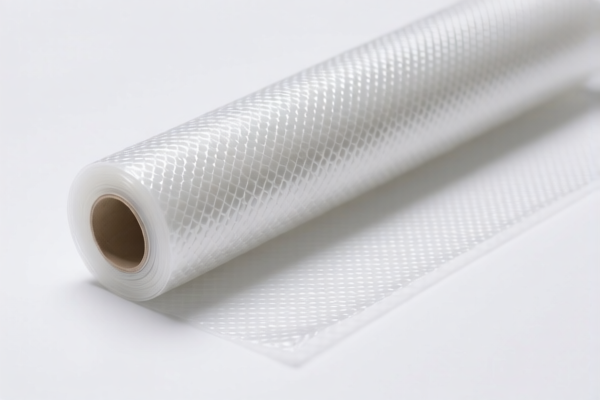

AI Analysis
⚡ Polyester Conductive Film (Polyester Conductive Film / Conductive PET Film)
🌐 HS Code Reference & Customs Clearance Guide | 2026 Latest Tariff Analysis | Professional Customs Strategy
📌 I. Product Definition & Classification: Do You Really Know "Polyester Conductive Film"?
Polyester Conductive Film is a high-tech functional material widely used in EMI/RFI shielding, capacitors, resistors, solar cells, smart packaging, and touch screen electrodes. It is typically a polyester (PET) substrate coated or laminated with conductive materials such as silver, carbon, ITO (Indium Tin Oxide), or copper.
In international trade, its classification depends heavily on: 1. Structure: Is it a simple film with conductive coating? Or a composite with textile layers? 2. Conductive Material: What is the primary conductive layer? 3. Application: Is it used in electronics, textiles, or general plastics?
⚠️ Critical Distinction for Customs: - If it is primarily a plastic film with a conductive coating (no textile dominance) → HS 3921 - If it is textile-based (e.g., conductive fabric laminated to plastic) → HS 5903 - If it is self-adhesive → HS 3919
📦 II. HS Code Classification Details (Based on Provided Data)
| HS Code | Product Description | Application Scenario | Key Characteristics |
|---|---|---|---|
3919.90.50.40 |
Self-adhesive plates, sheets, film, foil, tape, strip...: Other: Other Transparent tape | Transparent conductive tapes for labeling, bonding, or EMI shielding | Self-adhesive, transparent, plastic-based |
3919.90.50.60 |
Self-adhesive plates, sheets, film, foil, tape, strip...: Other: Other Other | General conductive adhesive tapes (non-transparent or specific shapes) | Self-adhesive, flexible, plastic-based |
5903.10.20.10 |
Textile fabrics impregnated/coated/laminated with plastics: With PVC: Man-made fibers: Over 70% rubber/plastics: Yarns sheathed with PVC | Conductive textile films, coated fabrics, or laminates where textile is the base | Textile + PVC/Plastic, textile component dominant |
5903.10.20.90 |
Textile fabrics impregnated/coated/laminated with plastics: With PVC: Man-made fibers: Over 70% rubber/plastics: Other | Similar to above, but different sub-category for non-sheathed coated fabrics | Textile + PVC/Plastic, generic coated textile |
3921.90.11.00 |
Other plates, sheets, film... of plastics: Combined with textile materials: Over 70% by weight of plastics | Multi-layer films where plastic dominates the weight, but contains textile for reinforcement | Plastic > 70%, combined with textile |
3921.90.15.00 |
Other plates, sheets, film... of plastics: Combined with textile materials: Man-made fibers predominate (Other) | Composite films where man-made fibers are the primary textile component | Plastic + Textile (Man-made), <1.492 kg/m² |
🔍 Key Analysis: -
3919Series: Best for self-adhesive conductive tapes (e.g., double-sided conductive tape used in electronics assembly). -5903Series: Best for conductive coated fabrics where the textile is the structural base (e.g., conductive clothing, EMI shielding curtains). -3921Series: Best for laminated films where the plastic content is high (>70%) or where man-made fibers dominate in a composite structure.
💰 III. 2026 Tariff Rate Analysis (Detailed Breakdown)
✅ Applicable Market: China Import/Export (Based on the provided data's tax structure: "Base Tariff" + "Added Tariff")
✅ Origin: Typically China (CN) or Vietnam (CN/VN)
✅ Effective Date: 2025-2026 Fiscal Year
🎯 Group A: Plastic-Based / Self-Adhesive (HS 3919 & 3921)
| HS Code | Product Type | Base Tariff | Added Tariff | Total Tax | Status |
|---|---|---|---|---|---|
3919.90.50.40 |
Transparent Self-Adhesive Tape | 0.0% | 0.0% | 0.0% | ✅ Duty-Free |
3919.90.50.60 |
Other Self-Adhesive Films | 0.0% | 0.0% | 0.0% | ✅ Duty-Free |
3921.90.11.00 |
Plastic > 70% + Textile | 0.0% | 0.0% | 0.0% | ✅ Duty-Free |
3921.90.15.00 |
Man-made Fiber Predominant | 0.0% | 0.0% | 0.0% | ✅ Duty-Free |
📌 Interpretation: - All plastic-based conductive films (including self-adhesive types) currently enjoy 0% total tax under the provided dataset. - No "Added Tariff" (e.g., 25% retaliation tax) applies to these specific subheadings in this dataset. - Strategy: Prioritize classifying under
3919or3921if the product is primarily plastic, as it is tax-advantaged.
🎯 Group B: Textile-Based (HS 5903)
| HS Code | Product Type | Base Tariff | Added Tariff | Total Tax | Status |
|---|---|---|---|---|---|
5903.10.20.10 |
Textile + PVC (Over 70% Plastic) | 0.0% | 25.0% | 25.0% | ⚠️ High Tariff |
5903.10.20.90 |
Textile + PVC (Other) | 0.0% | 25.0% | 25.0% | ⚠️ High Tariff |
📌 Critical Warning: - If your "Polyester Conductive Film" is classified as a textile fabric (even if coated with plastic/PVC), the Additional Tariff of 25.0% applies. - This is a significant cost difference compared to the 0% rate for pure plastic films. - Risk: Misclassifying a plastic-dominated composite film as a "textile fabric" could lead to a 25% penalty.
🛠️ IV. Customs Clearance Practical Suggestions (Actionable Tips)
✅ 1. Material Composition Verification (The 70% Rule)
To avoid the 25% tax on HS 5903, you must prove that the product is NOT primarily a textile fabric.
- Scenario A: If the film is >70% plastic by weight (even with some textile reinforcement) → Declare as 3921.90.11.00 (0% tax).
- Scenario B: If the film is >70% textile by weight (e.g., a fabric with a thin plastic coating) → Must declare as 5903.10.20.10 (25% tax).
- Action: Request a third-party laboratory weight analysis report to determine the exact plastic vs. textile ratio.
✅ 2. Correct HS Code Selection Strategy
🚨 Do NOT use generic terms like "Conductive Film" without specifying the base material!
| If your product is... | Use this HS Code | Tax Rate | Why? |
|---|---|---|---|
| Self-adhesive tape (clear or opaque) | 3919.90.50.40 / 3919.90.50.60 |
0% | Pure plastic self-adhesive. |
| Rigid/Flexible film with <70% textile | 3921.90.11.00 |
0% | Plastic dominates. |
| Coated Fabric (Textile base >70%) | 5903.10.20.10 |
25% | Textile base triggers added tariff. |
| ITO-coated PET (No textile) | 3921.90.11.00 |
0% | Standard plastic film. |
✅ 3. Documentation Checklist for 0% Tax Clearance
To secure the 0% tax rate and avoid random audits:
1. Bill of Materials (BOM): Clearly state the Plastic % vs. Textile %.
2. Technical Data Sheet (TDS): Specify "Polyester (PET) Substrate" + "Conductive Coating (Ag/Cu/ITO)".
3. Weight Ratio Declaration: Explicitly state "Plastic content: >70%" for 3921 codes.
4. Application Proof: Show the product is used in electronics packaging or insulation, not as a "fabric" for clothing or curtains.
5. Photos: High-res images showing the plastic texture (not a woven textile pattern).
🌍 V. Global Market Comparison (2026 Context)
| Market | Recommended HS Code | Estimated Total Tax | Key Requirement |
|---|---|---|---|
| 🇺🇸 USA | 3921.90 (Plastic) |
~0-10% (if not 301) | Detailed BOM, Weight Ratio |
| 🇪🇺 EU | 3921.90 |
0% (if plastic) | CE, RoHS compliance |
| 🇨🇳 China (Export) | 3919 / 3921 |
0% | Accurate "Plastic > 70%" declaration |
| 🇨🇳 China (Import) | 5903 (Textile) |
25% | Avoid this if possible! |
📌 Strategic Insight: - US/EU: Focus on proving "Plastic > 70%" to avoid textile-specific tariffs. - China Import: If importing back into China, ensure you declare
3921(0%) rather than5903(25%) to save massive costs.
📌 VI. Common Pitfalls & Avoidance Guide
❌ Pitfall 1: Calling it "Conductive Fabric" when it is actually a Plastic Film.
👉 Consequence: Classified as 5903 → 25% Tax instead of 0%.
✅ Fix: Use "Conductive Polyester Film" or "Conductive Plastic Sheet" in commercial invoices.
❌ Pitfall 2: Failing to declare the Weight Ratio of plastic vs. textile. 👉 Consequence: Customs officer may assume "Textile" → Audit & Penalty. ✅ Fix: Attach a Weight Analysis Report stating "Plastic: 85%, Textile: 15%".
❌ Pitfall 3: Using "Self-adhesive" for non-adhesive films.
👉 Consequence: Wrong HS Code (3919 vs 3921) → Potential delay.
✅ Fix: Be precise: "Adhesive Tape" (3919) vs "Film/Sheet" (3921).
🎯 VII. Conclusion: Strategic Tax Optimization
🎯 Key Takeaway:
🔹 "Plastic > 70% = 0% Tax" (HS 3921)
🔹 "Textile Base = 25% Tax" (HS 5903)
🔹 "Self-Adhesive = 0% Tax" (HS 3919)
Your Action Plan:
1. Analyze Composition: Confirm if your "Polyester Conductive Film" is truly a plastic sheet or a coated textile.
2. Adjust Description: If it's plastic-dominant, rename in invoices to "Polyester Film, Plastic-Dominant".
3. Declare Correctly: Use 3921.90.11.00 or 3919.90.50.40 to avoid the 25% added tariff.
✨ Professional Customs Clearance Starts with Precise Classification!
💼 Don't let a wrong HS Code cost you 25% of your profit!
🚀 Next Step: Request a weight ratio analysis for your product immediately to ensure compliance with the 0% tariff category.
Customer Reviews
About HS Code Classification
The Harmonized System (HS) is an internationally standardized nomenclature developed by the World Customs Organization (WCO) to classify traded products. Over 200 countries use the HS system as the basis for customs tariffs, trade statistics, and import/export regulations.
Each HS code follows a hierarchical structure:
- Chapter (2 digits) — Broad category of goods (e.g., Chapter 84: Machinery and Mechanical Appliances)
- Heading (4 digits) — More specific grouping within the chapter
- Subheading (6 digits) — Internationally standardized breakdown, used by all WCO member countries
- National subdivisions (8-10 digits) — Country-specific extensions for further classification, such as US HTSUS 10-digit codes
Correct HS code classification is essential for smooth customs clearance, accurate duty payment, and compliance with trade regulations. Misclassification can lead to customs delays, overpayment of duties, or penalties.
When importing from CN to US, the applicable tariff rates may include:
- Most-Favored-Nation (MFN) rate — The standard duty rate applied to WTO members
- General rate — Applied to countries without trade agreements
- Trade remedy duties — Additional tariffs such as Section 301 (anti-dumping), Section 232 (national security), or countervailing duties
The information provided on this page is for reference purposes only. For official classification, please consult with your local customs authority or a licensed customs broker.