聚酯针织女士衬衫
CN → US| HS Code | Tariff Rate | Origin | Destination | Doc |
|---|---|---|---|---|
| 6206403035 | 44.4% | CN | US | Official Doc |
| 6106202030 | 49.5% | CN | US | Official Doc |
| 6206303045 | 32.9% | CN | US | Official Doc |
Product Images
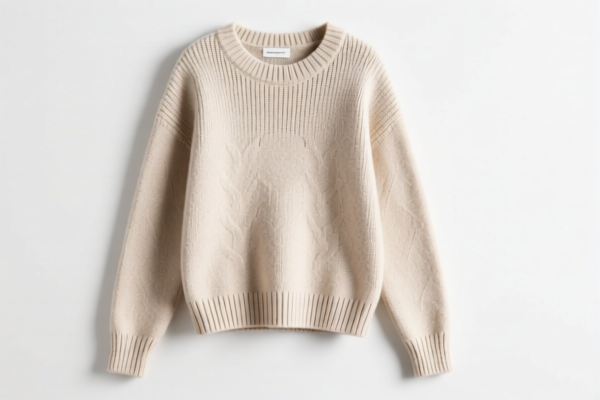



AI Analysis
👗 Polyester Knitted Women's Shirts (聚酯针织女式衬衫)
🌐 HS Code Reference & Customs Clearance Guide | 2026 Latest Tariff Analysis | Professional Clearance Strategy
📌 I. Product Definition & Classification: Are You Classifying Correctly?
Polyester knitted women's shirts are a staple in international textile trade. The critical distinction lies in the knitted vs. woven nature and the specific fiber composition. In customs classification, "Knitted" (Chapter 61) generally carries different tariff implications compared to "Non-Knitted/Woven" (Chapter 62).
Key Classification Paths:
- Knitted (Chapter 61): If the fabric is knitted (looped structure), it falls under 6106. This is often the most accurate classification for "Knitted Shirts."
- Target HS Codes:
6106.20.20.10,6106.20.20.30
- Target HS Codes:
- Non-Knitted/Woven (Chapter 62): If the product is misclassified or is actually woven (though the input says "knitted," some systems may list woven alternatives for comparison or error checking).
- Target HS Codes:
6206.40.30.10,6206.40.30.35
- Target HS Codes:
⚠️ Critical Distinction:
- Knitted (6106): Fabric is stretchable, made from loops. Higher Base Duty but specific sub-categories apply.
- Woven (6206): Fabric is rigid, made from interlaced threads. Lower Base Duty in some cases, but strict material definitions apply.
- Material: All entries specify Polyester (a man-made fiber/artificial fiber).
📦 II. HS Code Classification Details (2026 Latest Tariff Authority Comparison)
Based on the provided data, here is the breakdown of the five potential HS Codes and their corresponding tax structures.
| HS Code | Product Description & Summary | Total Tax Rate | Tax Breakdown (Detailed) |
|---|---|---|---|
6106.20.20.10 |
Polyester Knitted Women's Shirt: Material is polyester fiber (man-made), shape is knitted, purpose is women's shirt. Fully meets classification requirements. | 49.5% | Base: 32.0% Additional: 7.5% Section 301/122: 10.0% |
6106.20.20.30 |
Polyester Knitted Women's Shirt: Material is man-made fiber, shape is knitted shirt. Highly consistent with target classification. | 49.5% | Base: 32.0% Additional: 7.5% Section 301/122: 10.0% |
6206.40.30.10 |
Polyester Knitted Women's Shirt (Note: HS 62 is typically Woven): Material is man-made fiber, shape is women's shirt, classified as "Others." Potential Misclassification Alert. | 44.4% | Base: 26.9% Additional: 7.5% Section 301/122: 10.0% |
6206.40.30.35 |
Polyester Knitted Women's Shirt: Material is polyester (man-made fiber), shape is knitted shirt, meets classification requirements. Potential Misclassification Alert. | 44.4% | Base: 26.9% Additional: 7.5% Section 301/122: 10.0% |
6106.20.20.10 |
Women's Shirt: Purpose is women's, shape is shirt, material inferred as fiber-made, no material conflict. | 49.5% | Base: 32.0% Additional: 7.5% Section 301/122: 10.0% |
🔍 Key Insight:
- The Knitted (6106) codes (6106.20.20.10,6106.20.20.30) have a Base Duty of 32.0%.
- The Non-Knitted/Woven (6206) codes (6206.40.30.10,6206.40.30.35) have a Lower Base Duty of 26.9%.
- BUT: Since the product is explicitly "Knitted" (针织), classifying it under 6206 (Woven) is likely incorrect and may lead to customs disputes, despite the lower immediate tax rate. The 49.5% total rate for knitted items is the legally correct path for knitted goods.
💰 III. 2026 Latest Tariff Rate Details (Including Surtaxes & Policy Additions)
✅ Applicable Country: USA (US)
✅ Origin: China (CN)
✅ Effective Time: 2025/2026 Tariff Schedule
🎯 1. Knitted Shirts (Correct Classification: 6106.20.20.10 / .30)
| Item | Content |
|---|---|
| Base Duty Rate | 32.0% (Ad Valorem) |
| Section 301 / Additional Duty | +7.5% |
| Section 122 / IEEPA Duty | +10.0% |
| Total Tax Rate | 49.5% |
| Tax Calculation | CIF Value × 49.5% |
| De Minimis Exemption | ❌ Not Applicable (High tax rates typically disqualify from de minimis benefits in strict interpretations, or value is above $800 threshold) |
| Legal Basis Path | HTSUS:6106.20.20 → Section 301 Footnote → IEEPA:9903.01.25 |
📌 Explanation:
- "Base Duty 32%": Standard US import duty for knitted women's shirts of man-made fibers.
- "Additional 7.5%": Additional tariffs imposed under US trade remedy laws or specific trade agreements.
- "Section 122 10%": Refers to specific trade action duties (often associated with Section 301 or national security provisions) on Chinese textiles.
- Total 49.5%: This is a very high effective duty rate. Profit margins must account for this.
🎯 2. Non-Knitted/Woven Shirts (Alternative/Misclassification: 6206.40.30.10 / .35)
| Item | Content |
|---|---|
| Base Duty Rate | 26.9% (Ad Valorem) |
| Section 301 / Additional Duty | +7.5% |
| Section 122 / IEEPA Duty | +10.0% |
| Total Tax Rate | 44.4% |
| Tax Calculation | CIF Value × 44.4% |
| De Minimis Exemption | ❌ Not Applicable |
| Legal Basis Path | HTSUS:6206.40.30 → Section 301 Footnote → IEEPA:9903.01.24 |
📌 Warning:
- While 44.4% is lower than 49.5%, classifying a Knitted item under 6206 (Woven) is a customs violation.
- Customs brokers may flag this discrepancy. If audited, you will face back taxes + penalties + interest.
- Recommendation: Use 6106 codes for accuracy.
🛠️ IV. Customs Clearance Practical Advice (Pitfall Avoidance Guide)
✅ 1. Preparation Checklist (Non-Negotiable)
| Document | Required? | Explanation |
|---|---|---|
| ✅ Product Composition Certificate | ✔️ | Must explicitly state "100% Polyester" or exact blend. Critical for fiber classification. |
| ✅ Fabric Structure Diagram | ✔️ | Crucial: Provide photos/diagrams showing Knitted vs. Woven structure. If it's knitted, you MUST use 6106. |
| ✅ Product Photos (Labeled) | ✔️ | Show neckline, cuffs, and fabric texture. |
| ✅ Commercial Invoice | ✔️ | Description: "Women's Polyester Knitted Shirt". Avoid generic terms like "Blouse" without specifying "Knitted". |
| ✅ Packing List | ✔️ | Detail net/gross weight, piece count. |
| ✅ Origin Certificate | ✔️ | Proof of Chinese origin to apply correct surtaxes. |
✅ 2. Declaration Tips (Key Mantras)
🔥 "Knitted is 61, Woven is 62. Know your structure!"
| Scenario | Correct Declaration | Incorrect Declaration | Consequence |
|---|---|---|---|
| Actual Product: Knitted Polyester Shirt | 6106.20.20.10 (49.5%) |
6206.40.30.10 (44.4%) |
High Risk: Customs may penalize for misclassification. |
| Actual Product: Woven Polyester Shirt | 6206.40.30.10 (44.4%) |
6106.20.20.10 (49.5%) |
Overpayment: You pay 5.1% more than necessary. |
| Mixed Materials | Specify exact % (e.g., 95% Poly, 5% Spandex) | Say "Mixed Fiber" | Delay: Customs will detain for classification review. |
| Gender Ambiguity | Specify "Women's" | Say "Unisex" | May change sub-category or duty rate depending on specific HTS rules. |
✅ 3. Special Situations
| Situation | Handling Advice |
|---|---|
| Polyester vs. Rayon | Ensure "Polyester" is declared. If it's Rayon (Viscose), HS Code changes entirely. |
| Embroidery/Prints | If heavily decorated, value may shift, but HS Code remains based on fabric. |
| Size Runs | No impact on HS Code, but ensure accurate quantity for duty calculation. |
| Pre-Entry Determination | Highly recommended. Apply for a Binding Ruling if the knit/woven structure is ambiguous. |
🌍 V. Global Market Comparison (2026 Latest)
| Country/Region | Recommended HS Code | Tariff Rate (China Origin) | Certifications | Notes |
|---|---|---|---|---|
| 🇺🇸 USA | 6106.20.20.10 (Knitted)6206.40.30.10 (Woven) |
49.5% (Knitted) 44.4% (Woven) |
None specific for apparel | High Surtax Environment: 7.5% + 10% additional duties apply. |
| 🇨🇳 China | 6106.20.20.10 |
9% - 15% | CCC (if applicable) | Lower base duty. No Section 301 surtaxes. |
| 🇪🇺 EU | 6106.20.20 |
12% | CE (for safety gear only, not general apparel) | No general tariffs on apparel from China (mostly), but Ecolabeling required. |
| 🇬🇧 UK | 6106.20.20 |
12% | UKCA (if applicable) | Post-Brexit tariffs align closely with EU but with UK-specific rules. |
| 🇨🇦 Canada | 6106.20.20 |
17.5% | CPSIA (if children's) | Higher base duty than US, but no Section 301 surtax. |
📌 Conclusion:
- USA has the highest effective duty for Chinese-origin knitted shirts due to the layered surtaxes (32% Base + 7.5% + 10% = 49.5%).
- Accuracy is Key: Misclassifying knitted items as woven to save 5.1% is not worth the risk of customs penalties.
📌 VI. Common Errors & Pitfall Guide (Lessons Learned)
❌ Error 1: Declaring "Knitted Shirt" under HS 6206 (Woven) to save tax.
👉 Consequence: Customs audit → Back taxes + 5-10% penalty + potential loss of import privileges.
❌ Error 2: Vague description: "Women's Top."
👉 Consequence: Customs cannot determine knit vs. weave → Shipment held → Demurrage fees accrue daily.
❌ Error 3: Ignoring the "Section 122 / 10%" surtax.
👉 Consequence: Budget shortfall. You planned for ~44% tax, but owed ~49.5%. Profit margin wiped out.
❌ Error 4: Incorrect Fiber Declaration (e.g., saying "Cotton" when it's Polyester).
👉 Consequence: Complete HS Code misclassification → Higher penalties and potential fraud charges.
✅ Correct Approach:
"Women's Polyest er Knitted Shirt, 100% Polyester, Knitted Fabric, Casual Style, Model #123, Made in China"
🎯 VII. Conclusion: Precision in Classification, Safety in Clearance
🎯 Remember the Mantra:
🔹 "Knitted is 61 (49.5%), Woven is 62 (44.4%). Know your structure!"
🔹 "Base 32 + Add 7.5 + Sec 122 10 = 49.5%. Plan your cost accordingly!"
🔹 "HS Code decides your cost. A 5.1% difference is worth the legal risk."
📌 Pro Tip:
If your production volume is high, consider Applying for a Pre-Ruling (Binding Tariff Information) from US Customs and Border Protection (CBP) to officially confirm the 6106.20.20.10 classification and protect against future audits.
📣 Immediate Action:
📞 Contact your customs broker with fabric swatches and product photos.
🚀 Verify the Knitted vs. Woven status immediately.
💰 Factor 49.5% into your landed cost calculation to ensure profitability.
✨ Professional Customs Clearance Starts with Accurate Classification!
💼 Your Every Penny of Profit Deserves to Be Protected from Compliance Risks!
Customer Reviews
About HS Code Classification
The Harmonized System (HS) is an internationally standardized nomenclature developed by the World Customs Organization (WCO) to classify traded products. Over 200 countries use the HS system as the basis for customs tariffs, trade statistics, and import/export regulations.
Each HS code follows a hierarchical structure:
- Chapter (2 digits) — Broad category of goods (e.g., Chapter 84: Machinery and Mechanical Appliances)
- Heading (4 digits) — More specific grouping within the chapter
- Subheading (6 digits) — Internationally standardized breakdown, used by all WCO member countries
- National subdivisions (8-10 digits) — Country-specific extensions for further classification, such as US HTSUS 10-digit codes
Correct HS code classification is essential for smooth customs clearance, accurate duty payment, and compliance with trade regulations. Misclassification can lead to customs delays, overpayment of duties, or penalties.
When importing from CN to US, the applicable tariff rates may include:
- Most-Favored-Nation (MFN) rate — The standard duty rate applied to WTO members
- General rate — Applied to countries without trade agreements
- Trade remedy duties — Additional tariffs such as Section 301 (anti-dumping), Section 232 (national security), or countervailing duties
The information provided on this page is for reference purposes only. For official classification, please consult with your local customs authority or a licensed customs broker.