胎压监测系统
CN → US| HS Code | Tariff Rate | Origin | Destination | Doc |
|---|---|---|---|---|
| 8708806590 | 0.0% | CN | US | Official Doc |
| 8543709860 | 37.6% | CN | US | Official Doc |
| 8543704500 | 37.6% | CN | US | Official Doc |
| 9026208000 | 17.5% | CN | US | Official Doc |
| 9026204000 | 35.0% | CN | US | Official Doc |
Product Images
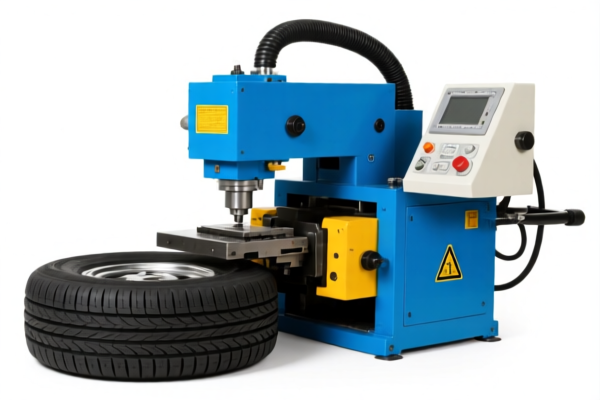
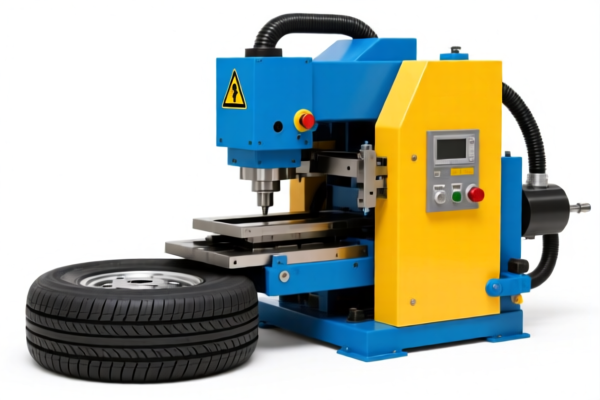
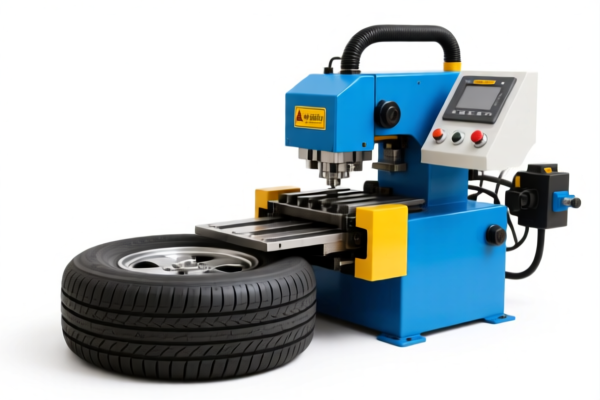
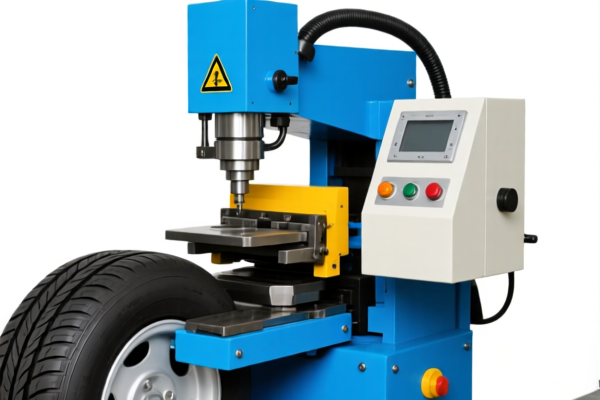
AI Analysis
🚗 Tire Pressure Monitoring Systems (TPMS) & Components
🌐 HS Code Reference & Customs Clearance Guide | 2026 Latest Tariff Analysis | Professional Compliance Strategy
📌 I. Product Definition & Classification: What is TPMS?
Tire Pressure Monitoring Systems (TPMS) are electronic systems designed to monitor the air pressure inside the pneumatic tires on various vehicles. In international trade, TPMS products are not treated as a single monolithic unit but are classified based on their function and component status.
The data provided distinguishes between three key categories: 1. Parts of Signaling Equipment: Specifically, the sensors or modules that transmit data to the vehicle’s dashboard. 2. Visual Signaling Equipment: The dashboard display unit or alert system that warns the driver. 3. Measuring/Checking Instruments: The standalone diagnostic tools or test benches used to verify TPMS functionality after installation.
⚠️ Critical Distinction:
- If the item is a sensor/transmitter installed in the tire/wheel → It is a Part of signaling equipment.
- If the item is a handheld scanner or test bench used by mechanics → It is a Measuring Instrument.
- Misclassification here leads to severe tariff disparities (0% vs. 26.7%).
📦 II. HS Code Classification Details (2026 Latest Tariff Authority Cross-Reference)
Based on the provided <DATA>, here is the precise breakdown for TPMS-related items:
| HS Code | Product Description | Application Scenario | Key Identification Feature |
|---|---|---|---|
| 8512.90.20.00 | Parts of Signaling Equipment (Of signaling equipment) |
TPMS Sensors, Transmitters, Internal Modules | Installed within the vehicle wheel assembly; transmits RF signals to the ECU. |
| 8512.20.40.80 | Other Visual Signaling Equipment | Dashboard Alert Lights, Warning Bells, UI Displays | The user-facing component that displays pressure data or triggers a warning light on the dashboard. |
| 9031.80.80.85 | Other Measuring/Checking Instruments | Handheld TPMS Scanners, Diagnostic Tools | Portable devices used by technicians to read sensor IDs and pressures from outside the vehicle. |
| 9031.20.00.00 | Test Benches | Stationary TPMS Diagnostic Stations, Lab Equipment | Large, fixed units used in manufacturing plants or service centers to test multiple sensors/valves simultaneously. |
🔍 Key Reminder:
- 8512.90.20.00 and 8512.20.40.80 are 0% tariff. These are components for the vehicle.
- 9031.xxxxxx.xxxx are instrumental. These are tools for measuring/checking.
- Do not mix "Diagnostic Tool" (9031) with "Vehicle Part" (8512). The form factor and function determine the code.
💰 III. 2026 Latest Tariff Rate Detail (Including Surcharge Policies)
✅ Applicable Country: United States (US)
✅ Origin: China (CN)
✅ Effective Date: Current rates include Section 301 additional tariffs.
🎯 1. 8512.90.20.00 —— Parts of Signaling Equipment (TPMS Sensors/Parts)
| Item | Content |
|---|---|
| Base Tariff | 0.0% (ad valorem) |
| Additional Tariff (Section 301) | 0.0% |
| Total Tax Rate | 0.0% |
| Tax Calculation | CIF Value × 0% = $0 Duty |
| Legal Basis | HTSUS 8512.90.20.00 |
📌 Explanation:
- TPMS sensors and internal signaling parts are classified under heading 8512 (Lighting/Signaling equipment for vehicles). - Crucially, parts of these vehicles often fall under 0% base rates, and no additional 25% tariff is applied to this specific subheading in the provided data. - Result: This is a duty-free import for parts, offering significant cost savings compared to general machinery.
🎯 2. 8512.20.40.80 —— Other Visual Signaling Equipment (TPMS Displays/Alerts)
| Item | Content |
|---|---|
| Base Tariff | 0.0% (ad valorem) |
| Additional Tariff (Section 301) | 0.0% |
| Total Tax Rate | 0.0% |
| Tax Calculation | CIF Value × 0% = $0 Duty |
| Legal Basis | HTSUS 8512.20.40.80 |
📌 Explanation:
- The dashboard unit or warning light itself is considered "visual signaling equipment." - Like sensors, these parts enjoy 0% total duty. - Strategy: If you are importing a complete TPMS kit, ensure the invoice clearly separates the sensors/parts (8512) from any non-vehicle diagnostic tools.
🎯 3. 9031.80.80.85 —— Other Measuring/Checking Instruments (Handheld Scanners)
| Item | Content |
|---|---|
| Base Tariff | 0.0% (ad valorem) |
| Additional Tariff (Section 301) | 25.0% |
| Total Tax Rate | 25.0% |
| Tax Calculation | CIF Value × 25% |
| Legal Basis | HTSUS 9031.80.80.85 |
📌 Explanation:
- Handheld TPMS scan tools are considered "measuring instruments" (Chapter 90), not vehicle parts. - While the base tariff is low (0%), the 25% additional tariff applies. - Result: High duty burden. A $100 scanner incurs $25 in duty.
🎯 4. 9031.20.00.00 —— Test Benches (TPMS Diagnostic Stations)
| Item | Content |
|---|---|
| Base Tariff | 1.7% (ad valorem) |
| Additional Tariff (Section 301) | 25.0% |
| Total Tax Rate | 26.7% |
| Tax Calculation | CIF Value × 26.7% |
| Legal Basis | HTSUS 9031.20.00.00 |
📌 Explanation:
- Large, stationary test benches or manufacturing test equipment fall under this category. - This is the highest tariff category in the dataset. - Result: Significant cost impact on industrial equipment.
🛠️ IV. Customs Clearance Practical Advice (Combat Pitfall Guide)
✅ 1. Preparation Checklist (Essential Documents)
| Document | Must Provide | Purpose |
|---|---|---|
| ✅ Product Technical Sheet | ✔️ | Must specify if the item is a Vehicle Part (Sensor/Display) or Diagnostic Tool (Scanner). |
| ✅ Circuit/Functional Diagram | ✔️ | To prove if the device is installed in the vehicle (HTS 8512) or used externally for measurement (HTS 9031). |
| ✅ Product Photos (Labeled) | ✔️ | Show form factor: "Small electronic module" vs. "Handheld pistol-shaped tool." |
| ✅ Commercial Invoice | ✔️ | CRITICAL: Use precise language. |
| > - Good: "TPMS Sensor Assembly (Part for Vehicle)" → 8512.90.20.00 | ||
| > - Bad: "TPMS Tool" → Likely misclassified as 9031.20.00.00 (26.7% duty). | ||
| ✅ FCC Certification | ✔️ | All wireless TPMS devices (RF transmitters) require FCC ID for US import. |
| ✅ Origin Certificate | ✔️ | Confirm Country of Origin to apply correct Section 301 rates. |
✅ 2. Declaration Strategy (Key Mantra)
🔥 "Sensor is Part, Scanner is Tool. Name it Right, Duty is Low!"
| Scenario | Correct HS Code | Duty Rate | Risk if Misclassified |
|---|---|---|---|
| TPMS Sensor (Valve stem/internal) | 8512.90.20.00 |
0.0% | Misdeclaring as "Tool" → 25% overpayment. |
| TPMS Dashboard Display | 8512.20.40.80 |
0.0% | Misdeclaring as "Instrument" → 25% overpayment. |
| Handheld TPMS Reader | 9031.80.80.85 |
25.0% | Misdeclaring as "Part" → Customs Penalty & Back Taxes. |
| Stationary Test Bench | 9031.20.00.00 |
26.7% | Misdeclaring as "Handheld" → 1.7% diff + penalties. |
💡 Pro Tip:
If you are importing a Kit containing sensors + a handheld reader, separate them on the commercial invoice.
- Sensor Line Item:8512.90.20.00(0% Duty)
- Reader Line Item:9031.80.80.85(25% Duty)
Do not lump them together under one HS code, or the CBP may apply the higher duty to the entire shipment.
✅ 3. Special Case Handling
| Situation | Handling Advice |
|---|---|
| OEM TPMS for Car Makers | Ensure HS Code 8512 is used. Provide OEM contract proving these are parts for vehicle assembly. |
| Aftermarket Sensor Kit | Declare as "TPMS Sensor Assembly." Provide FCC ID. No duty. |
| TPMS Diagnostic Software (No Hardware) | If sold as pure software/downloadable, check ITA exemptions. But if bundled with hardware, hardware dictates duty. |
| Portable Air Pump with TPMS Meter | If the meter is integral and the pump is for tire inflation, it may still be classified under 9031 (Measuring) due to the "checking" function. Consult a specialist. |
🌍 V. Global Market Clearance Comparison (2026 Latest)
| Country/Region | Recommended HS Code | Tariff (China Origin) | Certification Requirements | Notes |
|---|---|---|---|---|
| 🇺🇸 USA | 8512.90.20.00 (Parts)9031.80.80.85 (Tools) |
0.0% (Parts) 25.0% (Tools) |
FCC ID (Mandatory) | High savings on Parts. Be vigilant on "Tools." |
| 🇨🇳 China | 8512.90.20.00 |
~5-10% | CCC (if applicable) | Base rates differ; check specific MOFCOM list. |
| 🇪🇺 EU | 8512.90.90 (Parts) |
0% | E-Mark (ECE R10) | Wireless parts require E-Mark certification. |
| 🇬🇧 UK | 8512.90.00 |
0% | UKCA | Post-Brexit rules apply. |
| 🇦🇺 Australia | 8512.90.00 |
5% | RCM | 5% standard duty. |
📌 Conclusion:
- USA offers 0% duty for TPMS parts (sensors/displays), making it highly attractive if classified correctly.
- However, TPMS diagnostic tools face 25-26.7% tariffs in the US.
- Certification (FCC) is non-negotiable for wireless TPMS in the US.
📌 VI. Common Errors & Pitfalls (Lessons Learned)
❌ Error 1: Lumping "TPMS Sensors" and "TPMS Scan Tool" into one line item as "TPMS Kit."
👉 Consequence: Customs may apply the higher duty rate (25%) to the entire value, even the sensors.
Fix: Split invoices. Separate Part vs. Instrument.
❌ Error 2: Calling a "TPMS Sensor" a "TPMS Meter."
👉 Consequence: Misclassification as Measuring Instrument (9031) → 25% duty on a 0% item.
Fix: Use "Sensor," "Transmitter," or "Valve Stem Assembly."
❌ Error 3: Ignoring FCC Requirements.
👉 Consequence: CBP will seize the shipment. TPMS is a radio transmitter.
Fix: Ensure every sensor has a valid FCC ID printed on the hardware.
❌ Error 4: Declaring "Test Bench" as "Portable Scanner."
👉 Consequence: Audit risk. Large equipment doesn't look portable.
Fix: Accurate description: "Stationary TPMS Test Station."
✅ Correct Declaration Example:
Item 1: "TPMS Sensor Assembly, Valve Stem Type, Model XYZ, FCC ID: ABC123" → HS 8512.90.20.00 (0% Duty)
Item 2: "TPMS Diagnostic Scanner, Handheld, Model DEF" → HS 9031.80.80.85 (25% Duty)
🎯 VII. Conclusion: Precise Classification Saves Money
🎯 Remember the Mantra:
🔹 "Sensors are Parts (0%). Scanners are Tools (25%).
🔹 "Split the Invoice, Save the Duty. FCC is Key."
📌 Pro Tip:
If you are importing large volumes of TPMS Sensors (8512.90.20.00), you are importing Duty-Free goods. Ensure your supplier labels them correctly as "Vehicle Parts" and not "Electronic Devices" to avoid 25% duties.
📣 Immediate Action:
📞 Verify FCC IDs for all wireless components.
📄 Split Invoices if mixing Parts and Tools.
🚀 Clear Customs Fast with 0% duty on your sensors!
✨ Professional Customs Clearance Starts with Accurate Classification!
💼 Your Bottom Line Depends on the First Line of Your Invoice!
Customer Reviews
About HS Code Classification
The Harmonized System (HS) is an internationally standardized nomenclature developed by the World Customs Organization (WCO) to classify traded products. Over 200 countries use the HS system as the basis for customs tariffs, trade statistics, and import/export regulations.
Each HS code follows a hierarchical structure:
- Chapter (2 digits) — Broad category of goods (e.g., Chapter 84: Machinery and Mechanical Appliances)
- Heading (4 digits) — More specific grouping within the chapter
- Subheading (6 digits) — Internationally standardized breakdown, used by all WCO member countries
- National subdivisions (8-10 digits) — Country-specific extensions for further classification, such as US HTSUS 10-digit codes
Correct HS code classification is essential for smooth customs clearance, accurate duty payment, and compliance with trade regulations. Misclassification can lead to customs delays, overpayment of duties, or penalties.
When importing from CN to US, the applicable tariff rates may include:
- Most-Favored-Nation (MFN) rate — The standard duty rate applied to WTO members
- General rate — Applied to countries without trade agreements
- Trade remedy duties — Additional tariffs such as Section 301 (anti-dumping), Section 232 (national security), or countervailing duties
The information provided on this page is for reference purposes only. For official classification, please consult with your local customs authority or a licensed customs broker.