胸罩及类似品
CN → US| HS Code | Tariff Rate | Origin | Destination | Doc |
|---|---|---|---|---|
| 6212103000 | 22.3% | CN | US | Official Doc |
| 6212105010 | 34.4% | CN | US | Official Doc |
| 3926209050 | 15.0% | CN | US | Official Doc |
| 3926209010 | 40.0% | CN | US | Official Doc |
Product Images
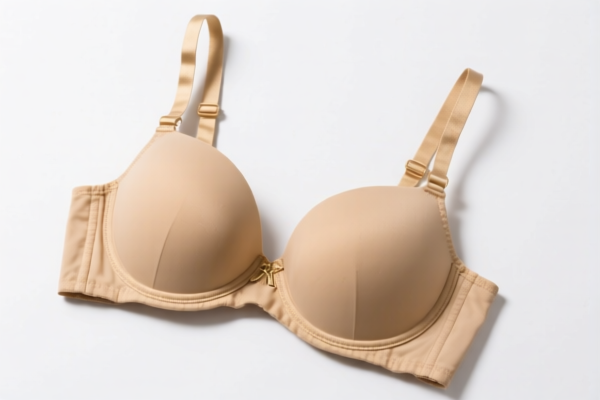
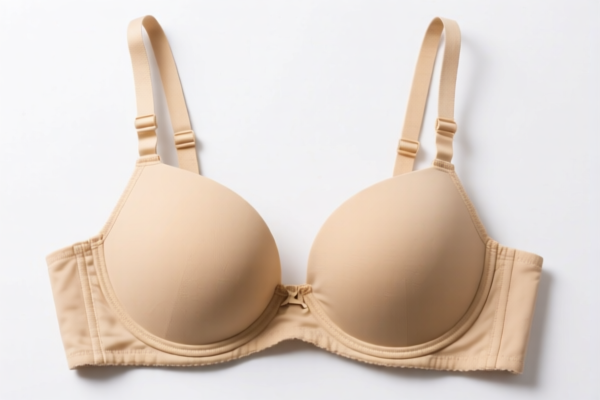
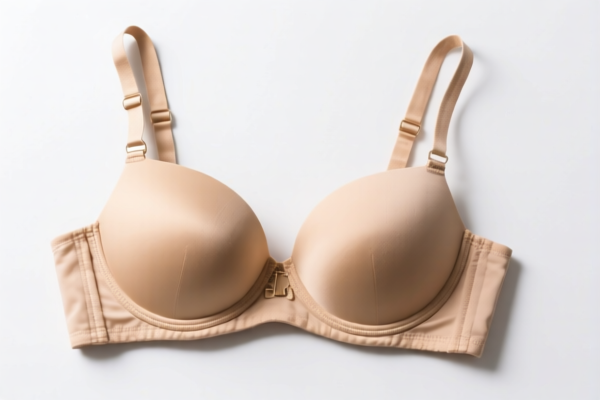
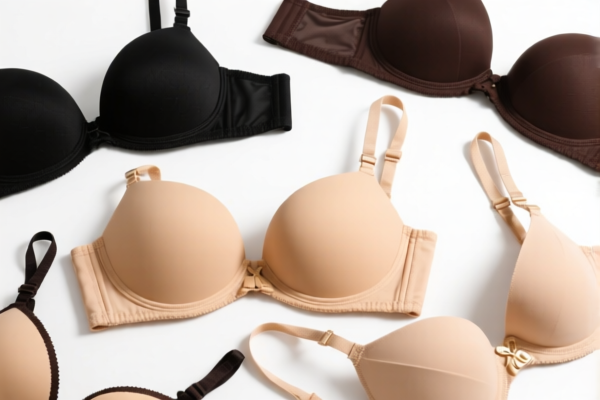
AI Analysis
👙 Bras & Similar Articles (Intimate Apparel)
🌐 HS Code Reference & Customs Clearance Guide | 2026 Latest Tariff Analysis | Professional-Level Strategy
📌 I. Product Definition & Classification: Do You Really Understand "Bras"?
In international trade, "Bras and Similar Articles" fall under Chapter 62 (Articles of Apparel and Clothing Accessories, Knitted or Crocheted). However, precise classification depends heavily on the specific type (Bra vs. Corset) and material composition. If the material is not explicitly stated, customs authorities often apply a "catch-all" or "other" classification logic.
⚠️ Key Distinction:
- Bras (6212.10): Designed to support the bust. Tax rate generally lower base duty (16.9%).
- Corsets/Body Shapers (6212.30): Designed to shape the torso. Tax rate higher base duty (23.5%).
- Material Ambiguity: If material is unknown, HS codes ending in.50are often used as residual categories, triggering specific "additional" tariff clauses.
📦 II. HS Code Classification Details (2026 Latest Tariff Authority Comparison)
| HS Code | Product Description | Applicable Scenario | Material Assumption (If Unspecified) |
|---|---|---|---|
6212.10.50.10 |
Bras and Similar Articles: Other | Bras/Similar items where purpose matches but material is unclear | Catch-all inference ("Other") |
6212.10.50.20 |
Bras and Similar Articles: Other | Bras form factor matches; material likely man-made fiber or cotton | Consistent with catch-all logic |
6212.30.00.30 |
Corsets and Similar Articles: Other | Corsets/Torso shapers; material unclear, judged by "other material" catch-all | "Other Material" assumption |
🔍 Key Reminder:
- Bras (6212.10) are classified under "Similar Articles."
- Corsets (6212.30) have a distinct subheading and higher base duty.
- Missing Material Info: If material is missing, customs may apply the.50or.30residual codes, which often carry significant additional tariffs due to trade restrictions.
💰 III. 2026 Latest Tariff Rate Breakdown (Including Surcharges & Policy Add-ons)
✅ Applicable Country: United States (US)
✅ Origin: China (CN)
✅ Effective Date: Current trade policy includes Section 301 and Section 232/122 implications.
🎯 1. 6212.10.50.10 & 6212.10.50.20 — Bras & Similar Articles
These two codes cover standard bras. If the material is unspecified, they fall into the "Other" category.
| Item | Content |
|---|---|
| Base Duty | 16.9% |
| Additional Duty (Section 301) | +7.5% |
| Section 122 Duty | +10% |
| Total Tax Rate | 34.4% |
| Tax Calculation | CIF Value × 34.4% |
| Legal Basis Path | HTSUS:6212.10.50 → Section 301 Footnote → Section 122 (Trade Promotion Authority) |
📌 Explanation:
- Base Duty (16.9%): Standard MFN rate for textile garments under Heading 6212.
- Section 301 (7.5%): Additional duty on Chinese imports under trade remedy laws.
- Section 122 (10%): Specific duty provision often applied to certain textile/apparel imports from China to protect domestic production.
- Total: 34.4%. This is a high-cost category for Chinese-manufactured lingerie.
🎯 2. 6212.30.00.30 — Corsets & Similar Articles
This code covers corsets and body shapers. Note the difference in base duty.
| Item | Content |
|---|---|
| Base Duty | 23.5% |
| Additional Duty (Section 301) | +7.5% |
| Section 122 Duty | +10% |
| Total Tax Rate | 41.0% |
| Tax Calculation | CIF Value × 41.0% |
| Legal Basis Path | HTSUS:6212.30.00 → Section 301 Footnote → Section 122 (Trade Promotion Authority) |
📌 Note:
- Corsets/Body Shapers are taxed at a higher base rate (23.5% vs 16.9%).
- The additional duties (7.5% + 10%) remain the same, pushing the total to 41.0%.
- Crucial: Misclassifying a corset as a bra can lead to underpayment and penalties. Ensure product structure matches the HS description.
🛠️ IV. Customs Clearance Practical Advice (Real-World Pitfall Avoidance)
✅ 1. Document Checklist (All Required)
| Document | Mandatory? | Description |
|---|---|---|
| ✅ Product Specification Sheet | ✔️ | Must include fabric composition (e.g., 95% Nylon, 5% Spandex). Do not leave blank! |
| ✅ Product Photos | ✔️ | Clear images of the item, labels, and packaging. Differentiate Bra vs. Corset. |
| ✅ Commercial Invoice | ✔️ | Clearly state "Bras" or "Corsets" and "Made in China." |
| ✅ Packing List | ✔️ | Detail item count, weight, and dimensions. |
| ✅ Certification (if applicable) | ✔️ | CPSIA (for children’s items), OEKO-TEX, or other safety certs. |
| ✅ Tariff Classification Ruling | ❌ (Recommended) | Pre-arrival ruling to confirm HS Code and avoid audit. |
✅ 2. Declaration Tips (Key Mnemonics)
🔥 “Material Clear, Type Specific, Tax Rate Drops, Audit Avoids!”
| Scenario | Correct Declaration | Wrong Practice |
|---|---|---|
| Bra (Cotton/Nylon) | 6212.10.50.20 (if material matches) |
Vague "Clothing" → Potential 34.4% + Penalty |
| Bra (Material Unknown) | 6212.10.50.10 (Catch-all) |
Assume 0% duty → Massive Underpayment |
| Corset | 6212.30.00.30 |
Declare as "Bra" → Audit Risk + Back Tax |
| Set (Bra + Panty) | De Minimis Exemption? | ❌ NO. Section 301/122 duties apply even to small packages. |
✅ 3. Special Situation Handling
| Situation | Handling Advice |
|---|---|
| De Minimis (Section 321) | ❌ DO NOT RELY ON De Minimis EXEMPTION for these HS Codes from China. Section 301 and Section 122 duties exceed the $800 de minimis threshold protection. All shipments are subject to duties. |
| OEM/Private Label | Provide brand authorization and design specs to prove origin and prevent "transshipment" flags. |
| Material Change | If switching from Cotton to Synthetic, the HS code may shift. Re-evaluate classification to avoid misdeclaration. |
| "Similar Articles" Ambiguity | If unsure if an item is a "Bra" or "Shapewear," provide detailed photos. Customs will classify based on function. Shapewear often falls under Corset (6212.30) which is more expensive. |
🌍 V. Global Market Comparison (2026 Latest)
| Country/Region | Recommended HS Code | Tariff (China Origin) | Certification | Notes |
|---|---|---|---|---|
| 🇺🇸 USA | 6212.10.50.20 / 6212.30.00.30 |
34.4% - 41.0% | CPSIA, OEKO-TEX | High Duty! No de minimis exemption for China. |
| 🇨🇳 China | 6212.10.20 / 6212.30.10 |
5% - 10% | CCC (if applicable) | Domestic duty much lower. |
| 🇪🇺 EU | 6212.10 / 6212.30 |
12% - 17% | CE (if medical) | No Section 301/122 equivalent, but VAT applies. |
| 🇬🇧 UK | 6212.10 / 6212.30 |
12% - 17% | UKCA | Post-Brexit rules apply. |
| 🇦🇺 Australia | 6212.10 / 6212.30 |
5% | GTSR | Lower duty than US. |
📌 Conclusion:
- USA is the most expensive market for Chinese lingerie due to Section 301 + Section 122.
- No De Minimis Exemption: Even small packages (e.g., $50 bras) will be taxed at 34.4%+.
- Strategy: Consider sourcing from Vietnam/Mexico for US market to avoid China-specific tariffs.
📌 VI. Common Mistakes & Pitfall Guide (Blood & Tears Lessons)
❌ Mistake 1: Assuming "De Minimis" applies to all small packages.
👉 Consequence: Customs seizure + 34.4% back tax + penalties. Section 301/122 duties are NOT waived for de minimis shipments from China.
❌ Mistake 2: Mixing "Bra" and "Corset" in one declaration.
👉 Consequence: Customs may audit the entire shipment. Corsets (41.0%) vs. Bras (34.4%) have different base duties. Misclassification leads to underpayment.
❌ Mistake 3: Leaving material composition blank.
👉 Consequence: Customs applies the "Other" code (.50 or .30), which triggers the highest surcharge. Always declare exact fabric (e.g., "Nylon/Spandex").
✅ Correct Approach:
"Women's Bra, Cotton/Spandex Blend, Non-Underwire, Model XYZ, Made in China. HS: 6212.10.50.20."
🎯 VII. Conclusion: Professional Declaration, Cost Control!
🎯 Remember the Mnemonic:
🔹 "Bras 34%, Corsets 41%, De Minimis is a Lie for China!"
🔹 "Material Matters, Type Defines Type, Audit Saves Your Life!"
📌 Pro Tip:
If your product is critical, apply for an Advance Ruling from US Customs (CBP) to confirm the HS Code and duty rate before shipping.
Consider supply chain diversification to countries like Vietnam or Turkey to avoid the 34.4%-41.0% China-specific tariff block.
📣 Immediate Action:
📞 Contact your freight forwarder + Declare exact material + Verify Section 122 applicability.
🚀 Clear your bras, clear your cash flow!
✨ Professional Customs Clearance Starts with Accurate Classification!
💼 Every Cent of Duty Saved is Pure Profit!
Customer Reviews
About HS Code Classification
The Harmonized System (HS) is an internationally standardized nomenclature developed by the World Customs Organization (WCO) to classify traded products. Over 200 countries use the HS system as the basis for customs tariffs, trade statistics, and import/export regulations.
Each HS code follows a hierarchical structure:
- Chapter (2 digits) — Broad category of goods (e.g., Chapter 84: Machinery and Mechanical Appliances)
- Heading (4 digits) — More specific grouping within the chapter
- Subheading (6 digits) — Internationally standardized breakdown, used by all WCO member countries
- National subdivisions (8-10 digits) — Country-specific extensions for further classification, such as US HTSUS 10-digit codes
Correct HS code classification is essential for smooth customs clearance, accurate duty payment, and compliance with trade regulations. Misclassification can lead to customs delays, overpayment of duties, or penalties.
When importing from CN to US, the applicable tariff rates may include:
- Most-Favored-Nation (MFN) rate — The standard duty rate applied to WTO members
- General rate — Applied to countries without trade agreements
- Trade remedy duties — Additional tariffs such as Section 301 (anti-dumping), Section 232 (national security), or countervailing duties
The information provided on this page is for reference purposes only. For official classification, please consult with your local customs authority or a licensed customs broker.