脚蹼
CN → US| HS Code | Tariff Rate | Origin | Destination | Doc |
|---|---|---|---|---|
| 6401999000 | 47.5% | CN | US | Official Doc |
| 6401998000 | 17.5% | CN | US | Official Doc |
| 9506290080 | 17.5% | CN | US | Official Doc |
| 9506910030 | 22.1% | CN | US | Official Doc |
Product Images

AI Analysis
🏊♂️ Fins (Swimming Fins / Snorkeling Fins)
🌐 HS Code Classification & Tariff Guide | 2026 U.S. Trade Compliance Deep Dive | Expert Customs Strategy
📌 One Product, Five Codes — Why So Many? Let’s Break It Down!
Fins — essential gear for swimmers, divers, and snorkelers — may seem simple, but their classification depends on material, design, and intended use. Misclassify them, and you could face 47.5% tariffs or even seizure.
⚠️ Key Insight:
- If your fins are rubber or plastic, designed for water sports, and not part of footwear, they fall under 9506.29.00.20 or 9506.91.00.30.
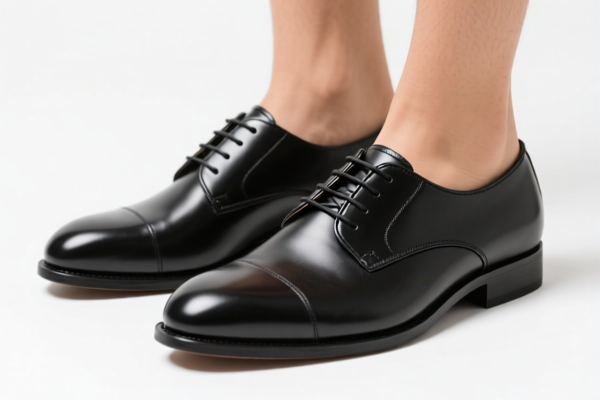
- If they resemble waterproof shoes or have footwear-like structure, they may be misclassified as 6401.99.90.00 — which carries a 47.5% tariff!
- The highest risk? Applying "122条款" (Section 122) tariffs — a 10% add-on for China-origin goods under U.S. trade law.
📦 Two Paths, Five Codes: How Fins Are Classified (2026 Official Data)
| HS Code | Product Description | Key Characteristics | Material | Tax Risk Level |
|---|---|---|---|---|
9506.29.00.20 |
Fins for water sports; rubber or plastic | Used in snorkeling, scuba diving, swimming | Rubber/Plastic | Medium |
6401.99.90.00 |
Waterproof footwear/footwear-like gear | Foot-covering design, may resemble shoes | Rubber/Plastic | HIGH |
6401.99.80.00 |
Other rubber/plastic waterproof footwear | Matches general "waterproof shoe" rules | Rubber/Plastic | Medium |
9506.29.00.80 |
Other water sports equipment | Generic category for non-specific fins | Rubber/Plastic | Medium |
9506.91.00.30 |
Swimming & water sports gear; general sports equipment | Broad classification, includes fins | Rubber/Plastic | HIGH (due to steel/aluminum surcharge) |
🔍 Critical Distinction:
- True fins (blade-shaped, strapped to feet) →9506.29.00.20or9506.29.00.80
- Fins that look like shoes (closed-toe, boot-like) → Danger zone:6401.99.90.00→ 47.5% tariff!
💰 2026 U.S. Tariff Breakdown (China-Origin Goods)
✅ Applicable to: United States (US)
✅ Origin: China (CN)
✅ Effective Date: November 10, 2025 (and ongoing)
🎯 1. 9506.29.00.20 — Fins for Water Sports (Rubber/Plastic)
| Tax Component | Rate | Explanation |
|---|---|---|
| Base Duty | 0.0% | Standard rate for this subheading |
| Additional Duty (Section 301) | 7.5% | From U.S. Trade Act Section 301 (China tariffs) |
| Section 122 Tariff | 10.0% | Under U.S. International Emergency Economic Powers Act (IEEPA) |
| Total Effective Rate | 17.5% | No additional surcharges |
📌 Why This Matters:
- This is the most accurate code for standard fins.
- No steel/aluminum surcharge — safe for plastic/rubber fins.
🎯 2. 6401.99.90.00 — Waterproof Footwear / Shoe-Like Gear
| Tax Component | Rate | Explanation |
|---|---|---|
| Base Duty | 37.5% | High base rate for waterproof footwear |
| Additional Duty (Section 301) | 0.0% | No 301 tariff on this code |
| Section 122 Tariff | 10.0% | Applies to China-origin goods |
| Total Effective Rate | 47.5% | Extremely high — avoid this code at all costs! |
⚠️ Red Flag Alert:
- If your fins have a closed toe, ankle strap, or boot-like shape, U.S. Customs may reclassify them as footwear.
- This is a common trap — many fins are misclassified here due to appearance, not function.
🎯 3. 6401.99.80.00 — Other Rubber/Plastic Waterproof Footwear
| Tax Component | Rate | Explanation |
|---|---|---|
| Base Duty | 0.0% | Standard for this subheading |
| Additional Duty (Section 301) | 7.5% | Applies to China-origin goods |
| Section 122 Tariff | 10.0% | IEEPA-based 10% add-on |
| Total Effective Rate | 17.5% | Same as 9506.29.00.20 |
✅ Good News:
- Same tax rate as true fins — but only if you can prove they’re not footwear.
🎯 4. 9506.29.00.80 — Other Water Sports Equipment
| Tax Component | Rate | Explanation |
|---|---|---|
| Base Duty | 0.0% | Standard for this category |
| Additional Duty (Section 301) | 7.5% | Applies to China-origin goods |
| Section 122 Tariff | 10.0% | IEEPA-based 10% add-on |
| Total Effective Rate | 17.5% | Safe for general fins |
✅ Use Case:
- If your fins don’t fit perfectly under9506.29.00.20, this is a valid fallback.
🎯 5. 9506.91.00.30 — General Sports & Recreational Equipment (Includes Fins)
| Tax Component | Rate | Explanation |
|---|---|---|
| Base Duty | 4.6% | Higher base than other fin codes |
| Additional Duty (Section 301) | 7.5% | Applies to China-origin goods |
| Section 122 Tariff | 10.0% | IEEPA-based 10% add-on |
| Steel/Aluminum Surcharge | 50.0% | MAJOR RISK — if any steel or aluminum parts (e.g., buckles, frames) are present |
| Total Effective Rate | 22.1% (no metal) → 72.1% (with metal) | Danger zone! |
⚠️ Critical Warning:
- Even one metal buckle or frame triggers the 50% steel/aluminum surcharge.
- This code is NOT safe if your fins have any metal components.
- Best avoided unless fins are 100% rubber/plastic.
🛠️ Customs Clearance Strategy: 5 Pro Tips to Avoid 47.5% Tariffs
✅ 1. Use the Right HS Code — Don’t Guess!
| Correct Code | When to Use |
|---|---|
9506.29.00.20 or 9506.29.00.80 |
Standard fins (blade-shaped, open-toe, no boot design) |
6401.99.90.00 |
Avoid unless you’re 100% sure — high risk |
6401.99.80.00 |
Only if fins resemble footwear but are not full shoes |
9506.91.00.30 |
Only if no metal parts and no better fit |
🔥 Golden Rule:
"If it looks like a shoe, it may be taxed like a shoe."
But function > form — if it’s used for swimming, not walking, fight the classification.
✅ 2. Prepare Evidence for Customs (Must-Have Docs)
| Document | Why It’s Critical |
|---|---|
| ✅ Product Photos (front, side, back, close-up of strap/blade) | Show open-toe, blade design, no shoe-like features |
| ✅ Technical Specs (material, weight, dimensions) | Prove rubber/plastic, not leather or shoe-grade |
| ✅ User Manual / Marketing Materials | Show use in swimming/snorkeling, not walking |
| ✅ Commercial Invoice | Must state: “Swimming Fins, Rubber/Plastic, for Water Sports” |
| ✅ Origin Certificate (CO) | If from Vietnam/Mexico, may qualify for lower tariffs |
| ✅ 3D Model or CAD Drawing | Helps prove design intent (if challenged) |
✅ 3. Avoid the 47.5% Trap — The “Footwear” Myth
❌ Don’t say:
- “These are waterproof foot covers”
- “They’re like water shoes”
- “They have ankle straps”✅ Do say:
- “Swimming fins, designed for propulsion in water, not for walking”
- “Blade-shaped, open-toe, used in scuba/snorkeling”
- “No sole, no heel, no closed toe — not footwear”📌 Legal Defense:
U.S. Customs considers intended use — if fins are used for swimming, they are not footwear, even if they look similar.
✅ 4. Watch for the 50% Steel/Aluminum Surcharge
🔥 If your fins have:
- Metal buckles
- Metal frames
- Aluminum straps
→ You trigger the 50% surcharge under9506.91.00.30
→ Total tax jumps from 22.1% to 72.1%✅ Fix It:
- Use plastic or nylon buckles
- Avoid metal frames
- Label: “100% Rubber/Plastic, No Metal Components”
✅ 5. Request a Pre-Ruling (Advance Ruling) — Smart Move!
📌 Before shipping, apply for an HS Code Pre-Ruling from U.S. Customs.
- Submit: photos, specs, use case, invoice
- Get binding decision on classification
- Avoid costly disputes later💡 Cost: $1,000–$2,000 (worth it for large shipments)
🌍 Global Tariff Comparison (2026)
| Country | Recommended HS Code | Base Tariff | Additional Duties | Notes |
|---|---|---|---|---|
| 🇺🇸 USA | 9506.29.00.20 |
0% | +7.5% (301) +10% (122) → 17.5% | Watch for 47.5% trap |
| 🇨🇳 China | 9506.29.00.20 |
5% | None | No extra tariffs |
| 🇪🇺 EU | 9506.29.00.20 |
0% | None | No 301/122 tariffs |
| 🇦🇺 Australia | 9506.29.00.20 |
5% | None | No extra surcharges |
| 🇯🇵 Japan | 9506.29.00.20 |
0% | None | Safe for export |
📌 Conclusion:
- The U.S. is the only market with 122/301 tariffs on fins.
- China-origin fins face 17.5%–47.5% depending on classification.
- Vietnam/Mexico-origin fins may avoid 122/301 — consider shifting production.
📌 Top 5 Mistakes & How to Avoid Them
| Mistake | Risk | Fix |
|---|---|---|
1. Misclassifying fins as footwear (6401.99.90.00) |
47.5% tariff | Use 9506.29.00.20 instead |
| 2. Using metal buckles in fins | 50% steel surcharge | Switch to plastic/nylon |
| 3. Not proving function over form | Customs reclassifies as shoes | Submit photos, manual, use case |
| 4. Shipping without pre-ruling | Delay, penalties, audit | Apply for Advance Ruling |
| 5. Using generic name “water shoes” | Triggers footwear code | Use “swimming fins” or “snorkeling fins” |
🎯 Final Verdict: How to Win the Classification Battle
🔹 Best HS Code:
9506.29.00.20— 17.5% tariff, safe, accurate
🔹 Avoid:6401.99.90.00(47.5%) and9506.91.00.30(if metal parts)
🔹 Pro Tip: Function > Form — if it’s for swimming, it’s a fin, not a shoe!📣 Pro Action Plan:
1. Verify material: Rubber/plastic only
2. Check design: Open-toe, blade-shaped, no sole
3. Use9506.29.00.20in invoice and customs declaration
4. Attach proof: Photos, specs, manual
5. Apply for pre-ruling if shipment > $100k
✨ Your Fins, Your Profit — Don’t Let Tax Kill Your Margin!
💼 Accurate classification = Lower tariffs = Faster clearance = Happy customers
🚀 Next Step:
📞 Contact a U.S. Customs Broker + Submit product files → Get HS Code Pre-Ruling
🌐 Export smart. Import safe. Win the game.
✅ Remember:
"A fin is not a shoe — even if it covers your foot."
"Function rules. Form follows purpose."
"One wrong code? 47.5% tax. One right code? 17.5% — and peace of mind."
Customer Reviews
About HS Code Classification
The Harmonized System (HS) is an internationally standardized nomenclature developed by the World Customs Organization (WCO) to classify traded products. Over 200 countries use the HS system as the basis for customs tariffs, trade statistics, and import/export regulations.
Each HS code follows a hierarchical structure:
- Chapter (2 digits) — Broad category of goods (e.g., Chapter 84: Machinery and Mechanical Appliances)
- Heading (4 digits) — More specific grouping within the chapter
- Subheading (6 digits) — Internationally standardized breakdown, used by all WCO member countries
- National subdivisions (8-10 digits) — Country-specific extensions for further classification, such as US HTSUS 10-digit codes
Correct HS code classification is essential for smooth customs clearance, accurate duty payment, and compliance with trade regulations. Misclassification can lead to customs delays, overpayment of duties, or penalties.
When importing from CN to US, the applicable tariff rates may include:
- Most-Favored-Nation (MFN) rate — The standard duty rate applied to WTO members
- General rate — Applied to countries without trade agreements
- Trade remedy duties — Additional tariffs such as Section 301 (anti-dumping), Section 232 (national security), or countervailing duties
The information provided on this page is for reference purposes only. For official classification, please consult with your local customs authority or a licensed customs broker.