自粘书皮
CN → US| HS Code | Tariff Rate | Origin | Destination | Doc |
|---|---|---|---|---|
| 4823908680 | 35.0% | CN | US | Official Doc |
| 3919102055 | 40.8% | CN | US | Official Doc |
| 3919905040 | 40.8% | CN | US | Official Doc |
| 3926908700 | 40.3% | CN | US | Official Doc |
| 3926909989 | 22.8% | CN | US | Official Doc |
Product Images
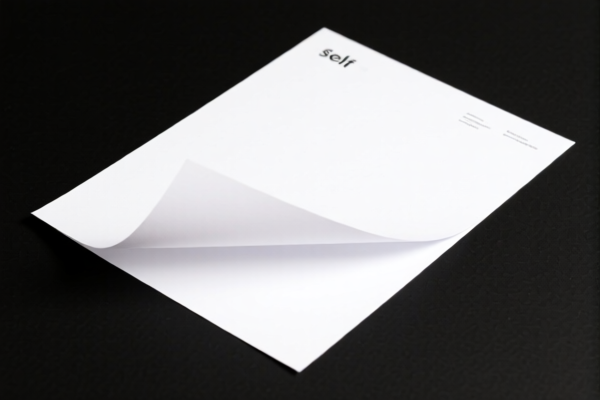
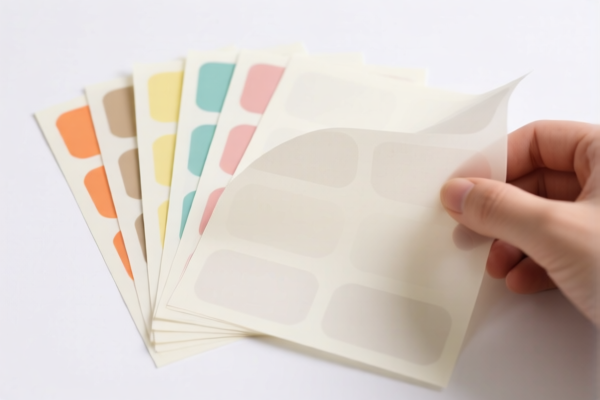

AI Analysis
📚 Self-Adhesive Book Covers (Self-Adhesive Plastic Film Products)
🌐 HS Code Reference & Customs Clearance Guide | 2026 Updated Tariff Analysis | Professional Import Strategy
📌 One: Product Definition & Classification – What Exactly Is a "Self-Adhesive Book Cover"?
A self-adhesive book cover is a flexible, plastic-based protective sleeve designed to wrap around books, notebooks, or journals for durability, aesthetics, and branding. It features a pressure-sensitive adhesive layer on one side that allows it to stick securely to the book’s surface without glue or fasteners.
⚠️ Key Distinction:
- If the product is flat, thin, made of plastic film, and sticks directly to paper or book surfaces → it falls under self-adhesive flat-shaped plastic films.
- If it’s a rigid, molded plastic case with clips or binding → it would be classified differently (e.g., 3926.90.99.89 may still apply if flexible).🔍 Critical Insight:
The material (plastic film), form (flat and flexible), and adhesive function are the core criteria that trigger the specific HS codes in this data set.
📦 Two: HS Code Classification Details (2026 Updated Tariff Authority)
| HS Code | Product Description | Material | Shape | Tax Rate | Key Trigger |
|---|---|---|---|---|---|
3926.90.99.89 |
Other plastic articles, made of plastic, in form of book covers | Plastic | Flexible book cover | 22.8% | General plastic product with book cover function |
3919.10.20.55 |
Other self-adhesive films, made of plastic film, flat and adhesive | Plastic film | Flat, self-adhesive | 40.8% | Self-adhesive + flat + plastic film |
3919.90.50.40 |
Self-adhesive flat-shaped products, plastic film, similar to transparent tape | Plastic film | Flat, adhesive | 40.8% | Functionally identical to transparent tape |
4823.90.86.80 |
Other paper products, made of paper or cellulose-coated, in form of paper covers | Paper / coated | Paper-based | 35.0% | Paper-based, no plastic |
3926.90.87.00 |
Flexible plastic articles with labels/coating, made of PE/PVC | PE/PVC | Flexible with coating | 40.3% | Coated or labeled flexible plastic |
✅ Important Note:
- Plastic film-based self-adhesive book covers are not considered "book covers" in the traditional sense (like hardbound or stitched).
- They are legally classified as self-adhesive films due to their material, form, and function — even if used for books.
💰 Three: 2026 Updated Tariff Breakdown (With Detailed Duty Clauses)
✅ Applicable Country: United States (US)
✅ Origin: China (CN)
✅ Effective Date: November 10, 2025 (and ongoing)
🎯 1. 3926.90.99.89 — Plastic Book Covers (General Plastic Articles)
| Item | Detail |
|---|---|
| Base Tariff | 5.3% (ad valorem) |
| Section 301 (USITC) Additional Duty | +7.5% |
| Section 122 (IEEPA) Additional Duty | +10% |
| Total Duty Rate | 22.8% |
| Tax Calculation | CIF Value × 22.8% |
| De Minimis Exemption | ❌ Not available (denied under 19 CFR 152.71) |
| Legal Basis Path | IEEPA:9903.01.25 → USITC:3926.90.99.89 → FOOTNOTE:9903.88.01 |
📌 Explanation:
- This is the lowest tariff rate among the listed items — but still high due to USITC + IEEPA layers.
- Applies to general plastic book covers that are not specifically self-adhesive or tape-like.
- If your product is not sticky, this may be the correct code.
🎯 2. 3919.10.20.55 — Self-Adhesive Plastic Films (Flat, Adhesive)
| Item | Detail |
|---|---|
| Base Tariff | 5.8% |
| Section 301 (USITC) Additional Duty | +25.0% |
| Section 122 (IEEPA) Additional Duty | +10% |
| Total Duty Rate | 40.8% |
| Tax Calculation | CIF × 40.8% |
| De Minimis Exemption | ❌ Not available |
| Legal Basis Path | IEEPA:9903.01.24 → USITC:3919.10.20.55 → FOOTNOTE:9903.88.01 |
📌 Explanation:
- This is the highest tier for self-adhesive plastic films.
- "Self-adhesive" + "plastic film" + "flat" triggers Section 301 (25%) — a punitive tariff under U.S. Trade Act of 1974, Section 301.
- The IEEPA 10% is based on national emergency powers targeting China.
- Total: 40.8% — extremely high. Must be avoided if possible.
🎯 3. 3919.90.50.40 — Self-Adhesive Flat Plastic Products (Like Transparent Tape)
| Item | Detail |
|---|---|
| Base Tariff | 5.8% |
| Section 301 (USITC) Additional Duty | +25.0% |
| Section 122 (IEEPA) Additional Duty | +10% |
| Total Duty Rate | 40.8% |
| Tax Calculation | CIF × 40.8% |
| De Minimis Exemption | ❌ Not available |
| Legal Basis Path | IEEPA:9903.01.24 → USITC:3919.90.50.40 → FOOTNOTE:9903.88.01 |
📌 Explanation:
- This code is identical in rate and legal basis to3919.10.20.55.
- The key trigger: "functionally equivalent to transparent tape".
- If your self-adhesive book cover is thin, flexible, and used like tape, it will be treated as tape under U.S. customs law.
- This is a major risk — many exporters are caught here by mistake.
🎯 4. 4823.90.86.80 — Paper-Based Book Covers (Coated Paper)
| Item | Detail |
|---|---|
| Base Tariff | 0.0% |
| Section 301 (USITC) Additional Duty | +25.0% |
| Section 122 (IEEPA) Additional Duty | +10% |
| Total Duty Rate | 35.0% |
| Tax Calculation | CIF × 35.0% |
| De Minimis Exemption | ❌ Not available |
| Legal Basis Path | IEEPA:9903.01.24 → USITC:4823.90.86.80 → FOOTNOTE:9903.88.01 |
📌 Explanation:
- Paper-based covers with coating (e.g., laminated paper, glossy finish) are taxed at 35%.
- No base tariff, but 25% + 10% = 35% due to Section 301 and IEEPA.
- If your product is not plastic, but paper with adhesive coating, this is the correct code.
🎯 5. 3926.90.87.00 — Coated/Labeled Flexible Plastic Articles (PE/PVC)
| Item | Detail |
|---|---|
| Base Tariff | 5.3% |
| Section 301 (USITC) Additional Duty | +25.0% |
| Section 122 (IEEPA) Additional Duty | +10% |
| Total Duty Rate | 40.3% |
| Tax Calculation | CIF × 40.3% |
| De Minimis Exemption | ❌ Not available |
| Legal Basis Path | IEEPA:9903.01.24 → USITC:3926.90.87.00 → FOOTNOTE:9903.88.01 |
📌 Explanation:
- Applies to flexible plastic with labels, coatings, or printing.
- If your book cover has branding, logos, or a printed surface, this code may apply.
- Even if not self-adhesive, the coating or label triggers the higher rate.
- 40.3% is very high — consider redesigning to avoid labeling.
🛠️ Four: Customs Clearance Best Practices (Pro Tips to Avoid Penalties)
✅ 1. Required Documentation (Must-Have)
| Document | Required? | Purpose |
|---|---|---|
| ✅ Product Specifications | ✔️ | Material, thickness, adhesive type, dimensions |
| ✅ Product Photos (with label) | ✔️ | Show form, material, adhesive layer |
| ✅ Certificate of Origin (CO) | ✔️ | For IEEPA/Section 301 eligibility |
| ✅ Commercial Invoice | ✔️ | Must state: "Self-adhesive plastic film for book covers" |
| ✅ Test Reports (FCC, RoHS, etc.) | ✔️ | If applicable |
| ✅ Bill of Lading / Packing List | ✔️ | Prove shipment integrity |
✅ 2.申报技巧(Critical Tips)
🔥 "Material First, Form Second, Function Last!"
| Scenario | Correct HS Code | Wrong Code | Risk |
|---|---|---|---|
| Plastic film, self-adhesive, flat, thin | 3919.10.20.55 or 3919.90.50.40 |
3926.90.99.89 |
40.8% vs 22.8% → +18% tax |
| Paper-based, coated, adhesive | 4823.90.86.80 |
3919.10.20.55 |
35% vs 40.8% → save 5.8% |
| PE/PVC with label | 3926.90.87.00 |
3926.90.99.89 |
40.3% vs 22.8% → +17.5% |
| No adhesive, just plastic sleeve | 3926.90.99.89 |
3919.10.20.55 |
22.8% vs 40.8% → save 18% |
✅ Golden Rule:
- If it sticks like tape → it’s a tape-like product → 40.8%
- If it’s just a plastic sleeve → 22.8%
- If it’s paper → 35%
✅ 3. Special Cases & Risk Mitigation
| Situation | Recommendation |
|---|---|
| Product is both plastic and printed | Avoid labeling → use plain film to avoid 3926.90.87.00 |
| Product is used for books but looks like tape | Redesign: Add a small border, thicker edge, or non-adhesive backing |
| You want to avoid 40.8% | Change material: Use paper-based instead of plastic |
| You must use plastic | Remove adhesive → use non-adhesive sleeves → 3926.90.99.89 |
| You’re exporting to U.S. from Vietnam/Mexico | Apply for IEEPA exemption → 0% tariff |
🌍 Five: Global Market Comparison (2026)
| Country | Recommended HS Code | Tariff | Certification | Notes |
|---|---|---|---|---|
| 🇺🇸 USA | 3919.10.20.55 / 3919.90.50.40 |
40.8% (plastic) | None | High risk |
| 🇨🇳 China | 3919.10.20.55 |
5% | CCC | No extra tariffs |
| 🇪🇺 EU | 3919.10.20.55 |
0% | CE | No 301/IEEPA |
| 🇦🇺 Australia | 3919.10.20.55 |
5% | RCM | No extra taxes |
| 🇯🇵 Japan | 3919.10.20.55 |
0% | PSE | No extra taxes |
📌 Conclusion:
- Only the U.S. applies the 40.8% rate due to Section 301 + IEEPA.
- All other markets are low-risk — focus on U.S. compliance.
📌 Six: Common Mistakes & How to Avoid Them
❌ Mistake 1: Calling a self-adhesive plastic film a "book cover" in invoice
👉 Result: Customs sees it as tape-like → 3919.90.50.40 → 40.8%
✅ Fix: Use "Self-adhesive plastic film for book protection" — not "book cover"
❌ Mistake 2: Using thin, transparent, sticky film
👉 Result: Treated as transparent tape → 40.8%
✅ Fix: Add non-adhesive edges, thicker film, or non-sticky backing
❌ Mistake 3: Labeling with branding, logos, or colors
👉 Result: Triggers 3926.90.87.00 → 40.3%
✅ Fix: Use plain, uncoated film or minimal printing
❌ Mistake 4: Not providing material test reports
👉 Result: Customs may reclassify or delay release
✅ Fix: Always include material composition (PE/PVC) and adhesive type
🎯 Seven: Final Verdict – How to Win the U.S. Market
🔥 Pro Tip:
- If you want to sell in the U.S. and avoid 40.8%, do NOT make it look like tape.
- Use paper-based instead of plastic → 35% (still high, but better).
- Remove adhesive → use non-sticky sleeves → 22.8%
- Redesign the form → add a non-adhesive edge, thicker border, non-tape appearance📌 Golden Rule:
"If it sticks like tape, it’s taxed like tape."
📣 Act Now: Protect Your Profit Margin!
📞 Contact a U.S. customs broker + request a pre-ruling (Advance Ruling)
🚀 Apply for IEEPA exemption if exporting from Vietnam, Mexico, or Thailand
💡 Redesign your product to avoid self-adhesive or tape-like features
✨ Professional Classification = Profit Protection
💼 Your next shipment could save you $10,000+ in duties — if you get the HS Code right!
Customer Reviews
About HS Code Classification
The Harmonized System (HS) is an internationally standardized nomenclature developed by the World Customs Organization (WCO) to classify traded products. Over 200 countries use the HS system as the basis for customs tariffs, trade statistics, and import/export regulations.
Each HS code follows a hierarchical structure:
- Chapter (2 digits) — Broad category of goods (e.g., Chapter 84: Machinery and Mechanical Appliances)
- Heading (4 digits) — More specific grouping within the chapter
- Subheading (6 digits) — Internationally standardized breakdown, used by all WCO member countries
- National subdivisions (8-10 digits) — Country-specific extensions for further classification, such as US HTSUS 10-digit codes
Correct HS code classification is essential for smooth customs clearance, accurate duty payment, and compliance with trade regulations. Misclassification can lead to customs delays, overpayment of duties, or penalties.
When importing from CN to US, the applicable tariff rates may include:
- Most-Favored-Nation (MFN) rate — The standard duty rate applied to WTO members
- General rate — Applied to countries without trade agreements
- Trade remedy duties — Additional tariffs such as Section 301 (anti-dumping), Section 232 (national security), or countervailing duties
The information provided on this page is for reference purposes only. For official classification, please consult with your local customs authority or a licensed customs broker.