舷外发动机配件
CN → US| HS Code | Tariff Rate | Origin | Destination | Doc |
|---|---|---|---|---|
| 8409919290 | 37.5% | CN | US | Official Doc |
| 8407210080 | 35.0% | CN | US | Official Doc |
| 8483908080 | 37.8% | CN | US | Official Doc |
| 8409915085 | 37.5% | CN | US | Official Doc |
| 8409915081 | 37.5% | CN | US | Official Doc |
Product Images
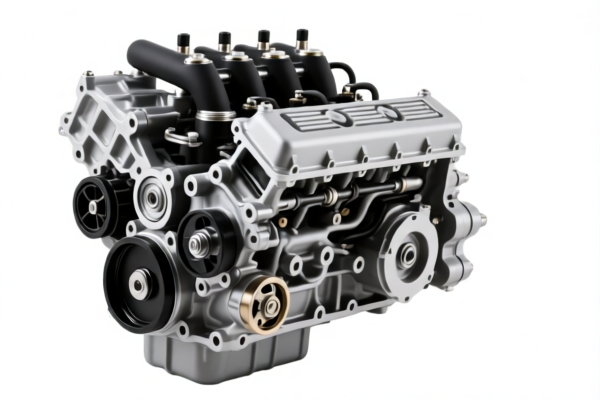
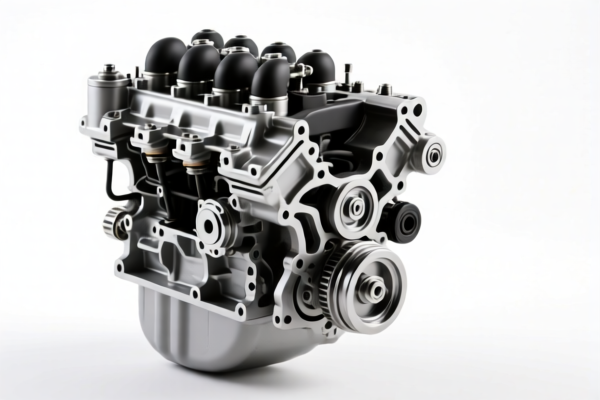
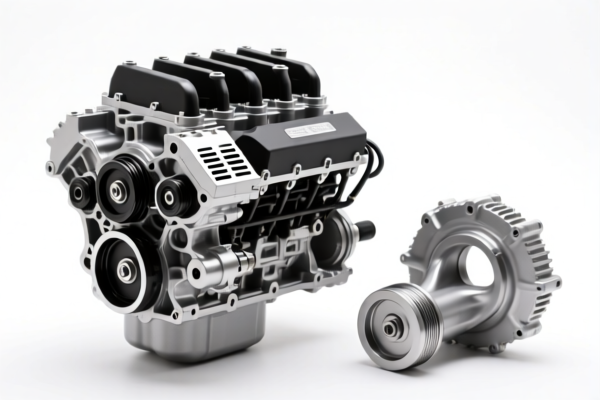
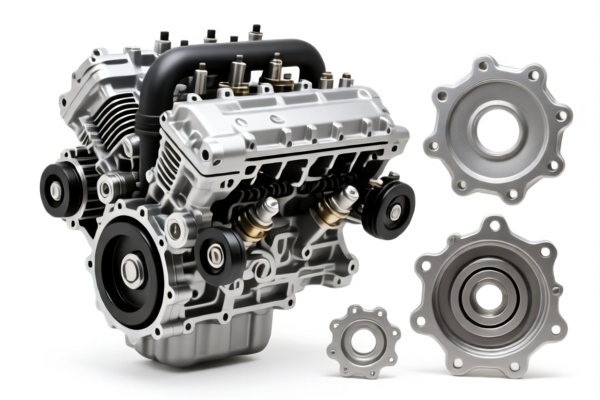
AI Analysis
🚤 Outboard Motor Accessories (舷外发动机配件)
🌐 HS Code Reference & Customs Clearance Guide | 2026 Latest Tariff Analysis | Professional Clearance Strategy
📌 I. Product Definition: What Are "Outboard Motor Accessories"?
Outboard motor accessories (often referred to as "outboards") are critical components or spare parts designed specifically for marine propulsion engines. In international trade, these items are complex because they bridge the gap between engine parts and marine hardware.
The classification depends heavily on: 1. Specific Function: Is it a structural part of the engine block? A transmission component? Or a general-purpose fastener? 2. Material: If made of specific materials (like steel or aluminum), it might default to Chapter 84 parts unless a specific motor part code exists. 3. "Residual" Classification (Fallback Category): If no specific part is listed for outboard motors, it falls under general engine parts or mechanical transmission parts.
⚠️ Key Distinction:
- If it is a pure engine component (pistons, valves, crankshafts) → Likely 8409.
- If it is a general mechanical part (gears, shafts) without specific engine exclusivity → Likely 8483.
- If it is a general outboard part with no specific engine definition → Likely 8407.21 (Residual/Fallback).
📦 II. HS Code Classification Details (2026 Authoritative Comparison)
Based on the provided data, here are the five most likely HS Codes for Outboard Motor Accessories, ranked by specificity and risk.
| HS Code | Product Description | Applicable Scenario | Tax Rate (Total) | Risk Level |
|---|---|---|---|---|
| 8409.91.92.90 | Specific Outboard Engine Parts | Spare parts specifically for marine propulsion engines; no material conflict. Default preference match. | 37.5% | ⭐⭐ Low |
| 8407.21.00.80 | Outboard Engine Fallback Parts | Residual category for outboard engine parts; no obvious conflict with marine propulsion attributes. | 35.0% | ⭐⭐ Medium |
| 8409.91.50.85 | General Engine Parts | Parts fitting the general definition of engine components; default preference if material is unspecified. | 37.5% | ⭐⭐ Medium |
| 8409.91.50.81 | Engine Parts (Usage Match) | Name does not specify material; matches usage definition for engine parts under residual rules. | 37.5% | ⭐⭐ Medium |
| 8483.90.80.80 | Transmission/Drive Parts | Parts related to mechanical transmission (gears, shafts) within the outboard motor. | 37.8% | ⭐⭐⭐ High |
🔍 Critical Insight:
- 8409.91.92.90 is often the most precise if the part is uniquely identifiable as an outboard engine component. - 8407.21.00.80 is the safest fallback for generic outboard parts that don't fit neatly into standard automotive/marine engine slots, offering the lowest total tax (35.0%). - 8483.90.80.80 applies only if the part is strictly a transmission element (e.g., a gear or drive shaft) and not an internal engine combustion part.
💰 III. 2026 Tariff Rate Breakdown (Detailed Policy Analysis)
✅ Applicable Country: USA (US)
✅ Origin: China (CN)
✅ Effective Date: Post-2025 (Including Section 301 & IEEPA measures)
🎯 1. 8409.91.92.90 & 8409.91.50.85/81 (Engine Parts)
| Item | Detail |
|---|---|
| Base Tariff | 2.5% (Ad Valorem) |
| Section 301 Surcharge | +25.0% (USITC Footnote regarding Chinese imports) |
| IEEPA Surcharge | +10.0% (Section 122 Tariff on Chinese Goods) |
| Total Effective Rate | 37.5% |
| Calculation | CIF Value × 37.5% |
| De Minimis Exemption | ❌ NOT Eligible (deny_de_minimis) |
| Legal Path | Base 8409 → 301: 25% → IEEPA: 10% |
📌 Explanation:
- These codes fall under Chapter 84 (Nuclear reactors, boilers, machinery). - The 37.5% total rate is a combination of the standard MFN rate (2.5%) plus two significant punitive tariffs (25% + 10%). - Warning: Even if the part is small (e.g., a gasket), if classified here, it is subject to these high tariffs.
🎯 2. 8407.21.00.80 (Outboard Engine Residual Category)
| Item | Detail |
|---|---|
| Base Tariff | 0.0% |
| Section 301 Surcharge | +25.0% |
| IEEPA Surcharge | +10.0% |
| Total Effective Rate | 35.0% |
| Calculation | CIF Value × 35.0% |
| De Minimis Exemption | ❌ NOT Eligible (deny_de_minimis) |
| Legal Path | Base 8407 → 301: 25% → IEEPA: 10% |
📌 Why This is Important:
- This code has a 0% base rate, making it 2.5% cheaper than the 8409 codes. - It is categorized as "Residual" for outboard engines, meaning it catches parts that aren't specifically listed under other 8407 subheadings. - Strategy: If the part can reasonably be argued as a general outboard accessory rather than a specific internal engine component, this code saves money.
🎯 3. 8483.90.80.80 (Transmission Parts)
| Item | Detail |
|---|---|
| Base Tariff | 2.8% |
| Section 301 Surcharge | +25.0% |
| IEEPA Surcharge | +10.0% |
| Total Effective Rate | 37.8% |
| Calculation | CIF Value × 37.8% |
| De Minimis Exemption | ❌ NOT Eligible (deny_de_minimis) |
📌 Note:
- This is the most expensive option. - Only use this if the item is strictly a mechanical transmission part (e.g., a gear, sprocket, or driveshaft) and not part of the engine's combustion or lubrication system. - Do not use this for general "accessories" unless you are certain of its mechanical transmission function.
🛠️ IV. Customs Clearance Practical Advice (Avoiding Pitfalls)
✅ 1. Preparation Checklist (Non-Negotiable)
| Document | Required? | Description |
|---|---|---|
| ✅ Product Specifications | ✔️ | Must include: Material, Function, Engine Model Compatibility, Diagram. |
| ✅ Product Photos | ✔️ | Clear images of the part, including any markings, serial numbers, or logos. |
| ✅ Commercial Invoice | ✔️ | Must clearly state: "Parts for Outboard Motor [Model]" and NOT just "Machine Parts." |
| ✅ Packing List | ✔️ | Detail quantities and weights. Avoid vague descriptions like "Miscellaneous Parts." |
| ✅ Origin Certificate | ✔️ | If applicable, to prove Chinese origin (for accurate tariff assessment). |
| ✅ HS Code Pre-Ruling | ✔️ | Highly recommended for high-volume shipments to avoid delays. |
✅ 2. Declaration Strategy (Key Mantras)
🔥 "Specify the Engine, Don't Guess the Part!"
| Scenario | Correct Declaration | Incorrect Practice |
|---|---|---|
| Specific Engine Part (e.g., Piston, Valve) | HS 8409.91.92.90 - "Piston for Outboard Engine Model XYZ" |
"Engine Part" (Too vague) |
| General Accessory (e.g., Mount, Cover) | HS 8407.21.00.80 - "Mounting Bracket for Outboard Motor" |
"Metal Bracket" (Could be reclassified as Chapter 73/76) |
| Transmission Component (e.g., Gear) | HS 8483.90.80.80 - "Gear for Outboard Transmission" |
"Mechanical Part" (High risk of audit) |
| Mixed Shipment | Separate invoices for different HS Codes | Combining into one "Machine Parts" line item |
✅ 3. Special Handling Tips
| Situation | Advice |
|---|---|
| OEM Custom Parts | Provide the customer's engineering drawings and order to prove the part is specific to that outboard model. |
| Material Ambiguity | If the part is made of steel/aluminum, explicitly state the material in the description to prevent misclassification under Chapter 73/76 (which may have different tax treatments). |
| "Residual" Classification | If unsure, 8407.21.00.80 is often the safest and cheapest option for outboard accessories, as it avoids the stricter "engine part" scrutiny of 8409. |
| Kit Assemblies | If sold as a "Repair Kit," ensure the kit contains primarily parts of one HS code to simplify declaration. |
🌍 V. Global Market Comparison (2026 Snapshot)
| Country/Region | Recommended HS Code | Est. Total Tax (China Origin) | Notes |
|---|---|---|---|
| 🇺🇸 USA | 8407.21.00.80 |
35.0% | Best balance of specificity and cost. Avoid 8483 (37.8%). |
| 🇨🇳 China | 8409.91.92.90 |
~7-10% | Import tariffs into China are lower; focus on VAT (13%). |
| 🇪🇺 EU | 8409.91 |
~4-5% | No Section 301/IEEPA equivalents, but strict CE/Ecolabel rules apply. |
| 🇦🇺 Australia | 8409.91 |
~5% | GST (10%) applies on CIF + Duty. |
| 🇯🇵 Japan | 8409.91 |
~5-8% | Varies by specific part type; anti-dumping checks may apply. |
📌 Conclusion:
- USA is the highest-cost market due to punitive tariffs. - Opt for8407.21.00.80for general outboard accessories to save 2.5% compared to standard engine parts. - Avoid8483unless the part is definitively a transmission component.
📌 VI. Common Errors & Pitfalls (Lessons Learned)
❌ Error 1: Declaring "Outboard Accessories" as "General Machinery Parts"
👉 Consequence: Misclassification penalty + Potential duty evasion investigation.
❌ Error 2: Using 8483 for Engine Parts
👉 Consequence: Higher tax rate (37.8% vs 35.0%) + Unnecessary scrutiny.
❌ Error 3: Ignoring IEEPA Section 122 Tariff
👉 Consequence: Underpayment of 10% on all Chinese-origin machinery parts.
❌ Error 4: Vague Description ("Motor Parts")
👉 Consequence: Customs may reclassify to the highest possible rate or seize goods for lack of information.
✅ Correct Approach:
"Steel Propeller Shaft for 150HP Yamaha Outboard Motor, Model XYZ, Made in China"
→ HS Code:8483.90.80.80(if transmission) OR8407.21.00.80(if fallback)
🎯 VII. Conclusion: Professional Classification, Cost Optimization!
🎯 Remember the Mantra:
🔹 "Be Specific: Engine vs. Transmission vs. Residual."
🔹 "Cheapest Safe Code:8407.21.00.80(35.0%)."
🔹 "Most Expensive:8483(37.8%)."
🔹 "Base Rates Matter: 0% vs 2.5% makes a difference."
📌 Pro Tip:
If your outboard accessories are shipped in small quantities (e.g., < $800 per package), verify if de minimis rules still apply to Chapter 84 goods. (Note: Current data suggests deny_de_minimis for these HS codes, so assume full tax applies).
Always apply for an Advance Ruling from US CBP if you are shipping high-value components regularly.
📣 Immediate Action:
📞 Consult a licensed customs broker.
📄 Prepare detailed technical specs.
🚀 Clear your outboard accessories smoothly and profitably!
✨ Precision in Classification, Savings in Every Shipment!
💼 Your Supply Chain Efficiency Starts with the Right HS Code!
Customer Reviews
About HS Code Classification
The Harmonized System (HS) is an internationally standardized nomenclature developed by the World Customs Organization (WCO) to classify traded products. Over 200 countries use the HS system as the basis for customs tariffs, trade statistics, and import/export regulations.
Each HS code follows a hierarchical structure:
- Chapter (2 digits) — Broad category of goods (e.g., Chapter 84: Machinery and Mechanical Appliances)
- Heading (4 digits) — More specific grouping within the chapter
- Subheading (6 digits) — Internationally standardized breakdown, used by all WCO member countries
- National subdivisions (8-10 digits) — Country-specific extensions for further classification, such as US HTSUS 10-digit codes
Correct HS code classification is essential for smooth customs clearance, accurate duty payment, and compliance with trade regulations. Misclassification can lead to customs delays, overpayment of duties, or penalties.
When importing from CN to US, the applicable tariff rates may include:
- Most-Favored-Nation (MFN) rate — The standard duty rate applied to WTO members
- General rate — Applied to countries without trade agreements
- Trade remedy duties — Additional tariffs such as Section 301 (anti-dumping), Section 232 (national security), or countervailing duties
The information provided on this page is for reference purposes only. For official classification, please consult with your local customs authority or a licensed customs broker.