船外机配件
CN → US| HS Code | Tariff Rate | Origin | Destination | Doc |
|---|---|---|---|---|
| 8409919290 | 37.5% | CN | US | Official Doc |
| 8407210080 | 35.0% | CN | US | Official Doc |
| 8483908080 | 37.8% | CN | US | Official Doc |
| 8483103010 | 37.5% | CN | US | Official Doc |
| 8409999290 | 37.5% | CN | US | Official Doc |
Product Images
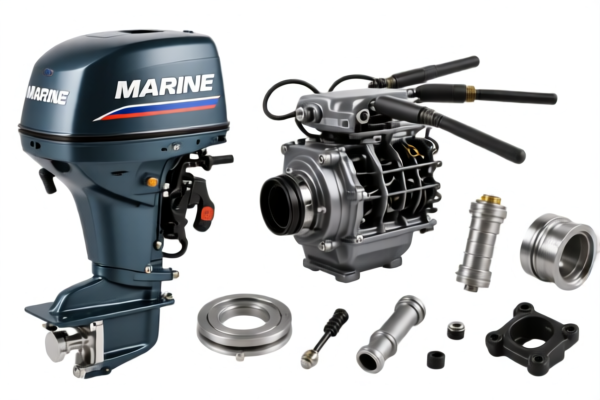
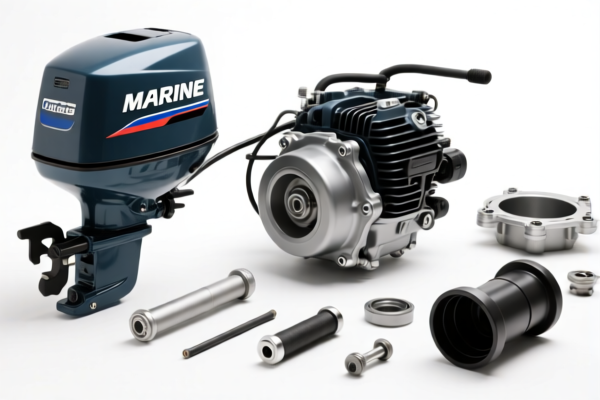
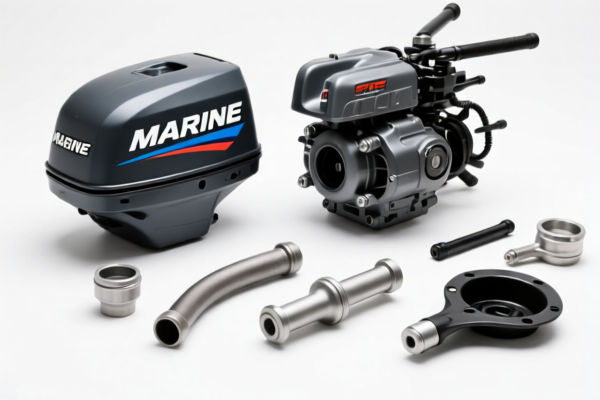

AI Analysis
🚤 Outboard Motor Parts (Accessories for Marine Propulsion Engines)
🌐 HS Code Reference & Customs Clearance Guide | 2026 Latest Tariff Analysis | Professional Clearance Strategy
📌 I. Product Definition: What Are "Outboard Motor Parts"?
Outboard motor parts refer to components used in engines designed specifically for marine propulsion (specifically outboard motors). In international trade, these are generally classified as "Parts" or "Accessories".
Key Classification Logic:
- Core Function: The parts must be identifiable as being exclusively or primarily for outboard motors (marine propulsion engines).
- Material Independence: Since the provided data does not specify a unique material conflict, the classification leans towards general零部件 (Parts) under the "Other" (兜底) category principles.
- Exclusion: These are not general-purpose mechanical parts (like generic gears) but are specific to the marine propulsion context.
⚠️ Critical Distinction:
- If the part is an integral component of the engine's propulsion system (e.g., pistons, crankshaits, cylinder heads specific to marine use) → Typically falls under 8409 (Parts for engines).
- If the part is a transmission component (e.g., gears, shafts) → May fall under 8483 (Transmission parts).
- Note: The following HS Codes are derived from the provided dataset based on the "Parts/Accessories" and "Other" fallback rules.
📦 II. HS Code Classification Details (Based on Provided Data)
| HS Code | Product Description (Summary) | Applicability Logic | Total Tax Rate |
|---|---|---|---|
8409.91.92.90 |
Parts for Marine Propulsion Engines | The item is a "part/component" used for marine propulsion. The purpose matches "parts for marine propulsion engines." No material conflict → Defaults to "Other." | 37.5% |
8407.21.00.80 |
Parts for Outboard Engines | Outboard motors are classified under Chapter 84, Heading 8407 (Internal combustion piston engines). As a part/accessory with no material conflict, it fits the "Other" category for these engines. | 35.0% |
8483.90.80.80 |
Transmission Components/Parts | Interpreted as parts of transmission devices (e.g., gearboxes, shafts) within the outboard motor. Fits "Other" parts for transmission elements. | 37.8% |
8409.99.92.90 |
Other Parts for Propulsion Engines | General "parts for marine propulsion engines" not specifically listed in 8409.91. Falls under the "Other" fallback rule for engine parts. | 37.5% |
8483.10.30.10 |
Transmission Parts (Other) | Parts for transmission shafts/crankshafts. As a part with no specific material conflict, it defaults to the "Other" category under transmission parts. | 37.5% |
🔍 Important Note:
- All these codes share a common logic: "Parts/Accessories" + "Marine/Propulsion Use" + "No Material Conflict" = "Other" Category Default.
- 8409 is typically for engine internal parts (pistons, valves, etc.).
- 8483 is typically for transmission parts (gears, shafts, bearings).
- 8407 is the heading for the engine itself, so parts specific to outboard engines (Heading 8407) may sometimes be grouped here if national nomenclature allows, though technically parts usually go to 8409. The dataset suggests8407.21.00.80is a valid match for "Outboard Motor Parts."
💰 III. 2026 Tariff Rate Breakdown (Detailed Tax Structure)
✅ Applicable Country: United States (US)
✅ Origin: China (CN)
✅ Effective Date: November 10, 2025 (and subsequent imports)
All codes in the provided data include a complex tariff structure consisting of Base Duty + Section 301 Duty + Section 122 Duty.
🎯 1. 8409.91.92.90 & 8409.99.92.90 & 8483.10.30.10
Category: Engine Parts / Transmission Parts (Other)
| Item | Detail |
|---|---|
| Base Duty Rate | 2.5% (Ad Valorem) |
| Section 301 Duty | +25.0% (Additional Duty under US Trade Law) |
| Section 122 Duty | +10.0% (Additional Duty under IEEPA Section 122) |
| Total Effective Rate | 37.5% |
| Calculation | CIF Value × 37.5% |
| De Minimis Exemption | ❌ Not Applicable (Deny De Minimis) |
| Legal Basis | Base Rate + USITC Footnote (Sec 301) + IEEPA Footnote (Sec 122) |
📌 Explanation:
- The 2.5% is the standard MFN (Most Favored Nation) base rate for these mechanical parts.
- The 25% is the classic "Section 301" tariff on Chinese goods.
- The 10% is the newer "Section 122" tariff applied to specific Chinese imports.
- Total: 37.5%. This is a high tariff requiring careful cost planning.
🎯 2. 8407.21.00.80
Category: Parts for Outboard Engines (Heading 8407)
| Item | Detail |
|---|---|
| Base Duty Rate | 0.0% (Ad Valorem) |
| Section 301 Duty | +25.0% |
| Section 122 Duty | +10.0% |
| Total Effective Rate | 35.0% |
| Calculation | CIF Value × 35.0% |
| De Minimis Exemption | ❌ Not Applicable (Deny De Minimis) |
| Legal Basis | Base Rate (0%) + USITC Footnote (Sec 301) + IEEPA Footnote (Sec 122) |
📌 Explanation:
- This code has a 0% base duty, making it 2.5% cheaper than the 8409/8483 options.
- However, the Section 301 (25%) and Section 122 (10%) still apply.
- Total: 35.0%. This is the most cost-effective option among the provided codes.
🎯 3. 8483.90.80.80
Category: Transmission Parts (Other)
| Item | Detail |
|---|---|
| Base Duty Rate | 2.8% (Ad Valorem) |
| Section 301 Duty | +25.0% |
| Section 122 Duty | +10.0% |
| Total Effective Rate | 37.8% |
| Calculation | CIF Value × 37.8% |
| De Minimis Exemption | ❌ Not Applicable (Deny De Minimis) |
📌 Explanation:
- This is the most expensive option due to a higher base rate (2.8%).
- Total: 37.8%. Avoid if a 8409 or 8407 classification is possible.
🛠️ IV. Customs Clearance Practical Advice (Pitfall Avoidance Guide)
✅ 1. Essential Documentation Checklist
| Document | Required? | Explanation |
|---|---|---|
| ✅ Detailed Product Specification | ✔️ | Must clearly state "Part for Outboard Motor," including model number, engine compatibility, and function. |
| ✅ Material Composition | ✔️ | Even if not specified in the summary, customs may request material proof to rule out conflicts (e.g., aluminum vs. steel). |
| ✅ Technical Diagrams/Photos | ✔️ | To prove the part is specifically for marine propulsion and not a general industrial machine part. |
| ✅ Commercial Invoice | ✔️ | Must explicitly describe the item as "Outboard Motor Part" or "Engine Component." Do not use vague terms like "Metal Part." |
| ✅ Packing List | ✔️ | Ensure no mixing of goods that could trigger different classifications. |
✅ 2. Classification Strategy (Key Rules)
🔥 Golden Rule: "Identify the Function, Not Just the Shape!"
| Scenario | Recommended HS Code | Why? |
|---|---|---|
| Engine Internal Parts (Pistons, Valves, Gaskets) | 8409.91.92.90 or 8409.99.92.90 |
These are strictly "parts for internal combustion engines." |
| Outboard Motor Specific Parts (Cowlings, Mounts, Propellers if specific) | 8407.21.00.80 |
If the part is uniquely designed for outboard engines (Heading 8407), this 0% base rate code is ideal. |
| Transmission/Gearbox Parts (Gears, Shafts) | 8483.90.80.80 or 8483.10.30.10 |
If the part is clearly a transmission component. |
| General Mechanical Parts (Bolts, Screws, Generic Bearings) | Do Not Use Above Codes | These may require different HTS codes (e.g., 7318, 8483.90) with different tax implications. |
✅ 3. Special Considerations
| Issue | Advice |
|---|---|
| Misclassification Risk | Do not classify transmission parts as engine parts to save taxes. Customs audits are strict on functional purpose. |
| Section 122 Impact | The 10% Section 122 tariff is cumulative with Section 301. Ensure your customs broker includes both in the calculation. |
| De Minimis Exemption | ❌ NO. These goods are not eligible for the $800 de minimis exemption (Section 321) because of the Section 301/122 duties. Full duty must be paid. |
| Origin Labeling | Ensure all parts are clearly marked "Made in China" to avoid origin fraud claims. |
🌍 V. Global Market Comparison (2026)
| Country | Recommended HS Code | Total Duty | Notes |
|---|---|---|---|
| 🇺🇸 USA | 8407.21.00.80 |
35.0% | Best rate among options. Includes Sec 301 + Sec 122. |
| 🇺🇸 USA | 8409.91.92.90 |
37.5% | Standard engine part rate. |
| 🇨🇳 China | Same Codes | ~2.5-2.8% | No Section 301/122 duties. Low import tax. |
| 🇪🇺 EU | Varies | Varies | EU uses different nomenclature. Generally lower duties but high VAT. |
📌 Conclusion for US Importers:
- The Section 301 (25%) and Section 122 (10%) duties make US imports from China significantly more expensive.
- Cost Saving Tip: Try to classify parts under 8407.21.00.80 (0% base) if the part is uniquely identifiable as an outboard engine component, saving 2.5% compared to engine/transmission parts.
- Supply Chain: Consider diversifying supply chains to countries not subject to Section 301/122 if volumes are high.
📌 VI. Common Mistakes & Pitfalls (Lessons Learned)
❌ Mistake 1: Assuming "De Minimis" applies to these parts.
👉 Result: Goods seized or denied entry because duties > $800 exemption limit due to Sec 301/122.
Fix: Always pay full duties for these HS codes.
❌ Mistake 2: Using vague descriptions like "Auto Parts."
👉 Result: Customs may misclassify as general auto parts, leading to penalties or delays.
Fix: Use precise language: "Part for Outboard Marine Engine, Model XYZ."
❌ Mistake 3: Ignoring the Section 122 tariff.
👉 Result: Underpaying duties by 10%, leading to audits and back-taxes.
Fix: Ensure your broker applies Base + 25% + 10%.
✅ Correct Declaration Example:
"OUTBOARD MOTOR ENGINE PART (PISTON), MODEL ABC123, MADE IN CHINA, FOR MARINE PROPULSION USE."
🎯 VII. Conclusion: Precision Saves Money!
🎯 Remember:
🔹 "Function determines Code, Code determines Cost!"
🔹 "35% vs 37.8%? That 2.8% matters on large volumes!"
🔹 "No De Minimis! Pay Duties Upfront!"
📌 Pro Tip:
If your parts are shipped in large volumes, consider applying for a Section 301 Exclusion (if still available) or Advance Ruling from US Customs (CBP) to confirm the correct HS code and avoid post-entry audits.
📣 Immediate Action:
📞 Consult a Licensed Customs Broker before shipping.
📄 Provide Detailed Specs to ensure correct classification.
📉 Calculate Total Landed Cost including the 35-37.8% duty burden.
✨ Professional Customs Clearance Starts with Accurate Classification!
💼 Every Percent Saved is Pure Profit!
Customer Reviews
About HS Code Classification
The Harmonized System (HS) is an internationally standardized nomenclature developed by the World Customs Organization (WCO) to classify traded products. Over 200 countries use the HS system as the basis for customs tariffs, trade statistics, and import/export regulations.
Each HS code follows a hierarchical structure:
- Chapter (2 digits) — Broad category of goods (e.g., Chapter 84: Machinery and Mechanical Appliances)
- Heading (4 digits) — More specific grouping within the chapter
- Subheading (6 digits) — Internationally standardized breakdown, used by all WCO member countries
- National subdivisions (8-10 digits) — Country-specific extensions for further classification, such as US HTSUS 10-digit codes
Correct HS code classification is essential for smooth customs clearance, accurate duty payment, and compliance with trade regulations. Misclassification can lead to customs delays, overpayment of duties, or penalties.
When importing from CN to US, the applicable tariff rates may include:
- Most-Favored-Nation (MFN) rate — The standard duty rate applied to WTO members
- General rate — Applied to countries without trade agreements
- Trade remedy duties — Additional tariffs such as Section 301 (anti-dumping), Section 232 (national security), or countervailing duties
The information provided on this page is for reference purposes only. For official classification, please consult with your local customs authority or a licensed customs broker.