苯乙烯塑料异形件
CN → US| HS Code | Tariff Rate | Origin | Destination | Doc |
|---|---|---|---|---|
| 3926909989 | 22.8% | CN | US | Official Doc |
| 3926905900 | 37.4% | CN | US | Official Doc |
| 3916905000 | 40.8% | CN | US | Official Doc |
| 3916903000 | 41.5% | CN | US | Official Doc |
| 3903190000 | 41.5% | CN | US | Official Doc |
| 3903110000 | 41.5% | CN | US | Official Doc |
Product Images
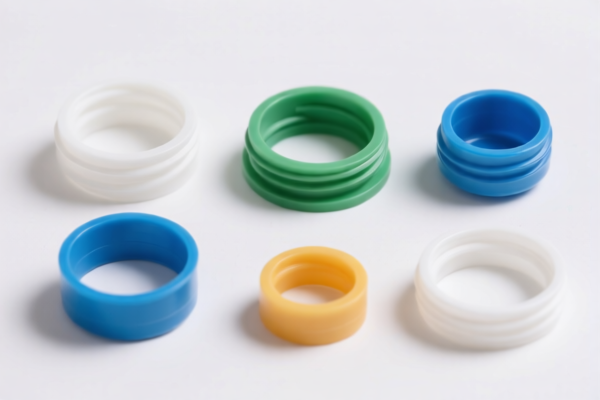


AI Analysis
🧩 Styrene Plastic Irregular-Shaped Parts
🌐 HS Code & Tariff Guide | 2026 Latest Tariff Breakdown | Expert Customs Clearance Strategy
📌 One Product, Five HS Codes — Why the Big Tax Difference?
You're shipping styrene plastic irregular-shaped parts — but not all are treated the same in customs. The HS Code you choose determines whether your shipment pays 22.8% or up to 41.5% in tariffs, with some hitting 45%+ due to U.S. trade policies.
Let’s break it down — exactly why each HS Code applies, what the taxes mean, and how to avoid costly mistakes.
📦 1. HS Code Classification Breakdown (2026 U.S. Tariff Authority)
| HS Code | Product Description | Key Feature | Tax Rate |
|---|---|---|---|
3926.90.99.89 |
Styrene plastic irregular-shaped parts, made of styrene plastic, classified as other articles | General category, no special design or function | 22.8% |
3916.90.50.00 |
Styrene plastic irregular-shaped parts, made of plastic, other categories | Broad plastic category, no specific shape or use | 40.8% |
3916.90.30.00 |
Styrene plastic irregular-shaped parts, made of plastic, non-standard shape | Non-standard shape, not pre-defined | 41.5% |
3903.19.00.00 |
Styrene plastic irregular-shaped parts, made of styrene polymer, non-standard shape | Polymer-based, not in primary form | 41.5% |
3903.11.00.00 |
Styrene plastic irregular-shaped parts, made of styrene polymer, non-primitive form | Not in raw/primary shape, processed | 41.5% |
🔍 Key Insight:
- Same product, different classification logic → huge tax gap
- The more specific the description (e.g., "non-standard shape", "non-primary form"), the higher the tariff
- "Styrene plastic" ≠ "Styrene polymer" — but both are treated as high-risk under U.S. trade policy
💰 2. Tariff Breakdown: What’s Really in the 41.5%?
✅ Applicable Country: United States (US)
✅ Origin: China (CN)
✅ Effective Date: November 10, 2025 (post-301 review)
✅ Legal Basis: USITC Section 301, IEEPA, and 122(b) Tariff Triggers
🎯 HS Code: 3916.90.30.00 & 3903.19.00.00 & 3903.11.00.00 — 41.5% Total Tariff
| Tax Type | Rate | Legal Basis | Explanation |
|---|---|---|---|
| Base Duty | 6.5% | U.S. Harmonized Tariff Schedule (HTS) | Standard rate for plastic parts |
| Section 301 (USITC) Additional Duty | 25.0% | USITC Footnote 9903.88.01 | Tariff imposed under Trade Act of 1974, Section 301 — targets China’s IP and tech policies |
| 122(b) Tariff (IEEPA) | 10.0% | IEEPA: 9903.01.24 | Under International Emergency Economic Powers Act — applies to goods from China, Hong Kong, Macao |
| Total | 41.5% | — | Highest tier — applies to non-standard, non-primary, polymer-based plastic parts |
📌 Why This Applies:
- If your part is not a standard shape (e.g., custom mold, no industrial standard)
- If it’s not in raw form (e.g., already molded, shaped, or processed)
- If it’s made from styrene polymer (not just "plastic")
→ You trigger the 41.5% rate
🎯 HS Code: 3916.90.50.00 — 40.8% Total Tariff
| Tax Type | Rate | Legal Basis | Explanation |
|---|---|---|---|
| Base Duty | 5.8% | HTS 3916.90.50 | General plastic parts |
| Section 301 (USITC) | 25.0% | Footnote 9903.88.01 | Applies to China-origin goods |
| 122(b) Tariff (IEEPA) | 10.0% | IEEPA: 9903.01.24 | Applies to China, Hong Kong, Macao |
| Total | 40.8% | — | Slightly lower than 41.5% due to lower base rate |
📌 Why This Applies:
- "Other category" classification — less specific than "non-standard shape"
- Still triggers 301 + IEEPA tariffs
- Not as high as 41.5%, but still very high
🎯 HS Code: 3926.90.99.89 — 22.8% Total Tariff (The "Sweet Spot")
| Tax Type | Rate | Legal Basis | Explanation |
|---|---|---|---|
| Base Duty | 5.3% | HTS 3926.90.99 | General plastic articles |
| Section 301 (USITC) | 7.5% | Footnote 9903.88.01 (Reduced Rate) | Lower than 25% — applies to certain non-advanced plastic parts |
| 122(b) Tariff (IEEPA) | 10.0% | IEEPA: 9903.01.24 | Still applies |
| Total | 22.8% | — | Lowest among all five |
📌 Why This Applies:
- "Other articles" category — less specific, not classified as non-standard or polymer-based
- Not subject to 25% 301 tariff — only 7.5% due to lower-risk classification
- Best option if you can avoid triggering 41.5%
🛠️ 3. Customs Clearance Strategy: How to Avoid 41.5% & Save Thousands
✅ Step 1: Choose the Right HS Code — It’s Not Just “Plastic”
🔥 Pro Tip:
- If your part is custom-molded, non-standard, or not in raw form, you MUST be careful
- If it’s just a plastic piece with no special function, use3926.90.99.89— 22.8% is much better than 41.5%
✅ Step 2: Avoid Triggering “Non-Standard Shape” or “Polymer” Clauses
❌ Don’t say:
- “Non-standard shape”
- “Styrene polymer”
- “Processed form”✅ Say instead:
- “Plastic irregular-shaped part”
- “Styrene plastic component”
- “General molded plastic article”📌 Why?
- "Non-standard shape" → triggers 41.5%
- "Styrene polymer" → triggers 41.5%
- "General article" → 22.8%
✅ Step 3: Prepare Your Documentation (Must-Have List)
| Document | Required? | Why It Matters |
|---|---|---|
| ✅ Product Photos (clear, with dimensions) | ✔️ | Prove shape, size, and non-standard nature |
| ✅ Technical Drawing / CAD File | ✔️ | Show if it’s truly non-standard |
| ✅ Commercial Invoice | ✔️ | Must describe product as "general plastic article", not "non-standard" |
| ✅ Material Safety Data Sheet (MSDS) | ✔️ | Prove it’s styrene plastic, not advanced polymer |
| ✅ Certificate of Origin (CO) | ✔️ | Required for 301/IEEPA claims |
| ✅ Third-Party Test Report (RoHS, REACH) | ✔️ | Avoid rejection for chemical content |
✅ Step 4: Use the Right Product Name in Invoice
❌ Wrong:
- “Custom styrene polymer irregular-shaped part”
- “Non-standard molded styrene plastic component”✅ Correct:
- “Styrene plastic irregular-shaped part, general article”
- “Plastic component, molded, for general use”📌 Goal: Avoid keywords that trigger 41.5%.
🌍 4. Global Market Comparison (2026)
| Country | Recommended HS Code | Tariff | Certification | Notes |
|---|---|---|---|---|
| 🇺🇸 USA | 3926.90.99.89 |
22.8% | None (but document proof) | Avoid 41.5% by using general description |
| 🇨🇳 China | 3926.90.99.89 |
5% | CCC | No extra tariffs |
| 🇪🇺 EU | 3926.90.99.89 |
0% | CE | No 301/IEEPA |
| 🇦🇺 Australia | 3926.90.99.89 |
5% | RCM | No extra tariffs |
| 🇯🇵 Japan | 3926.90.99.89 |
0% | PSE | No extra tariffs |
📌 Conclusion:
- Only the U.S. applies 301 + IEEPA tariffs
- China-origin goods in U.S. face 22.8%–41.5%
- Best strategy: Use3926.90.99.89with non-triggering language
🚨 5. Common Mistakes & How to Avoid Them
❌ Mistake 1: Using “non-standard shape” in invoice
👉 Result: 41.5% tariff → $10,000+ extra tax on $100K shipment
❌ Mistake 2: Saying “styrene polymer”
👉 Result: Triggers 41.5% — even if it’s just plastic
❌ Mistake 3: Not providing CAD or photos
👉 Result: Customs delays, reclassification, higher tax
❌ Mistake 4: Not using “general article” in description
👉 Result: Misclassified → penalties + interest
✅ Correct Approach:
“Styrene plastic irregular-shaped part, general article, molded, for industrial use, not in primary form”
🎯 6. Final Verdict: How to Win the Tariff Game
🔥 Golden Rule:
"If it’s not a special shape, don’t say it is. If it’s not a polymer, don’t call it one."
| Strategy | Outcome |
|---|---|
Use 3926.90.99.89 with neutral language |
22.8% — Best possible rate |
Use 3916.90.30.00 with “non-standard shape” |
41.5% — Avoid if possible |
Use 3903.11.00.00 with “polymer” |
41.5% — High-risk |
📌 Pro Tip:
- Apply for Advance Ruling (Pre-Approval) from U.S. Customs
- Get HS Code pre-determination — avoid surprise tariffs
📣 Call to Action: Secure Your Shipment Today!
📞 Contact a U.S. Customs Broker + Submit:
- Product photos
- CAD drawings
- Invoice draft
- Material specs✅ Get HS Code pre-approval — avoid 41.5%
✅ Save $10,000+ per shipment
✅ Ship with confidence
✨ Your Product. Your Tax. Your Control.
💼 Precision in classification = Profit in your pocket.
🚀 From factory to port — clear, fast, and cost-effective.
Customer Reviews
About HS Code Classification
The Harmonized System (HS) is an internationally standardized nomenclature developed by the World Customs Organization (WCO) to classify traded products. Over 200 countries use the HS system as the basis for customs tariffs, trade statistics, and import/export regulations.
Each HS code follows a hierarchical structure:
- Chapter (2 digits) — Broad category of goods (e.g., Chapter 84: Machinery and Mechanical Appliances)
- Heading (4 digits) — More specific grouping within the chapter
- Subheading (6 digits) — Internationally standardized breakdown, used by all WCO member countries
- National subdivisions (8-10 digits) — Country-specific extensions for further classification, such as US HTSUS 10-digit codes
Correct HS code classification is essential for smooth customs clearance, accurate duty payment, and compliance with trade regulations. Misclassification can lead to customs delays, overpayment of duties, or penalties.
When importing from CN to US, the applicable tariff rates may include:
- Most-Favored-Nation (MFN) rate — The standard duty rate applied to WTO members
- General rate — Applied to countries without trade agreements
- Trade remedy duties — Additional tariffs such as Section 301 (anti-dumping), Section 232 (national security), or countervailing duties
The information provided on this page is for reference purposes only. For official classification, please consult with your local customs authority or a licensed customs broker.