莫代克合成短纤混纺工业用布
CN → US| HS Code | Tariff Rate | Origin | Destination | Doc |
|---|---|---|---|---|
| 5911900080 | 38.8% | CN | US | Official Doc |
| 5911203000 | 35.0% | CN | US | Official Doc |
| 5903902500 | 42.5% | CN | US | Official Doc |
| 5903902000 | 35.0% | CN | US | Official Doc |
| 5516910090 | 47.0% | CN | US | Official Doc |
| 5516920090 | 47.0% | CN | US | Official Doc |
Product Images
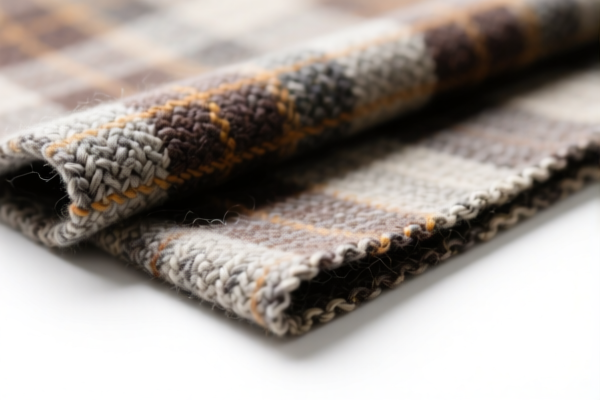
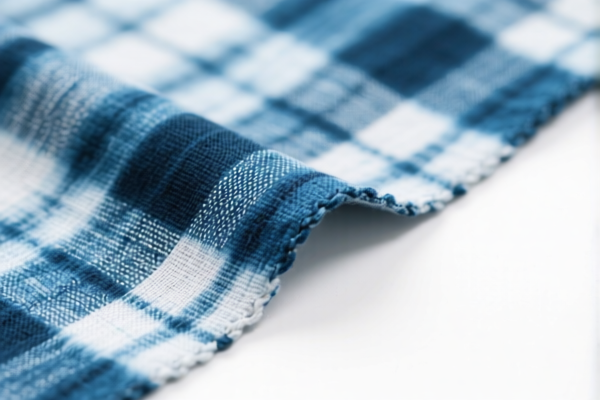

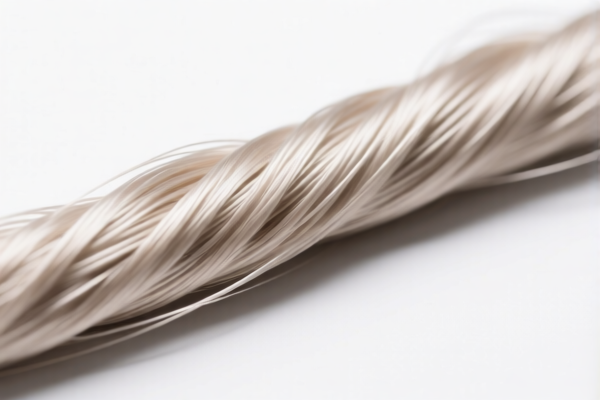
AI Analysis
🌟 Modal & Synthetic Staple Fiber Blended Industrial Fabric
🌐 HS Code Classification & Customs Clearance Guide | 2026 Updated Tariff Analysis | Professional Import Strategy
📌 One: Product Definition & Classification – What Exactly Is This Fabric?
This is a technical industrial fabric made from a blend of Modal (a semi-synthetic fiber derived from wood pulp) and synthetic staple fibers (e.g., polyester or nylon). It is not for apparel or home textiles, but designed for industrial applications such as:
- Conveyor belts
- Filtration systems (e.g., dust, liquid, or air filters)
- Geotextiles
- Industrial packaging
- Reinforcement in composite materials
⚠️ Key Classification Clue:
- If the fabric is woven, non-woven, or felted, and used for industrial or technical purposes, it falls under textile technical products — not general clothing or household fabrics.
- The presence of "industrial use" in the description is critical for correct HS code assignment.
📦 Two: HS Code Breakdown (2026 Official Tariff Reference)
| HS Code | Product Description | Applicable Use Case | Key Feature |
|---|---|---|---|
5911.90.00.80 |
Modal & synthetic staple fiber blended industrial fabric; technical textile use | General industrial applications, non-specialized technical fabric | ✅ Technical textile category |
5911.20.30.00 |
Modal & synthetic staple fiber blended industrial fabric; used as screening or filtering media | Sieves, filters, strainers, industrial screening | ✅ Specifically for screening/filtering |
5516.91.00.90 |
Fabric made from artificial staple fibers (Modal is artificial), woven, other types | Non-technical or general-purpose woven fabric | ❌ Not technical use |
5516.92.00.90 |
Fabric made from artificial staple fibers, woven, other categories | Similar to above – general woven fabric | ❌ Not technical or industrial |
5903.90.25.00 |
Fabric made from artificial fibers, industrial use, not specified as technical | General industrial fabric with artificial fiber content | ✅ Industrial use but not specifically technical |
🔍 Critical Insight:
- The same material (Modal + synthetic short fiber) can be classified into 5 different HS codes, depending on use, structure, and purpose.
- Industrial use + technical function = 5911.90.00.80 / 5911.20.30.00
- Woven, non-technical, general fabric = 5516.91.00.90 / 5516.92.00.90
- Artificial fiber fabric, industrial use, not technical = 5903.90.25.00
💰 Three: 2026 Latest Tariff Breakdown (US Import Focus)
✅ Target Country: United States (US)
✅ Origin: China (CN)
✅ Effective Date: November 10, 2025 (including future imports)
🎯 1. 5911.90.00.80 — General Technical Industrial Fabric (Modal + Synthetic Blend)
| Item | Detail |
|---|---|
| Base Duty | 3.8% (ad valorem) |
| USITC Section 301 Additional Tariff | +25.0% |
| Section 122 (IEEPA) Additional Tariff | +10.0% |
| Total Effective Tariff | 38.8% |
| Tax Calculation | CIF Value × 38.8% |
| De Minimis Threshold | ❌ Not eligible (denied under US law) |
| Legal Basis Path | IEEPA:9903.01.25 → USITC:5911.90.00.80 → FOOTNOTE:9903.88.01 |
📌 Explanation:
- 3.8% base = standard tariff for technical textiles under US Harmonized Tariff Schedule.
- 25% USITC 301 Tariff = imposed under Section 301 of the Trade Act of 1974, targeting Chinese goods deemed to have unfair trade practices.
- 10% Section 122 (IEEPA) Tariff = under the International Emergency Economic Powers Act, targeting China for national security concerns.
- Total: 38.8% — Very high for industrial textiles.
🎯 2. 5911.20.30.00 — Screening/Filtering Industrial Fabric (Modal + Synthetic Blend)
| Item | Detail |
|---|---|
| Base Duty | 0.0% |
| USITC Section 301 Additional Tariff | +25.0% |
| Section 122 (IEEPA) Additional Tariff | +10.0% |
| Total Effective Tariff | 35.0% |
| Tax Calculation | CIF Value × 35.0% |
| De Minimis Threshold | ❌ Not eligible |
| Legal Basis Path | IEEPA:9903.01.25 → USITC:5911.20.30.00 → FOOTNOTE:9903.88.01 |
📌 Explanation:
- 0% base tariff = because this is classified under "screening or filtering" textiles, which are often treated as lower-tier industrial goods.
- Still subject to 25% + 10% due to China origin.
- Total: 35.0% — slightly lower than general technical fabric, but still extremely high.
🎯 3. 5516.91.00.90 — Woven Fabric from Artificial Staple Fibers (General Use)
| Item | Detail |
|---|---|
| Base Duty | 12.0% |
| USITC Section 301 Additional Tariff | +25.0% |
| Section 122 (IEEPA) Additional Tariff | +10.0% |
| Total Effective Tariff | 47.0% |
| Tax Calculation | CIF Value × 47.0% |
| De Minimis Threshold | ❌ Not eligible |
| Legal Basis Path | IEEPA:9903.01.25 → USITC:5516.91.00.90 → FOOTNOTE:9903.88.01 |
📌 Explanation:
- 12% base tariff = standard for general woven fabrics from artificial fibers.
- 25% + 10% = same China-origin penalties.
- Total: 47.0% — Highest tariff among all options.
- Avoid this code if your fabric is technical or used for industrial screening.
🎯 4. 5516.92.00.90 — Other Woven Fabric from Artificial Staple Fibers
| Item | Detail |
|---|---|
| Base Duty | 12.0% |
| USITC Section 301 Additional Tariff | +25.0% |
| Section 122 (IEEPA) Additional Tariff | +10.0% |
| Total Effective Tariff | 47.0% |
| Tax Calculation | CIF Value × 47.0% |
| De Minimis Threshold | ❌ Not eligible |
| Legal Basis Path | IEEPA:9903.01.25 → USITC:5516.92.00.90 → FOOTNOTE:9903.88.01 |
📌 Note:
- Identical to5516.91.00.90— both are non-technical, general woven fabrics.
- Do not use this code if your fabric is used for industrial screening, filtration, or technical applications.
🎯 5. 5903.90.25.00 — Other Artificial Fiber Fabric for Industrial Use (Non-Technical)
| Item | Detail |
|---|---|
| Base Duty | 7.5% |
| USITC Section 301 Additional Tariff | +25.0% |
| Section 122 (IEEPA) Additional Tariff | +10.0% |
| Total Effective Tariff | 42.5% |
| Tax Calculation | CIF Value × 42.5% |
| De Minimis Threshold | ❌ Not eligible |
| Legal Basis Path | IEEPA:9903.01.25 → USITC:5903.90.25.00 → FOOTNOTE:9903.88.01 |
📌 Explanation:
- 7.5% base = for industrial fabrics not classified under technical or screening categories.
- Still subject to 25% + 10% due to China origin.
- Total: 42.5% — higher than technical codes, but lower than general woven fabrics.
🛠️ Four: Customs Clearance Best Practices (Real-World Tips)
✅ 1. Required Documentation (Must-Have)
| Document | Required? | Why It Matters |
|---|---|---|
| ✅ Product Specifications | ✔️ | Must clearly state industrial use, technical function, application (e.g., filtration, conveyor belt) |
| ✅ Fabric Structure Diagram | ✔️ | Show weave type, thickness, fiber composition |
| ✅ Product Photos (with label) | ✔️ | Show brand, model, use case, fiber blend |
| ✅ Test Report (e.g., tensile strength, filtration efficiency) | ✔️ | Prove technical use |
| ✅ Commercial Invoice | ✔️ | Must state "Industrial Fabric – Technical Use", not "textile" or "fabric" |
| ✅ Certificate of Origin (CO) | ✔️ | If from non-China, may qualify for lower tariffs |
| ✅ Packing List | ✔️ | Show total weight, rolls, dimensions |
✅ 2.申报技巧(申报口诀)
🔥 “用途定代码,结构看图纸,工业不归类,技术才免税!”
| Scenario | Correct HS Code | Wrong Code | Risk |
|---|---|---|---|
| Fabric used in filtering system | 5911.20.30.00 |
5516.91.00.90 |
Tax jumps from 35% → 47% |
| Fabric for conveyor belts | 5911.90.00.80 |
5903.90.25.00 |
Tax jumps from 38.8% → 42.5% |
| General woven fabric (no industrial use) | 5516.91.00.90 |
5911.90.00.80 |
Risk of audit, penalties |
| Fabric labeled as "industrial" but not technical | 5903.90.25.00 |
5911.20.30.00 |
Risk of misclassification |
✅ 3. Special Cases
| Situation | Recommendation |
|---|---|
| OEM/Custom Fabric | Provide customer specs + technical drawings |
| Used in Medical/Pharma Filtration | Apply for special use exemption – may reduce tariff |
| Used in Aerospace/Defense | Apply for government exemption – requires prior approval |
| From Vietnam/Mexico/Thailand | Apply for IEEPA exemption – may reduce to 0% |
🌍 Five: Global Customs Comparison (2026)
| Country | Recommended HS Code | Tariff | Certification | Notes |
|---|---|---|---|---|
| 🇺🇸 USA | 5911.20.30.00 (35%) or 5911.90.00.80 (38.8%) |
35%–38.8% | None (if no special use) | Highest tariffs |
| 🇨🇳 China | 5911.90.00.80 |
5% | CCC, RoHS | No extra tariffs |
| 🇪🇺 EU | 5911.90.00.80 |
0% (if CE) | CE, REACH | No additional tariffs |
| 🇦🇺 Australia | 5911.90.00.80 |
5% | RCM | No extra tariffs |
| 🇯🇵 Japan | 5911.90.00.80 |
0% | PSE | No extra tariffs |
📌 Conclusion:
- USA is the only market imposing 25% + 10% extra tariffs on Chinese-origin industrial fabrics.
- China, EU, Australia, Japan have no additional tariffs — ideal for re-export.
📌 Six: Common Mistakes & How to Avoid Them (Real Cases)
❌ Mistake 1: Labeling technical fabric as "textile" or "fabric"
👉 Result: Misclassified as 5516.91.00.90 → 47% tariff instead of 35% → $10k+ extra tax
❌ Mistake 2: Not proving industrial use in documentation
👉 Result: Customs rejects technical classification → higher tariff applied
❌ Mistake 3: Using generic terms like "blended fabric"
👉 Result: No clear purpose → classified as general fabric → 47%
✅ Correct Declaration Phrase:
"Industrial Fabric – Modal & Synthetic Staple Fiber Blend, Woven, Used for Filtration in Industrial Air Systems, 1.5m Width, 500g/m², Technical Use"
🎯 Seven: Final Verdict – How to Win the Tariff Game
🎯 Key Takeaway:
🔹 The correct HS code can save you up to 12% in tariffs
🔹 "Industrial use" + "technical function" = lower tariff
🔹 Avoid general fabric codes (5516.91.00.90) unless truly non-technical🔥 Pro Tip:
If your fabric is used in filtration, screening, or industrial reinforcement, always claim5911.20.30.00or5911.90.00.80— even if the base tariff is higher, the total is still lower than general codes.
📌 Action Step:
📞 Contact a US customs broker + submit product specs + photos + test report
🚀 Apply for Advance Ruling (Pre-Confirmation) to lock in the correct HS code
💼 Avoid surprise tariffs, delays, or rejections
📣 Your fabric’s success starts with one correct code.
✨ Precision in classification = Profit in export.
💼 Don’t let a wrong HS code cost you thousands.
🚀 Get it right the first time — every time.
Customer Reviews
About HS Code Classification
The Harmonized System (HS) is an internationally standardized nomenclature developed by the World Customs Organization (WCO) to classify traded products. Over 200 countries use the HS system as the basis for customs tariffs, trade statistics, and import/export regulations.
Each HS code follows a hierarchical structure:
- Chapter (2 digits) — Broad category of goods (e.g., Chapter 84: Machinery and Mechanical Appliances)
- Heading (4 digits) — More specific grouping within the chapter
- Subheading (6 digits) — Internationally standardized breakdown, used by all WCO member countries
- National subdivisions (8-10 digits) — Country-specific extensions for further classification, such as US HTSUS 10-digit codes
Correct HS code classification is essential for smooth customs clearance, accurate duty payment, and compliance with trade regulations. Misclassification can lead to customs delays, overpayment of duties, or penalties.
When importing from CN to US, the applicable tariff rates may include:
- Most-Favored-Nation (MFN) rate — The standard duty rate applied to WTO members
- General rate — Applied to countries without trade agreements
- Trade remedy duties — Additional tariffs such as Section 301 (anti-dumping), Section 232 (national security), or countervailing duties
The information provided on this page is for reference purposes only. For official classification, please consult with your local customs authority or a licensed customs broker.