藤编收纳篮
CN → US| HS Code | Tariff Rate | Origin | Destination | Doc |
|---|---|---|---|---|
| 4602113500 | 35.0% | CN | US | Official Doc |
| 9403893020 | 35.0% | CN | US | Official Doc |
| 9403893010 | 35.0% | CN | US | Official Doc |
| 4602110700 | 35.0% | CN | US | Official Doc |
| 4602121600 | 40.0% | CN | US | Official Doc |
Product Images
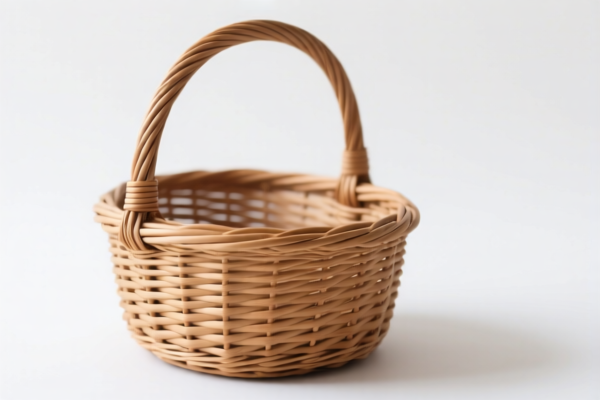
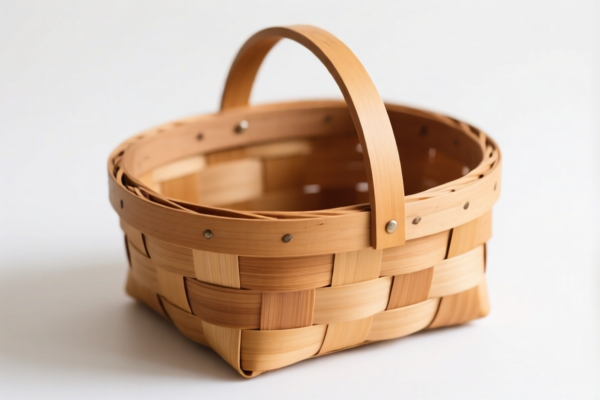
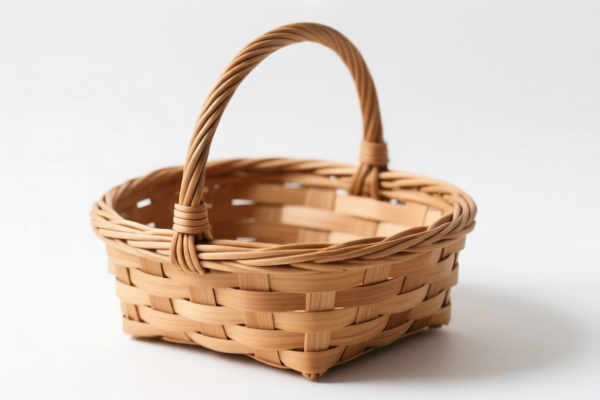
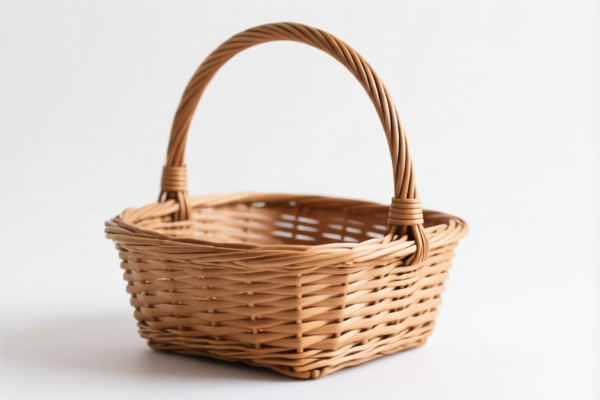
AI Analysis
🧺 Rattan Storage Baskets (藤编收纳篮)
🌐 HS Code Reference & Customs Clearance Guide | 2026 Latest Tariff Full Analysis | Professional Entry Strategies
📌 I. Product Definition & Classification: Do You Really Understand "Rattan Storage Baskets"?
Rattan storage baskets are versatile household items made from plant-based weaving materials, primarily used for organizing and storing goods. In international trade, the classification depends heavily on the material composition (specifically whether it qualifies as "rattan" or other plant materials) and the functional purpose (whether it is classified as a woven article or a piece of furniture).
Woven Articles (Chapter 46): Products primarily defined by the manufacturing process (weaving) and material (rattan/reed), regardless of their final use. Furniture/Home Furnishings (Chapter 94): Products primarily defined by their function as furniture or household containers.
⚠️ Key Distinction Point:
- If the basket is primarily identified by its woven structure and plant material (rattan/reed), it falls under Chapter 46. - If the basket is primarily identified as furniture or a household container with significant structural components (e.g., rigid frames, handles designed for furniture use), it may fall under Chapter 94. - Note: Even if classified under Chapter 94, the material (rattan) dictates the specific subheading.
📦 II. HS Code Classification Details (2026 Latest Tariff Authority Cross-Reference)
Based on the provided data, here are the four possible HS Codes for Rattan Storage Baskets, their summaries, and the detailed tax breakdown.
| HS Code | Product Summary & Category | Primary Logic | Total Tax Rate (China to US) |
|---|---|---|---|
4602.11.35.00 |
Woven Products: Plant material (rattan), form is storage basket. | Classified under "Woven articles of vegetable materials." | 35.0% |
9403.89.30.20 |
Furniture: Rattan material, storage basket belongs to "Other furniture" category. | Classified under "Other furniture." | 35.0% |
9403.89.30.10 |
Furniture/Home: Rattan material, storage basket belongs to "Home use" category. | Classified under "Other furniture" for home use. | 35.0% |
4602.11.07.00 |
Woven Products: Storage basket form, rattan material is plant weaving material. | Classified under "Woven articles of vegetable materials." | 35.0% |
4602.12.16.00 |
Rattan Baskets: Explicitly includes rattan material and basket form. | Classified under "Other woven articles of rattan." | 40.0% |
🔍 Important Reminder:
- Codes starting with4602are classified as Woven Articles (Chapter 46). - Codes starting with9403are classified as Furniture (Chapter 94). - All listed HS codes carry significant additional tariffs due to US-China trade policies.
💰 III. 2026 Latest Tariff Rate Details (Including Surcharges & Policy Add-ons)
✅ Applicable Country: United States (US)
✅ Origin: China (CN)
✅ Effective Time: Current rates apply (2025-2026 Trade Policy Context)
🎯 1. HS Codes: 4602.11.35.00, 9403.89.30.20, 9403.89.30.10, 4602.11.07.00
Classification: Woven Plant Material Articles OR Other Furniture
| Item | Content |
|---|---|
| Base Tariff | 0.0% (ad valorem) |
| Section 301 Surcharge | +25.0% |
| Section 122 Surcharge | +10.0% |
| Total Tax Rate | 35.0% |
| Tax Calculation | CIF Value × 35% |
| De Minimis Eligibility | ❌ Not Eligible (Denied due to Section 301/122 provisions) |
| Legal Basis Path | USITC:4602.11.35.00 → FOOTNOTE:301 → Section 122 |
📌 Explanation:
- Although the base tariff is 0%, the effective tax rate is 35% due to two major surcharges. - 25% Surcharge: Derived from Section 301 of the Trade Act of 1974, targeting specific Chinese imports. - 10% Surcharge: Derived from Section 122 of the Trade Act of 1974, applied to certain goods from China. - Total 35% is a high cost barrier, requiring precise cost calculation.
🎯 2. HS Code: 4602.12.16.00
Classification: Rattan Baskets (Specific Subheading for Rattan)
| Item | Content |
|---|---|
| Base Tariff | 5.0% (ad valorem) |
| Section 301 Surcharge | +25.0% |
| Section 122 Surcharge | +10.0% |
| Total Tax Rate | 40.0% |
| Tax Calculation | CIF Value × 40% |
| De Minimis Eligibility | ❌ Not Eligible (Denied due to Section 301/122 provisions) |
| Legal Basis Path | USITC:4602.12.16.00 → FOOTNOTE:301 → Section 122 |
📌 Note:
- This code has a higher base tariff (5%) compared to the other three (0%). - Combined with the same surcharges (25% + 10%), the total rate is 40%. - Comparison: If possible, classifying under4602.11.xx.xxor9403.89.xx.xxmay save 5% in base tariff, resulting in a 35% total rate instead of 40%. However, you must ensure the product description accurately matches the "Woven Article" or "Other Furniture" definition, not specifically "Rattan Basket" if the latter carries the 5% base.
🛠️ IV. Customs Clearance Practical Advice (Real-World Pitfall Avoidance Guide)
✅ 1. Preparation Checklist (Essential Documents)
| Document | Must Provide | Explanation |
|---|---|---|
| ✅ Product Specification Sheet | ✔️ | Include dimensions, material type (e.g., natural rattan, synthetic rattan, willow), weight. |
| ✅ Material Composition Certificate | ✔️ | Crucial for distinguishing between "Rattan" (4602.12) and "Other Plant Materials" (4602.11). |
| ✅ Product Photos (Clear) | ✔️ | Show the weaving structure, handles, and any metal/wood frames (if present). |
| ✅ Commercial Invoice | ✔️ | Clearly state "Rattan Storage Basket" and HS Code. |
| ✅ Packing List | ✔️ | Indicate if baskets are nested, stacked, or have separate packaging. |
| ✅ Certificate of Origin (CO) | ✔️ | Essential for proving Chinese origin to calculate exact surcharges. |
✅ 2. Declaration Strategies (Key Mantras)
🔥 "Material First, Function Second, Name Precise, Tax Lowered!"
| Scenario | Correct Declaration Method | Incorrect Action |
|---|---|---|
| Basket made of Willow/Reed | 4602.11.35.00 or 4602.11.07.00 |
Call it "Rattan" → Misclassification risk |
| Basket explicitly made of Rattan | 4602.12.16.00 (Check if 40% is acceptable) |
Force classify as 4602.11 → Fraud risk |
| Basket with Wooden Frame | 9403.89.30.10/20 (Furniture) |
Declare as pure woven article → Value shift risk |
| Empty Basket vs. Filled Basket | Declare as Empty | Declare as "Furniture with Goods" → Complex duty calculation |
✅ 3. Special Handling Advice
| Situation | Handling Suggestion |
|---|---|
| Material Ambiguity | If the material is "Synthetic Rattan" (PE Rattan), it may fall under Chapter 39 (Plastics). This could significantly lower tariffs! Ensure the product is not natural plant material if aiming for plastic classification. |
| Nested Baskets | If baskets are nested inside each other for shipping, declare as one unit with the largest basket's specs. Do not declare as multiple separate baskets. |
| With Handles/Lids | Presence of metal/wood handles does not necessarily change classification from Chapter 46 to 94 if the weaving is the essential character. Consult a customs broker for borderline cases. |
| Section 122 Applicability | Verify if Section 122 is currently active for your specific entry date. Rates can change based on executive orders. |
🌍 V. Global Market Comparison (2026 Latest)
| Country/Region | Recommended HS Code | Estimated Total Tax | Certification Requirements | Remarks |
|---|---|---|---|---|
| 🇺🇸 USA | 4602.11.35.00 / 9403.89.30.xx |
35% | ASTM F963 (if for children), CPSIA | High tariffs due to trade war. |
| 🇺🇸 USA | 4602.12.16.00 |
40% | ASTM F963 | Higher base tariff. |
| 🇨🇳 China | 4602.11.07.00 |
5-7% | No special export certs | Low import duty for domestic sale. |
| 🇪🇺 EU | 4602.11.10.00 |
0% | FSC (Sustainability Proof) | No trade war tariffs. EPR registration required. |
| 🇬🇧 UK | 4602.11.10.00 |
0% | UKCA Mark (if applicable) | Post-Brexit rules apply. |
📌 Conclusion:
- The USA imposes a 35%-40% tariff burden on rattan baskets from China. - Europe and other markets are significantly more favorable (0%-5%). - Strategy Consideration: If exporting to the US, consider shifting supply chain to Vietnam/Mexico or switching to Synthetic (PE) Rattan to potentially reduce duties.
📌 VI. Common Errors & Pitfall Avoidance (Lessons Learned)
❌ Error 1: Misidentifying "Synthetic Rattan" as "Natural Rattan"
👉 Consequence: Incorrect HS Code. Synthetic (Plastic) may have 0-2% base duty, while Natural is 0-5% + surcharges.
👉 Action: Always specify "PE Rattan" or "Natural Rattan" in documentation.
❌ Error 2: Declaring under 9403 (Furniture) when it should be 4602 (Woven)
👉 Consequence: Customs may reject or reclassify. While both are 35% total here, 9403 might trigger different inspection requirements (e.g., formaldehyde testing for wood components).
👉 Action: Stick to 4602 if it is a pure woven basket without significant structural furniture components.
❌ Error 3: Ignoring Section 122 and 301 Surcharges
👉 Consequence: Underestimating landed cost by 35-40%. Profit margins will be wiped out.
👉 Action: Always calculate CIF × 35% (or 40%) into your pricing model.
✅ Correct Practice:
"Storage Basket, Woven, Natural Willow, Handmade, 12x12x10 inches, Model A1, Not Made of Rattan" → Use
4602.11.xx.xx(35% Total).
"Storage Basket, Woven, Natural Rattan, Model B2" → Use4602.12.16.00(40% Total).
🎯 VII. Conclusion: Professional Declaration, Cost Optimization!
🎯 Remember the Mantra:
🔹 "Material is King, Surcharge is the Enemy!"
🔹 "Synthetic vs. Natural can save you 35% vs. 40%!"
🔹 "Don't ignore Section 122, it costs you 10% more!"
📌 Pro Tip:
If your product is made of Polyethylene (PE) Rattan (common in outdoor furniture), it is classified as Plastics (Chapter 39).
- HS Code Example: 3926.90.98
- US Tariff: Base 3.4% + 25% Section 301 = 28.4%
- Benefit: Saves 6.6% compared to natural rattan baskets (35% total).
- Action: If possible, switch to PE Rattan for US-bound goods to reduce tax burden.
📣 Immediate Action:
📞 Contact a Customs Broker: Verify if your specific "Rattan" is natural or synthetic.
🚀 Recalculate Landed Cost: Include 35% or 40% in your pricing.
💼 Your Bottom Line: Every percentage point of tariff affects your competitiveness.
✨ Professional Customs Clearance Starts with Accurate Classification!
💼 Your Cost is Worthy of Precision Calculation!
Customer Reviews
About HS Code Classification
The Harmonized System (HS) is an internationally standardized nomenclature developed by the World Customs Organization (WCO) to classify traded products. Over 200 countries use the HS system as the basis for customs tariffs, trade statistics, and import/export regulations.
Each HS code follows a hierarchical structure:
- Chapter (2 digits) — Broad category of goods (e.g., Chapter 84: Machinery and Mechanical Appliances)
- Heading (4 digits) — More specific grouping within the chapter
- Subheading (6 digits) — Internationally standardized breakdown, used by all WCO member countries
- National subdivisions (8-10 digits) — Country-specific extensions for further classification, such as US HTSUS 10-digit codes
Correct HS code classification is essential for smooth customs clearance, accurate duty payment, and compliance with trade regulations. Misclassification can lead to customs delays, overpayment of duties, or penalties.
When importing from CN to US, the applicable tariff rates may include:
- Most-Favored-Nation (MFN) rate — The standard duty rate applied to WTO members
- General rate — Applied to countries without trade agreements
- Trade remedy duties — Additional tariffs such as Section 301 (anti-dumping), Section 232 (national security), or countervailing duties
The information provided on this page is for reference purposes only. For official classification, please consult with your local customs authority or a licensed customs broker.