螺旋桨叶
CN → US| HS Code | Tariff Rate | Origin | Destination | Doc |
|---|---|---|---|---|
| 8483905080 | 37.5% | CN | US | Official Doc |
| 8487100080 | 35.0% | CN | US | Official Doc |
| 8483908010 | 37.8% | CN | US | Official Doc |
| 8487100040 | 35.0% | CN | US | Official Doc |
| 8483905080 | 37.5% | CN | US | Official Doc |
Product Images
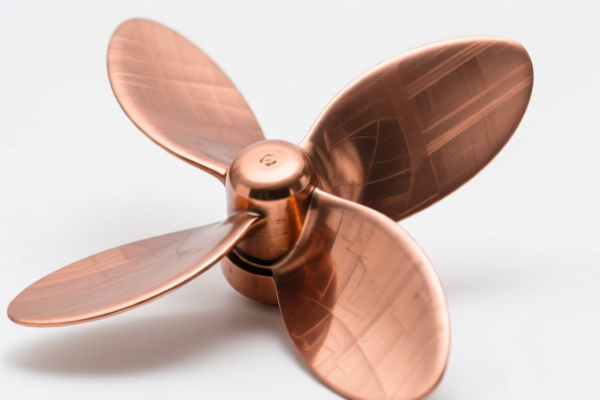
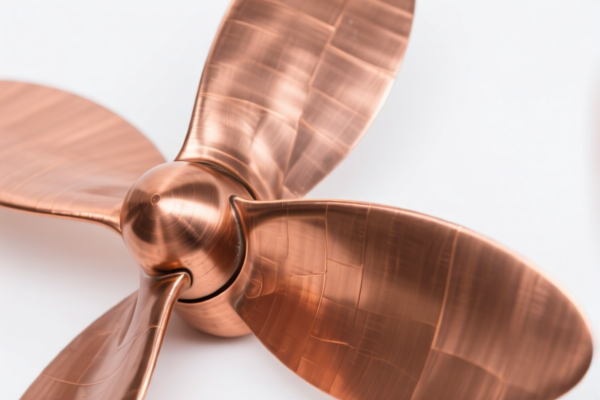
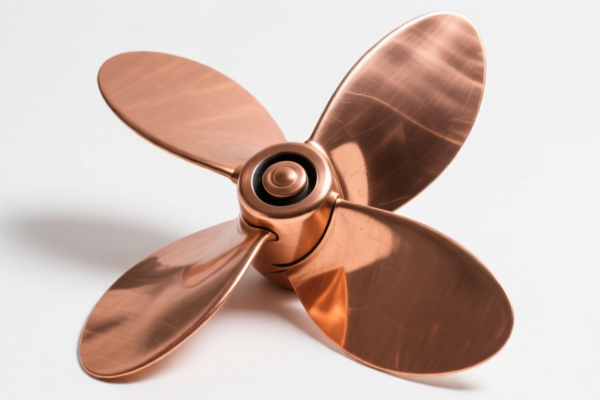
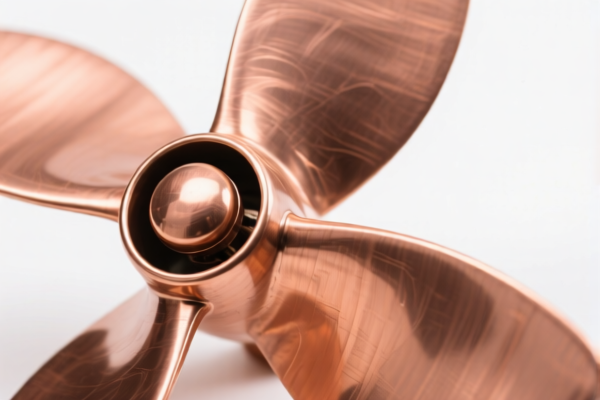
AI Analysis
🚢 Propeller Blades: Navigating US Customs Classification & Tariffs (2026 Update)
🌐 HS Code Reference & Clearance Guide | 2026 Latest Tariff Analysis | Strategic Compliance Strategy
📌 I. Product Definition & Classification: What Are "Propeller Blades"?
Propeller blades are critical components used in marine vessels, aircraft, and industrial machinery to generate thrust or lift. In international trade, the classification depends heavily on whether they are considered parts of a transmission engine or parts of other machinery.
Key Distinction in US Customs: 1. Parts of Transmission Engines (Section 84, Ch. 8483): If the blades are specifically designed for propulsion systems (engines/motors) and act as transmission elements. 2. Parts of Other Machinery (Section 84, Ch. 8487): If the blades are generic mechanical parts not specifically tied to a transmission engine's classification, or if they fall under "parts of machines not elsewhere specified."
⚠️ Critical Decision Point:
- Marine/Aircraft Propulsion: Often scrutinized under 8483 (Transmission shafts, gears, and propellers) vs. 8487 (Machinery parts not specified elsewhere).
- Material Matters: While metal/composite materials are common, the function drives the HS Code, not just the material.
📦 II. HS Code Classification Matrix (Based on Provided Data)
The following HS Codes are the primary candidates for Propeller Blades based on the provided dataset. Note that different HS codes result in significantly different tax liabilities.
| HS Code | Product Description | Classification Logic | Total Tax Rate (China Origin) |
|---|---|---|---|
| 8483.90.50.80 | Parts of transmission elements (Propeller Blades) | Classified as parts of transmission components. Material: Metal or Composite. | 37.5% |
| 8483.90.80.10 | Other parts of transmission elements | Fits the part morphology for transmission elements. Material inferred as metal/composite. | 37.8% |
| 8487.10.00.80 | Parts of other machinery (Propeller Blades) | Classified as mechanical parts not specifically transmission elements. Matches "other categories." | 35.0% |
| 8487.10.00.40 | Parts of other machinery (Propeller Blades) | Matches morphology and usage for non-transmission machinery parts. No material conflict. | 35.0% |
🔍 Key Insight:
- Classifying under 8483 (Transmission Parts) incurs a higher base duty (2.5% or 2.8%) compared to 8487 (Other Machinery Parts) which has a 0% base duty.
- However, ALL listed codes include the 25% Section 301 Tariff and 10% IEEPA Tariff.
- Savings Potential: Choosing an 8487 code instead of an 8483 code saves 2.5% - 2.8% in base duties, resulting in a total rate of 35.0% vs. 37.5%-37.8%.
💰 III. 2026 Latest Tariff Rate Breakdown (Detailed)
✅ Applicable Country: USA (US)
✅ Origin: China (CN)
✅ Effective Date: Ongoing (Section 301 & IEEPA measures)
🎯 1. Classification: 8483.90.50.80 (Transmission Parts)
- Summary: Propeller blades are parts of transmission elements.
- Base Duty: 2.5%
- Section 301 Tariff (Item 122): +25.0%
- IEEPA Tariff (China): +10.0%
- Total Rate: 37.5%
- Legal Path:
USITC:8483.90.50.80→Section 301→IEEPA
📌 Explanation:
- Base duty is 2.5% because it falls under specific transmission part subheadings.
- The 25% is a penalty tariff on Chinese goods.
- The 10% is an additional surcharge for Chinese origin goods.
- Result: High tariff burden. Only choose if legally required by function.
🎯 2. Classification: 8483.90.80.10 (Other Transmission Parts)
- Summary: Propeller blades as parts of transmission elements.
- Base Duty: 2.8%
- Section 301 Tariff: +25.0%
- IEEPA Tariff: +10.0%
- Total Rate: 37.8%
- Legal Path:
USITC:8483.90.80.10→Section 301→IEEPA
📌 Explanation:
- Slightly higher base duty (2.8%) than 8483.90.50.80.
- Same high total impact. Avoid if possible.
🎯 3. Classification: 8487.10.00.80 (Other Machinery Parts)
- Summary: Propeller blades match usage with ships/boats as mechanical parts, not transmission elements.
- Base Duty: 0.0%
- Section 301 Tariff: +25.0%
- IEEPA Tariff: +10.0%
- Total Rate: 35.0%
- Legal Path:
USITC:8487.10.00.80→Section 301→IEEPA
📌 Explanation:
- Zero Base Duty: This is the key advantage.
- Total Savings: 2.5% lower than 8483.90.50.80.
- Risk: Must prove the blade is not a "transmission element" but a generic mechanical part.
🎯 4. Classification: 8487.10.00.40 (Other Machinery Parts)
- Summary: Propeller blades match morphology and usage for other machinery.
- Base Duty: 0.0%
- Section 301 Tariff: +25.0%
- IEEPA Tariff: +10.0%
- Total Rate: 35.0%
- Legal Path:
USITC:8487.10.00.40→Section 301→IEEPA
📌 Explanation:
- Identical tax rate to 8487.10.00.80.
- Use if 8487.10.00.80 is unavailable for your specific product variant.
🛠️ IV. Customs Clearance Operational Advice (Pitfall Avoidance)
✅ 1. Essential Documentation Checklist
| Document | Required? | Description |
|---|---|---|
| ✅ Product Specifications | ✔️ | Must detail if the blade is for a propulsion engine (transmission) or general machinery (non-transmission). |
| ✅ Material Certificate | ✔️ | Confirm metal/composite composition. |
| ✅ Technical Drawings | ✔️ | Highlight mounting features to determine if it’s a transmission component. |
| ✅ Commercial Invoice | ✔️ | Clearly state: "Propeller Blade, Material: [X], Use: [Marine/Aircraft/Industrial]" |
| ✅ Origin Certificate | ✔️ | To verify China origin for IEEPA application. |
✅ 2. Classification Strategy (The "Golden Rule")
🔥 “Function Over Form: Is it Transmission or Not?”
| Scenario | Recommended HS Code | Tax Rate | Why? |
|---|---|---|---|
| Blades for Main Propulsion Engine | 8483.90.50.80 |
37.5% | Legally considered parts of transmission elements. |
| Blades for Auxiliary/General Machinery | 8487.10.00.80 |
35.0% | Can be classified as parts of "other machinery" to save 2.5%. |
| Generic Propeller Blades (No Specific Engine) | 8487.10.00.40 |
35.0% | Safe fallback for non-specific applications. |
✅ 3. Critical Clearance Tips
- Avoid Ambiguity: Do not simply declare "Propeller Blade." Specify "Propeller Blade for [Specific Machine Type]".
- Material Declaration: Clearly state "Metal" or "Composite." Customs may challenge the classification if material is unclear.
- IEEPA Applicability: All listed codes DO NOT qualify for de minimis exemptions. Full taxation applies.
- Advance Ruling: Given the 2.5% difference between 8483 and 8487, high-value shipments should apply for a Binding Tariff Information (BTI) or Advance Ruling to ensure the 35.0% rate is accepted if applicable.
🌍 V. Global Market Comparison (2026)
| Region | Recommended HS Code | Base Duty | Total Duty (China) | Notes |
|---|---|---|---|---|
| 🇺🇸 USA | 8487.10.00.80 |
0% | 35.0% | Best rate. Avoid 8483 unless legally required. |
| 🇨🇳 China (Import) | 8487.10.00.80 |
~0-2% | Low | No Section 301/IEEPA. |
| 🇪🇺 EU | 8487.10.00 |
0% | 0% | No additional tariffs. |
| 🇬🇧 UK | 8487.10.00 |
0% | 0% | Post-Brexit rates favorable. |
📌 Conclusion:
- The USA imposes the highest cost due to Section 301 and IEEPA tariffs.
- Optimization Tip: If your propeller blades are not strictly "transmission elements" under USHTS Note 1 to Ch. 84, always choose 8487.10.00 to save 2.5-2.8% on the CIF value.
📌 VI. Common Errors & Pitfalls
❌ Error 1: Declaring all propeller blades as 8483 (Transmission Parts)
👉 Consequence: Overpaying 2.5% - 2.8% in base duties unnecessarily.
👉 Fix: Analyze if the blade is part of a transmission system. If it's a generic mechanical part, use 8487.
❌ Error 2: Omitting "Section 301" and "IEEPA" from cost calculation
👉 Consequence: Unexpected budget overrun.
👉 Fix: Always add +35% (25% + 10%) to base duty for Chinese origin goods.
❌ Error 3: Mislabeling as "Propeller" instead of "Blade"
👉 Consequence: Customs may classify the entire propeller assembly, leading to different duties.
👉 Fix: Clearly declare "Blade" if only the blade is being imported.
🎯 VII. Final Recommendation: Professional Clearance Strategy
🎯 Key Takeaway:
🔹 "For Propeller Blades, Aim for 8487.10.00 to Secure 35.0% Total Duty."
🔹 "Only use 8483.90 if the blade is explicitly a transmission component."
🔹 "Budget for 35% of CIF Value for US Imports from China."
📌 Pro Tip:
If your shipment value is high, consider applying for a US Customs Ruling to confirm if your specific propeller blades can be classified under 8487.10.00.80 or 8487.10.00.40 to secure the 35.0% rate instead of 37.5%.
📣 Action Plan:
1. Review Product Function: Is it a transmission part?
2. Select HS Code: 8487.10.00.80 (Preferred) or 8487.10.00.40.
3. Calculate Cost: CIF Value × 35.0%.
4. Clear Customs: Ensure documentation supports "Other Machinery Part" classification.
✨ Precision in Classification Saves Every Percent!
💼 Maximize Profit, Minimize Tariff Risk!
Customer Reviews
About HS Code Classification
The Harmonized System (HS) is an internationally standardized nomenclature developed by the World Customs Organization (WCO) to classify traded products. Over 200 countries use the HS system as the basis for customs tariffs, trade statistics, and import/export regulations.
Each HS code follows a hierarchical structure:
- Chapter (2 digits) — Broad category of goods (e.g., Chapter 84: Machinery and Mechanical Appliances)
- Heading (4 digits) — More specific grouping within the chapter
- Subheading (6 digits) — Internationally standardized breakdown, used by all WCO member countries
- National subdivisions (8-10 digits) — Country-specific extensions for further classification, such as US HTSUS 10-digit codes
Correct HS code classification is essential for smooth customs clearance, accurate duty payment, and compliance with trade regulations. Misclassification can lead to customs delays, overpayment of duties, or penalties.
When importing from CN to US, the applicable tariff rates may include:
- Most-Favored-Nation (MFN) rate — The standard duty rate applied to WTO members
- General rate — Applied to countries without trade agreements
- Trade remedy duties — Additional tariffs such as Section 301 (anti-dumping), Section 232 (national security), or countervailing duties
The information provided on this page is for reference purposes only. For official classification, please consult with your local customs authority or a licensed customs broker.