螺旋桨叶片
CN → US| HS Code | Tariff Rate | Origin | Destination | Doc |
|---|---|---|---|---|
| 8487100080 | 35.0% | CN | US | Official Doc |
| 8487100040 | 35.0% | CN | US | Official Doc |
| 848710 | 0.0% | CN | US | Official Doc |
| 880330 | 0.0% | CN | US | Official Doc |
Product Images
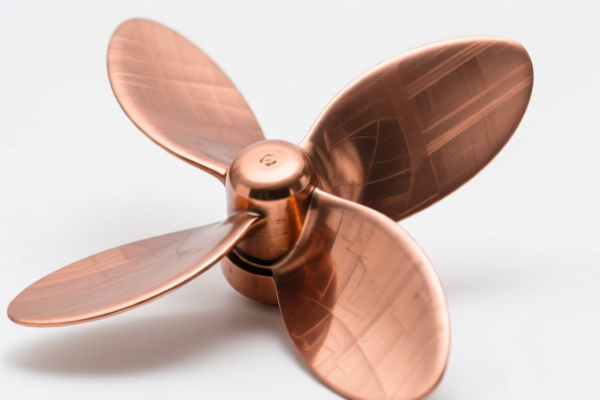
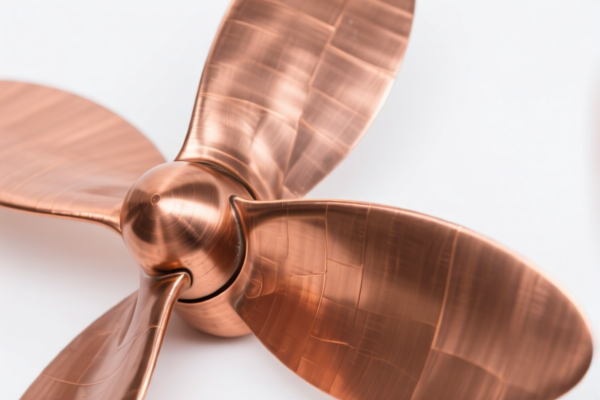
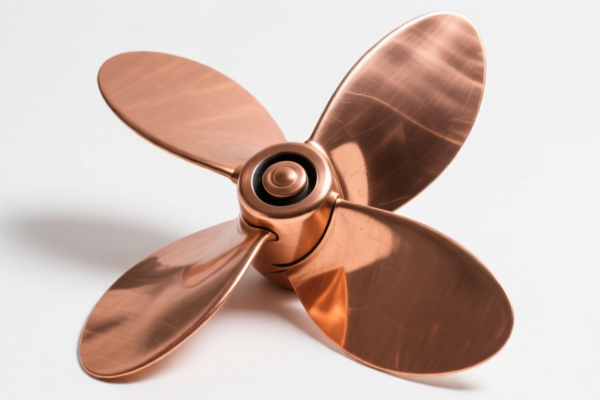
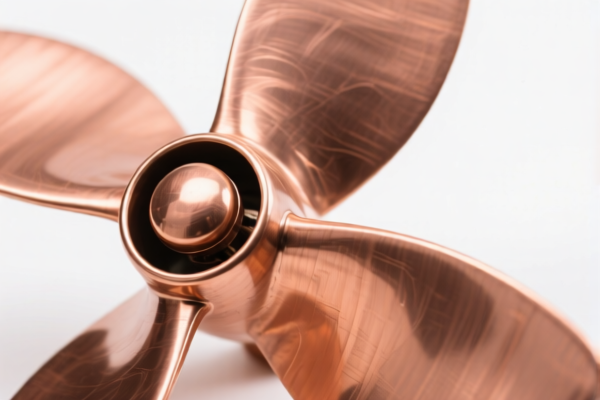
AI Analysis
🚢 Propeller Blades (Marine Propeller Blades)
🌐 HS Code Reference & Customs Clearance Guide | 2026 Latest Tariff Analysis | Professional-Level Clearance Strategy
📌 I. Product Definition and Classification: Do You Truly Understand "Propeller Blades"?
Propeller blades are the critical hydrodynamic components of marine propulsion systems, directly converting engine torque into thrust. In international trade, they are primarily classified based on their function (part of a machine) and material.
- As Parts of Propellers (8487): Blades that are integral or specifically designed for propellers, viewed as "parts of machinery or appliances."
- As Transmission Parts (8483): Blades viewed strictly as components of transmission shafting systems.
⚠️ Key Distinction Point:
- If classified under 8487, they are often treated as "parts of machines" with a 0% base tariff (before additions).
- If classified under 8483, they are "parts of transmission parts," often attracting a 2.5%–2.8% base tariff.
- Material (metal/composite) is secondary to the functional classification in these specific headings, but must match the summary descriptions.
📦 II. HS Code Classification Details (2026 Latest Tariff Authoritative Comparison)
| HS Code | Product Description | Application Scenario | Base Tariff |
|---|---|---|---|
8487.10.00.80 |
Propeller blades as parts of propellers for ships/boats; mechanical component form; no material conflict. | Standard ship/boat propeller blades, mechanical parts | 0.0% |
8483.90.80.10 |
Blades belonging to parts of transmission elements; mechanical part characteristics; metal/composite material. | Propeller blades as transmission system components | 2.8% |
8487.10.00.40 |
Blades matching form and usage; material unspecified but no obvious conflict; complies with classification rules. | General propeller blades, unspecified material | 0.0% |
8483.90.50.80 |
Blades belonging to other transmission element parts; part attributes under other categories; metal/composite. | Propeller blades as other transmission components | 2.5% |
🔍 Key Reminder:
- 8487.10 codes generally offer a 0% base duty, making them highly attractive for cost optimization if the product strictly fits the "part of a propeller" definition.
- 8483.90 codes carry small base duties (2.5%–2.8%) because they are classified under "transmission parts."
- Do not mix materials: Ensure the product description explicitly states "metal or composite" if using 8483 codes to avoid rejection for vague material claims.
💰 III. 2026 Latest Tariff Rate Details (Including Additional Taxes, Policy Add-ons)
✅ Applicable Country: United States (US)
✅ Origin: China (CN)
✅ Effective Date: From November 10, 2025 (including subsequent imports)
🎯 1. 8487.10.00.80 & 8487.10.00.40 —— Propeller Blades (Part of Propeller)
These two HS codes share the same total tax structure because they both have a 0% Base Tariff.
| Item | Content |
|---|---|
| Base Tariff | 0.0% (ad valorem) |
| USITC Additional Tax | +25.0% (Section 301 Duty) |
| Section 122 Tariff | +10.0% (Specific China Tariff) |
| Total Tax Rate | 35.0% |
| Tax Calculation | CIF Value × 35% |
| De Minimis Eligibility | ❌ Not Eligible (deny_de_minimis) |
| Legal Basis Path | USITC:8487.10.00.80 → Section 301 + Section 122 |
📌 Explanation:
- Although the base duty is 0%, the 25% Section 301 and 10% Section 122 surcharges bring the total to 35%.
- This is a high-tax category due to the substantial additional levies on Chinese goods.
- Cost Tip: There is no difference in total tax between.80and.40subheadings for the US market, so choose based on the most accurate physical description.
🎯 2. 8483.90.80.10 & 8483.90.50.80 —— Propeller Blades (Transmission Parts)
These HS codes have small base duties, but the additional taxes significantly increase the total cost.
A. 8483.90.80.10
| Item | Content |
|---|---|
| Base Tariff | 2.8% |
| USITC Additional Tax | +25.0% |
| Section 122 Tariff | +10.0% |
| Total Tax Rate | 37.8% |
| Tax Calculation | CIF Value × 37.8% |
| De Minimis Eligibility | ❌ Not Eligible |
| Legal Basis Path | USITC:8483.90.80.10 → Section 301 + Section 122 |
📌 Note:
- The base duty of 2.8% makes this slightly more expensive than the 8487 codes (35.0%) by 2.8 percentage points.
- Use this code only if the blade is clearly defined as a transmission element part rather than a propeller part.
B. 8483.90.50.80
| Item | Content |
|---|---|
| Base Tariff | 2.5% |
| USITC Additional Tax | +25.0% |
| Section 122 Tariff | +10.0% |
| Total Tax Rate | 37.5% |
| Tax Calculation | CIF Value × 37.5% |
| De Minimis Eligibility | ❌ Not Eligible |
| Legal Basis Path | USITC:8483.90.50.80 → Section 301 + Section 122 |
📌 Note:
- This is the lowest base duty among the 8483 codes (2.5%), resulting in a total of 37.5%.
- It is still 2.5% higher than the 8487 codes.
- Best used for blades classified under "other transmission parts" where no more specific 8483 subheading applies.
🛠️ IV. Customs Clearance Practical Advice (Battlefield Pitfall Avoidance Guide)
✅ 1. Required Documentation List (All Mandatory)
| Document | Mandatory? | Description |
|---|---|---|
| ✅ Product Specification Sheet | ✔️ | Must include dimensions, material (metal/composite), weight, and application (ship type). |
| ✅ Technical Drawing/Blueprint | ✔️ | Critical for proving whether it is a "propeller part" (8487) or "transmission part" (8483). |
| ✅ Product Photos (with Nameplate) | ✔️ | Clear view of blade shape, hub connection, and any serial/model numbers. |
| ✅ Commercial Invoice | ✔️ | Must state: "Propeller Blade for Marine Use," not just "Metal Part." |
| ✅ Packing List | ✔️ | Detail individual blade packaging to prevent damage claims and clarify unit values. |
| ✅ Origin Certificate (CO) | ✔️ | Essential for proving China origin to apply (or avoid) preferential treatments (though unlikely for US CN origin). |
✅ 2. Declaration Strategy (Key Mantras)
🔥 "Blade Form, Function First; Base 0 vs 2.8%, Total 35 vs 37%!"
| Scenario | Correct Declaration | Wrong Practice |
|---|---|---|
| Standard Ship Propeller Blade | 8487.10.00.80 or .40 (Total 35%) |
Misdeclare as "Transmission Part" → 37.5%–37.8% |
| Blade as Part of Shafting System | 8483.90.80.10 (Total 37.8%) |
Misdeclare as "Propeller Part" → Risk of audit/refund |
| Composite Material Blades | Specify "Composite/Metal" in summary | Vague description "Propeller Part" → Delayed Clearance |
| Used vs. New Blades | Clearly state "New" | Misdeclare used as new → Potential fraud claims |
✅ 3. Special Situation Handling
| Situation | Handling Advice |
|---|---|
| OEM Custom Blades | Provide customer order + design drawings to prove specific use. Avoid generic terms. |
| Mixed Container (Parts + Complete Propellers) | Declare separately. Complete propellers may have different HS codes (e.g., 8487.10). Do not lump them together. |
| High-Value Carbon Fiber Blades | Ensure material declaration matches "composite." Customs may verify material composition via lab test. |
| Small Quantity Samples | Not eligible for De Minimis. High taxes (35%+) apply even for samples. Use correct HS code and pay taxes upfront. |
🌍 V. Global Main Market Clearance Comparison (2026 Latest)
| Country/Region | Recommended HS Code | Total Tariff (China Origin) | Certification Requirements | Notes |
|---|---|---|---|---|
| 🇺🇸 USA | 8487.10.00.80 |
35.0% | None specific (but documentation key) | 35% due to Sec 301 + Sec 122. |
| 🇪🇺 EU | 8487.10.00 |
~0% – 4.5% | CE (if applicable), RoHS | Lower base tariffs, no US-style surcharges. |
| 🇨🇳 China | 8487.10.00 |
0% – 2% | CCC (if applicable) | Very favorable import tariffs. |
| 🇯🇵 Japan | 8487.10.00 |
0% | JIS | Generally low/zero tariffs. |
📌 Conclusion:
- The US market is the most expensive for propeller blades from China due to the 35% effective rate.
- EU and Japan offer significantly lower total tariff burdens.
- Supply Chain Tip: If exporting to the US, ensure the HS code is precisely8487.10to minimize base duty, but budget for the 35% total cost.
📌 VI. Common Errors & Pitfall Guide (Blood-Tested Lessons)
❌ Error 1: Declaring "Propeller Blade" under 8483.90 when it is clearly a propeller part.
👉 Consequence: Paying 37.5%–37.8% instead of 35%. Small difference, but wrong classification risks audit.
❌ Error 2: Failing to specify Material (Metal vs. Composite).
👉 Consequence: Customs may reject the clearance or assign a higher default rate due to uncertainty.
❌ Error 3: Using "De Minimis" for small shipments.
👉 Consequence: Denied. Propeller blades are subject to specific trade remedies. You must pay the 35% tax.
❌ Error 4: Vague description "Part of Machine."
👉 Consequence: Classification dispute. Customs may reclassify under a less favorable heading.
✅ Correct Practice:
"Propeller Blade, Marine Use, Steel/Composite, Model XYZ, for Ship Engine, HS 8487.10.00.80"
🎯 VII. Conclusion: Professional Declaration, Save Time, Reduce Costs!
🎯 Remember the Mantra:
🔹 "8487 is King for Propellers (35% Total); 8483 is for Transmission Parts (37.5%–37.8%)."
🔹 "Base 0% + 25% + 10% = 35%. Do Not Forget Section 122!"
📌 Pro Tip:
If your propeller blades are originating from Vietnam, Mexico, or Thailand, you may be eligible to avoid Section 301/122 tariffs, reducing the rate to 0%–2.5%.
Recommendation: Apply for an Advance Ruling before shipment to confirm the exact HS code and tax liability.
📣 Immediate Action:
📞 Contact a professional customs broker + Provide Technical Drawings + Apply for HS Code Advance Ruling
🚀 Ensure your propeller blades clear customs smoothly, efficiently, and profitably!
✨ Professional Customs Clearance Starts with Accurate Classification!
💼 Every percent of tax matters in international trade!
Customer Reviews
About HS Code Classification
The Harmonized System (HS) is an internationally standardized nomenclature developed by the World Customs Organization (WCO) to classify traded products. Over 200 countries use the HS system as the basis for customs tariffs, trade statistics, and import/export regulations.
Each HS code follows a hierarchical structure:
- Chapter (2 digits) — Broad category of goods (e.g., Chapter 84: Machinery and Mechanical Appliances)
- Heading (4 digits) — More specific grouping within the chapter
- Subheading (6 digits) — Internationally standardized breakdown, used by all WCO member countries
- National subdivisions (8-10 digits) — Country-specific extensions for further classification, such as US HTSUS 10-digit codes
Correct HS code classification is essential for smooth customs clearance, accurate duty payment, and compliance with trade regulations. Misclassification can lead to customs delays, overpayment of duties, or penalties.
When importing from CN to US, the applicable tariff rates may include:
- Most-Favored-Nation (MFN) rate — The standard duty rate applied to WTO members
- General rate — Applied to countries without trade agreements
- Trade remedy duties — Additional tariffs such as Section 301 (anti-dumping), Section 232 (national security), or countervailing duties
The information provided on this page is for reference purposes only. For official classification, please consult with your local customs authority or a licensed customs broker.