血压计
CN → US| HS Code | Tariff Rate | Origin | Destination | Doc |
|---|---|---|---|---|
| 9018199530 | 35.0% | CN | US | Official Doc |
| 9018905040 | 10.0% | CN | US | Official Doc |
| 9025805000 | 19.1% | CN | US | Official Doc |
Product Images
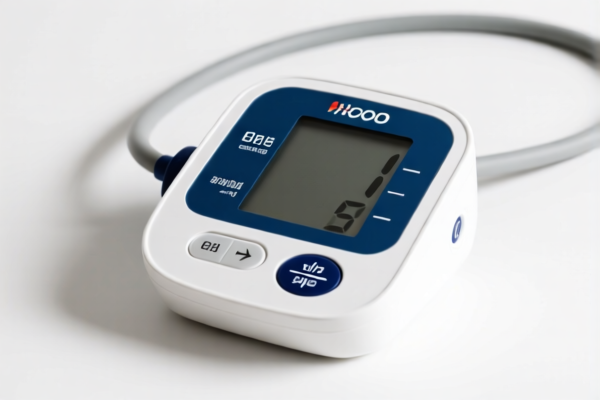

AI Analysis
🩺 Blood Pressure Monitor (Sphygmomanometers)
🌐 HS Code & Tariff Guide | 2026 Customs Classification & Duty Breakdown | Professional Clearance Strategy
📌 One-Stop Reference for Importers & Exporters | Accurate HS Code Assignment & Tax Clarity
📌 一、Product Definition & Classification: What Exactly Is a Blood Pressure Monitor?
A blood pressure monitor is a medical device used to measure arterial pressure in humans, primarily for diagnosing hypertension and monitoring cardiovascular health. In international trade, it is classified under specific HS Codes based on function, design, and whether it includes accessories or components.
⚠️ Key Distinction:
- If the device is fully functional (with display, pump, cuff, and control system) → Complete device
- If it includes only parts or accessories (e.g., cuffs, tubing, batteries) → Component or accessory
- If used in clinical settings and designed for professional use → May fall under broader medical instruments
📦 二、HS Code Classification Details (2026 Updated Tariff Schedule)
| HS Code | Product Description | Usage Scenario | Functional Completeness |
|---|---|---|---|
9018.19.95.30 |
Blood pressure monitors for human use; fully functional devices with integrated display, pump, and control | Home use, clinics, hospitals | ✅ Fully functional |
9018.90.50.40 |
Parts, accessories, or components of blood pressure monitors (e.g., cuffs, tubing, batteries) | Replacement parts, spare kits | ❌ Not complete device |
9025.80.50.00 |
Clinical medical measurement instruments, including automated blood pressure devices used in professional settings | Hospitals, diagnostic centers, clinical trials | ✅ High-functionality, professional-grade |
🔍 Critical Note:
-9018.19.95.30applies only to complete, ready-to-use blood pressure monitors — not parts or modules.
-9018.90.50.40covers only accessories — even if sold together with the main unit, they must be declared separately if not part of a single functional system.
-9025.80.50.00is for high-end, clinically used instruments, often with data logging, connectivity, and advanced diagnostics.
💰 三、2026 Latest Tariff Breakdown (With Detailed Duty Clauses)
✅ Applicable Country: United States (US)
✅ Origin Country: China (CN)
✅ Effective Date: November 10, 2025 (including subsequent imports)
🎯 1. 9018.19.95.30 — Complete Blood Pressure Monitors (Fully Functional)
| Item | Details |
|---|---|
| Base Tariff Rate | 0.0% (ad valorem) |
| Section 301 Additional Duty (USITC) | +25.0% |
| Section 122 Clause Duty (IEEPA) | +10.0% |
| Total Effective Duty | 35.0% |
| Duty Calculation | CIF Value × 35.0% |
| De Minimis Threshold | ❌ Not applicable (denied) |
| Legal Basis Path | IEEPA:9903.01.25 → IEEPA:9903.01.24 → USITC:9018.19.95.30 → FOOTNOTE:9903.88.01 |
📌 Explanation:
- 25% USITC (Section 301): Imposed under the U.S. Trade Act of 1974 due to alleged unfair trade practices by China.
- 10% IEEPA (Section 122): Levied under the International Emergency Economic Powers Act (IEEPA) targeting Chinese-origin goods.
- Total: 35% — one of the highest tariffs for consumer medical devices imported from China.
🎯 2. 9018.90.50.40 — Parts & Accessories for Blood Pressure Monitors
| Item | Details |
|---|---|
| Base Tariff Rate | 0.0% |
| Section 301 Additional Duty (USITC) | +0.0% |
| Section 122 Clause Duty (IEEPA) | +10.0% |
| Total Effective Duty | 10.0% |
| Duty Calculation | CIF Value × 10.0% |
| De Minimis Threshold | ❌ Not applicable |
| Legal Basis Path | IEEPA:9903.01.25 → IEEPA:9903.01.24 → 9018.90.50.40 → FOOTNOTE:9903.88.01 |
📌 Explanation:
- No 301 duty applied — because these are non-functional components, not final products.
- 10% IEEPA duty still applies — due to the origin of the component being China.
- Even if sold with the main unit, if declared as separate items, this tariff applies.
🎯 3. 9025.80.50.00 — Clinical Medical Measurement Instruments (Professional-Grade)
| Item | Details |
|---|---|
| Base Tariff Rate | 1.6% |
| Section 301 Additional Duty (USITC) | +7.5% |
| Section 122 Clause Duty (IEEPA) | +10.0% |
| Total Effective Duty | 19.1% |
| Duty Calculation | CIF Value × 19.1% |
| De Minimis Threshold | ❌ Not applicable |
| Legal Basis Path | IEEPA:9903.01.25 → IEEPA:9903.01.24 → 9025.80.50.00 → FOOTNOTE:9903.88.01 |
📌 Explanation:
- Higher base rate (1.6%) due to classification as clinical medical equipment.
- 7.5% USITC duty — lower than 25% because of less aggressive targeting of clinical instruments under Section 301.
- 10% IEEPA duty still applies due to Chinese origin.
- Total: 19.1% — significantly lower than consumer monitors, but still high.
🛠️ 四、Customs Clearance Best Practices (Pro Tips to Avoid Penalties)
✅ 1. Required Documentation (Must-Have Checklist)
| Document | Required? | Notes |
|---|---|---|
| ✅ Product Specification Sheet | ✔️ | Include model, measurement type (digital/automatic), display, power source |
| ✅ Circuit Diagram / Internal Structure | ✔️ | Prove whether it's a complete device or just a module |
| ✅ Product Photos (with label & interface) | ✔️ | Show brand, model, interface ports, battery type |
| ✅ Third-Party Certification | ✔️ | FDA (if applicable), CE, ISO 13485, RoHS, UL (if powered) |
| ✅ Commercial Invoice | ✔️ | Clearly state: "Digital Blood Pressure Monitor, Fully Functional, Model XYZ" |
| ✅ Certificate of Origin (CO) | ✔️ | Essential for claiming preferential rates (e.g., if from Vietnam/Mexico) |
| ✅ Packing List | ✔️ | Distinguish between main unit and accessories |
✅ 2.申报技巧 (Declaration Tips – Key Rules)
🔥 “Full unit stays whole, parts go separate, name matters, duty drops fast!”
| Scenario | Correct HS Code | Wrong Approach |
|---|---|---|
| Complete monitor with cuff, pump, display, battery | 9018.19.95.30 |
Split into parts → 35% + 10% = 45%+ |
| Only replacement cuff or tubing | 9018.90.50.40 |
Declare as "monitor" → 35% tax |
| Hospital-grade device with data logging & Bluetooth | 9025.80.50.00 |
Misdeclare as home-use → 35% instead of 19.1% |
| Monitor + accessories in one box | Declare as one unit if functional together | Split → each item taxed separately → higher total duty |
✅ 3. Special Cases Handling
| Situation | Recommended Action |
|---|---|
| OEM/White-label monitors | Provide customer PO + design specs; avoid “non-standard” classification |
| Monitor with Bluetooth/Wi-Fi connectivity | Still falls under 9018.19.95.30 unless used in clinical trials |
| Used for medical research or clinical trials | Apply for “non-commercial use” exemption — requires supporting documentation |
| Monitors for military or emergency use | Request “special-purpose” clearance — may qualify for reduced duty |
🌍 五、Global Market Customs Comparison (2026 Update)
| Country/Region | Recommended HS Code | Tariff Rate | Certification Required | Notes |
|---|---|---|---|---|
| 🇺🇸 United States | 9018.19.95.30 |
35.0% (China) | FDA, CE, RoHS | 35% is extremely high |
| 🇨🇳 China | 9018.19.95.30 |
5.0% | CCC, ISO 13485 | No extra tariffs |
| 🇪🇺 European Union | 9018.19.95.30 |
0% (if CE compliant) | CE, MDR | No IEEPA/301 duties |
| 🇦🇺 Australia | 9018.19.95.30 |
5.0% | RCM | No extra duties |
| 🇯🇵 Japan | 9018.19.95.30 |
0% | PSE | No additional tariffs |
📌 Insight:
- Only the U.S. applies the 35% tariff on Chinese-made blood pressure monitors.
- China, EU, Australia, and Japan have no extra duties — ideal for export diversification.
📌 六、Common Mistakes & How to Avoid Them (Real-World Pitfalls)
❌ Mistake 1: Splitting a complete monitor + cuff + battery into separate items
👉 Result: 9018.19.95.30 (35%) + 9018.90.50.40 (10%) = 45% total tax → massive overpayment
❌ Mistake 2: Declaring a clinical-grade monitor as a "home-use" device
👉 Result: Tax jumps from 19.1% to 35% → $10k+ in extra cost per shipment
❌ Mistake 3: Using “blood pressure device” or “medical monitor” without specifying function
👉 Result: Customs can’t verify if it’s a full device → delayed clearance or rejection
❌ Mistake 4: Not providing circuit diagrams or internal structure
👉 Result: Customs may classify as “component” → lower value, higher risk of audit
✅ Correct Declaration Example:
"Digital Automatic Blood Pressure Monitor, 2400mAh Battery, Bluetooth 5.0, CE & FDA Listed, Model XYZ, Fully Functional, Includes Cuff & User Manual"
🎯 七、Final Verdict: Accurate Classification = Cost Savings & Smooth Clearance
🎯 Remember the Golden Rules:
🔹 "Full device stays whole, parts go separate, name matters, duty drops fast!"
🔹 "Wrong HS Code = 35% vs 19.1% = $10k+ difference per 100 units!"
📌 Pro Tip:
If your blood pressure monitors are originating from Vietnam, Mexico, Thailand, or Malaysia, you may qualify for IEEPA exemption — duty drops to 0%–5%.
👉 Apply for Advance Ruling (Pre-Approval) to lock in the correct HS Code and avoid costly disputes.
📣 Take Action Now:
📞 Contact a licensed customs broker + submit product photos + request HS Code Pre-Ruling
🚀 Ensure smooth, compliant, and cost-effective entry into the U.S. and global markets!
✨ Precision in Classification = Profit in Trade!
💼 Your next shipment deserves zero surprises — declare right the first time!
Customer Reviews
About HS Code Classification
The Harmonized System (HS) is an internationally standardized nomenclature developed by the World Customs Organization (WCO) to classify traded products. Over 200 countries use the HS system as the basis for customs tariffs, trade statistics, and import/export regulations.
Each HS code follows a hierarchical structure:
- Chapter (2 digits) — Broad category of goods (e.g., Chapter 84: Machinery and Mechanical Appliances)
- Heading (4 digits) — More specific grouping within the chapter
- Subheading (6 digits) — Internationally standardized breakdown, used by all WCO member countries
- National subdivisions (8-10 digits) — Country-specific extensions for further classification, such as US HTSUS 10-digit codes
Correct HS code classification is essential for smooth customs clearance, accurate duty payment, and compliance with trade regulations. Misclassification can lead to customs delays, overpayment of duties, or penalties.
When importing from CN to US, the applicable tariff rates may include:
- Most-Favored-Nation (MFN) rate — The standard duty rate applied to WTO members
- General rate — Applied to countries without trade agreements
- Trade remedy duties — Additional tariffs such as Section 301 (anti-dumping), Section 232 (national security), or countervailing duties
The information provided on this page is for reference purposes only. For official classification, please consult with your local customs authority or a licensed customs broker.