行李与旅行配件
CN → US| HS Code | Tariff Rate | Origin | Destination | Doc |
|---|---|---|---|---|
| 9617001000 | 17.2% | CN | US | Official Doc |
| 4202321000 | 0.0% | CN | US | Official Doc |
| 4202329300 | 52.6% | CN | US | Official Doc |
| 9617006000 | 17.2% | CN | US | Official Doc |
Product Images
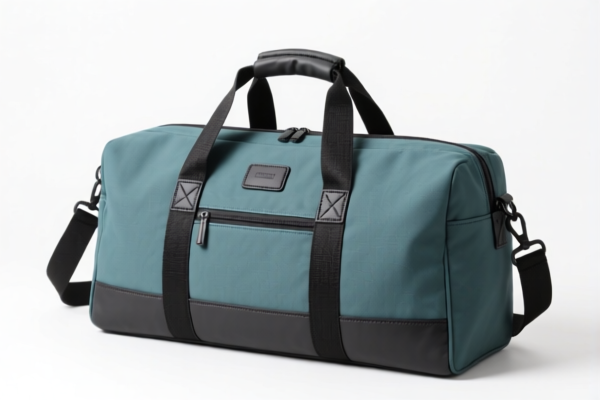
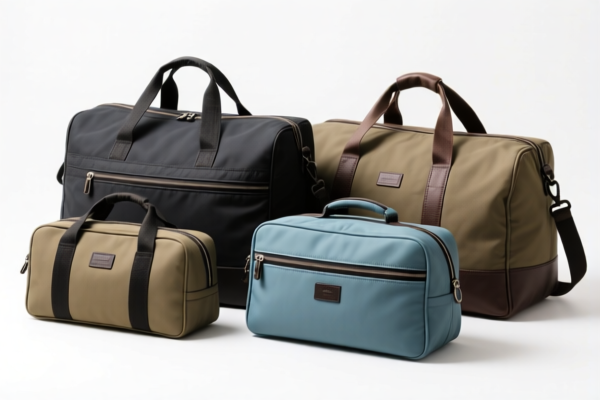
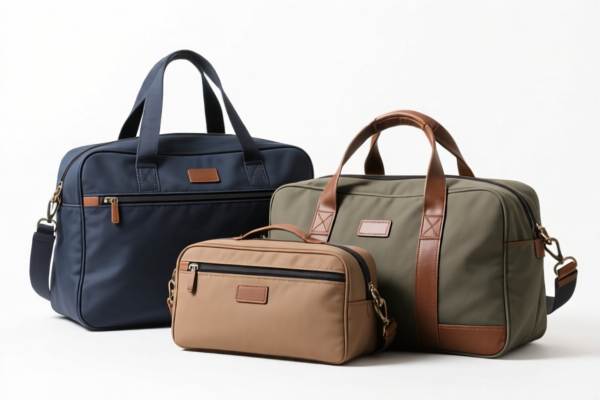
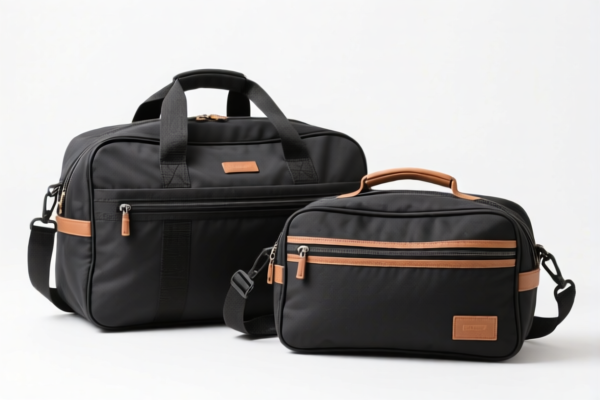
AI Analysis
🧳 Luggage & Travel Accessories (行李与旅行配件)
🌐 HS Code Reference & Customs Clearance Guide | 2026 Latest Tariff Analysis | Strategic Clearance Strategy
📌 I. Product Definition & Classification: Do You Really Understand "Travel Accessories"?
"Luggage and Travel Accessories" is a broad category in international trade, often falling into multi-purpose or ambiguous classifications. Unlike standardized electronics, their HS Code classification heavily depends on material composition, specific use, and structural integrity.
Two Main Categories:
1. Specialized Travel Goods (Bags/Cases): * Defined by specific usage: carrying personal items during travel. * Must meet the definition of "articles of apparel and衣着 accessories" or "suitcases." * Key Distinction: If it’s a bag/holder with a specific travel function → Chapter 42.
2. General Accessories / Multi-purpose Items: * Items like vacuum flask parts, generic organizers, or unstructured accessories. * Often classified under "Other articles" or "Parts of other articles." * Key Distinction: If it lacks a specific bag structure or is made of non-textile/non-leather materials → Chapter 96 or General Provisions.
⚠️ Critical Classification Point:
- If it is a bag/case designed for travel → Likely 4202 (Article of Apparel/Luggage).
- If it is a generic accessory or multi-purpose item with no clear material conflict → Likely 9617 (Thermos Vessels Parts/Other) or a catch-all category.
📦 II. HS Code Classification Details (2026 Latest Tariff Authority Reference)
Based on the provided data, here are the four possible HS Code classifications for "Luggage & Travel Accessories":
| HS Code | Product Description | Application Scenario | Tax Implication |
|---|---|---|---|
9617.00.10.00 |
Travel Accessories (Multi-purpose/Catch-all) | Items deemed "multi-purpose" or "ambiguous" with no material conflict. Fits parts/components or catch-all rules. | Lowest Duty (17.2%) |
4202.32.10.00 |
Carry-on Travel Goods | Items inferred to be for "carrying personal items" (personal effects). Fits personal goods usage description. | Moderate Duty (12.1¢/kg + 39.6%) |
4202.32.93.00 |
Other Travel Accessories (Ambiguous) | Usage/form ambiguous, no textile/plastic conflict. Default tendency for accessory categories. | Highest Duty (52.6%) |
9617.00.60.00 |
Other Accessories (Catch-all) | Based on catch-all principles for multi-purpose/ambiguous items. May include vacuum container accessories. | Lowest Duty (17.2%) |
🔍 Key Insight:
- HS 4202.32.xxxx applies if the item is strictly defined as luggage/bags for carrying items.
- HS 9617.00.xxxx applies if the item is treated as a generic accessory or part of a thermos/vacuum container, leveraging "catch-all" rules for ambiguous multi-purpose items.
- Avoid 4202.32.93.00 if possible, as it carries the highest total tax burden (52.6%).
💰 III. 2026 Latest Tariff Rate Details (Including Additional Duties)
✅ Applicable Country: United States (US)
✅ Origin: China (CN)
✅ Effective Time: Includes subsequent imports (Post-Nov 10, 2025)
🎯 1. 9617.00.10.00 & 9617.00.60.00 —— Travel Accessories / Catch-all
| Item | Content |
|---|---|
| Basic Duty | 7.2% |
| Section 301 Additional Duty | 0.0% (No Section 301 tariff applied for these specific sub-headings in this dataset) |
| Section 122 Duty | +10% (For imports <$800, de minimis threshold adjustments) |
| Total Duty Rate | 17.2% |
| Tax Calculation | CIF Value × 17.2% |
| De Minimis Exemption | ⚠️ Subject to Section 122 Rules (Check current $800 threshold eligibility) |
| Legal Basis Path | USITC:9617.00.10.00 / 9617.00.60.00 → Section 122: 10% |
📌 Explanation:
- These codes benefit from lower base tariffs (7.2%) and no Section 301 surcharge.
- The 10% Section 122 duty applies to de minimis shipments.
- Total 17.2% is significantly more favorable than Chapter 42 classifications.
🎯 2. 4202.32.10.00 —— Carry-on Travel Goods
| Item | Content |
|---|---|
| Basic Duty | 12.1¢/kg + 4.6% (Ad Valorem) |
| Section 301 Additional Duty | 25.0% |
| Section 122 Duty | +10% |
| Total Duty Rate | 12.1¢/kg + 39.6% + 10% (Section 122) |
| Tax Calculation | (Weight × 12.1¢) + (CIF Value × 39.6%) + Section 122 Adjustment |
| De Minimis Exemption | ❌ Not Eligible (Section 301 duties usually negate de minimis benefits for Chinese goods) |
| Legal Basis Path | USITC:4202.32.10.00 → Section 301: 25% → Section 122: 10% |
📌 Note:
- This classification incurs both Section 301 (25%) and Section 122 (10%) duties.
- The weight-based duty (12.1¢/kg) adds complexity for heavy items.
- Total effective rate is much higher, especially for high-value goods.
🎯 3. 4202.32.93.00 —— Other Travel Accessories
| Item | Content |
|---|---|
| Basic Duty | 17.6% |
| Section 301 Additional Duty | 25.0% |
| Section 122 Duty | +10% |
| Total Duty Rate | 52.6% |
| Tax Calculation | CIF Value × 52.6% |
| De Minimis Exemption | ❌ Not Eligible |
| Legal Basis Path | USITC:4202.32.93.00 → Section 301: 25% → Section 122: 10% |
📌 Warning:
- This is the most expensive classification (52.6%).
- Avoid this code unless the product strictly fits this ambiguous "other" category with no better option.
🛠️ IV. Customs Clearance Practical Advice (Battle-Tested Pitfall Guide)
✅ 1. Preparation Checklist (Must-Haves)
| Document | Required | Explanation |
|---|---|---|
| ✅ Product Specifications | ✔️ | Dimensions, material, capacity, intended use (e.g., "for travel," "for storage"). |
| ✅ Product Photos | ✔️ | Clear shots of the item, showing its structure (bag vs. accessory). |
| ✅ Commercial Invoice | ✔️ | Describe item accurately: e.g., "Travel Organizer" vs. "Luggage Bag." |
| ✅ Packing List | ✔️ | Detailed breakdown of items to avoid bulk classification errors. |
| ✅ Material Declaration | ✔️ | Specify materials (e.g., nylon, plastic, leather) to support HS Code choice. |
✅ 2. Classification Strategy (Key Tips)
🔥 "Ambiguity Favors Chapter 96, Structure Favors Chapter 42!"
| Scenario | Recommended HS Code | Risk Level |
|---|---|---|
| Bag/Case with zippers/compartments | 4202.32.10.00 |
⚠️ Medium (High tax due to Sec 301) |
| Generic Accessory (e.g., pouch, organizer) with no specific travel structure | 9617.00.10.00 or 9617.00.60.00 |
✅ Low (Best tax outcome) |
| Item with ambiguous use, no clear material conflict | 9617.00.10.00 |
✅ Low (Leverages "multi-purpose" rule) |
| Item that doesn't fit other categories clearly | 4202.32.93.00 |
❌ High (Avoid if possible) |
✅ 3. Special Cases Handling
| Case | Recommendation |
|---|---|
| OEM Custom Bags | Provide design blueprints to prove "luggage" status. Use 4202.32.10.00 if structure is clear. |
| Vacuum Flask Accessories | Classify under 9617 if they are parts of thermos vessels. Leverages lower tariff. |
| Multi-functional Travel Organizers | Argue for 9617.00.10.00 as "multi-purpose/catch-all" to avoid Chapter 42 duties. |
| Mixed Shipments (Bags + Accessories) | Separate declaration. Bags under 4202, accessories under 9617 to optimize total duty. |
🌍 V. Global Market Clearance Comparison (2026 Latest)
| Country/Region | Recommended HS Code | Duty Rate (China Origin) | Key Certifications | Notes |
|---|---|---|---|---|
| 🇺🇸 USA | 9617.00.10.00 |
17.2% | None required for de minimis | Avoid 4202 due to 301 duties. |
| 🇺🇸 USA | 4202.32.10.00 |
~39.6% + 12.1¢/kg | None required | High duty due to Section 301. |
| 🇨🇳 China | 4202.32.00.00 |
5% - 15% | CCC (if applicable) | Lower base duty, no Section 301. |
| 🇪🇺 EU | 4202.32.00 |
0% - 4% | CE (if electronic) | No additional anti-dumping duties. |
| 🇬🇧 UK | 4202.32.00 |
4% | UKCA | Post-Brexit rules apply. |
📌 Conclusion:
- USA is the most challenging market due to Section 301 and Section 122 duties.
- Chapter 96 (9617) offers the best tax efficiency for ambiguous/travel accessories.
- Chapter 42 (4202) is costly due to 25% Section 301 surcharge.
📌 VI. Common Mistakes & Pitfall Guide (Lessons Learned)
❌ Mistake 1: Classifying all travel items as 4202 (Luggage)
👉 Result: Incurring 25% Section 301 duty unnecessarily.
Fix: Argue for 9617 if the item is a generic accessory or multi-purpose.
❌ Mistake 2: Using vague descriptions like "Travel Item"
👉 Result: Customs delays, potential reclassification to 4202.32.93.00 (52.6% duty).
Fix: Provide specific material and usage details in the invoice.
❌ Mistake 3: Ignoring Section 122 Rules
👉 Result: De minimis exemption denied, leading to higher duties.
Fix: Ensure shipments comply with Section 122 requirements for $800 threshold.
✅ Correct Practice:
"Travel Organizer Pouch, Nylon, Multi-Purpose, Non-Structural, Model XYZ"
🎯 VII. Conclusion: Precise Classification, Cost Savings, Efficiency!
🎯 Remember This:
🔹 "Ambiguity = Chapter 96, Structure = Chapter 42"
🔹 "Section 301 adds 25%, so avoid4202if possible!"
🔹 "Use9617for accessories to save 35%+ in duties!"
📌 Pro Tip:
If your products are originating from Vietnam, Mexico, or Malaysia, you may qualify for IEEPA exemptions or lower tariffs. Consider Advance Rulings to secure favorable HS Code classifications before shipping.
📣 Take Action Now:
📞 Contact professional customs brokers + Provide product photos + Apply for HS Code Advance Rulings
🚀 Ensure smooth clearance, minimize costs, and maximize profits!
✨ Professional clearance starts with precise classification!
💼 Every cent of cost is worth precise calculation!
Customer Reviews
About HS Code Classification
The Harmonized System (HS) is an internationally standardized nomenclature developed by the World Customs Organization (WCO) to classify traded products. Over 200 countries use the HS system as the basis for customs tariffs, trade statistics, and import/export regulations.
Each HS code follows a hierarchical structure:
- Chapter (2 digits) — Broad category of goods (e.g., Chapter 84: Machinery and Mechanical Appliances)
- Heading (4 digits) — More specific grouping within the chapter
- Subheading (6 digits) — Internationally standardized breakdown, used by all WCO member countries
- National subdivisions (8-10 digits) — Country-specific extensions for further classification, such as US HTSUS 10-digit codes
Correct HS code classification is essential for smooth customs clearance, accurate duty payment, and compliance with trade regulations. Misclassification can lead to customs delays, overpayment of duties, or penalties.
When importing from CN to US, the applicable tariff rates may include:
- Most-Favored-Nation (MFN) rate — The standard duty rate applied to WTO members
- General rate — Applied to countries without trade agreements
- Trade remedy duties — Additional tariffs such as Section 301 (anti-dumping), Section 232 (national security), or countervailing duties
The information provided on this page is for reference purposes only. For official classification, please consult with your local customs authority or a licensed customs broker.