袖章
CN → US| HS Code | Tariff Rate | Origin | Destination | Doc |
|---|---|---|---|---|
| 6217108500 | 24.6% | CN | US | Official Doc |
| 6217109550 | 32.1% | CN | US | Official Doc |
| 6117809570 | 32.1% | CN | US | Official Doc |
| 6117808500 | 32.1% | CN | US | Official Doc |
Product Images
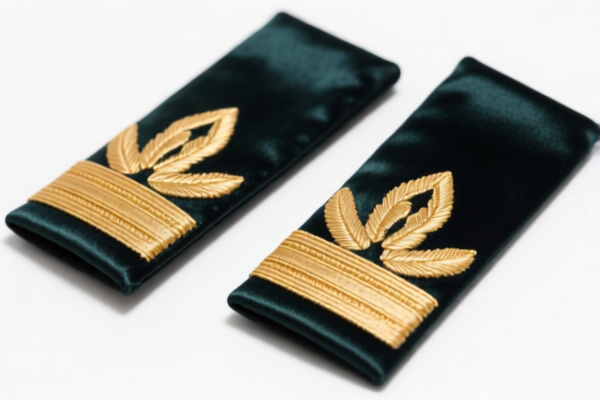
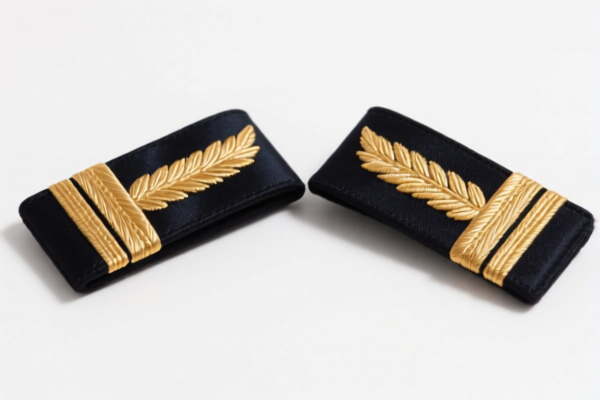
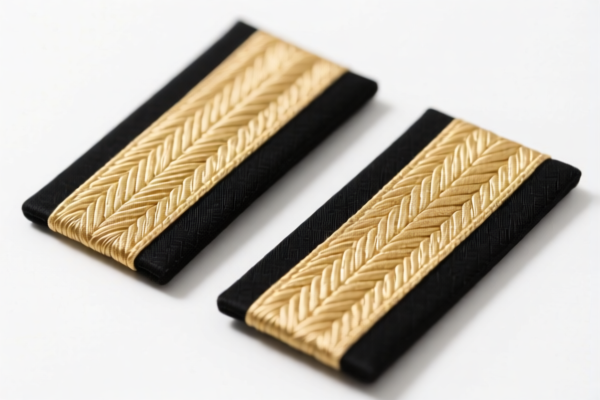

AI Analysis
🎖️ Armbands (Sleeve Badges / Insignia)
🌐 HS Code Reference & Customs Clearance Guide | 2026 Latest Tariff Analysis | Professional Clearance Strategy
📌 I. Product Definition & Classification: Do You Really Understand "Armbands"?
Armbands, in the context of international trade, refer to fabric or synthetic fiber accessories worn on the upper arm. They serve various purposes, including military insignia, organizational membership indicators, medical symbols, or decorative fashion elements.
In international trade, they are primarily classified as "Parts and Accessories of Clothing" (服装附件). The key distinction lies in their material (Knitted vs. Non-Knitted/Woven) and construction, which dictates the HS Code and, consequently, the tariff burden.
⚠️ Key Distinction Point:
- If the armband is Knitted or Crocheted (e.g., jersey, sweatshirt material) → Falls under Chapter 61.
- If the armband is Woven, Stitched, or Made from Non-Knitted Fabrics (e.g., canvas, woven polyester, felt) → Falls under Chapter 62.
- Note: Most commercial/organizational armbands are Woven/Non-Knitted, but military-style elastic bands may be Knitted.
📦 II. HS Code Classification Details (2026 Latest Tariff Authority Comparison)
Based on the provided data, here are the specific HS Codes for Armbands, categorized by material and construction logic:
| HS Code | Product Description | Material Logic | Applicable Scenario |
|---|---|---|---|
6117.80.95.70 |
Other made-up clothing accessories; Knitted/Crocheted | Synthetic Fiber / Knitted | Elastic arm bands, knitted insignia, synthetic fabric accessories |
6217.10.85.00 |
Other made-up clothing accessories; Non-Knitted | Fabric / Woven | Woven patches, cloth badges, non-knitted fabric attachments |
6217.10.95.50 |
Other made-up clothing accessories; Non-Knitted (Misc.) | Fabric / Other Textile | Generic fabric armbands, embroidered cloth badges |
6117.80.85.00 |
Other made-up clothing accessories; Knitted/Crocheted | Knitted / Fabric Blend | Knitted armbands, blended fabric accessories |
🔍 Important Reminder:
- All armbands are treated as Clothing Accessories (附件), not standalone garments.
- The difference between Chapter 61 (Knitted) and Chapter 62 (Non-Knitted) is critical for classification.
- If the armband includes metal pins, badges, or complex embroidery, it is still generally classified under "Made-up Clothing Accessories" unless it is purely a decorative badge (which might fall under different headings, but based on the provided data, it stays within these 61/62 codes).
💰 III. 2026 Latest Tariff Rate Detailed Breakdown (Including Additional Duties, Policy Surcharges)
✅ Applicable Country: United States (US)
✅ Country of Origin: China (CN)
✅ Effective Date: Current 2025/2026 Trade Framework (Section 301 & 122 Clauses)
🎯 1. 6117.80.95.70 — Knitted/Synthetic Armbands
| Item | Content |
|---|---|
| Base Tariff Rate | 14.6% (ad valorem) |
| Section 301 Additional Tariff | +7.5% (USITC Footnote associated with Chapter 61 accessories) |
| Section 122 Tariff | +10% (Special provision for specific textile/apparel imports) |
| Total Tariff Rate | 32.1% |
| Tax Calculation | CIF Value × 32.1% |
| De Minimis Eligibility | ❌ NO (Denied) |
| Legal Basis Path | Base Tariff: 14.6% → Add-on: 7.5% → Sec 122: 10% |
📌 Explanation:
- "Base Tariff 14.6%": Standard US MFN rate for knitted clothing accessories.
- "Additional Tariff 7.5%": Part of the broader Section 301 tariffs on Chinese textiles.
- "Sec 122 Tariff 10%": A specific add-on for certain apparel/apparel-related goods from China.
- Total 32.1%: A significant cost driver. Must be accounted for in pricing.
🎯 2. 6217.10.85.00 — Woven/Fabric Armbands (Lowest Risk)
| Item | Content |
|---|---|
| Base Tariff Rate | 14.6% (ad valorem) |
| Section 301 Additional Tariff | 0.0% (Specific exemption or lower bracket for this subheading) |
| Section 122 Tariff | +10% (Specific provision applies) |
| Total Tariff Rate | 24.6% |
| Tax Calculation | CIF Value × 24.6% |
| De Minimis Eligibility | ❌ NO (Denied) |
| Legal Basis Path | Base Tariff: 14.6% → Add-on: 0.0% → Sec 122: 10% |
📌 Note:
- This is the most cost-effective HS Code for armbands if the material is non-knitted (woven).
- The 0% additional tariff under Section 301 for this specific subheading (6217.10.85.00) makes it highly preferable over other knitted options.
- Suitable for woven polyester, canvas, or cloth badges.
🎯 3. 6217.10.95.50 — Other Woven/Fabric Armbands
| Item | Content |
|---|---|
| Base Tariff Rate | 14.6% (ad valorem) |
| Section 301 Additional Tariff | +7.5% |
| Section 122 Tariff | +10% |
| Total Tariff Rate | 32.1% |
| Tax Calculation | CIF Value × 32.1% |
| De Minimis Eligibility | ❌ NO (Denied) |
| Legal Basis Path | Base Tariff: 14.6% → Add-on: 7.5% → Sec 122: 10% |
📌 Warning:
- This code applies to woven armbands that do not fall under the specific85.00subheading.
- It incurs the full 7.5% additional tariff, making the total 32.1% — same as knitted options.
- Ensure proper material description to avoid misclassification.
🎯 4. 6117.80.85.00 — Knitted/Fabric Blended Armbands
| Item | Content |
|---|---|
| Base Tariff Rate | 14.6% (ad valorem) |
| Section 301 Additional Tariff | +7.5% |
| Section 122 Tariff | +10% |
| Total Tariff Rate | 32.1% |
| Tax Calculation | CIF Value × 32.1% |
| De Minimis Eligibility | ❌ NO (Denied) |
| Legal Basis Path | Base Tariff: 14.6% → Add-on: 7.5% → Sec 122: 10% |
📌 Note:
- Applies to knitted or blended fabric armbands not covered by95.70.
- Same high tariff burden as other knitted categories.
🛠️ IV. Customs Clearance Practical Advice (Real-World Pitfall Guide)
✅ 1. Preparation Checklist (Missing Items = Delays)
| Document | Required | Description |
|---|---|---|
| ✅ Product Specifications | ✔️ | Material composition (e.g., 100% Polyester, Knitted vs. Woven), dimensions, weight |
| ✅ Product Photos | ✔️ | Clear images showing attachment method (elastic, sew-on, pin-back) |
| ✅ Material Test Report | ✔️ | To confirm "Knitted" vs. "Woven" status |
| ✅ Commercial Invoice | ✔️ | Must clearly state "Armband" or "Clothing Accessory" |
| ✅ Packing List | ✔️ | Itemized count and total value |
✅ 2. Declaration Tips (Critical Rules)
🔥 “Material is King, Knit or Weave decides the Price!”
| Situation | Correct Declaration | Wrong Practice |
|---|---|---|
| Woven Cloth Badge | 6217.10.85.00 |
Misdeclare as Knitted → 32.1% |
| Elastic Knitted Band | 6117.80.95.70 |
Misdeclare as Woven → Risk of penalty |
| Mixed Material (Knitted + Woven) | Classify by Major Material | Guessing → 32.1% |
| Armband with Metal Pin | Still 6217.10.85.00 (if fabric dominant) |
Declare as "Metal Badge" → Wrong Chapter |
✅ 3. Special Cases
| Situation | Handling Advice |
|---|---|
| Military Armbands | Provide official documentation to confirm purpose; still subject to tariffs |
| Medical Armbands (e.g., Allergy) | Classify as fabric accessory; ensure no medical device classification is triggered |
| Fashion Armbands (Denim, Leather) | Denim → Chapter 62; Leather → May require different code (not in current data) |
| Embroidered Patches | Still fall under 6217.10.85.00 if woven fabric base |
🌍 V. Global Market Comparison (2026 Latest)
| Country/Region | Recommended HS Code | Tariff (China Origin) | Certification Requirements | Remarks |
|---|---|---|---|---|
| 🇺🇸 USA | 6217.10.85.00 |
24.6% | None specific for fabric | Lowest among options; avoid 32.1% |
| 🇺🇸 USA | 6117.80.95.70 |
32.1% | None specific for fabric | Higher cost; use only if knitted |
| 🇨🇳 China | 6217.10.85.00 |
5% | None | Domestic market friendly |
| 🇪🇺 EU | 6217.10.85.00 |
4.5% | REACH (if synthetic dyes) | No Section 301 equivalent |
| 🇬🇧 UK | 6217.10.85.00 |
4.5% | UKCA (if applicable) | Post-Brexit standards apply |
📌 Conclusion:
- USA is the most challenging market due to Section 301 and Section 122 tariffs.
- Opt for6217.10.85.00if your armbands are woven/non-knitted to save 7.5% in additional tariffs.
- Knitted armbands (6117.80.95.70) incur the full 32.1% burden.
📌 VI. Common Errors & Pitfall Guide (Lessons Learned)
❌ Error 1: Declaring a woven armband as 6117.80.95.70 (Knitted)
👉 Consequence: No cost saving, but risk of customs audit for misclassification.
❌ Error 2: Assuming all armbands are taxed at 14.6%
👉 Consequence: Underpaying taxes by 10-17.5%, leading to back taxes + penalties.
❌ Error 3: Ignoring Section 122 Tariff
👉 Consequence: Missing 10% add-on in declaration → Seizure or fine.
❌ Error 4: Using vague terms like "Badge" or "Accessory"
👉 Consequence: Customs officer may assign higher duty rate due to uncertainty.
✅ Correct Practice:
"Armband, 100% Woven Polyester, Woven Fabric, No Knitting, for Uniform Use, Model XYZ"
🎯 VII. Conclusion: Professional Declaration, Save Money, Avoid Delays
🎯 Remember These Rules:
🔹 “Woven is Better:
6217.10.85.00saves 7.5%!”
🔹 “Knitted Costs More:6117.80.95.70adds 7.5%!”
🔹 “Section 122 is Always 10%: Don’t Forget It!”
🔹 “Total Tax: 24.6% (Woven) vs. 32.1% (Knitted) — Choose Wisely!”
📌 Pro Tip:
If your armbands are originating from Vietnam, Mexico, or Thailand, you may apply for IEEPA Exemption or FTAA Benefits, reducing tariffs to 0-5%.
For US imports, consider Applying for an Advance Ruling to lock in the correct HS Code and avoid disputes.
📣 Immediate Action:
📞 Contact a licensed customs broker + Provide material test reports + Apply for HS Code Advance Ruling
🚀 Ensure your armbands clear customs smoothly, efficiently, and cost-effectively!
✨ Professional Customs Clearance Starts with Accurate Classification!
💼 Every cent counts in global trade!
Customer Reviews
About HS Code Classification
The Harmonized System (HS) is an internationally standardized nomenclature developed by the World Customs Organization (WCO) to classify traded products. Over 200 countries use the HS system as the basis for customs tariffs, trade statistics, and import/export regulations.
Each HS code follows a hierarchical structure:
- Chapter (2 digits) — Broad category of goods (e.g., Chapter 84: Machinery and Mechanical Appliances)
- Heading (4 digits) — More specific grouping within the chapter
- Subheading (6 digits) — Internationally standardized breakdown, used by all WCO member countries
- National subdivisions (8-10 digits) — Country-specific extensions for further classification, such as US HTSUS 10-digit codes
Correct HS code classification is essential for smooth customs clearance, accurate duty payment, and compliance with trade regulations. Misclassification can lead to customs delays, overpayment of duties, or penalties.
When importing from CN to US, the applicable tariff rates may include:
- Most-Favored-Nation (MFN) rate — The standard duty rate applied to WTO members
- General rate — Applied to countries without trade agreements
- Trade remedy duties — Additional tariffs such as Section 301 (anti-dumping), Section 232 (national security), or countervailing duties
The information provided on this page is for reference purposes only. For official classification, please consult with your local customs authority or a licensed customs broker.