袜子(双)
CN → US| HS Code | Tariff Rate | Origin | Destination | Doc |
|---|---|---|---|---|
| 6117909080 | 32.1% | CN | US | Official Doc |
| 6117909090 | 32.1% | CN | US | Official Doc |
| 6115959000 | 31.0% | CN | US | Official Doc |
| 6115969020 | 24.6% | CN | US | Official Doc |
Product Images
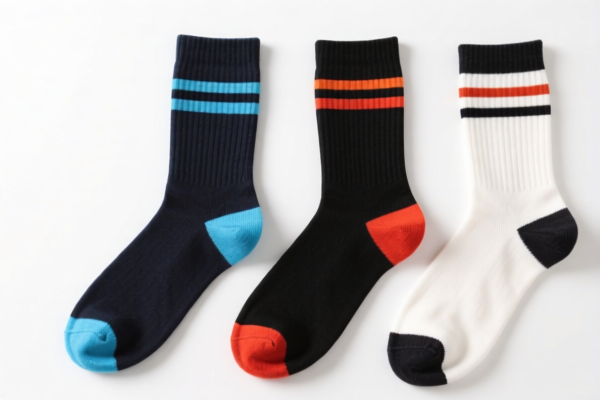
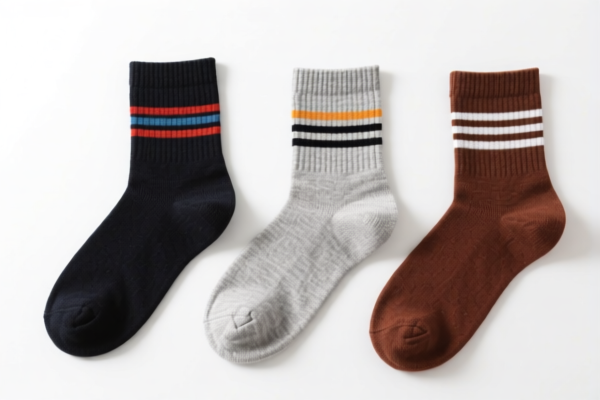
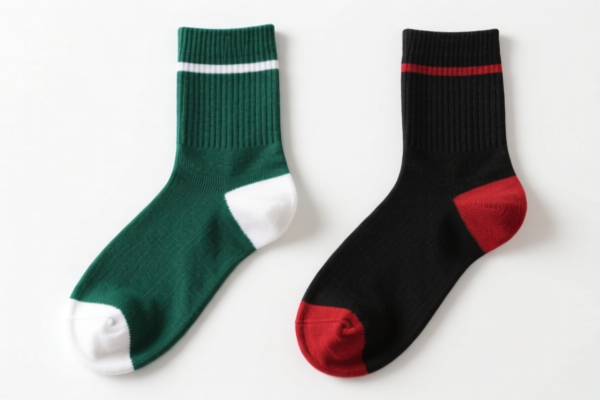
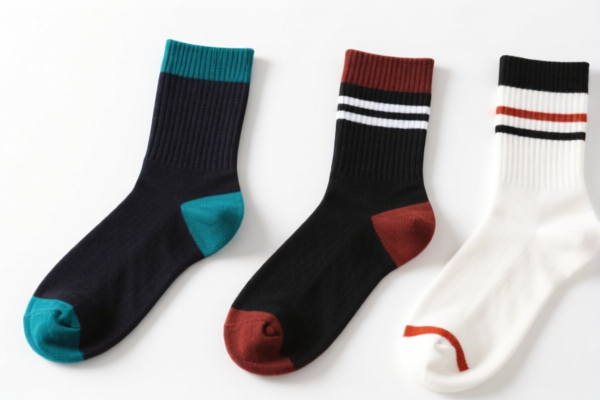
AI Analysis
🧦 Socks (Pairs) – The "Hidden Tax" Maze for Global Exporters
🌐 HS Code Reference & Customs Clearance Guide | 2026 Latest Tariff Analysis | Professional通关 Strategy
📌 I. Product Definition: What Exactly Are We Importing?
Socks are often overlooked in complex supply chains, but their classification hinges on three critical factors: Material, Knitting Method (Knitted vs. Crocheted), and Coverage (Ankle vs. Knee-high). In international trade, they fall primarily under Chapter 61 (Articles of Apparel and Clothing Accessories, Knitted or Crocheted).
⚠️ Key Distinction:
- Knitted Socks (most common): Fall under 6115.
- Crocheted Socks: Fall under 6117.
- Material Matters: Cotton, Synthetic Fibers, and Other Textiles have different base tariffs and eligibility for additional duties.
📦 II. HS Code Classification Details (2026 Latest Tariff Authority对照)
Based on the provided data, here are the five specific HS Codes identified for Socks, with detailed breakdowns of their logic and tax implications.
| HS Code | Product Description & Logic | Estimated Total Tax Rate | Key Tariff Components |
|---|---|---|---|
6115.95.90.00 |
Socks, Other (Cotton/Other Fibers) Morphology match; Material inferred as Cotton or other fibers. Fits "Other" category. (Appears twice in data with identical tax) |
31.0% | Base: 13.5% Add'l: 7.5% Section 301/122: 10% |
6115.96.90.20 |
Socks, Other (Synthetic/Cotton) Morphology match; Material inferred as Synthetic Fibers or Cotton. Fits "Other" category. Lowest Additional Duty Option |
24.6% | Base: 14.6% Add'l: 0.0% Section 301/122: 10% |
6115.29.80.10 |
Socks, Other (Cotton - Fallback) Morphology match; Material inferred as Cotton. Falls under "Catch-all" subheading. Lowest Total Tax Option |
26.0% | Base: 16.0% Add'l: 0.0% Section 301/122: 10% |
6117.90.90.90 |
Socks, Other (Apparel/Fiber) Morphology & Use match; Classified as Apparel. Material inferred as Fiber-based. Highest Tax Option |
32.1% | Base: 14.6% Add'l: 7.5% Section 301/122: 10% |
🔍 重点提醒 (Critical Notes):
-6115.96.90.20and6115.29.80.10are the most competitive options (24.6% and 26.0% respectively) because they avoid the 7.5% "Additional Duty" seen in the 31.0% and 32.1% codes.
-6117.90.90.90is risky due to the higher total tax (32.1%) and potential misclassification if the item is clearly knitted (6115) rather than crocheted (6117).
- Section 122 Tariff (10%) applies universally across all provided codes, likely referring to specific trade remedy duties or recent enforcement actions.
💰 III. 2026 Latest Tariff Rate Breakdown (Including Surcharges & Policy Add-ons)
✅ Applicable Country: United States (US)
✅ Origin: China (CN) (Implied by "Section 122" and typical duty structures)
✅ Effective Time: Current 2026 Tariff Schedule
🎯 1. 6115.95.90.00 & 6115.95.90.00 (Duplicate Entry) – Socks, Other
| Item | Detail |
|---|---|
| Base Duty | 13.5% |
| Additional Duty | +7.5% (Likely "Section 301" or specific textile surcharge) |
| Section 122 Duty | +10% (Specific enforcement clause) |
| Total Effective Rate | 31.0% |
| Tax Calculation | CIF Value × 31.0% |
| De Minimis Exemption | ❌ Not Eligible (Most textile imports >$800 require full duty) |
| Legal Basis Path | USITC:6115.95.90.00 → FOOTNOTE:Section122 |
📌 Explanation:
- This code applies to socks not elsewhere specified, typically cotton or mixed fibers.
- The 7.5% additional duty is significant. If your material is synthetic, consider switching to6115.96.90.20to save 6.4% in total tax.
🎯 2. 6115.96.90.20 – Socks, Other (Synthetic/Cotton)
| Item | Detail |
|---|---|
| Base Duty | 14.6% |
| Additional Duty | 0.0% (Key Savings!) |
| Section 122 Duty | +10% |
| Total Effective Rate | 24.6% |
| Tax Calculation | CIF Value × 24.6% |
| De Minimis Exemption | ❌ Not Eligible |
| Legal Basis Path | USITC:6115.96.90.20 → FOOTNOTE:Section122 |
📌 Why Choose This?:
- Despite a higher Base Duty (14.6% vs 13.5%), the 0.0% Additional Duty makes this 6.4% cheaper than6115.95.90.00.
- Ideal for socks made of Polyester, Nylon, Spandex, or Blends.
🎯 3. 6115.29.80.10 – Socks, Other (Cotton - Fallback)
| Item | Detail |
|---|---|
| Base Duty | 16.0% |
| Additional Duty | 0.0% |
| Section 122 Duty | +10% |
| Total Effective Rate | 26.0% |
| Tax Calculation | CIF Value × 26.0% |
| De Minimis Exemption | ❌ Not Eligible |
| Legal Basis Path | USITC:6115.29.80.10 → FOOTNOTE:Section122 |
📌 Why Choose This?:
- If you are unsure of the material but know it is Cotton, this is a safe, low-tax "fallback" option.
- Slightly more expensive than synthetic (6115.96.90.20) but still saves the 7.5% surcharge.
🎯 4. 6117.90.90.90 – Socks, Other (Apparel/Fiber)
| Item | Detail |
|---|---|
| Base Duty | 14.6% |
| Additional Duty | +7.5% |
| Section 122 Duty | +10% |
| Total Effective Rate | 32.1% |
| Tax Calculation | CIF Value × 32.1% |
| De Minimis Exemption | ❌ Not Eligible |
| Legal Basis Path | USITC:6117.90.90.90 → FOOTNOTE:Section122 |
📌 Warning:
- This is the most expensive option.
- Only use if the socks are Crocheted (not knitted) or fit a very specific "Other" apparel classification.
- For 95% of standard socks, this is a misclassification risk.
🛠️ IV. Customs Clearance Practical Advice (Pitfall Avoidance Guide)
✅ 1. Documentation Checklist (Non-negotiable)
| Document | Required? | Explanation |
|---|---|---|
| ✅ Commercial Invoice | ✔️ | Must clearly state "Socks, Pairs" and Material Composition (e.g., "80% Cotton, 15% Polyester, 5% Spandex"). |
| ✅ Packing List | ✔️ | Specify quantity in pairs. Weight must match invoice. |
| ✅ Material Test Report | ✔️ | Crucial for distinguishing between 6115.95 (Cotton/Other) and 6115.96 (Synthetic). Lab reports prevent disputes. |
| ✅ Product Photos | ✔️ | Clear images of labels, stitching, and packaging. |
| ✅ Origin Certificate | ✔️ | If claiming any preferential rates (none shown here for US-China, but good for record). |
✅ 2. Declaration Tips (Key Mantras)
🔥 “Material is King, Stitching is Queen! Get it wrong, Pay the Price!”
| Scenario | Correct Declaration | Wrong Approach |
|---|---|---|
| Cotton Socks | 6115.95.90.00 (13.5% Base) or 6115.29.80.10 (16.0% Base) |
Mislabeling as synthetic → Penalty for fraud |
| Synthetic Socks | 6115.96.90.20 (Saves 7.5% Add'l Duty) |
Mislabeling as cotton → Higher tax or audit |
| Crocheted Socks | 6117.90.90.90 (Only if truly crocheted) |
Using 6115 codes → Rejection |
| Mixed Material | Declare dominant fiber by weight | Vague description "Textile Socks" → Customs Detention |
✅ 3. Special Case Handling
| Situation | Recommendation |
|---|---|
| OEM Custom Socks | Provide design blueprints + material spec sheet. Avoid generic descriptions. |
| Sample Shipment | Even under $800, US Customs may scrutinize textiles. Provide full documentation. |
| "No-Show" Socks (Ankle) | Still classified under 6115. Material determines the subheading. |
| Thermal/Insulated Socks | If heavily insulated with non-textile materials, may migrate to 6117. Verify with lab test. |
🌍 V. Global Market Comparison (2026 Latest)
| Country/Region | Recommended HS Code | Estimated Duty | Notes |
|---|---|---|---|
| 🇺🇸 USA | 6115.96.90.20 |
24.6% | Best balance for Synthetics. High Section 122 impact. |
| 🇨🇳 China (Export) | 6115.95/96 |
0-5% | No export duty on socks. |
| 🇪🇺 EU | 6115.95/96 |
12-16% | No Section 122 equivalent. VAT applies. |
| 🇬🇧 UK | 6115.95/96 |
12-16% | Post-Brexit rules apply. |
| 🇦🇺 Australia | 6115.95/96 |
5% | Low tariff, high GST (10%). |
📌 Conclusion:
- USA is the most complex market for socks due to Section 122 duties and Additional Tariffs.
- Synthetic socks (6115.96.90.20) are the most cost-effective for US import, saving ~6.4% vs. Cotton/Other codes.
📌 VI. Common Errors & Pitfalls (Lessons Learned)
❌ Error 1: Declaring all socks as 6115.95.90.00 regardless of material.
👉 Consequence: If synthetic, you overpay 6.4%. If cotton, you might be fine, but risk audit if labels differ.
❌ Error 2: Ignoring Section 122 implications.
👉 Consequence: Unexpected 10% duty at customs if not declared correctly or if origin is disputed.
❌ Error 3: Using "Hosiery" as a generic term.
👉 Consequence: Hosiery can include tights, stockings, etc. Be specific: "Ankle Socks," "Knee-High Socks."
✅ Correct Practice:
"Men's Cotton Ankle Socks, Knitted, 10 pairs per pack, Model XYZ, 80% Cotton, 15% Polyester, 5% Spandex"
🎯 VII. Conclusion: Precise Classification Saves Money!
🎯 Remember the Mantra:
🔹 "Synthetic = 24.6%, Cotton = 26-31%, Crochet = 32.1%!"
🔹 "Material Test Report is Your Best Friend!"
🔹 "Section 122 is Always On – Don't Ignore It!"
📌 Pro Tip:
If your socks are originally made in Vietnam, Bangladesh, or India, check for preferential trade agreements (e.g., GSP, BTA) which may reduce or eliminate the Section 122 or Additional Duties.
📣 Immediate Action:
📞 Consult a licensed customs broker + Provide Material Test Report + Apply for Pre-Ruling if volume is high.
🚀 Ensure your socks clear customs smoothly, efficiently, and profitably!
✨ Professional Customs Clearance Starts with Accurate Classification!
💼 Every Percent Saved is Pure Profit!
Customer Reviews
About HS Code Classification
The Harmonized System (HS) is an internationally standardized nomenclature developed by the World Customs Organization (WCO) to classify traded products. Over 200 countries use the HS system as the basis for customs tariffs, trade statistics, and import/export regulations.
Each HS code follows a hierarchical structure:
- Chapter (2 digits) — Broad category of goods (e.g., Chapter 84: Machinery and Mechanical Appliances)
- Heading (4 digits) — More specific grouping within the chapter
- Subheading (6 digits) — Internationally standardized breakdown, used by all WCO member countries
- National subdivisions (8-10 digits) — Country-specific extensions for further classification, such as US HTSUS 10-digit codes
Correct HS code classification is essential for smooth customs clearance, accurate duty payment, and compliance with trade regulations. Misclassification can lead to customs delays, overpayment of duties, or penalties.
When importing from CN to US, the applicable tariff rates may include:
- Most-Favored-Nation (MFN) rate — The standard duty rate applied to WTO members
- General rate — Applied to countries without trade agreements
- Trade remedy duties — Additional tariffs such as Section 301 (anti-dumping), Section 232 (national security), or countervailing duties
The information provided on this page is for reference purposes only. For official classification, please consult with your local customs authority or a licensed customs broker.