装饰线帘
CN → US| HS Code | Tariff Rate | Origin | Destination | Doc |
|---|---|---|---|---|
| 6303990010 | 28.8% | CN | US | Official Doc |
| 5607504000 | 38.6% | CN | US | Official Doc |
| 5808109000 | 39.2% | CN | US | Official Doc |
| 6303990060 | 28.8% | CN | US | Official Doc |
| 5607909000 | 41.3% | CN | US | Official Doc |
Product Images
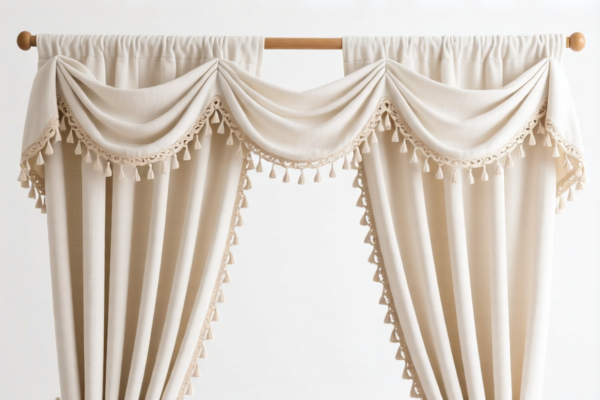
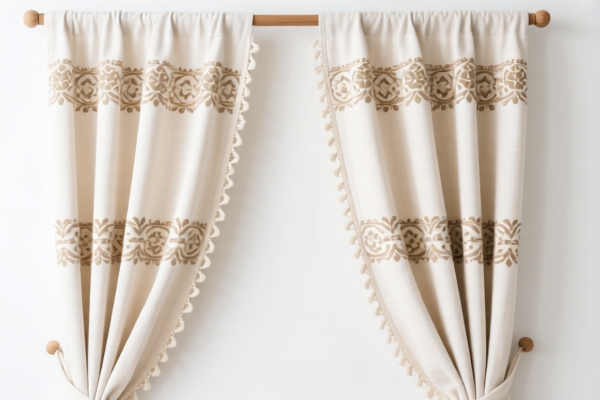
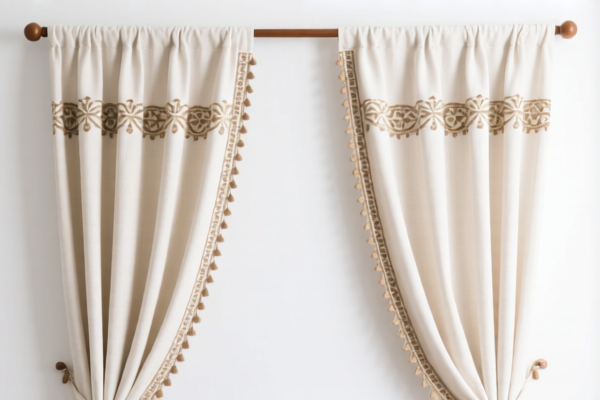
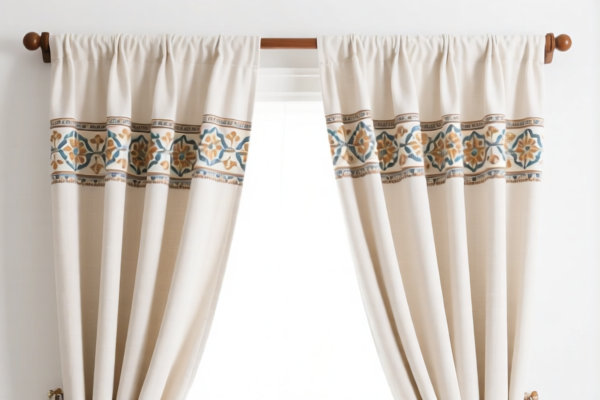
AI Analysis
🧵 Decorative Fabric Beaded Curtains / Textile Line Curtains
🌐 HS Code Reference & Customs Clearance Guide | 2026 Latest Tariff Analysis | Professional通关 Strategy
📌 I. Product Definition & Classification: What Exactly Are "Decorative Line Curtains"?
Decorative Line Curtains (also known as Beaded Curtains, String Curtains, or Textile Line Drapes) are interior decoration products made from threads, yarns, or filaments arranged vertically or in patterns to form a curtain-like structure. They serve both aesthetic and functional purposes (light filtering, space partitioning).
In international trade, their classification depends heavily on: 1. Material Composition: Synthetic fibers (polyester, nylon), natural fibers (cotton, silk), or non-silk textiles. 2. Structural Form: Are they woven, knitted, or simply tied/strung together? 3. End Use: Are they strictly "curtains" (Chapter 63) or "ropes/tapes" (Chapters 56 or 58)?
⚠️ Key Classification Distinction:
- If the product is viewed as a finished decorative curtain (even if made of strings) → Typically falls under Chapter 63 (Other Made-Up Textile Articles).
- If viewed as rope, twine, or cord → Falls under Chapter 56 (Ropes, Cables, etc.).
- If viewed as ornamental trim/tape → Falls under Chapter 58 (Special Woven Fabrics/Trimmings).
📦 II. HS Code Classification Details (2026 Latest Tariff Cross-Reference)
Based on the provided data, here are the 5 possible HS Codes for "Decorative Line Curtains" with corresponding tax implications:
| HS Code | Product Description & Summary | Key Classification Logic | Total Tax Rate |
|---|---|---|---|
6303.99.00.10 |
Textile Decorative Line Curtain Category: Curtains/Edgings Material: Non-silk synthetic/other textile materials |
Viewed as a finished curtain article made of non-silk textiles. | 28.8% |
5607.50.40.00 |
Thread/String Form Category: Ropes/Twines Material: Synthetic or natural fibers |
Viewed as manufactured rope/twine, not a finished curtain. | 38.6% |
5808.10.90.00 |
Woven/Decorative Tape Category: Roll-type Decorative Trims Material: Textile decorative tape attributes |
Viewed as ornamental braid or woven trim in rolls. | 39.2% |
6303.99.00.60 |
Line Curtain/Curtain Tape Category: Curtains/Curtain Tapes Material: Textile material compliant with curtain specs |
Another sub-category under "Other Made-Up Curtains" for line-style curtains. | 28.8% |
5607.90.90.00 |
Thin Rope/Cord Product Category: Other Ropes/Cords Material: Other cordage articles |
Viewed as a generic thin rope or cord product, not specifically a curtain. | 41.3% |
🔍 Critical Insight:
- The lowest tax burden (28.8%) is achieved by classifying the product as a finished textile curtain (6303.99.00.10or6303.99.00.60).
- Classifying it as rope, twine, or tape (5607or5808) results in significantly higher taxes (38.6%–41.3%) due to higher base duties and additional surcharges.
- Strategy: Emphasize the decorative/curtain end-use and finished nature of the product during customs declaration to avoid misclassification into the higher-tariff "rope/trim" categories.
💰 III. 2026 Latest Tariff Rate Breakdown (Detailed Tax Clauses)
✅ Applicable Country: USA (US)
✅ Country of Origin: China (CN)
✅ Effective Date: Post-November 2025 (Current Policy Framework)
🎯 1. 6303.99.00.10 & 6303.99.00.60 —— Textile Decorative Line Curtains (Lowest Tax Option)
| Item | Detail |
|---|---|
| Base Duty | 11.3% |
| Section 301 Surcharge | 7.5% |
| IEEPA Section 122 Duty | 10% |
| Total Effective Rate | 28.8% |
| Tax Calculation | CIF Value × 28.8% |
| De Minimis Exemption? | ❌ No (Not eligible for de minimis due to Section 301/IEEPA) |
| Legal Basis | USITC:6303.99.00.10/60 → Footnote: Section 301 (7.5%) + IEEPA:122 (10%) |
📌 Explanation:
- This classification treats the item as a made-up textile article (curtain).
- The base duty (11.3%) is moderate for textiles.
- The 7.5% Section 301 tariff is the standard surcharge for many textile accessories from China.
- The 10% IEEPA 122 tariff is an additional penalty layer for specific Chinese imports.
- Total 28.8% is the most cost-effective route if the product can be clearly defined as a "curtain."
🎯 2. 5607.50.40.00 —— Rope/Twine Category (Higher Tax)
| Item | Detail |
|---|---|
| Base Duty | 3.6% |
| Section 301 Surcharge | 25.0% |
| IEEPA Section 122 Duty | 10% |
| Total Effective Rate | 38.6% |
| Tax Calculation | CIF Value × 38.6% |
| De Minimis Exemption? | ❌ No |
| Legal Basis | USITC:5607.50.40.00 → Footnote: Section 301 (25%) + IEEPA:122 (10%) |
📌 Explanation:
- Although the base duty is low (3.6%), the Section 301 surcharge is much higher (25%) for rope/cordage products compared to textile curtains (7.5%).
- This makes the total tax 9.8% higher than the curtain classification.
🎯 3. 5808.10.90.00 —— Woven Tape/Trim Category (Highest Base + High Surcharge)
| Item | Detail |
|---|---|
| Base Duty | 4.2% |
| Section 301 Surcharge | 25.0% |
| IEEPA Section 122 Duty | 10% |
| Total Effective Rate | 39.2% |
| Tax Calculation | CIF Value × 39.2% |
| De Minimis Exemption? | ❌ No |
| Legal Basis | USITC:5808.10.90.00 → Footnote: Section 301 (25%) + IEEPA:122 (10%) |
📌 Explanation:
- Similar to rope, the 25% Section 301 surcharge applies.
- Base duty is slightly higher (4.2% vs 3.6%), making it the second-most expensive option.
🎯 4. 5607.90.90.00 —— Other Rope/Cord Category (Highest Total Tax)
| Item | Detail |
|---|---|
| Base Duty | 6.3% |
| Section 301 Surcharge | 25.0% |
| IEEPA Section 122 Duty | 10% |
| Total Effective Rate | 41.3% |
| Tax Calculation | CIF Value × 41.3% |
| De Minimis Exemption? | ❌ No |
| Legal Basis | USITC:5607.90.90.00 → Footnote: Section 301 (25%) + IEEPA:122 (10%) |
📌 Explanation:
- This is the most expensive classification.
- The base duty is higher (6.3%), and the 25% surcharge remains.
- Avoid this classification unless the product is purely a raw cord without any decorative/curtain characteristics.
🛠️ IV. Customs Clearance Practical Advice (Pitfall Avoidance Guide)
✅ 1. Required Documentation Checklist
| Document | Mandatory? | Purpose |
|---|---|---|
| ✅ Product Specifications | ✔️ | Must detail material (e.g., 100% Polyester), length, weight, and construction (tied, woven, etc.). |
| ✅ Photos (Clear & Labeled) | ✔️ | Show the item as a curtain/drape, hanging or displayed as decor, not just as a bundle of rope. |
| ✅ Commercial Invoice | ✔️ | Description should use terms like "Decorative Textile Curtain," "Beaded Line Curtain," NOT "Rope" or "Cord." |
| ✅ Packing List | ✔️ | Confirm items are packed as finished goods, not raw materials. |
| ✅ Materials Declaration | ✔️ | Specify fiber content to justify Chapter 63 (Textiles) over Chapter 56 (Rope). |
✅ 2. Declaration Strategy (Key Mantra)
🔥 "Curtain Use, Not Rope; Decorative Finish, Not Raw Material."
| Scenario | Correct Declaration | Incorrect Declaration | Consequence of Error |
|---|---|---|---|
| Finished Line Curtain | 6303.99.00.10 or 6303.99.00.60 |
5607.50.40.00 |
Overpay by ~10% (28.8% vs 38.6%) |
| Decorative Trim Tape | 5808.10.90.00 |
6303.99.00.10 |
Underpay, risk penalty & back-duties |
| Raw Rope/Cord | 5607.90.90.00 |
6303.99.00.10 |
Misclassification, seizure/fines |
💡 Tip: If the product is sold as a ready-to-hang curtain, emphasize its function as a room divider/decoration. If it is sold as rolls of trim for DIY sewing, it may fall under
5808.10.90.00.
✅ 3. Special Cases & Mitigation
| Case | Handling Advice |
|---|---|
| Mixed Materials | If beads/plastic are attached, ensure the textile portion provides the essential character. If beads dominate, it might shift to Chapter 39 or 71, changing HS codes entirely. |
| OEM Custom Orders | Provide design sheets showing the curtain structure. Avoid vague terms like "textile product." |
| Small Samples (De Minimis) | ❌ Not Eligible: Due to Section 301 and IEEPA, de minimis (under $800) exemption does not apply. Plan for full duty payment. |
🌍 V. Global Market Comparison (2026)
| Market | Recommended HS Code | Est. Total Tax (China Origin) | Notes |
|---|---|---|---|
| 🇺🇸 USA | 6303.99.00.10 |
28.8% | Best rate for finished curtains. Rope/trig rates are 38-41%. |
| 🇪🇺 EU | 6303.99.00 (Varies) |
~0-12% (Duty) + VAT | No Section 301/IEEPA. Standard MFN rates apply. |
| 🇨🇳 China (Import) | 6303.99.00 |
~10-14% | Standard textile duty. |
| 🇯🇵 Japan | 6303.99.00 |
~5-10% | Generally lower than US tariffs. |
📌 Conclusion:
- The US market is the most challenging due to the layering of Base Duty + Section 301 + IEEPA.
- Classification is critical: A change from "Curtain" (6303) to "Rope" (5607) increases the US import tax by 9.8% to 12.5%.
📌 VI. Common Errors & Pitfalls (Lessons Learned)
❌ Error 1: Describing the product as "String Curtain" without emphasizing "Textile Material"
👉 Result: Customs may classify it under 5607 (Rope) due to lack of textile context.
👉 Fix: Use terms like "Woven Textile," "Polyester Thread," "Finished Drapery."
❌ Error 2: Splitting shipment into "Rope" + "Beads"
👉 Result: Each component taxed separately, potentially at higher rates.
👉 Fix: Declare as a single composite article: "Decorative Textile Curtain with Bead Accents."
❌ Error 3: Ignoring IEEPA Section 122
👉 Result: Unexpected 10% tax added to the bill.
👉 Fix: Budget for 10% IEEPA duty in addition to Section 301.
✅ Correct Declaration Example:
"Decorative Textile Line Curtain, 100% Polyester, Made-Up Article, For Window Decoration, Finished with Beaded Trim, HS: 6303.99.00.10"
🎯 VII. Conclusion: Precise Classification Saves Costs!
🎯 Remember the Rule:
🔹 "Curtain Form = 28.8% | Rope Form = 38-41%"
🔹 "Don't let 'string' trick you into 'rope' tariffs!"
🔹 "IEEPA 122 is always 10%, no matter the HS code!"
📌 Pro Tip:
- If you are unsure about the classification, apply for a Binding Tariff Information (BTI) or Advance Ruling before shipping.
- For US imports, consider supply chain diversification (e.g., Vietnam, Thailand) if you can shift production, as origin-based tariffs may change.
- Always ensure product photos clearly show the item as a decorative curtain, not a bundle of rope.
📣 Immediate Action:
📞 Consult a licensed customs broker.
📸 Provide clear images of the finished product.
📄 Declare as "Textile Curtain" to secure the 28.8% rate.
🚀 Save up to 12% on taxes by getting the HS Code right!
✨ Smart Classification, Smarter Profits!
💼 Every percentage point matters in international trade!
Customer Reviews
About HS Code Classification
The Harmonized System (HS) is an internationally standardized nomenclature developed by the World Customs Organization (WCO) to classify traded products. Over 200 countries use the HS system as the basis for customs tariffs, trade statistics, and import/export regulations.
Each HS code follows a hierarchical structure:
- Chapter (2 digits) — Broad category of goods (e.g., Chapter 84: Machinery and Mechanical Appliances)
- Heading (4 digits) — More specific grouping within the chapter
- Subheading (6 digits) — Internationally standardized breakdown, used by all WCO member countries
- National subdivisions (8-10 digits) — Country-specific extensions for further classification, such as US HTSUS 10-digit codes
Correct HS code classification is essential for smooth customs clearance, accurate duty payment, and compliance with trade regulations. Misclassification can lead to customs delays, overpayment of duties, or penalties.
When importing from CN to US, the applicable tariff rates may include:
- Most-Favored-Nation (MFN) rate — The standard duty rate applied to WTO members
- General rate — Applied to countries without trade agreements
- Trade remedy duties — Additional tariffs such as Section 301 (anti-dumping), Section 232 (national security), or countervailing duties
The information provided on this page is for reference purposes only. For official classification, please consult with your local customs authority or a licensed customs broker.