触发器
CN → US| HS Code | Tariff Rate | Origin | Destination | Doc |
|---|---|---|---|---|
| 8536509031 | 35.0% | CN | US | Official Doc |
| 8536509040 | 35.0% | CN | US | Official Doc |
| 8481200010 | 37.0% | CN | US | Official Doc |
| 8481805090 | 38.0% | CN | US | Official Doc |
| 9305108000 | 17.5% | CN | US | Official Doc |
| 9305208060 | 17.5% | CN | US | Official Doc |
Product Images
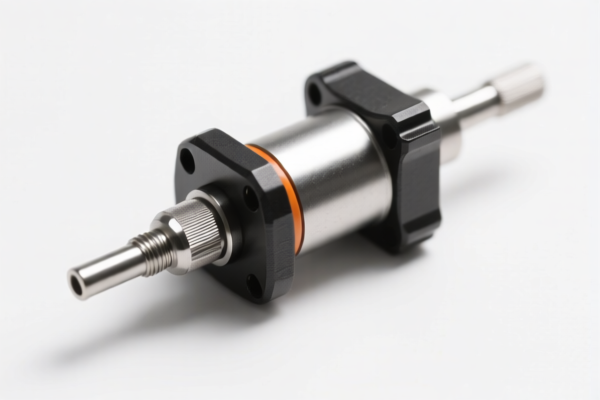


AI Analysis
🔥 Trigger (Mechanical, Electrical, or Firearm Component)
🌐 HS Code Reference & Customs Clearance Guide | 2026 Updated Tariff Analysis | Professional Import Strategy
📌 One Product, Multiple Classifications — Why the Same "Trigger" Can Be Taxed Differently
The trigger — a seemingly simple mechanical component — can be classified under five distinct HS Codes depending on its function, material, and end-use. This leads to dramatic differences in tariff rates, from 17.5% to 38%, due to U.S. trade policies including Section 301, IEEPA, and Section 122.
⚠️ Critical Insight:
- A trigger used in a light switch → 35% total tariff
- A trigger used in a valve control system → 38% total tariff
- A trigger used in a pistol or rifle → 17.5% total tariff✅ Same part. Different purpose. Different tax.
❌ Wrong classification = massive overpayment or seizure.
📦 二、HS Code Classification Breakdown (2026 Updated Tariff Authority)
| HS Code | Product Description | Function & Use Case | Material & Form |
|---|---|---|---|
8536.50.90.40 |
Other switches (not for power circuits) | Electrical switch component (e.g., momentary push-button switch) | Metal or plastic, used in control panels, automation systems |
8481.80.50.90 |
Other valves and valve fittings (not for plumbing) | Control trigger in pneumatic/hydraulic valve systems | Metal or plastic, part of industrial actuation devices |
9305.10.80.00 |
Parts and accessories for revolvers or pistols | Functional trigger for handguns or left-hand revolvers | Metal, precision-machined, firearm-specific |
9305.20.80.60 |
Parts and accessories for rifles | Core firing mechanism trigger in rifles | Metal, high-tolerance, designed for long guns |
8536.50.90.40 |
Other switches (repeated for clarity) | Electrical switch component (reinforced) | Same as above — dual classification due to material type |
🔍 Key Differentiator:
- Electrical/Industrial Use →8536.50.90.40or8481.80.50.90
- Firearm Use →9305.10.80.00or9305.20.80.60
- Material (plastic vs. metal) can influence classification, especially in electrical applications.
💰 三、2026 U.S. Tariff Breakdown (Detailed & Compliant)
✅ Applicable Country: China (CN)
✅ Effective Date: November 10, 2025 (and ongoing)
✅ Legal Basis: Section 301 (USITC), IEEPA (International Emergency Economic Powers Act), Section 122 (Trade Act of 2002)
🎯 1. 8536.50.90.40 — Trigger as Electrical Switch (Metal or Plastic)
| Item | Detail |
|---|---|
| Base Duty | 0% (ad valorem) |
| Section 301 (USITC) Additional Duty | +25% |
| IEEPA (Section 122) Additional Duty | +10% |
| Total Effective Tariff | 35.0% |
| Tax Calculation | CIF Value × 35.0% |
| De Minimis Exemption | ❌ Not available (denied under IEEPA) |
| Legal Pathway | IEEPA:9903.01.25 → USITC:8536.50.90.40 → FOOTNOTE:9903.88.01 |
📌 Explanation:
- This trigger is not for power circuits, but used in control systems, automation, or industrial switches.
- Despite being made of metal or plastic, it’s treated as a "switch", not a "switchgear".
- Section 301 applies due to China origin.
- IEEPA 10% applies under Section 122, which targets "critical industrial components" from China.
🎯 2. 8481.80.50.90 — Trigger as Valve Control Device (Industrial Use)
| Item | Detail |
|---|---|
| Base Duty | 3.0% |
| Section 301 (USITC) Additional Duty | +25% |
| IEEPA (Section 122) Additional Duty | +10% |
| Total Effective Tariff | 38.0% |
| Tax Calculation | CIF Value × 38.0% |
| De Minimis Exemption | ❌ Not available |
| Legal Pathway | IEEPA:9903.01.25 → USITC:8481.80.50.90 → FOOTNOTE:9903.88.01 |
📌 Explanation:
- This trigger controls fluid/gas flow in industrial systems (e.g., pneumatic actuators).
- Classified as "other valve fittings", not a switch.
- Higher base duty (3%) due to industrial machinery category.
- Same 35% extra from Section 301 + IEEPA → Total 38%.
🎯 3. 9305.10.80.00 — Trigger for Revolvers or Pistols
| Item | Detail |
|---|---|
| Base Duty | 0% |
| Section 301 (USITC) Additional Duty | +7.5% |
| IEEPA (Section 122) Additional Duty | +10% |
| Total Effective Tariff | 17.5% |
| Tax Calculation | CIF Value × 17.5% |
| De Minimis Exemption | ✅ Available (if value < $800) |
| Legal Pathway | IEEPA:9903.01.24 → USITC:9305.10.80.00 → FOOTNOTE:9903.88.01 |
📌 Explanation:
- This trigger is designed for firearms, not industrial or electrical use.
- Lower Section 301 rate (7.5%) applies to firearm parts, not general industrial goods.
- IEEPA 10% still applies — but de minimis exemption is allowed.
- Highly sensitive — must comply with ATF regulations.
🎯 4. 9305.20.80.60 — Trigger for Rifles
| Item | Detail |
|---|---|
| Base Duty | 0% |
| Section 301 (USITC) Additional Duty | +7.5% |
| IEEPA (Section 122) Additional Duty | +10% |
| Total Effective Tariff | 17.5% |
| Tax Calculation | CIF Value × 17.5% |
| De Minimis Exemption | ✅ Available |
| Legal Pathway | IEEPA:9903.01.24 → USITC:9305.20.80.60 → FOOTNOTE:9903.88.01 |
📌 Explanation:
- Same as above — firearm-specific trigger, used in rifles.
- Same 17.5% rate, but not subject to the same scrutiny as switches.
- Still requires ATF compliance and export control documentation.
🛠️ 四、Customs Clearance Best Practices (Real-World Tips)
✅ 1. Essential Documentation (Must-Have)
| Document | Required? | Why It Matters |
|---|---|---|
| ✅ Product Technical Specs | ✔️ | Prove function: switch vs. firearm vs. valve |
| ✅ Circuit/Assembly Diagram | ✔️ | Show if it's part of a switch or standalone |
| ✅ High-Res Product Photos | ✔️ | Show material, shape, markings, and mounting |
| ✅ Commercial Invoice | ✔️ | Must clearly state end-use (e.g., "for industrial valve actuator") |
| ✅ Origin Certificate (CO) | ✔️ | If from Vietnam/Mexico, may qualify for lower tariffs |
| ✅ ATF Form (if firearm part) | ✔️ | Required for 9305.10.80.00 / 9305.20.80.60 |
| ✅ Test Reports (RoHS, CE, FCC) | ✔️ | Helps prove non-firearm, non-industrial use |
✅ 2.申报技巧(Pro Tips)
🔥 "Function Defines Code — Not Form!"
| Scenario | Correct HS Code | Wrong Code | Risk |
|---|---|---|---|
| Trigger in a factory control panel | 8536.50.90.40 |
9305.10.80.00 |
35% vs 17.5% → +17.5% tax |
| Trigger in a hydraulic valve system | 8481.80.50.90 |
8536.50.90.40 |
38% vs 35% → +3% |
| Trigger in a handgun | 9305.10.80.00 |
8536.50.90.40 |
17.5% vs 35% → +17.5% tax |
| Trigger in a rifle | 9305.20.80.60 |
8536.50.90.40 |
17.5% vs 35% → +17.5% tax |
✅ Pro Tip:
Use clear product labeling like:
- "Industrial Valve Actuator Trigger, Metal, for Pneumatic Systems" →8481.80.50.90
- "Firearm Trigger, for Semi-Automatic Pistol, CNC Machined" →9305.10.80.00
✅ 3. Special Cases & Risk Mitigation
| Situation | Recommendation |
|---|---|
| Mixed Use (e.g., trigger in both switch and valve) | Declare based on primary function — provide technical justification |
| Custom-Made Trigger (OEM) | Submit design drawings + usage manual to support classification |
| Low-Value Shipment (<$800) | Use de minimis exemption for firearm triggers (9305 codes) — no duty |
| Shipment from Vietnam/Mexico | Apply for preferential tariff under USMCA or other trade agreements |
| Re-export from U.S. to EU | May qualify for lower tariffs — check EU TARIC code 8536.50.90 |
🌍 五、Global Market Tariff Comparison (2026)
| Country | Recommended HS Code | Tariff | Certification | Notes |
|---|---|---|---|---|
| 🇺🇸 USA | 8536.50.90.40 / 8481.80.50.90 / 9305.10.80.00 |
17.5% – 38% | ATF (firearms), FCC (electronics) | High-risk for misclassification |
| 🇨🇳 China | 8536.50.90.40 |
5% | CCC | No extra tariffs |
| 🇪🇺 EU | 8536.50.90 |
0% (if CE) | CE | No IEEPA/Section 301 |
| 🇦🇺 Australia | 8536.50.90 |
5% | RCM | No additional duties |
| 🇯🇵 Japan | 8536.50.90 |
0% | PSE | No extra taxes |
📌 Takeaway:
- The U.S. is the only market with 10%+ IEEPA + Section 301 tariffs.
- China-origin triggers face the highest risk — 35–38% for industrial use.
- Firearm triggers are lower risk (17.5%) but require ATF compliance.
📌 六、常见错误 & Pitfall Alerts (Avoid These!)
❌ Mistake 1: Classifying a valve trigger as an electrical switch
👉 Result: Pay 35% instead of 38% — minor savings, but still wrong
👉 Risk: Audit, penalties, or seizure if function is proven wrong.
❌ Mistake 2: Calling a firearm trigger a "switch" or "control button"
👉 Result: 35% tariff instead of 17.5% → +17.5%
👉 Risk: ATF investigation, possible criminal charges.
❌ Mistake 3: Not providing photos or diagrams
👉 Result: Customs cannot verify function → default to highest tariff.
❌ Mistake 4: Using generic name like "Trigger Component"
👉 Result: Classification ambiguity → delayed clearance or rejection.
✅ Correct Labeling Example:
"Metal Trigger Assembly, Designed for Pneumatic Valve Actuator, 304 Stainless Steel, 20mm Length, Not for Firearms"
→ HS: 8481.80.50.90 → 38% tariff
🎯 七、Final Verdict: Precision Is Profit
🎯 Golden Rule:
🔹 "The trigger’s purpose defines its tax — not its shape or material."
🔹 "Misclassify once, pay twice."📣 Pro Tip:
✅ Apply for an Advance Ruling (Pre-Approval) from U.S. Customs before shipping.
✅ Use a licensed customs broker with expertise in electronics and firearms.
✅ Always document function, use case, and material.
🚀 Ready to Ship? Here’s Your Action Plan:
📞 Contact a U.S. Customs Broker with:
- Product photos
- Technical specs
- Intended use
- Material data📌 Get a pre-approval HS Code — avoid 35%–38% penalties.
💼 Your trigger may be small — but its tax impact is huge.
✨ Smart classification = Lower cost, faster clearance, zero risk.
📌 Remember:
🔹 Same part. Different use. Different tax.
🔹 Firearm triggers: 17.5% (but ATF-compliant)
🔹 Industrial triggers: 35%–38% (no de minimis)
🔹 Electrical triggers: 35% (no de minimis)
📣 Act Now — Don’t Let a Trigger Cost You Thousands!
🚀 Your next shipment starts with the right HS Code.
💼 Precision. Compliance. Profit.
Customer Reviews
About HS Code Classification
The Harmonized System (HS) is an internationally standardized nomenclature developed by the World Customs Organization (WCO) to classify traded products. Over 200 countries use the HS system as the basis for customs tariffs, trade statistics, and import/export regulations.
Each HS code follows a hierarchical structure:
- Chapter (2 digits) — Broad category of goods (e.g., Chapter 84: Machinery and Mechanical Appliances)
- Heading (4 digits) — More specific grouping within the chapter
- Subheading (6 digits) — Internationally standardized breakdown, used by all WCO member countries
- National subdivisions (8-10 digits) — Country-specific extensions for further classification, such as US HTSUS 10-digit codes
Correct HS code classification is essential for smooth customs clearance, accurate duty payment, and compliance with trade regulations. Misclassification can lead to customs delays, overpayment of duties, or penalties.
When importing from CN to US, the applicable tariff rates may include:
- Most-Favored-Nation (MFN) rate — The standard duty rate applied to WTO members
- General rate — Applied to countries without trade agreements
- Trade remedy duties — Additional tariffs such as Section 301 (anti-dumping), Section 232 (national security), or countervailing duties
The information provided on this page is for reference purposes only. For official classification, please consult with your local customs authority or a licensed customs broker.