计时器
CN → US| HS Code | Tariff Rate | Origin | Destination | Doc |
|---|---|---|---|---|
| 9105996000 | 0.0% | CN | US | Official Doc |
| 9102128000 | 17.5% | CN | US | Official Doc |
| 9105995000 | 0.0% | CN | US | Official Doc |
| 9029108000 | 35.0% | CN | US | Official Doc |
| 9029908080 | 35.0% | CN | US | Official Doc |
Product Images
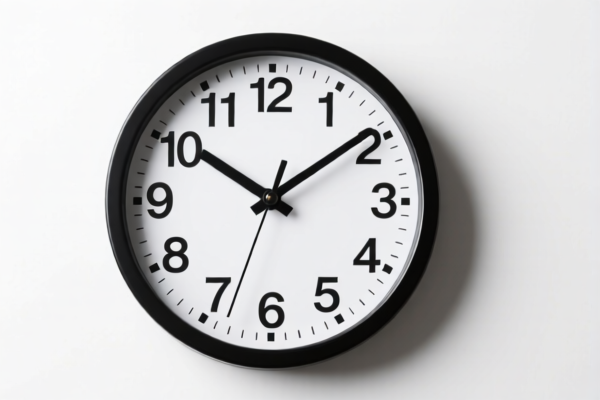


AI Analysis
⏱️ Timer (Timekeeping Instruments)
🌐 HS Code Classification & Tariff Guide | 2026 Updated Customs Compliance | Expert Clearance Strategy
📌 One Product, Multiple Classifications — Know the Right HS Code to Avoid 45%+ Tariffs!
📌 一、Product Definition & Key Classification Logic
A timer is a device designed to measure, record, or control time intervals — commonly used in industrial, sports, medical, automotive, and consumer applications. In international trade, timers are not always classified under the same heading due to functional differences, design, and intended use.
✅ Critical Insight:
- If the timer is mechanical or electronic, used for timekeeping, and functions like a clock or stopwatch, it falls under 9105.99.60.00 or 9102.12.80.00.
- If it’s part of a rotating counter, odometer, or measurement instrument, it may be classified under 9029.10.80.00 or 9029.90.80.80.
- No universal HS code — function and design matter more than name.
📦 二、HS Code Classification Breakdown (2026 Official Tariff Matrix)
| HS Code | Product Description | Functional Use | Material/Design Compatibility |
|---|---|---|---|
9105.99.60.00 |
Other timepieces (e.g., digital timers, wall-mounted time controllers) | General timekeeping, alarms, countdowns | Compatible with standard clock materials; no conflict |
9102.12.80.00 |
Stopwatches, handwatches, or time-measuring instruments | Sports timing, lab use, precision measurement | Same function as watches; no structural conflict |
9105.99.50.00 |
Other timekeeping devices (non-watch, non-stopwatch) | Industrial timers, kitchen timers, process timers | Falls under "other clocks" as a catch-all category |
9029.10.80.00 |
Rotating counters, odometers, speedometers, tachometers | Vehicle instruments, industrial meters, data loggers | No material conflict; fits under measurement devices |
9029.90.80.80 |
Other instruments and apparatus (non-optical) | Generic time counters, pulse counters, data recorders | Broadly applicable; used in automation and machinery |
🔍 Key Rule:
- If it counts time and is not a watch or stopwatch, it may still be a "clock" under 9105.99.
- If it measures rotation, distance, or speed, it belongs in 9029 — even if it has a timer function.
💰 三、2026 Tariff Breakdown (US Market | China Origin | Effective Nov 10, 2025)
✅ Applicable Country: United States (US)
✅ Origin: China (CN)
✅ Effective Date: November 10, 2025 (including all subsequent imports)
🎯 1. 9105.99.60.00 — Other Timepieces (e.g., digital timers, wall timers)
| Item | Detail |
|---|---|
| Base Duty | 23¢ each + 3.2% ad valorem |
| Section 301 (USITC) Additional Duty | 7.5% |
| Section 122 (IEEPA) Additional Duty | 10% |
| Total Effective Rate | 23¢ + 3.2% + 7.5% + 10% = 20.7% + 23¢ |
| Tax Calculation | (CIF Value × 3.2%) + 23¢ + (CIF × 7.5%) + (CIF × 10%) |
| De Minimis Threshold | ❌ Not eligible (denied under US law) |
| Legal Basis Path | IEEPA:9903.01.25 → USITC:9105.99.60.00 → FOOTNOTE:9903.88.01 |
📌 Why This Applies:
- The timer functions like a clock (e.g., countdown, alarm, time display).
- No conflict with materials or form — fits the "other clocks" category.
- Not a stopwatch, so not under 9102.12.80.00.
🎯 2. 9102.12.80.00 — Stopwatches, Handwatches, or Time-Measuring Instruments
| Item | Detail |
|---|---|
| Base Duty | 0.0% |
| Section 301 (USITC) Additional Duty | 7.5% |
| Section 122 (IEEPA) Additional Duty | 10% |
| Total Effective Rate | 17.5% |
| Tax Calculation | CIF × 17.5% |
| De Minimis Threshold | ❌ Not eligible |
| Legal Basis Path | IEEPA:9903.01.25 → USITC:9102.12.80.00 → FOOTNOTE:9903.88.01 |
📌 Why This Applies:
- The device measures short time intervals with high precision (e.g., sports timing, lab experiments).
- No material or structural conflict with watches or stopwatches.
- Even if it’s digital, if it's used for timing events, it qualifies.
🎯 3. 9105.99.50.00 — Other Timekeeping Devices (e.g., kitchen timers, process timers)
| Item | Detail |
|---|---|
| Base Duty | 7.5¢ each + 3.2% ad valorem |
| Section 301 (USITC) Additional Duty | 0.0% |
| Section 122 (IEEPA) Additional Duty | 10% |
| Total Effective Rate | 7.5¢ + 3.2% + 10% = 13.2% + 7.5¢ |
| Tax Calculation | (CIF × 3.2%) + 7.5¢ + (CIF × 10%) |
| De Minimis Threshold | ❌ Not eligible |
| Legal Basis Path | IEEPA:9903.01.25 → USITC:9105.99.50.00 → FOOTNOTE:9903.88.01 |
📌 Why This Applies:
- The timer is not a clock or stopwatch, but still measures time (e.g., cooking timer, industrial cycle timer).
- Falls under the "catch-all" category for other timepieces.
- No conflict with materials or form — valid under general classification rules.
🎯 4. 9029.10.80.00 — Rotating Counters, Odometers, Speedometers, Tachometers
| Item | Detail |
|---|---|
| Base Duty | 0.0% |
| Section 301 (USITC) Additional Duty | 25.0% |
| Section 122 (IEEPA) Additional Duty | 10% |
| Total Effective Rate | 35.0% |
| Tax Calculation | CIF × 35% |
| De Minimis Threshold | ❌ Not eligible |
| Legal Basis Path | IEEPA:9903.01.25 → USITC:9029.10.80.00 → FOOTNOTE:9903.88.01 |
📌 Why This Applies:
- The device measures rotation, distance, or speed — even if it has a timer function.
- Used in vehicles, machinery, or industrial systems.
- No material conflict — fits under measurement instruments.
🎯 5. 9029.90.80.80 — Other Instruments & Apparatus (Non-Optical)
| Item | Detail |
|---|---|
| Base Duty | 0.0% |
| Section 301 (USITC) Additional Duty | 25.0% |
| Section 122 (IEEPA) Additional Duty | 10% |
| Total Effective Rate | 35.0% |
| Tax Calculation | CIF × 35% |
| De Minimis Threshold | ❌ Not eligible |
| Legal Basis Path | IEEPA:9903.01.25 → USITC:9029.90.80.80 → FOOTNOTE:9903.88.01 |
📌 Why This Applies:
- The timer is not a clock, but part of a larger measurement system (e.g., data logger, pulse counter).
- Classified under "other instruments" as a broad category.
- No conflict with form or material — valid under general rules.
🛠️ 四、Customs Clearance Best Practices (Pro Tips to Avoid 45%+ Penalties)
✅ 1. Required Documentation (Must-Have)
| Document | Mandatory? | Why It Matters |
|---|---|---|
| ✅ Product Specifications | ✔️ | Show function: Is it a clock? Stopwatch? Counter? |
| ✅ Circuit Diagram / Schematic | ✔️ | Prove it’s not a watch or clock (if in 9029) |
| ✅ Product Photos (Front, Back, Label) | ✔️ | Show interface, display type, buttons |
| ✅ Test Report (FCC, CE, RoHS) | ✔️ | Avoid rejection due to compliance issues |
| ✅ Commercial Invoice | ✔️ | Clearly state: “Timer, Digital, 5-minute Countdown, No Watch Function” |
| ✅ Certificate of Origin (CO) | ✔️ | Required for tariff eligibility |
| ✅ Packing List | ✔️ | Show if timer is part of a larger system |
✅ 2.申报技巧 (Key Rules to Remember)
🔥 "Function Over Name — If It Measures Time, It’s a Clock. If It Counts Rotations, It’s a Meter!"
| Scenario | Correct HS Code | Wrong Approach |
|---|---|---|
| Digital kitchen timer | 9105.99.50.00 |
Misclassified as 9029.10.80.00 → 35% vs 13.2% |
| Sports stopwatch | 9102.12.80.00 |
Misclassified as 9105.99.60.00 → 20.7% vs 17.5% |
| Odometer in car | 9029.10.80.00 |
Misclassified as 9105.99.60.00 → 20.7% vs 35% |
| Industrial pulse counter | 9029.90.80.80 |
Misclassified as 9105.99.50.00 → 13.2% vs 35% |
⚠️ Warning:
- Misclassifying a timer as a clock may result in underpayment.
- Misclassifying a counter as a clock may result in overpayment — but worse, customs audit.
✅ 3. Special Cases & Solutions
| Case | Solution |
|---|---|
| Timer with display + buttons | Use 9105.99.60.00 if it functions like a clock |
| Timer used in car dashboard | Use 9029.10.80.00 — even if it has time display |
| Timer with Bluetooth/WiFi | Still classified by function, not connectivity |
| Timer sold with app/software | Software is not part of the physical product — don’t include in HS code |
| OEM timer for industrial machine | Classify under 9029.90.80.80 if it’s a standalone meter |
🌍 五、Global Market Tariff Comparison (2026)
| Country | Recommended HS Code | Tariff | Certification | Notes |
|---|---|---|---|---|
| 🇺🇸 USA | Depends on function | 13.2%–35% | FCC, RoHS | No de minimis |
| 🇨🇳 China | 9105.99.60.00 |
5% | CCC | No extra duties |
| 🇪🇺 EU | 9105.99.60.00 |
0% (if CE) | CE | No extra taxes |
| 🇦🇺 Australia | 9105.99.60.00 |
5% | RCM | No extra |
| 🇯🇵 Japan | 9105.99.60.00 |
0% | PSE | No extra |
📌 Insight:
- The US is the only market with 35%+ tariffs on measurement timers.
- China and EU offer lower rates — consider shifting production or distribution.
📌 六、常见错误 & Avoidance Guide (Learn from Others' Mistakes)
❌ Error 1: Calling a car odometer a "digital clock"
👉 Result: Misclassified as 9105.99.60.00 → 20.7% instead of 35% → Underpaid → Audit risk!
❌ Error 2: Labeling a kitchen timer as "stopwatch"
👉 Result: 9102.12.80.00 → 17.5% instead of 13.2% → Overpaid, but safe
❌ Error 3: Not providing circuit diagrams
👉 Result: Customs can’t verify function → delayed clearance or rejection
❌ Error 4: Using “timer” as the only product name
👉 Result: Ambiguity → customs may default to highest tariff category
✅ Correct申报 Name Example:
“Digital Countdown Timer, 10-Minute, 5-Button, No Watch Function, Model T-2025, FCC & RoHS Certified”
🎯 七、Conclusion: Precision in Classification = Profit Protection
🎯 Remember the Golden Rule:
🔹 "If it measures time — it’s a clock. If it counts rotations — it’s a meter."
🔹 "The name doesn’t matter — the function does."
🔹 "Misclassify once, pay 35% instead of 13.2% — lose thousands."
📌 Pro Tip:
📞 Apply for a Pre-Approval Ruling (Advance Ruling) before shipping to lock in the correct HS code.
🚀 Save time, avoid fines, and reduce risk — especially for high-volume or high-value timers.
📣 Take Action Now:
📞 Contact a licensed customs broker + provide product photos + request HS Code pre-ruling
💼 Ensure your timer clears smoothly, avoids 35% tariffs, and reaches market on time!
✨ Professional Customs Compliance Starts with Accurate Classification!
💼 Your profit margin depends on the right HS code — don’t gamble!
Customer Reviews
About HS Code Classification
The Harmonized System (HS) is an internationally standardized nomenclature developed by the World Customs Organization (WCO) to classify traded products. Over 200 countries use the HS system as the basis for customs tariffs, trade statistics, and import/export regulations.
Each HS code follows a hierarchical structure:
- Chapter (2 digits) — Broad category of goods (e.g., Chapter 84: Machinery and Mechanical Appliances)
- Heading (4 digits) — More specific grouping within the chapter
- Subheading (6 digits) — Internationally standardized breakdown, used by all WCO member countries
- National subdivisions (8-10 digits) — Country-specific extensions for further classification, such as US HTSUS 10-digit codes
Correct HS code classification is essential for smooth customs clearance, accurate duty payment, and compliance with trade regulations. Misclassification can lead to customs delays, overpayment of duties, or penalties.
When importing from CN to US, the applicable tariff rates may include:
- Most-Favored-Nation (MFN) rate — The standard duty rate applied to WTO members
- General rate — Applied to countries without trade agreements
- Trade remedy duties — Additional tariffs such as Section 301 (anti-dumping), Section 232 (national security), or countervailing duties
The information provided on this page is for reference purposes only. For official classification, please consult with your local customs authority or a licensed customs broker.