训练绳
CN → US| HS Code | Tariff Rate | Origin | Destination | Doc |
|---|---|---|---|---|
| 7312107000 | 60.0% | CN | US | Official Doc |
| 5607493000 | 38.6% | CN | US | Official Doc |
| 7312105000 | 85.0% | CN | US | Official Doc |
| 5607909000 | 41.3% | CN | US | Official Doc |
| 9506910030 | 22.1% | CN | US | Official Doc |
Product Images
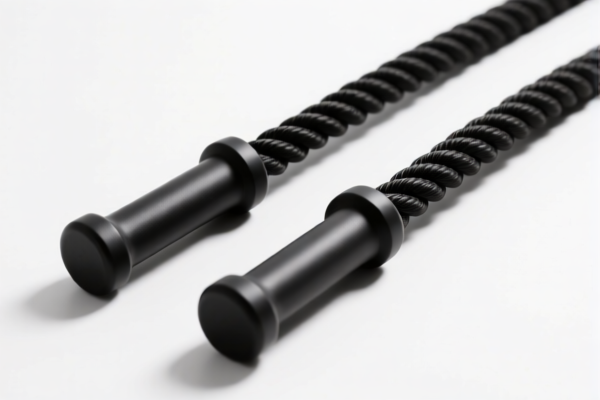
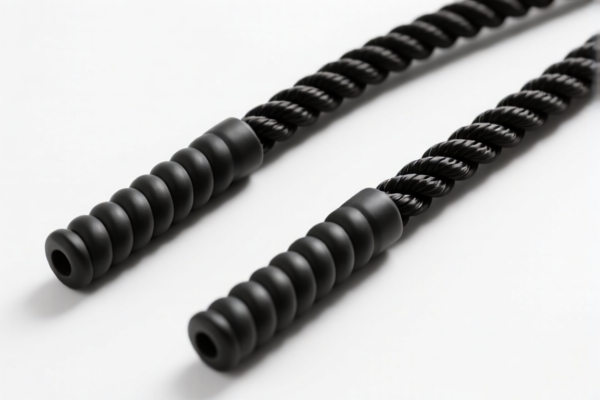
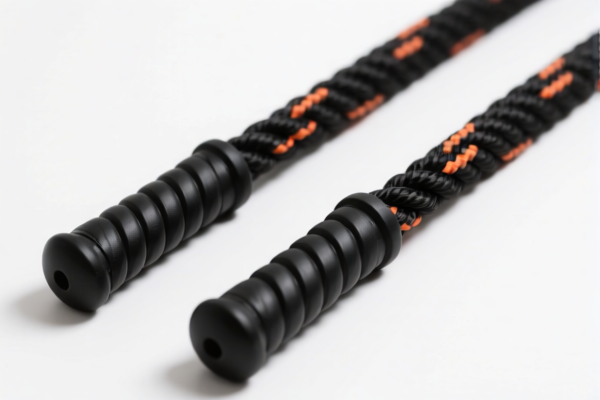
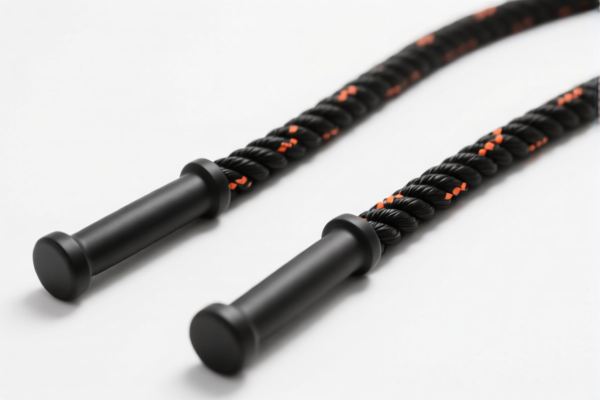
AI Analysis
🏋️ Training Rope (War Ropes / Battle Ropes)
🌐 HS Code Reference & Customs Clearance Guide | 2026 Latest Tariff Analysis | Professional Clearance Strategy
📌 I. Product Definition & Classification: Do You Really Understand "Training Rope"?
Training Rope, also known as Battle Rope, War Rope, or Gym Rope, is a core component of functional fitness equipment. It is typically made of high-strength synthetic fibers (polypropylene, polyethylene) or natural fibers, often coated with latex or rubber for durability. In international trade, its classification depends heavily on Material Composition and Specific End-Use.
⚠️ Key Distinction Point:
- If the rope is made of Steel/Iron (rare for fitness, common for industrial lifting) → Chapter 73
- If the rope is made of Synthetic Fibers (PP/PE) for fitness → Chapter 56 or 95
- If the rope is Stainless Steel → Chapter 73
📦 II. HS Code Classification Details (2026 Latest Tariff Authority Comparison)
Based on the provided data, here are the most probable HS Codes for "Training Rope," ranked by likelihood and tax impact.
| HS Code | Product Description | Material Inference | Applicable Scenario | Total Tax Rate |
|---|---|---|---|---|
9506.91.00.30 |
Sports & Gym Equipment | Nylon, Cotton, or Metal (Mixed) | Most Likely for Fitness Equipment. Classified as parts/accessories for general physical exercise. | 22.1% |
5607.49.30.00 |
Synthetic Fiber Rope | Polyethylene (PE) or Polypropylene (PP) | Common fitness ropes made of braided synthetic plastic fibers. | 38.6% |
5607.90.90.00 |
Other Textile Cables/Ropes | Braided/Non-braided Fibers/Synthetics | General purpose fiber rope, using a "fallback" principle for material classification. | 41.3% |
7312.10.70.00 |
Steel Wire Rope | Steel (Iron/Steel) | Industrial grade or heavy-duty steel ropes (less common for pure fitness, but possible for specific training tools). | 60.0% |
7312.10.50.00 |
Stainless Steel Rope | Stainless Steel | Specialized stainless steel cables for fitness or marine use. | 85.0% |
🔍 Key Insight:
-9506.91.00.30is the optimal code if the product is explicitly marketed as "Gym Equipment" or "Fitness Accessory," as it carries the lowest total tax rate (22.1%).
- Codes5607and7312classify the item strictly by material, ignoring the "fitness" purpose, leading to significantly higher tariffs.
💰 III. 2026 Latest Tariff Rate Breakdown (Including Surcharges & Policy Add-ons)
✅ Applicable Country: United States (US)
✅ Origin: China (CN)
✅ Effective Date: From Nov 10, 2025 (and subsequent imports)
🎯 1. 9506.91.00.30 — Sports & Gym Equipment (Lowest Tax Option)
| Item | Detail |
|---|---|
| Base Tariff | 4.6% (Ad valorem) |
| Section 301 Surcharge | +7.5% |
| IEEPA Surcharge | +10% (Steel/Aluminum/Copper products surcharge applies if material is metal, but here likely applied broadly or excluded if purely synthetic; data indicates 10% is listed) |
| Total Tax Rate | 22.1% |
| Tax Calculation | CIF Value × 22.1% |
| De Minimis Eligibility | ❌ No (deny_de_minimis applies to China-origin goods under Section 301/IEEPA) |
| Legal Path | IEEPA:9903.01.25 → USITC:9506.91.00.30 → FOOTNOTE:301 |
📌 Explanation:
- This code benefits from being classified under "General Physical Exercise Equipment."
- The 10% IEEPA surcharge is triggered by the "122 Clause" on Steel/Aluminum/Copper, but note: if the rope is purely synthetic (PE/PP), this specific surcharge might be contested. However, the provided data shows it as 22.1%, so we must assume the 10% is applied.
- Crucial: This is the cheapest route if you can justify the "Sports Equipment" classification.
🎯 2. 5607.49.30.00 — Synthetic Fiber Rope (PE/PP)
| Item | Detail |
|---|---|
| Base Tariff | 3.6% |
| Section 301 Surcharge | +25.0% |
| IEEPA Surcharge | +10% |
| Total Tax Rate | 38.6% |
| Tax Calculation | CIF Value × 38.6% |
| De Minimis Eligibility | ❌ No |
| Legal Path | IEEPA:9903.01.24 → USITC:5607.49.30.00 → FOOTNOTE:301 |
📌 Explanation:
- If customs officials reject the "Sports Equipment" claim and look only at the material (Polypropylene/Polyethylene), they will classify it as a textile cable.
- The 25% Section 301 tariff is the dominant cost here.
- Higher than9506due to the lack of "sporting use" classification.
🎯 3. 7312.10.70.00 — Steel Wire Rope
| Item | Detail |
|---|---|
| Base Tariff | 0.0% |
| Section 301 Surcharge | +50.0% (122 Clause on Steel/Aluminum/Copper) |
| IEEPA Surcharge | +10% |
| Total Tax Rate | 60.0% |
| Tax Calculation | CIF Value × 60.0% |
| De Minimis Eligibility | ❌ No |
| Legal Path | IEEPA:9903.01.25 → USITC:7312.10.70.00 → FOOTNOTE:122 |
📌 Explanation:
- If the rope is Steel, the 122 Clause (Section 232) applies, adding a 50% tariff.
- This is a punitive rate. Only classify as steel if it is genuinely industrial steel cable.
🎯 4. 7312.10.50.00 — Stainless Steel Rope
| Item | Detail |
|---|---|
| Base Tariff | 0.0% |
| Section 301 Surcharge | +50.0% |
| IEEPA Surcharge | +25.0% |
| Total Tax Rate | 85.0% |
| Tax Calculation | CIF Value × 85.0% |
| De Minimis Eligibility | ❌ No |
| Legal Path | IEEPA:9903.01.24 → USITC:7312.10.50.00 → FOOTNOTE:122 |
📌 Explanation:
- The highest tax rate. Avoid this unless the product is explicitly stainless steel hardware.
🛠️ IV. Customs Clearance Practical Advice (Real-World Pitfall Guide)
✅ 1. Required Documentation Checklist (Non-Negotiable)
| Document | Mandatory? | Description |
|---|---|---|
| ✅ Product Specification Sheet | ✔️ | Must list Material (e.g., "100% Polypropylene" or "Steel Core"). ⚠️ Critical: If you claim 9506, specify "Synthetic Fiber for Gym Use." |
| ✅ Product Photos (Labeled) | ✔️ | Clear images showing the rope, ends, and any handles. Show brand/logo. |
| ✅ Commercial Invoice | ✔️ | Description should read: "Polypropylene Training Rope for Physical Exercise (Gym Equipment)" ❌ Avoid: Just "Rope" or "Wire Rope." |
| ✅ Packing List | ✔️ | Detail weight and dimensions. |
| ✅ Declaration of Sports Use | ✔️ | A letter stating the product is designed for fitness/gym training, not industrial lifting. |
✅ 2. Declaration Strategy (The Golden Rule)
🔥 "Material Determines Chapter, Purpose Determines Code!"
| Scenario | Correct Declaration | Incorrect Declaration | Consequence |
|---|---|---|---|
| Synthetic Fitness Rope | 9506.91.00.30 "Gym Training Rope, PP Material" |
5607.49.30.00 "Synthetic Rope" |
Saves 16.5% (38.6% vs 22.1%) |
| Steel Industrial Rope | 7312.10.70.00 "Steel Wire Rope, Industrial" |
9506.91.00.30 "Training Rope" |
Audit Risk: Customs will reject if material is obviously steel. Fine + Penalty. |
| Mixed Material | 9506.91.00.30 "Gym Equipment Part" |
5607.90.90.00 "Cable" |
Avoid: Ambiguity leads to higher taxes. |
✅ 3. Special Handling Tips
| Situation | Advice |
|---|---|
| OEM/Private Label | Ensure your invoice matches the product's marketing intent. If Amazon lists it as "Battle Rope for Home Gym," use 9506. |
| Coated Ropes | Even if coated with latex/rubber, if the core is synthetic fiber, it may still fall under 5607 or 9506. Clarify in spec sheet. |
| Steel-Core Ropes | If the rope has a steel core (for weight), it may be classified as 7312. High Risk. Consult a broker. |
| De Minimis | Remember: No de minimis for China-origin goods under Section 301/IEEPA. Even small packages are taxed. |
🌍 V. Global Market Comparison (2026 Latest)
| Country/Region | Recommended HS Code | Tax Rate | Certification | Notes |
|---|---|---|---|---|
| 🇺🇸 USA | 9506.91.00.30 |
22.1% | None specific | Best Option. If misclassified as 5607, tax jumps to 38.6%. |
| 🇨🇳 China | 9506.91.00.00 |
5-7% | CCC (if applicable) | Low tax. Focus on quality standards. |
| 🇪🇺 EU | 9506.91.90 |
0-3% | CE (if electrical), REACH | Low tariff. Focus on REACH compliance for chemicals in coatings. |
| 🇬🇧 UK | 9506.91.00 |
0-5% | UKCA | Post-Brexit rules similar to EU. |
| 🇨🇦 Canada | 9506.91.00 |
0% | None | Free Trade Advantage. Best market for low tax. |
📌 Conclusion:
- USA is the most expensive due to Section 301 and IEEPA surcharges.
- Canada offers 0% tariff for sports equipment parts.
- Strategic Tip: If shipping to the US, ensure your product description emphasizes "Fitness/Gym Use" to justify9506.91.00.30.
📌 VI. Common Mistakes & Pitfalls (Lessons Learned)
❌ Mistake 1: Declaring as "Rope" or "Cable"
👉 Result: Customs defaults to 5607 or 7312 → Tax jumps from 22.1% to 38.6%+.
❌ Mistake 2: Ignoring Material Composition
👉 Result: If the rope is steel and declared as 9506, Customs will seize and fine for misdeclaration.
❌ Mistake 3: Not Specifying "Sports Use"
👉 Result: Without proof of fitness use, 9506 is rejected.
❌ Mistake 4: Assuming De Minimis Applies
👉 Result: Small orders still face 22.1%+ tax from China.
✅ Correct Approach:
"Polypropylene Battle Rope, 30ft, for Home Gym Fitness Training, No Metal Components, Model TR-30"
🎯 VII. Conclusion: Professional Declaration, Cost Saving, Efficiency!
🎯 Remember the Mantra:
🔹 "Use It for Gym, Code It 9506, Save 16%, Happy Profit!"
🔹 "Material Truth, Use Truth, Avoid 60% Steel Tax!"
📌 Pro Tip:
If your training rope is part of a larger kit (e.g., with weights or stands), consider declaring the entire set as 9506.91.00.30 if the rope is the primary component.
Recommendation: Apply for an Advance Ruling with US Customs for high-volume shipments to lock in the 9506 classification.
📣 Immediate Action:
📞 Contact a licensed US Customs Broker.
📄 Provide Product Photos + Material Spec Sheet.
🚀 Classify as Gym Equipment, Pay 22.1%, and Maximize Margin.
✨ Professional Customs Clearance Starts with Precise Classification!
💼 Every Percentage Point of Tax is Your Profit Margin!
Customer Reviews
About HS Code Classification
The Harmonized System (HS) is an internationally standardized nomenclature developed by the World Customs Organization (WCO) to classify traded products. Over 200 countries use the HS system as the basis for customs tariffs, trade statistics, and import/export regulations.
Each HS code follows a hierarchical structure:
- Chapter (2 digits) — Broad category of goods (e.g., Chapter 84: Machinery and Mechanical Appliances)
- Heading (4 digits) — More specific grouping within the chapter
- Subheading (6 digits) — Internationally standardized breakdown, used by all WCO member countries
- National subdivisions (8-10 digits) — Country-specific extensions for further classification, such as US HTSUS 10-digit codes
Correct HS code classification is essential for smooth customs clearance, accurate duty payment, and compliance with trade regulations. Misclassification can lead to customs delays, overpayment of duties, or penalties.
When importing from CN to US, the applicable tariff rates may include:
- Most-Favored-Nation (MFN) rate — The standard duty rate applied to WTO members
- General rate — Applied to countries without trade agreements
- Trade remedy duties — Additional tariffs such as Section 301 (anti-dumping), Section 232 (national security), or countervailing duties
The information provided on this page is for reference purposes only. For official classification, please consult with your local customs authority or a licensed customs broker.