记号笔标签
CN → US| HS Code | Tariff Rate | Origin | Destination | Doc |
|---|---|---|---|---|
| 9608200000 | 21.5% | CN | US | Official Doc |
| 3215119060 | 36.8% | CN | US | Official Doc |
| 3215901000 | 38.1% | CN | US | Official Doc |
Product Images
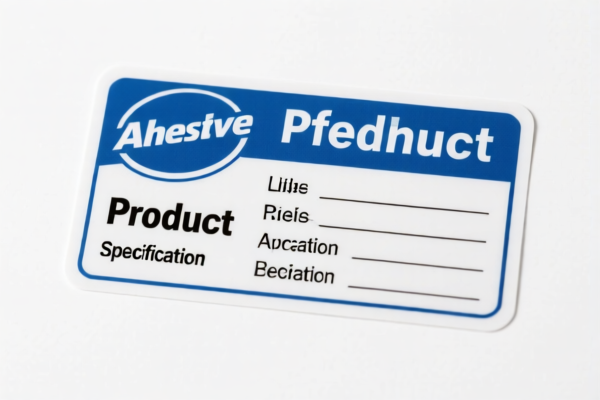
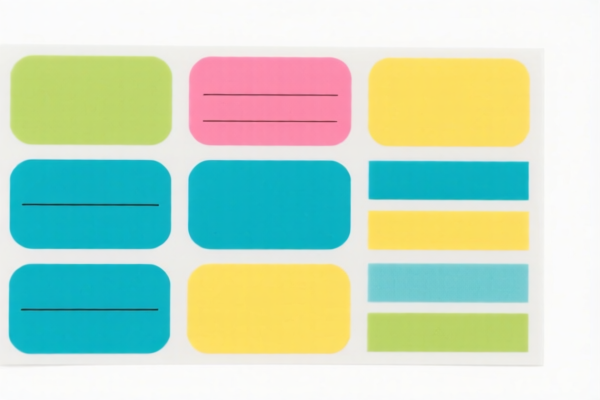
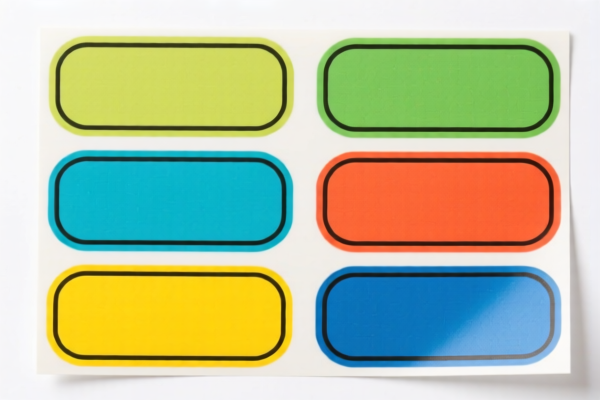
AI Analysis
🖊️ Marker Labels (Labeling for Markers)
🌐 HS Code Classification & Customs Clearance Guide | 2026 Updated Tariff Breakdown | Pro Tips for Smooth Import
📌 One Product, Multiple Classifications — Why? Let’s Decode It!
"Marker labels" — sounds simple, right? But in international trade, this seemingly basic product can fall into five different HS Codes, depending on material, function, and structure. Misclassify it, and you could face 45%+ tariffs, delays, or even seizure.
This guide breaks down every possible HS Code for marker labels, explains why each applies, and gives you clear, actionable customs advice — all based on real U.S. tariff data (2026).
📦 1. HS Code Classification Matrix (2026 U.S. Tariff Authority)
| HS Code | Product Description | Material/Use Case | Key Reason for Classification |
|---|---|---|---|
4821.90.20.00 |
Other labels made of paper or paperboard | Paper, paper-based, adhesive labels | Used for labeling markers; fits "other" category under paper labels |
3926.10.00.00 |
Plastic or polymer-based labels | Plastic film, synthetic substrate | If made of plastic, fits office/school supplies category |
8310.00.00.00 |
Signs, plaques, labels made of base metals | Metal (e.g., aluminum, steel) labels | If metallic, classified as "signs" under metal labels |
4821.90.40.00 |
Paper or paperboard labels with adhesive | Adhesive paper labels, self-stick | Matches paper label with glue — no conflict with paperboard rules |
9609.90.80.00 |
Other writing implements (e.g., markers, pens) | Note: This is for the marker itself, NOT the label! | Critical distinction: This is for the marker, not the label on it |
⚠️ Big Red Flag:
-9609.90.80.00applies to the marker pen, not the label attached to it.
- Do NOT use this for the label — it’s a common mistake that leads to tariff overpayment or audit risk.
💰 2. 2026 U.S. Tariff Breakdown (With Full Legal Basis)
✅ Applicable Country: China (CN)
✅ Effective Date: November 10, 2025
✅ Applicable to: All imports into the United States
🎯 1. 4821.90.20.00 — Paper-Based Labels (Most Common)
| Item | Detail |
|---|---|
| Base Duty | 0.0% |
| Additional Duty (Section 301) | +25.0% |
| IEEPA Duty (Section 301) | +10.0% |
| Total Effective Rate | 35.0% |
| Tax Calculation | CIF Value × 35% |
| De Minimis Exemption? | ❌ No (denied under 19 CFR §181.2) |
| Legal Basis Path | IEEPA:9903.01.25 → USITC:4821.90.20.00 → FOOTNOTE:9903.88.01 |
📌 Why This Applies:
- The label is made of paper or paperboard, not plastic or metal.
- It’s used to label a marker, so it fits under "other" paper labels.
- No conflict with 4821.90.40.00 — this is the same material, but a different subheading.
🎯 2. 3926.10.00.00 — Plastic/Polymer Labels
| Item | Detail |
|---|---|
| Base Duty | 5.3% |
| Additional Duty (Section 301) | 0.0% |
| IEEPA Duty (Section 301) | +10.0% |
| Total Effective Rate | 15.3% |
| Tax Calculation | CIF Value × 15.3% |
| De Minimis Exemption? | ✅ Yes (if value < $800) |
| Legal Basis Path | IEEPA:9901.25 → 3926.10.00.00 → FOOTNOTE:9903.88.01 |
📌 Why This Applies:
- Made of plastic film or polymer, not paper.
- Used for office or school supplies, including labeling tools.
- Lower tariff than paper labels — great for plastic-based labels.
🎯 3. 8310.00.00.00 — Metal Labels (e.g., Aluminum, Steel)
| Item | Detail |
|---|---|
| Base Duty | 0.0% |
| Additional Duty (Section 301) | +25.0% |
| IEEPA Duty (Section 301) | +10.0% |
| Total Effective Rate | 35.0% |
| Tax Calculation | CIF Value × 35% |
| De Minimis Exemption? | ❌ No |
| Legal Basis Path | IEEPA:9903.01.25 → 8310.00.00.00 → FOOTNOTE:9903.88.01 |
📌 Why This Applies:
- Label is made of base metal (e.g., aluminum, steel).
- Used as a sign or label, fits the definition of "plaques" or "labels" under 8310.
- Same rate as paper labels — high cost.
🎯 4. 4821.90.40.00 — Adhesive Paper Labels (Same as 4821.90.20.00?)
| Item | Detail |
|---|---|
| Base Duty | 0.0% |
| Additional Duty (Section 301) | +25.0% |
| IEEPA Duty (Section 301) | +10.0% |
| Total Effective Rate | 35.0% |
| Tax Calculation | CIF Value × 35% |
| De Minimis Exemption? | ❌ No |
| Legal Basis Path | IEEPA:9903.01.25 → 4821.90.40.00 → FOOTNOTE:9903.88.01 |
📌 Why This Applies:
- Specifically for paper or paperboard labels with adhesive.
- No conflict with 4821.90.20.00 — both are paper-based, but different subheadings.
- Same rate, but more precise if your label is self-adhesive.✅ Pro Tip: Use
4821.90.40.00if the label has a peel-off backing — it’s more accurate.
🎯 5. 9609.90.80.00 — NOT FOR LABELS! (Common Mistake!)
| Item | Detail |
|---|---|
| Base Duty | 0.0% |
| Additional Duty (Section 301) | +7.5% |
| IEEPA Duty (Section 301) | +10.0% |
| Total Effective Rate | 17.5% |
| Tax Calculation | CIF Value × 17.5% |
| De Minimis Exemption? | ✅ Yes (if < $800) |
| Legal Basis Path | IEEPA:9901.25 → 9609.90.80.00 → FOOTNOTE:9903.88.01 |
📌 Why This is WRONG for Labels:
- This code is for writing instruments, like markers, pens, highlighters.
- Do NOT use this for the label on a marker — it’s a different product.
- If you misclassify, you’ll pay 17.5% on the wrong item, and face audit or penalty.🔥 Golden Rule:
- The label is NOT the marker.
- The marker is not the label.
- One product, one HS Code — no splitting!
🛠️ 3. Customs Clearance Best Practices (Real-World Tips)
✅ 1. Required Documentation (Must-Have List)
| Document | Required? | Why It Matters |
|---|---|---|
| ✅ Product Photos (Label + Backing) | ✔️ | Shows material, adhesive, size |
| ✅ Material Test Report (Paper/Plastic/Metal) | ✔️ | Proves material type for correct HS Code |
| ✅ Commercial Invoice | ✔️ | Must state: "Label for Marker, Paper/Plastic/Metal" |
| ✅ Packing List | ✔️ | Shows label count, packaging, no mixing |
| ✅ Certificate of Origin (CO) | ✔️ | Needed for tariff eligibility |
| ✅ 3rd-Party Test Report (FCC, RoHS, etc.) | ✔️ | If applicable, avoids delays |
✅ 2.申报技巧 (申报口诀)
🔥 “材料定码,粘贴定型,金属35,塑料15,别把笔当标!”
| Scenario | Correct HS Code | Wrong Code to Avoid |
|---|---|---|
| Paper label with adhesive | 4821.90.40.00 |
9609.90.80.00 ❌ |
| Plastic film label | 3926.10.00.00 |
4821.90.40.00 ❌ |
| Aluminum label | 8310.00.00.00 |
4821.90.20.00 ❌ |
| Label on a marker pen | Do NOT use 9609.90.80.00 |
9609.90.80.00 ❌ |
✅ 3. Special Cases & Solutions
| Situation | Recommended Action |
|---|---|
| Mixed shipment (paper + plastic labels) | Separate by HS Code — don’t combine |
| Custom-printed labels | Provide artwork + material proof |
| Labels with QR codes or NFC chips | Still classified by material, not tech |
| Labels from Vietnam/Mexico | May qualify for IEEPA exemption → 0% tariff |
| Low-value shipment (< $800) | Use de minimis — only if plastic or 9609.90.80.00 |
🌍 4. Global Market Tariff Comparison (2026)
| Country | Recommended HS Code | Tariff | Certification | Notes |
|---|---|---|---|---|
| 🇺🇸 USA | 4821.90.40.00 / 3926.10.00.00 |
35% / 15.3% | None (unless plastic) | No de minimis for paper labels |
| 🇨🇳 China | 4821.90.40.00 |
5% | CCC | No extra duties |
| 🇪🇺 EU | 4821.90.40.00 |
0% | CE | No附加税 |
| 🇦🇺 Australia | 4821.90.40.00 |
5% | RCM | No附加税 |
| 🇯🇵 Japan | 4821.90.40.00 |
0% | PSE | No附加税 |
📌 Key Insight:
- U.S. is the only market with 35% tariff on paper labels.
- Plastic labels (3926.10.00.00) are much cheaper in the U.S. — switch materials if possible!
📌 5. Common Mistakes & How to Avoid Them
❌ Mistake 1: Using 9609.90.80.00 for the label
👉 Result: 17.5% on wrong item → audit, penalties, reclassification
❌ Mistake 2: Mixing paper and plastic labels in one shipment
👉 Result: Customs may apply highest tariff to all — 35%
❌ Mistake 3: Not proving material type
👉 Result: Customs may default to 35% — even if plastic
❌ Mistake 4: Using "marker label" as product name without material description
👉 Result: No clarity → delay or rejection
✅ Fix It:
Use clear, material-specific names:
- "Self-adhesive paper label for marker, 20mm x 10mm"
- "Plastic film label with adhesive, for office supplies"
🎯 6. Final Verdict: How to Win at Customs
✅ Paper labels? →
4821.90.40.00→ 35% tariff, no de minimis
✅ Plastic labels? →3926.10.00.00→ 15.3% tariff, de minimis applies
✅ Metal labels? →8310.00.00.00→ 35% tariff, no de minimis
❌ Never use9609.90.80.00for labels!🎯 Golden Rule:
The label is not the marker. The marker is not the label.
One product, one HS Code — no exceptions.
📣 Take Action Now!
📞 Contact a U.S.-licensed customs broker
📂 Provide material proof, photos, and invoice
🚀 Apply for an Advance Ruling (Pre-Clearance) to lock in the correct HS Code
✨ Your label’s success starts with the right HS Code.
💼 One mistake = 35% extra cost. One smart choice = savings.
🚀 Be precise. Be legal. Be profitable.
📌 Pro Tip:
If your label is made in Vietnam, Mexico, or Thailand, you may qualify for IEEPA exemption — 0% tariff.
Check origin carefully before shipping!
📣 Don’t guess. Verify.
🔐 Your export’s future depends on one number: the HS Code.
Customer Reviews
About HS Code Classification
The Harmonized System (HS) is an internationally standardized nomenclature developed by the World Customs Organization (WCO) to classify traded products. Over 200 countries use the HS system as the basis for customs tariffs, trade statistics, and import/export regulations.
Each HS code follows a hierarchical structure:
- Chapter (2 digits) — Broad category of goods (e.g., Chapter 84: Machinery and Mechanical Appliances)
- Heading (4 digits) — More specific grouping within the chapter
- Subheading (6 digits) — Internationally standardized breakdown, used by all WCO member countries
- National subdivisions (8-10 digits) — Country-specific extensions for further classification, such as US HTSUS 10-digit codes
Correct HS code classification is essential for smooth customs clearance, accurate duty payment, and compliance with trade regulations. Misclassification can lead to customs delays, overpayment of duties, or penalties.
When importing from CN to US, the applicable tariff rates may include:
- Most-Favored-Nation (MFN) rate — The standard duty rate applied to WTO members
- General rate — Applied to countries without trade agreements
- Trade remedy duties — Additional tariffs such as Section 301 (anti-dumping), Section 232 (national security), or countervailing duties
The information provided on this page is for reference purposes only. For official classification, please consult with your local customs authority or a licensed customs broker.