诊断工具
CN → US| HS Code | Tariff Rate | Origin | Destination | Doc |
|---|---|---|---|---|
| 9031808085 | 10.0% | CN | US | Official Doc |
| 9031200000 | 36.7% | CN | US | Official Doc |
| 9028900080 | 35.0% | CN | US | Official Doc |
| 9027504060 | 35.0% | CN | US | Official Doc |
| 9027504060 | 35.0% | CN | US | Official Doc |
Product Images
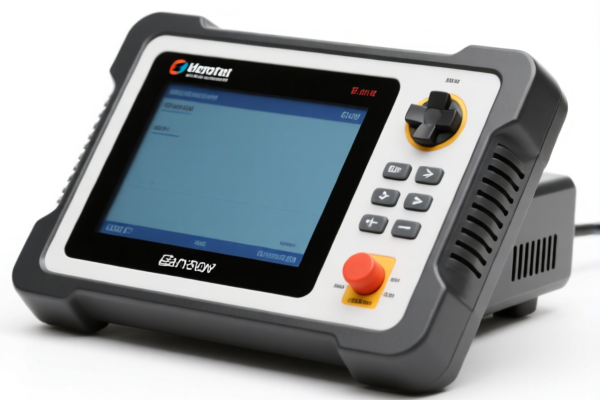
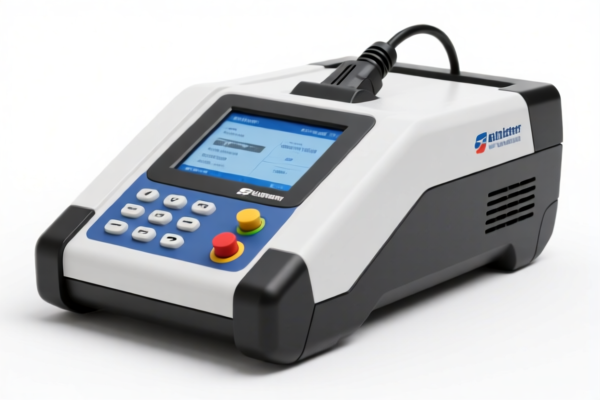
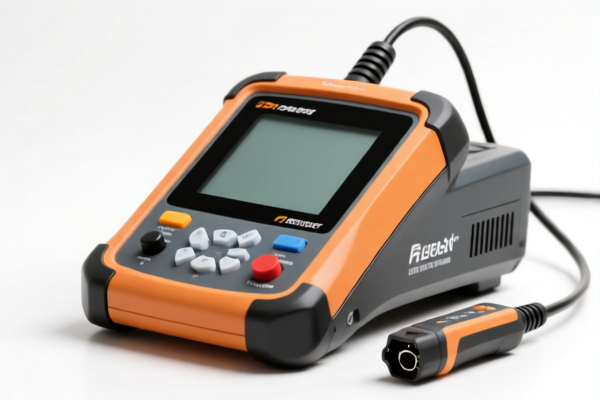
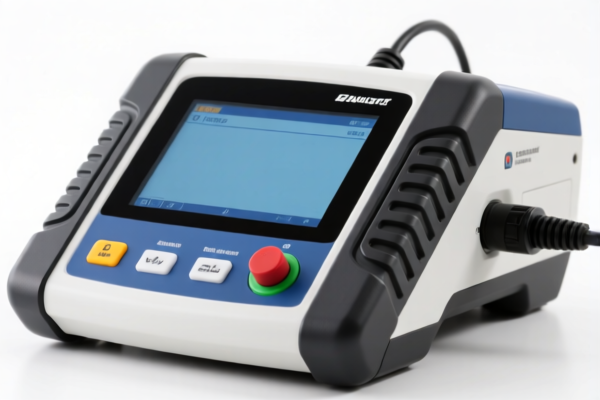
AI Analysis
🔬 Diagnostic Tools (Diagnostic Instruments)
🌐 HS Code Reference & Customs Clearance Guide | 2026 Latest Tariff Analysis | Professional Clearance Strategy
📌 Part 1: Product Definition & Classification: Do You Really Understand "Diagnostic Tools"?
Diagnostic tools are critical instruments used for medical, industrial, or technical testing and measurement. In international trade, they are not a single unified category but are classified based on their specific function, physical principle, and application scenario. The key to accurate classification lies in distinguishing whether the tool is a general measuring device, a specialized analytical instrument, or a specific type of meter.
⚠️ Key Classification Points: - If it is a general diagnostic/testing device without specific optical/chemical analysis functions → Likely 9031 or 9028. - If it is a specialized analytical instrument (optical, chemical, physical) → Likely 9027. - If it is a metering device (e.g., for utility or specific process control) → Likely 9028.
📦 Part 2: HS Code Classification Details (2026 Latest Tariff Authority Comparison)
Based on the provided data, here are the five potential HS Codes for "Diagnostic Tools" and their corresponding tax implications.
| HS Code | Product Description | Applicable Scenario | Tax Rate (Total) | Key Justification from Data |
|---|---|---|---|---|
9031.80.80.85 |
Other measuring or checking instruments/machines (General Diagnostic) | General diagnostic tools fitting the "measurement and inspection" category not elsewhere specified. | 10.0% | Diagnostic tools belong to measurement/inspection; classified under "other" meters. |
9031.20.00.00 |
Test benches for measuring electrical characteristics (Diagnostic/Test Bench) | Diagnostic tools functioning as test benches for electrical or general testing/measurement. | 36.7% | Fits the scope of "test benches" in testing/measurement categories. |
9028.90.00.80 |
Meters and checkers (other than those of heading 9024 to 9027) (Diagnostic Metering) | Diagnostic tools classified under "other" meters after excluding specific categories. | 35.0% | Fits under "other accessories/meters" after excluding specific categories. |
9027.50.40.60 |
Optical radiation measuring/controlling instruments (Diagnostic Analytical) | Diagnostic tools highly aligned with analytical instruments/devices; fallback principle. | 35.0% | Matches optical radiation or physical/chemical analytical instrument functions. |
9027.50.40.60 |
Other instruments using optical radiation (Diagnostic Analytical 2) | Diagnostic tools as detection/analysis instruments using optical radiation. | 35.0% | Consistent with detection and analysis instruments category. |
🔍 Critical Distinction: -
9031.80.80.85is the lowest tax option (10%) and applies if the tool is a general diagnostic/measuring device without complex analytical (optical/chemical) capabilities. -9027Codes apply if the tool performs chemical, physical, or optical analysis (e.g., gas analyzers, spectrometers). -9028Codes apply if the tool is primarily a metering device for flow, voltage, etc., but not a full analytical lab instrument.
💰 Part 3: 2026 Latest Tariff Rate Breakdown (Including Additional Taxes & Policy Surcharges)
✅ Applicable Country: United States (US)
✅ Origin: China (CN)
✅ Effective Time: Current US Trade Policy (Including Section 301 & IEEPA)
🎯 1. 9031.80.80.85 —— General Diagnostic/Measuring Instruments
| Item | Content |
|---|---|
| Base Duty Rate | 0.0% |
| Section 301 Additional Duty | 0.0% (Note: Some 9031 items may be exempt, check specific footnote) |
| Section 122 Duty | +10.0% |
| Total Duty Rate | 10.0% |
| Tax Calculation | CIF Value × 10% |
| De Minimis Eligibility | ❌ No (Generally, professional diagnostic equipment is not eligible for de minimis) |
| Legal Basis Path | HS:9031.80.80.85 → Section 122: 10% |
📌 Explanation: - This is the most cost-effective classification if applicable. - It assumes the tool is not a specialized optical/chemical analyzer (which would trigger higher rates). - Key Advantage: The total tax burden is significantly lower than other classifications.
🎯 2. 9031.20.00.00 —— Test Benches for Measurement
| Item | Content |
|---|---|
| Base Duty Rate | 1.7% |
| Section 301 Additional Duty | +25.0% |
| Section 122 Duty | +10.0% |
| Total Duty Rate | 36.7% |
| Tax Calculation | CIF Value × 36.7% |
| De Minimis Eligibility | ❌ No |
| Legal Basis Path | HS:9031.20.00.00 → Section 301: 25% → Section 122: 10% |
📌 Explanation: - Applies if the diagnostic tool is specifically a "test bench" used for electrical or general measurement testing. - Subject to full Section 301 tariffs (25%) due to its classification as a test/measurement apparatus often targeted by trade policies.
🎯 3. 9028.90.00.80 —— Other Meters and Checkers
| Item | Content |
|---|---|
| Base Duty Rate | 0.0% |
| Section 301 Additional Duty | +25.0% |
| Section 122 Duty | +10.0% |
| Total Duty Rate | 35.0% |
| Tax Calculation | CIF Value × 35.0% |
| De Minimis Eligibility | ❌ No |
| Legal Basis Path | HS:9028.90.00.80 → Section 301: 25% → Section 122: 10% |
📌 Explanation: - Applies if the diagnostic tool is classified as a meter (e.g., voltage, current, flow meter) rather than a general instrument. - Key Risk: Even with a 0% base rate, the 25% Section 301 tariff significantly increases costs.
🎯 4 & 5. 9027.50.40.60 —— Optical/Physical/Chemical Analytical Instruments
| Item | Content |
|---|---|
| Base Duty Rate | 0.0% |
| Section 301 Additional Duty | +25.0% |
| Section 122 Duty | +10.0% |
| Total Duty Rate | 35.0% |
| Tax Calculation | CIF Value × 35.0% |
| De Minimis Eligibility | ❌ No |
| Legal Basis Path | HS:9027.50.40.60 → Section 301: 25% → Section 122: 10% |
📌 Explanation: - Applies if the diagnostic tool uses optical radiation, chemical analysis, or physical measurement principles (e.g., spectrometers, gas analyzers, pH meters). - Key Risk: While base duty is 0%, the 25% Section 301 tariff applies. This classification is strictly for analytical devices, not general diagnostic tools.
🛠️ Part 4: Practical Clearance Advice (Battle-Tested Pitfall Guide)
✅ 1. Preparation Checklist (Must-Haves)
| Document | Required | Description |
|---|---|---|
| ✅ Product Specification Sheet | ✔️ | Must detail: Function, Principle (Optical/Chemical/General), Accuracy, Range. |
| ✅ User Manual | ✔️ | Must show intended use (e.g., "Medical Diagnostic," "Industrial Testing," "Electrical Analysis"). |
| ✅ Photos (Internal/External) | ✔️ | Show brand, model, connectors, and any labels indicating function. |
| ✅ Declaration Statement | ✔️ | Explicitly state: "This is a general diagnostic tool, NOT a chemical analyzer" (if aiming for 9031.80). |
| ✅ Commercial Invoice | ✔️ | Accurate description matching the HS Code chosen. |
| ✅ Packing List | ✔️ | List all components; avoid splitting main unit and accessories incorrectly. |
✅ 2. Declaration Tips (Key Mantras)
🔥 “General Meas. 9031.80 (10%), Analytical 9027 (35%), Test Bench 9031.20 (36.7%)!”
| Scenario | Correct HS Code | Incorrect Practice | Consequence |
|---|---|---|---|
| General Diagnostic Device (e.g., multimeter, general tester) | 9031.80.80.85 |
Declare as "Chemical Analyzer" | Overpay by 25% (35% vs 10%) |
| Optical/Chemical Analyzer (e.g., spectrometer) | 9027.50.40.60 |
Declare as "General Meter" | Under-declare Tax → Penalties & Back Taxes |
| Electrical Test Bench | 9031.20.00.00 |
Declare as "General Instrument" | Under-declare Tax → Penalties |
| Flow/Voltage Meter | 9028.90.00.80 |
Declare as "Analytical Instrument" | Overpay by 0% (35% vs 35%) – No benefit, risk of misclassification |
✅ 3. Special Situation Handling
| Situation | Handling Advice |
|---|---|
| Dual-Use Devices | If a device can be both general diagnostic AND analytical, choose the lower tax code (9031.80) if you can prove its primary use is general measurement. Provide evidence (manuals, marketing) supporting this. |
| Medical Diagnostic Tools | Ensure correct classification. If it’s a general medical tester, it might still fall under 9031. If it’s a lab analyzer, it falls under 9027. Check FDA requirements as well. |
| Section 122 Impact | Note that Section 122 (10%) applies to all these codes from China. There is no exemption for diagnostic tools under this specific section. |
| Section 301 Exemptions | Check if your specific product model was previously exempt from Section 301 tariffs. Exemptions are rare for diagnostic tools but worth verifying. |
🌍 Part 5: Global Market Clearance Comparison (2026 Latest)
| Country/Region | Recommended HS Code | Total Tariff (China Origin) | Key Certifications | Remarks |
|---|---|---|---|---|
| 🇺🇸 USA | 9031.80.80.85 |
10.0% | FCC, RoHS | Best Rate. Avoid 9027/9031.20 if possible. |
| 🇺🇸 USA | 9027.50.40.60 |
35.0% | FCC, RoHS | High tax due to Section 301. |
| 🇨🇳 China | 9031.80.80.85 |
~5-8% (Import Duty) | CCC (if applicable) | Lower base duty, no Section 301. |
| 🇪🇺 EU | 9031.80.80.85 |
~1.7% - 4% | CE, RoHS, MDR (if medical) | No Section 122 or 301. Favorable for exports. |
| 🇬🇧 UK | 9031.80.80.85 |
~1.7% - 4% | UKCA, RoHS | Post-Brexit rules apply. |
| 🇯🇵 Japan | 9031.80.80.85 |
~1.0% - 3% | PSE, JIS | Low tariffs, high quality standards. |
📌 Conclusion: - USA: Classification is CRITICAL.
9031.80.80.85saves 25-26% in taxes compared to other codes. - EU/UK/JP: Tariffs are low and stable. Focus on CE/UKCA/PSE certifications rather than HS Code optimization for tax savings.
📌 Part 6: Common Mistakes & Pitfall Guide (Lessons Learned)
❌ Mistake 1: Declaring all diagnostic tools as 9027 (Analytical Instruments)
👉 Result: Overpaying 25% in Section 301 tariffs unnecessarily.
💡 Fix: If the tool does not perform chemical/physical/optimical analysis, use 9031.80.
❌ Mistake 2: Declaring a "Test Bench" as "General Instrument" (9031.80)
👉 Result: Under-declaration of Tax. Customs may audit and charge back taxes + penalties.
💡 Fix: If it is a dedicated test bench, use 9031.20.
❌ Mistake 3: Ignoring Section 122 (10%) 👉 Result: Unexpected 10% charge on ALL entries from China. 💡 Fix: Budget for the 10% Section 122 in your cost model for all US imports from China.
❌ Mistake 4: Inconsistent Product Descriptions 👉 Result: Customs delays, requests for additional documentation, or misclassification. 💡 Fix: Ensure the Invoice, Manual, and Declaration all use consistent terminology that supports the chosen HS Code.
✅ Correct Practice:
"General Electronic Diagnostic Tool, Model XYZ, Used for Electrical Circuit Testing, Not for Chemical Analysis, FCC Certified"
🎯 Part 7: Conclusion: Precise Classification, Significant Savings!
🎯 Key Takeaway:
🔹 For US Imports from China: Aim for
9031.80.80.85to achieve the 10% total tax rate. 🔹 Avoid9027and9031.20unless your product is explicitly an analytical instrument or test bench, as they incur 35-36.7% total taxes. 🔹 Section 122 (10%) is unavoidable for all these codes from China to the US.
📌 Pro Tip:
If you have a mixed shipment of diagnostic tools, ensure the analytical and general tools are separated or clearly described to avoid classification errors.
📣 Immediate Action:
📞 Consult a Customs Broker: Provide product manuals and photos for a Pre-Ruling request. 📄 Document Everything: Keep records proving the tool’s function is general measurement, not analytical. 🚀 Optimize Your Supply Chain: Factor in the 10% Section 122 and 0-25% Section 301 in your pricing strategy.
✨ Professional Clearance Starts with Precise Classification! 💼 Every Percentage Point Counts in International Trade!
Customer Reviews
About HS Code Classification
The Harmonized System (HS) is an internationally standardized nomenclature developed by the World Customs Organization (WCO) to classify traded products. Over 200 countries use the HS system as the basis for customs tariffs, trade statistics, and import/export regulations.
Each HS code follows a hierarchical structure:
- Chapter (2 digits) — Broad category of goods (e.g., Chapter 84: Machinery and Mechanical Appliances)
- Heading (4 digits) — More specific grouping within the chapter
- Subheading (6 digits) — Internationally standardized breakdown, used by all WCO member countries
- National subdivisions (8-10 digits) — Country-specific extensions for further classification, such as US HTSUS 10-digit codes
Correct HS code classification is essential for smooth customs clearance, accurate duty payment, and compliance with trade regulations. Misclassification can lead to customs delays, overpayment of duties, or penalties.
When importing from CN to US, the applicable tariff rates may include:
- Most-Favored-Nation (MFN) rate — The standard duty rate applied to WTO members
- General rate — Applied to countries without trade agreements
- Trade remedy duties — Additional tariffs such as Section 301 (anti-dumping), Section 232 (national security), or countervailing duties
The information provided on this page is for reference purposes only. For official classification, please consult with your local customs authority or a licensed customs broker.