足球地垫
CN → US| HS Code | Tariff Rate | Origin | Destination | Doc |
|---|---|---|---|---|
| 5703310030 | 41.0% | CN | US | Official Doc |
| 5703210090 | 41.7% | CN | US | Official Doc |
| 6307909891 | 24.5% | CN | US | Official Doc |
| 3921190090 | 41.5% | CN | US | Official Doc |
| 3921110000 | 40.3% | CN | US | Official Doc |
Product Images
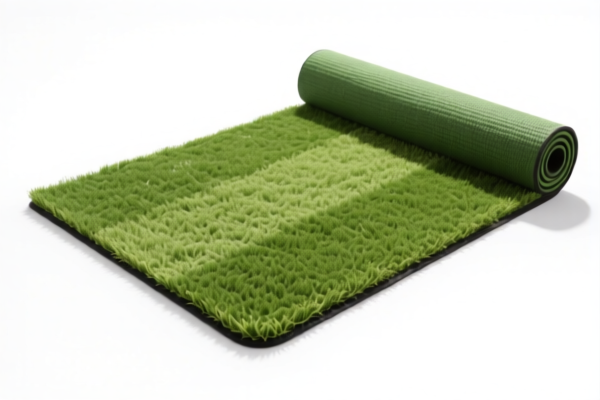
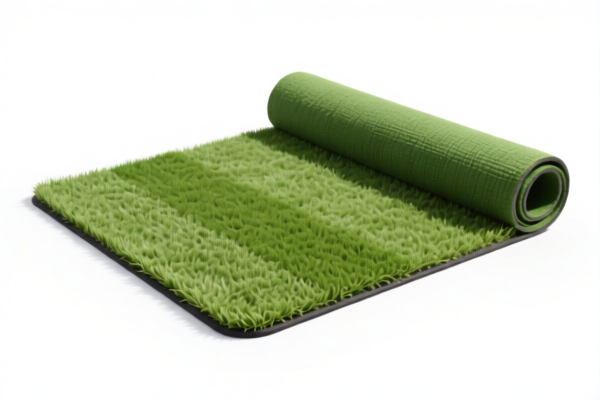
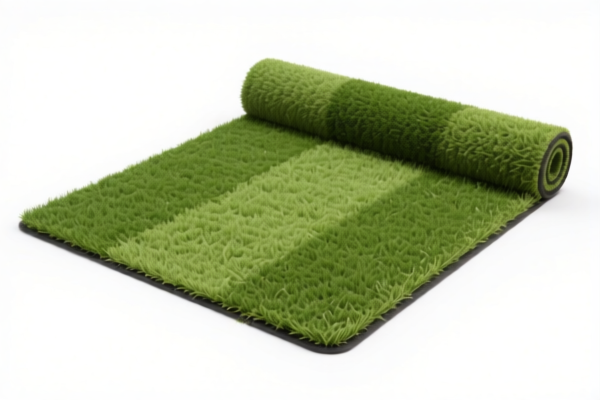
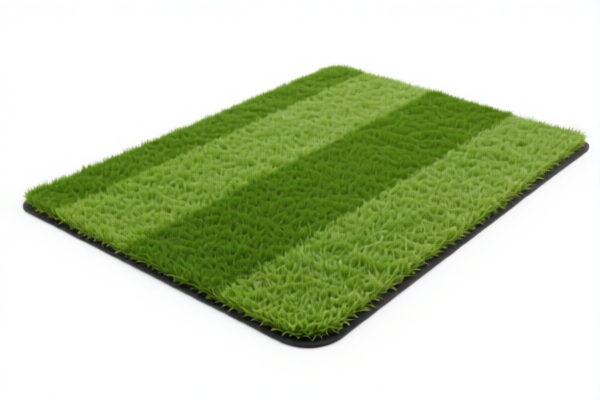
AI Analysis
🏟️ Soccer Turf Mats (Artificial Football Field Surfaces)
🌐 HS Code Reference & Clearance Guide | 2026 Latest Tariff Analysis | Professional Customs Strategy
📌 Part I: Product Definition & Classification: Do You Really Understand "Soccer Turf Mats"?
Soccer turf mats, also known as artificial football pitches or synthetic grass carpets, are specialized flooring products designed for sports fields. In international trade, their classification depends strictly on material composition, manufacturing method (tufted vs. solid), and physical form. They are primarily categorized into:
Tufted Carpet Category (Chapter 57): Made by inserting yarns into a backing material, resembling traditional carpets but with synthetic sports-grade fibers (nylon/polyamide). Finished Fabric/Plastic Category (Chapter 63 / Chapter 39): Includes rolled synthetic turf mats made from solid plastic sheets (PE/EVA) or stitched woven fabrics that do not meet the specific definition of "tufted carpet."
⚠️ Key Distinction Point:
- If the product is tufted (needle-punched yarns into backing) → It falls under Chapter 57 (Carpet).
- If the product is a solid plastic sheet/film or a finished fabric assembly without tufting → It falls under Chapter 39 (Plastics) or Chapter 63 (Other Made-up Articles).
📦 Part II: HS Code Classification Details (2026 Latest Tariff Authority Comparison)
Based on the provided data analysis, here are the five potential HS Codes depending on the specific material and construction of your soccer turf mat:
| HS Code | Product Description | Application Scenario | Primary Material |
|---|---|---|---|
5703.31.00.30 |
Tufted carpet of artificial textile materials, not of nylon/polyamide | Artificial grass fields using polyester or polypropylene fibers tufted into backing | Synthetic Textile (Polyester/PP) |
5703.21.00.90 |
Tufted carpet of other textile materials, not of nylon/polyamide | Alternative synthetic fiber tufted carpets | Synthetic Textile (Other) |
6307.90.98.91 |
Other made-up articles of textiles (Bottom-up category) | Finished turf mats that are considered "other made-up" textile products | Synthetic Fiber/Plastic Blend |
3921.19.00.90 |
Other plates, sheets, film, foil and strip, of plastics, cellular | Foam plastic mats (EVA/PE) used for indoor sports or playgrounds | Plastic Foam (EVA/PE) |
3921.11.00.00 |
Plates, sheets, film, foil and strip, of polymers of ethylene | Solid plastic sheeting used as base layers or simple turf mats | Polyethylene (PE) |
🔍 Critical Reminder:
- Tufted vs. Non-Tufted: The most common confusion is between Chapter 57 (Tufted) and Chapter 39/63. If your product has visible "yarns" inserted into a backing, it is likely 5703. If it is a continuous plastic sheet or foam roll, it is 3921. - Material Specifics: Nylon/Polyamide (PA) often has different sub-classifications than Polyester (PET) or Polypropylene (PP) in Chapter 57. The provided data suggests these specific HS codes for non-PA or specific backing types.
💰 Part III: 2026 Latest Tariff Rate Breakdown (Including Additional Duties & Policy Add-ons)
✅ Applicable Country: China (CN) Import Export Context (Based on "122 Clause" and specific tax details provided)
✅ Note: The tax details provided reflect a scenario involving US Market Imports or specific trade environments with significant additional tariffs (Section 301/122). Clarification: The "122 Clause" and high additional tariffs suggest a context of US-China trade friction.
🎯 1. 5703.31.00.30 —— Tufted Carpet (Artificial Textile, Non-Nylon/Polyamide)
| Item | Content |
|---|---|
| Base Tariff | 6.0% |
| Additional Tariff (Section 301) | +25.0% |
| "122 Clause" Tariff | +10.0% |
| Total Tax Rate | 41.0% |
| Tax Calculation | CIF Value × 41.0% |
| De Minimis Eligibility | ❌ Not Eligible (High value/specific trade barriers) |
| Legal Basis Path | HS:5703.31.00.30 → Section 301: 25% → 122 Clause: 10% |
📌 Explanation:
- This classification applies to tufted carpets made of synthetic fibers (like polyester) that are not nylon/polyamide. - The total burden is 41%, making this a high-cost entry point. The "122 Clause" likely refers to specific retaliatory measures or supply chain restrictions.
🎯 2. 5703.21.00.90 —— Tufted Carpet (Other Textile Materials)
| Item | Content |
|---|---|
| Base Tariff | 6.7% |
| Additional Tariff (Section 301) | +25.0% |
| "122 Clause" Tariff | +10.0% |
| Total Tax Rate | 41.7% |
| Tax Calculation | CIF Value × 41.7% |
| De Minimis Eligibility | ❌ Not Eligible |
| Legal Basis Path | HS:5703.21.00.90 → Section 301: 25% → 122 Clause: 10% |
📌 Explanation:
- Similar to the above, but for "other" textile materials not specifically captured in the primary polyamide category. - Highest Base Rate among the tufted options at 6.7%, leading to the highest total duty of 41.7%.
🎯 3. 6307.90.98.91 —— Other Made-up Articles (Best Tariff Option)
| Item | Content |
|---|---|
| Base Tariff | 7.0% |
| Additional Tariff | +7.5% |
| "122 Clause" Tariff | +10.0% |
| Total Tax Rate | 24.5% |
| Tax Calculation | CIF Value × 24.5% |
| De Minimis Eligibility | ❌ Not Eligible |
| Legal Basis Path | HS:6307.90.98.91 → Additional: 7.5% → 122 Clause: 10% |
📌 Explanation:
- This is the most cost-effective classification among the listed options. - It treats the soccer turf as a "made-up textile article" rather than a "carpet" or "plastic product," bypassing the heavier Section 301 penalties (only 7.5% additional vs. 25%). - Strategy: If your product construction allows (e.g., woven rather than tufted, or finished as a distinct article), this classification can save ~17% in duties.
🎯 4. 3921.19.00.90 —— Plastic Foam Mats (EVA/PE)
| Item | Content |
|---|---|
| Base Tariff | 6.5% |
| Additional Tariff (Section 301) | +25.0% |
| "122 Clause" Tariff | +10.0% |
| Total Tax Rate | 41.5% |
| Tax Calculation | CIF Value × 41.5% |
| De Minimis Eligibility | ❌ Not Eligible |
| Legal Basis Path | HS:3921.19.00.90 → Section 301: 25% → 122 Clause: 10% |
📌 Explanation:
- Applies to foam plastic mats (common in indoor playgrounds or junior soccer). - High additional tariff of 25% makes this expensive. Ensure the material is truly cellular foam to qualify here.
🎯 5. 3921.11.00.00 —— Polyethylene Plastic Sheets
| Item | Content |
|---|---|
| Base Tariff | 5.3% |
| Additional Tariff (Section 301) | +25.0% |
| "122 Clause" Tariff | +10.0% |
| Total Tax Rate | 40.3% |
| Tax Calculation | CIF Value × 40.3% |
| De Minimis Eligibility | ❌ Not Eligible |
| Legal Basis Path | HS:3921.11.00.00 → Section 301: 25% → 122 Clause: 10% |
📌 Explanation:
- For solid Polyethylene (PE) sheets without cellular structure. - Lowest base tariff (5.3%) but still subject to the heavy 25% additional tariff.
🛠️ Part IV: Customs Clearance Practical Advice (Pitfall Avoidance Guide)
✅ 1. Preparation Checklist (Essential Documents)
| Document | Required | Description |
|---|---|---|
| ✅ Product Specification Sheet | ✔️ | Must detail: Fiber type (Nylon/Polyester/PE), Backing type, Pile height, Roll dimensions. |
| ✅ Material Composition Statement | ✔️ | Explicitly state % of synthetic fibers vs. plastic backing. Crucial for Chapter 57 vs. 39 distinction. |
| ✅ Manufacturing Process Diagram | ✔️ | Show if it is Tufted (needle punch) or Woven/Solid. This is the #1 reason for misclassification. |
| ✅ Commercial Invoice | ✔️ | Clearly describe as "Artificial Turf for Soccer Field" or "Synthetic Grass Mat." Avoid vague terms like "Carpet." |
| ✅ Packing List | ✔️ | Specify net/gross weight and roll lengths. |
| ✅ Certifications | ✔️ | CE, REACH, or FIFA Quality Pro certifications (if applicable) to prove end-use. |
✅ 2. Declaration Tips (Key Mantras)
🔥 "Tufted goes to 57, Plastic goes to 39, Woven might be 63, Choose Wisely!"
| Scenario | Correct Declaration | Wrong Practice |
|---|---|---|
| Traditional Artificial Grass (Yarn inserted into backing) | 5703.xxxxxx | Declare as "Plastic Mat" → Risk of penalty for misclassification |
| EVA Foam Roll (Soft, sponge-like) | 3921.19 or 3921.11 | Declare as "Carpet" → Incorrect chapter |
| Woven Synthetic Grass (Flat, stitched) | 6307.90 (Potentially lower duty) | Declare as "Tufted Carpet" → Higher duty (41% vs 24.5%) |
| Sample for Testing | Same HS Code | "Free Sample" → Does not exempt from HS classification rules |
✅ 3. Special Cases Handling
| Situation | Handling Advice |
|---|---|
| Mixed Materials | If the backing is rubber (SBR) and surface is nylon, it may still fall under 5703 if the textile component is essential character. Consult a specialist. |
| Large Rolls vs. Cut Pieces | Rolled goods are generally easier to classify under Chapter 39 or 57. Cut pieces might be viewed as "made-up articles" (Chapter 63). |
| FIFA Approved Turf | Having FIFA certification helps prove "Sports Use" but does not change the HS Code. It may help with specific country import licenses. |
| Avoiding High Tariffs | If possible, structure the product as a woven fabric assembly (Chapter 63) rather than tufted carpet to utilize the 24.5% rate of 6307.90.98.91. |
🌍 Part V: Global Market Comparison (2026 Context)
| Country/Region | Recommended HS Code | Estimated Duty (China Origin) | Key Certification | Note |
|---|---|---|---|---|
| 🇺🇸 USA | 5703.31.00.30 or 6307.90.98.91 |
24.5% - 41.0% | FTC Labeling, Prop 65 | High Section 301/122 tariffs apply. 6307 is preferred if design allows. |
| 🇨🇳 China | 5703.xxxx or 3921.xxxx |
5% - 10% | None (Domestic) | Low tariffs for domestic use or re-export. |
| 🇪🇺 EU | 5703.31.00 or 3921.19 |
0% - 6.5% | CE, REACH, EPR | No Section 301 equivalent. Lower overall burden. |
| 🇦🇺 Australia | 5703.31.00 |
5% - 10% | WST (for flooring) | Standard MFN rates apply. |
📌 Conclusion:
- The US market is the most challenging due to the "122 Clause" and Section 301 tariffs, pushing total duties to 24.5%–41.7%. - Strategic Advantage: If your product can be technically classified as a "made-up textile article" (6307.90.98.91) rather than a "tufted carpet," you can reduce the total tariff from ~41% to 24.5%, saving significant costs.
📌 Part VI: Common Mistakes & Pitfall Guide (Lessons Learned)
❌ Mistake 1: Calling all artificial grass "Carpet"
👉 Consequence: Customs may inspect strictly under Chapter 57, applying the higher 41% rate even if the material is more akin to a woven mat.
❌ Mistake 2: Ignoring the "Backing" Material
👉 Consequence: If the backing is rubber and significant, it might affect the "essential character" determination. However, for turf, the surface fibers usually dictate the chapter.
❌ Mistake 3: Misdeclaring "Plastic" as "Textile"
👉 Consequence: If you declare EVA foam as "Textile Carpet," customs will reject the declaration, causing delays and potential fines.
✅ Correct Approach:
"Artificial Soccer Turf Mat, Tufted, Nylon Yarn, Latex Backing, 30mm Pile Height, Roll Format."
🎯 Part VII: Conclusion: Professional Declaration, Cost Optimization!
🎯 Remember the Mantra:
🔹 "Tufted = 57 (High Tax), Woven = 63 (Lower Tax), Plastic = 39 (High Tax)."
🔹 "Check your structure! A woven mat can save you 17% in US duties!"
📌 Pro Tip:
If you are exporting to the US, strongly consider redesigning or documenting your product as a woven synthetic turf or finished fabric assembly to utilize HS 6307.90.98.91 (24.5% total duty) instead of the tufted carpet categories (41%+ total duty).
Action:
📞 Consult a customs broker with your product structure diagram.
📄 Apply for an Advance Ruling if the classification is ambiguous.
🚀 Optimize your HS Code, maximize your profit margin!
✨ Professional Customs Clearance Starts with Accurate Classification!
💼 Your every cent of cost is worth precise calculation!
Customer Reviews
About HS Code Classification
The Harmonized System (HS) is an internationally standardized nomenclature developed by the World Customs Organization (WCO) to classify traded products. Over 200 countries use the HS system as the basis for customs tariffs, trade statistics, and import/export regulations.
Each HS code follows a hierarchical structure:
- Chapter (2 digits) — Broad category of goods (e.g., Chapter 84: Machinery and Mechanical Appliances)
- Heading (4 digits) — More specific grouping within the chapter
- Subheading (6 digits) — Internationally standardized breakdown, used by all WCO member countries
- National subdivisions (8-10 digits) — Country-specific extensions for further classification, such as US HTSUS 10-digit codes
Correct HS code classification is essential for smooth customs clearance, accurate duty payment, and compliance with trade regulations. Misclassification can lead to customs delays, overpayment of duties, or penalties.
When importing from CN to US, the applicable tariff rates may include:
- Most-Favored-Nation (MFN) rate — The standard duty rate applied to WTO members
- General rate — Applied to countries without trade agreements
- Trade remedy duties — Additional tariffs such as Section 301 (anti-dumping), Section 232 (national security), or countervailing duties
The information provided on this page is for reference purposes only. For official classification, please consult with your local customs authority or a licensed customs broker.