踏板面板
CN → US| HS Code | Tariff Rate | Origin | Destination | Doc |
|---|---|---|---|---|
| 3926305000 | 22.8% | CN | US | Official Doc |
| 3926301000 | 24.0% | CN | US | Official Doc |
| 7326908688 | 87.9% | CN | US | Official Doc |
| 7326190080 | 87.9% | CN | US | Official Doc |
| 8708295160 | 0.0% | CN | US | Official Doc |
| 8708295110 | 0.0% | CN | US | Official Doc |
Product Images
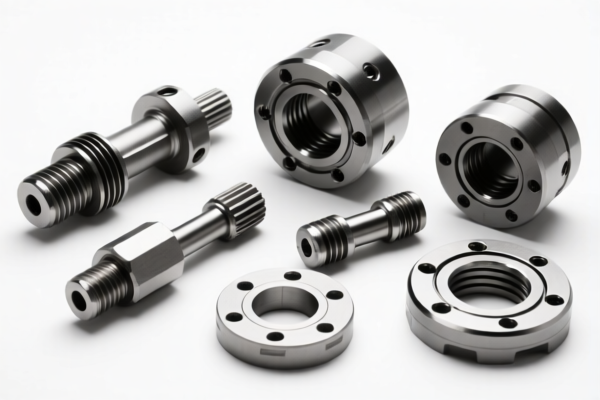
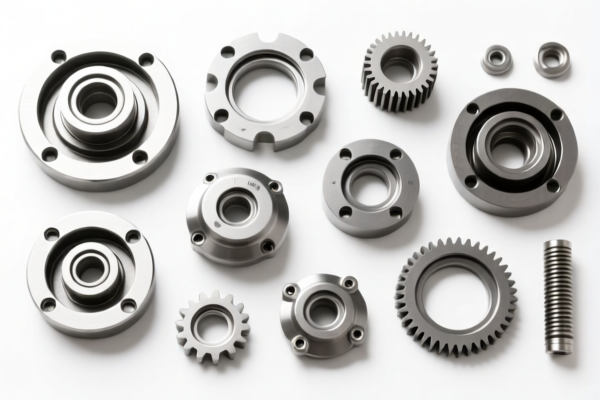
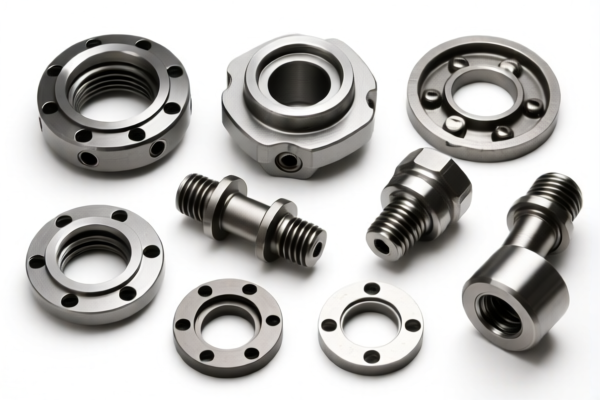
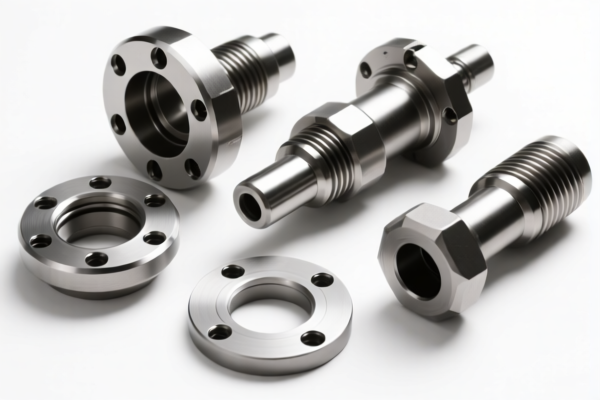
AI Analysis
🚶♂️ Pedal Panels (踏板面板)
🌐 HS Code Reference & Customs Clearance Guide | 2026 Latest Tariff Analysis | Professional-Level Strategy
📌 I. Product Definition & Classification: What Exactly is a "Pedal Panel"?
In the context of international trade, "Pedal Panels" usually refer to components for vehicles (specifically automotive floorboards, footwells, or structural metal parts associated with pedal assemblies) or industrial foot-operated control panels. Based on the provided data, these items are primarily metal structural components or vehicle body parts.
⚠️ Critical Distinction:
- If the part is a steel/iron stamped structure for general machinery → It falls under Chapter 73.
- If the part is a specific vehicle body component (e.g., floor pan, pedal housing bracket) → It falls under Chapter 87.
- If the part is a plastic accessory (e.g., cover, trim) → It falls under Chapter 39.
📦 II. HS Code Classification Details (Based on Provided Data)
The input data suggests three potential classifications depending on the material and specific function of the pedal panel.
| HS Code | Product Description (from Data) | Material Inference | Application Scenario |
|---|---|---|---|
7326.90.86.88 |
Metal article panel, inferred from other iron/steel articles | Iron/Steel | General metal stamped panels, non-automotive specific, or generic structural supports. |
7326.19.00.80 |
Other iron/steel articles, after forging or stamping | Iron/Steel | Stamped/formed steel parts, likely structural components not specifically identified as auto parts. |
8708.29.51.60 |
Body parts or accessories, inferred from parts rules | Metal/Aluminum/Steel | Automotive Body Parts: Specific parts like footwell liners, pedal assembly brackets, or floor pans for vehicles. |
8708.29.51.10 |
Vehicle body parts, inferred from metal stamping or plastic | Metal/Plastic Hybrid | Vehicle Body Parts: Specific automotive body components, potentially mixed materials or simpler stamped body parts. |
3926.30.50.00 |
Plastic connectors or accessories, fitting other plastic articles | Plastic | Plastic Accessories: If the "panel" is purely a plastic cover, trim, or connector piece for a pedal assembly. |
🔍 Key Insight:
- Steel vs. Auto Parts: If the pedal panel is a structural part of a car (e.g., the metal floor where the pedals are mounted), it MUST be classified under 8708 (Auto Parts), not 7326. Misclassifying an auto part as a general metal article (7326) can lead to severe penalties because the tariff structures differ significantly.
- Plastic vs. Metal: If it is a plastic pedal pad or cover, it goes to 3926. If it is the metal backing plate, it goes to 7326 or 8708.
💰 III. 2026 Latest Tariff Rate Breakdown (Including Surcharge Taxes)
✅ Applicable Country: USA (US)
✅ Origin: China (CN)
✅ Effective Date: Current rates apply (Includes Section 301, Section 232, and IEEPA surcharges as per data)
🎯 1. 7326.90.86.88 & 7326.19.00.80 —— General Iron/Steel Metal Panels
These codes attract the highest combined tariff rate due to broad steel/aluminum and "122 Clause" surcharges.
| Item | Content |
|---|---|
| Base Duty Rate | 2.9% (ad valorem) |
| Surcharge Tax (Section 301) | +25.0% |
| 122 Clause / Steel-Aluminum-Copper Surcharge | +10% (for steel) + 50% (for specific steel/aluminum/copper products) |
| Total Effective Rate | 87.9% |
| Tax Calculation | CIF Value × 87.9% |
| Legal Basis Path | Base Tariff → Section 301 Footnote → 122 Clause (Steel/Aluminum Surcharge) |
📌 Explanation:
- The 87.9% rate is extremely high. It combines the base duty (2.9%), the standard Section 301 surcharge (25%), and significant additional tariffs for steel/aluminum products (up to 50% under Section 232/122 Clause interpretations).
- Warning: This rate applies to general steel articles. If the item is misclassified as a general steel part when it should be an auto part, the tax burden is massive. However, even auto parts have high surcharges.
🎯 2. 3926.30.50.00 —— Plastic Connectors/Accessories
| Item | Content |
|---|---|
| Base Duty Rate | 5.3% (ad valorem) |
| Surcharge Tax (Section 301) | +7.5% |
| 122 Clause Surcharge | +10% |
| Total Effective Rate | 22.8% |
| Tax Calculation | CIF Value × 22.8% |
| Legal Basis Path | Base Tariff → Section 301 Footnote → 122 Clause |
📌 Note:
- This is the lowest tariff option among the listed codes.
- Applicability: Only if the pedal panel is entirely plastic (e.g., a cover, trim, or non-structural connector). Do not use this code for metal structural parts.
🎯 3. 8708.29.51.60 & 8708.29.51.10 —— Vehicle Body Parts (Auto Parts)
These codes apply if the pedal panel is considered a part of the vehicle body (e.g., floor pan, pedal housing).
| Item | Content |
|---|---|
| Base Duty Rate | 2.5% (ad valorem) |
| Surcharge Tax (Section 301) | +25.0% |
| 122 Clause / Steel-Aluminum-Copper Surcharge | +10% (for steel) + 50% (for specific steel/aluminum/copper products) |
| Total Effective Rate | 2.5% + 85.0% = 87.5% (for ...51.60) 2.5% + 35.0% = 37.5% (for ...51.10) |
| Tax Calculation | CIF Value × Total Rate |
| Legal Basis Path | Base Tariff → Section 301 Footnote → 122 Clause (Steel/Aluminum Surcharge) |
📌 Critical Distinction:
-8708.29.51.60: Attracts the full steel/aluminum surcharge (50%), resulting in a 87.5% total rate. This is effectively similar to the general steel code (7326), but legally classified as an auto part.
-8708.29.51.10: Shows a 35.0% surcharge (25% Section 301 + 10% other?), resulting in a 37.5% total rate. This is significantly lower than the 87.9% rate for general steel articles.
- Strategic Implication: If the product can be legally classified as8708.29.51.10(Vehicle Body Part) rather than8708.29.51.60or7326, you can save ~50% in tariffs.
🛠️ IV. Customs Clearance Practical Advice (Real-World Pitfall Guide)
✅ 1. Preparation Checklist (Non-Negotiable)
| Document | Required | Explanation |
|---|---|---|
| ✅ Technical Specifications | ✔️ | Must specify: Material (Steel/Plastic), Dimensions, Weight, Intended Use (Vehicle Type). |
| ✅ Product Photos | ✔️ | Clear shots of the part, including mounting points, connectors, and any labels. |
| ✅ Bill of Lading & Commercial Invoice | ✔️ | Must match the HS Code exactly. Description should be precise: "Metal Pedal Panel Assembly for Vehicle Model XYZ." |
| ✅ Origin Certificate | ✔️ | To prove China origin (which triggers surcharges) or other origins. |
| ✅ Part Number Cross-Reference | ✔️ | Link to OEM part number if available to prove it is a genuine vehicle part (8708). |
✅ 2. Declaration Strategy (Key Mnemonic)
🔥 “Auto Part First, Steel Second, Plastic Third! Don’t Split the Panel!”
| Scenario | Correct Declaration | Incorrect Practice |
|---|---|---|
| Metal Pedal Bracket for Car | 8708.29.51.10 (if eligible) or 8708.29.51.60 |
Misclassifying as 7326 (General Steel) → Same high tax, but higher audit risk. |
| Plastic Pedal Cover | 3926.30.50.00 |
Declaring as 7326 or 8708 → Overpayment of tax. |
| Mixed Metal/Plastic Panel | Primary material determines code. If structural metal → 8708 or 7326. |
Splitting into multiple lines unnecessarily → Increases customs scrutiny. |
| Generic Stamped Steel Plate | 7326.19.00.80 |
Declaring as 8708 without proof it’s for a vehicle → Customs will reject and penalize. |
✅ 3. Special Considerations
| Situation | Advice |
|---|---|
| High Tariff Avoidance | Investigate if the part fits 8708.29.51.10 (37.5% total) vs 8708.29.51.60 (87.5%). The difference is 50%. Provide proof it is a "body part" rather than a "structural accessory." |
| Plastic Parts | If the panel is >50% plastic by weight or value, consider 3926.30.50.00 (22.8%). This is the most cost-effective route if applicable. |
| Audit Risk | 7326 and 8708 codes with 87.9% tariffs are high-risk targets for CBP audits. Ensure your commercial invoice explicitly states the product’s function and origin. |
🌍 V. Global Market Comparison (2026 Update)
| Country/Region | Recommended HS Code | Tariff Rate | Certification | Notes |
|---|---|---|---|---|
| 🇺🇸 USA | 8708.29.51.10 or 7326 |
22.8% (Plastic) to 87.9% (Steel) | None specific, but strict origin enforcement | High surcharges apply to China-origin steel/plastic. |
| 🇨🇳 China | 7326 or 8708 |
5-10% | CCC (if auto part) | Lower duties, but export restrictions may apply. |
| 🇪🇺 EU | 8708 |
0-4% | CE Marking | No Section 301/232 equivalent surcharges. |
| 🇲🇽 Mexico | 8708 |
0% (under USMCA) | N/A | Best Alternative: If assembled in Mexico, 0% duty to US. |
📌 Conclusion:
- USA is the most expensive market due to Section 301, Section 232, and IEEPA surcharges.
- Plastic parts (3926) have the lowest tariffs (22.8%) even in the US.
- Steel parts face punitive tariffs (87.9%). Consider supplemental manufacturing in Mexico (8708under USMCA) to avoid these surcharges.
📌 VI. Common Errors & Pitfall Guide (Lessons Learned)
❌ Error 1: Classifying a metal vehicle pedal panel as a general steel article (7326)
👉 Consequence: Same high tariff (87.9%), but higher risk of customs audit for misclassification. If it’s an auto part, it should be 8708. If it’s 8708.29.51.10, you might pay less (37.5%).
❌ Error 2: Declaring a plastic pedal cover as 7326 (Steel)
👉 Consequence: Overpayment. You pay 87.9% instead of 22.8%. Loss of $65,100 per $1M shipment.
❌ Error 3: Ignoring the 122 Clause / Steel-Aluminum Surcharge
👉 Consequence: Unexpected 50% add-on tax on steel products. Always check if the product falls under the "Steel/Aluminum/Copper" surcharge category.
❌ Error 4: Using vague descriptions like "Metal Part"
👉 Consequence: Customs will classify based on worst-case scenario (often highest tariff). Always use precise terms: "Stamped Steel Footwell Panel for Automotive Vehicle."
✅ Correct Action:
"Pedal Assembly Panel, Steel, Stamped, for Use in Automotive Vehicle Body, Model XYZ, Origin: China"
Recommended Code: Try to qualify for8708.29.51.10(37.5%) to save on the 50% steel surcharge. If not possible, use7326.19.00.80(87.9%). If plastic, use3926.30.50.00(22.8%).
🎯 VII. Conclusion: Precision Classification Saves Millions!
🎯 Remember the Mantra:
🔹 "Plastic is Cheap (22.8%), Auto Steel is Mid (37.5%~87.5%), General Steel is PUNISHING (87.9%)."
🔹 "Check the 122 Clause! If it’s steel, it’s +50%!"
🔹 "Use8708.29.51.10to escape the 50% steel surcharge!"
📌 Pro Tip:
If your pedal panels are shipped from Mexico or assembled in Mexico, apply for USMCA Preference. Even if made from Chinese steel, if substantial transformation occurs in Mexico, you may avoid the Section 301/232 surcharges.
Recommendation: File an Advance Ruling (Pre-Ruling) with US Customs for 8708.29.51.10 vs 8708.29.51.60 to confirm the correct tariff rate before shipment.
📣 Immediate Action Required:
📞 Contact your customs broker to review the material composition and functional use of the pedal panel.
🚀 Goal: Classify as8708.29.51.10(37.5%) or3926.30.50.00(22.8%) to avoid the 87.9% penalty.
💼 Your Profit Margin depends on this classification!
Customer Reviews
About HS Code Classification
The Harmonized System (HS) is an internationally standardized nomenclature developed by the World Customs Organization (WCO) to classify traded products. Over 200 countries use the HS system as the basis for customs tariffs, trade statistics, and import/export regulations.
Each HS code follows a hierarchical structure:
- Chapter (2 digits) — Broad category of goods (e.g., Chapter 84: Machinery and Mechanical Appliances)
- Heading (4 digits) — More specific grouping within the chapter
- Subheading (6 digits) — Internationally standardized breakdown, used by all WCO member countries
- National subdivisions (8-10 digits) — Country-specific extensions for further classification, such as US HTSUS 10-digit codes
Correct HS code classification is essential for smooth customs clearance, accurate duty payment, and compliance with trade regulations. Misclassification can lead to customs delays, overpayment of duties, or penalties.
When importing from CN to US, the applicable tariff rates may include:
- Most-Favored-Nation (MFN) rate — The standard duty rate applied to WTO members
- General rate — Applied to countries without trade agreements
- Trade remedy duties — Additional tariffs such as Section 301 (anti-dumping), Section 232 (national security), or countervailing duties
The information provided on this page is for reference purposes only. For official classification, please consult with your local customs authority or a licensed customs broker.