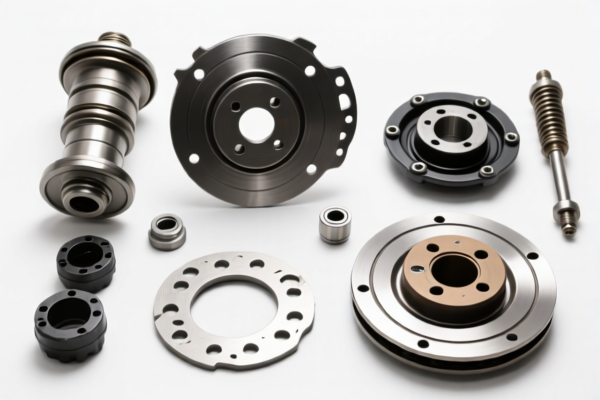
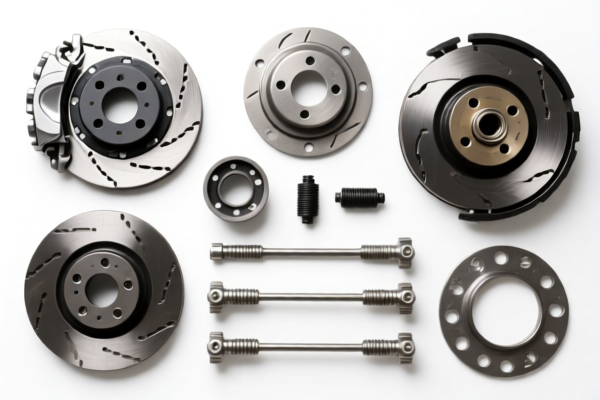
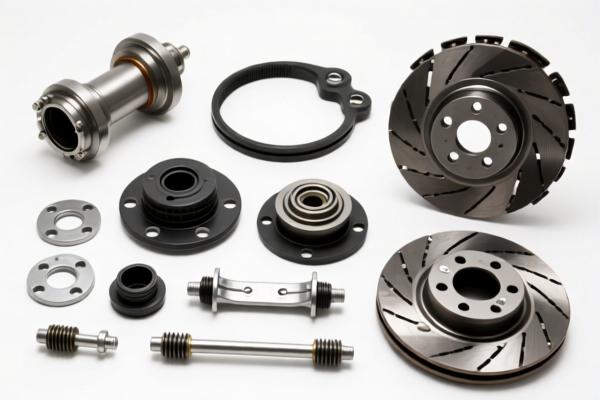
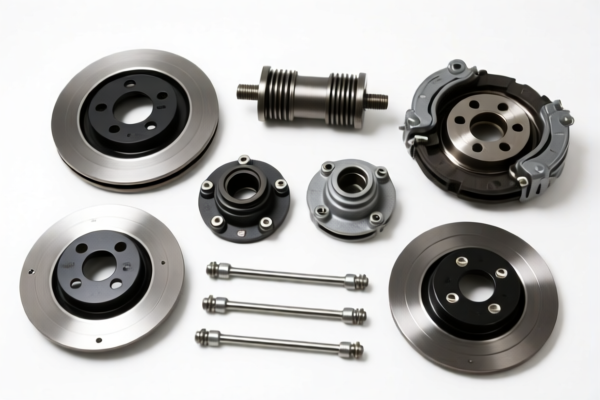
车辆制动系统零件
CN → US| HS Code | Tariff Rate | Origin | Destination | Doc |
|---|---|---|---|---|
| 6813200015 | 35.0% | CN | US | Official Doc |
| 8431499084 | 85.0% | CN | US | Official Doc |
| 8708301090 | 35.0% | CN | US | Official Doc |
| 6813810050 | 35.0% | CN | US | Official Doc |
Product Images
AI Analysis
🚗 Brake System Parts (Vehicle Braking System Components)
🌐 HS Code Reference & Customs Clearance Guide | 2026 Latest Tariff Analysis | Professional Clearance Strategy
📌 I. Product Definition & Classification: Do You Really Know "Brake Parts"?
Brake System Parts refer to the components that make up the vehicle's braking mechanism, responsible for slowing down or stopping the vehicle. In international trade, these parts are primarily categorized based on their function and material composition:
Friction Material-Based Parts (e.g., Brake Pads, Linings): Made primarily of composite friction materials (often containing ceramic, semi-metallic, or organic fibers), used for direct contact with brake discs or drums. These fall under Chapter 68 (Articles of Stone, Plaster, Cement, Asbestos, Mica, or Similar Materials). Mechanical Parts (e.g., Calipers, Pistons, Hoses): Metal or rubber components that transmit force or contain fluid. If not specifically listed elsewhere, they often fall under Chapter 84 (Machinery) or Chapter 87 (Vehicles) as general "parts."
⚠️ Key Distinction Point:
- If the part is primarily defined by its friction material and use in braking → Often classified under 6813 (Friction Material Articles). - If the part is a mechanical assembly (like a caliper) without specific friction material focus → Often classified under 8708.30 (Brake Systems and Parts Thereof). - If the part is a generic mechanical component with no specific vehicle designation → Might default to 8431 (Parts of Machinery).
📦 II. HS Code Classification Details (2026 Latest Tariff Authority Comparison)
Based on the provided data, here are the matched HS Codes and the rationale for each:
| HS Code | Product Description | Matching Rationale from Data | Application Scenario |
|---|---|---|---|
6813.20.00.15 |
Friction material articles for braking | Match Basis: "Brake parts" match the use of "brakes/clutches"; shape is "accessory/component"; material inferred as friction material based on common sense, with no conflict with "other" categories. | Brake pads, brake linings made of friction composites. |
8431.49.90.84 |
Other parts of machinery of a kind used solely or principally for the machinery of heading 84.25 to 84.30 | Match Basis: "Brake parts" belong to mechanical parts. In the absence of clear material conflict, default to this catch-all "other" category for mechanical components. | Generic mechanical brake components (e.g., housings, brackets) not specifically listed under vehicle parts. |
8708.30.10.90 |
Parts and accessories of motor vehicles of heading 87.01 to 87.05, for brakes and servobrakes; parts thereof | Match Point: "Parts" in the name correspond to "parts" in the classification; since it’s a "other (other)" catch-all category and "brake parts" have no obvious conflict with "brakes and their parts," a preferential match is made. | Specific brake system components for vehicles (calipers, brake boosters, etc.). |
6813.81.00.50 |
Other articles of friction material | Match Basis: Product belongs to "braking" use category. Since the code is "other (n.e.s.)," and the name is "parts," while material is unclear, it is inferred based on common sense as friction material products with no material conflict, fitting the "parts/components" default matching principle. | Other friction-based brake components not covered by 6813.20. |
🔍 Key Reminder:
- Friction Material Dominance: If the part’s primary function is friction (like pads), Chapter 68 is a strong candidate, especially if no specific vehicle part code fits perfectly. - Vehicle Specificity: If the part is clearly designed for a vehicle (e.g., a brake caliper for a car), 8708.30 is the most direct and often safest classification. - Mechanical Generic: If the part is generic machinery-related (e.g., industrial brake components for heavy machinery), 8431.49.90.84 may apply as a fallback.
💰 III. 2026 Latest Tariff Rate Details (Including Surtaxes, Policy Add-ons)
✅ Applicable Country: United States (US)
✅ Country of Origin: China (CN)
✅ Effective Date: From November 10, 2025 (including subsequent imports)
🎯 1. 6813.20.00.15 —— Friction Material Articles for Braking
| Item | Content |
|---|---|
| Base Duty Rate | 0.0% (ad valorem) |
| USITC Surtax | +25.0% (Section 301 Duties) |
| Section 122 Tariff | +10.0% (Specific China-related provision) |
| Total Tariff Rate | 35.0% |
| Tax Calculation | CIF Value × 35% |
| De Minimis Eligibility | ❌ No (deny_de_minimis) |
| Legal Basis Path | Section 301: 8701-8899 → Section 122: 6813.20.00.15 → USITC: 6813.20.00.15 |
📌 Explanation:
- The 25% USITC surtax comes from Section 301 of the Trade Act; - The 10% Section 122 tariff is a specific additional duty on Chinese products; - Total 35% is a moderate-to-high tariff, requiring careful cost calculation.
🎯 2. 8431.49.90.84 —— Other Parts of Machinery
| Item | Content |
|---|---|
| Base Duty Rate | 0.0% |
| USITC Surtax | +25.0% (Section 301) |
| Section 122 Tariff | +10.0% |
| Steel/Aluminum/Copper Surtax | +50.0% (Applicable to steel, aluminum, and copper products) |
| Total Tariff Rate | 85.0% (Assuming steel/aluminum/copper content) |
| Tax Calculation | CIF Value × 85% |
| De Minimis Eligibility | ❌ No (deny_de_minimis) |
| Legal Basis Path | Section 301: 8401-8479 → Section 122: 8431.49.90.84 → Section 232: Steel/Aluminum |
📌 Warning:
- If the brake part is made of steel, aluminum, or copper, the additional 50% Section 232 tariff applies, pushing the total to 85%. - This is an extremely high tariff. It is crucial to determine the material composition accurately. - Even if not steel/aluminum/copper, the 35% base (25%+10%) still applies.
🎯 3. 8708.30.10.90 —— Parts of Brakes and Servobrakes for Motor Vehicles
| Item | Content |
|---|---|
| Base Duty Rate | 0.0% |
| USITC Surtax | +25.0% (Section 301) |
| Section 122 Tariff | +10.0% |
| Total Tariff Rate | 35.0% |
| Tax Calculation | CIF Value × 35% |
| De Minimis Eligibility | ❌ No (deny_de_minimis) |
| Legal Basis Path | Section 301: 8701-8899 → Section 122: 8708.30.10.90 → USITC: 8708.30.10.90 |
📌 Explanation:
- This is the most direct classification for vehicle brake parts. - The tariff rate is 35%, same as the friction material category. - No additional material-specific surtax applies unless the part falls under Section 232 (steel/aluminum/copper), but typically, 8708.30 is treated under the 301/122 framework for this total.
🎯 4. 6813.81.00.50 —— Other Articles of Friction Material
| Item | Content |
|---|---|
| Base Duty Rate | 0.0% |
| USITC Surtax | +25.0% (Section 301) |
| Section 122 Tariff | +10.0% |
| Total Tariff Rate | 35.0% |
| Tax Calculation | CIF Value × 35% |
| De Minimis Eligibility | ❌ No (deny_de_minimis) |
| Legal Basis Path | Section 301: 6801-6824 → Section 122: 6813.81.00.50 → USITC: 6813.81.00.50 |
📌 Explanation:
- Similar to 6813.20, this is for friction materials not elsewhere specified. - Tariff rate is 35%.
🛠️ IV. Customs Clearance Practical Advice (Field Avoidance Guide)
✅ 1. Preparation Checklist (Missing Anything Will Cause Delays)
| Document | Required | Description |
|---|---|---|
| ✅ Product Specification Sheet | ✔️ | Include material composition (e.g., % ceramic, % steel), dimensions, weight. |
| ✅ Material Certificate | ✔️ | Crucial to determine if Section 232 (50% surtax) applies for 8431 codes. |
| ✅ Product Photos (with Label) | ✔️ | Clear view of part, model number, branding. |
| ✅ Test Report (if applicable) | ✔️ | FMVSS (for US), ECE R90 (for Europe), or other relevant safety certifications. |
| ✅ Commercial Invoice | ✔️ | Clearly state "Brake Parts for Motor Vehicles" or "Friction Material Brake Pads." |
| ✅ Packing List | ✔️ | Detail contents to avoid misclassification claims. |
| ✅ Origin Certificate (CO) | ✔️ | For any potential FTZ or exemption claims (though limited for China-origin goods under current tariffs). |
✅ 2. Declaration Tips (Key Mantra)
🔥 "Material First, Function Second, Code Precision Saves Money!"
| Scenario | Correct Declaration | Incorrect Practice |
|---|---|---|
| Brake Pads (Friction) | 6813.20.00.15 or 6813.81.00.50 |
Misdeclare as mechanical parts → Risk of 85% if steel content detected. |
| Brake Caliper (Metal Assembly) | 8708.30.10.90 |
Misdeclare as machinery parts → 35% is better, but 8708 is more accurate for vehicles. |
| Generic Mechanical Brake Part | 8431.49.90.84 |
Only if not specifically for vehicles. |
| Mixed Shipment | Separate HS Codes | Combine all into one code → High risk of audit and penalties. |
✅ 3. Special Case Handling
| Scenario | Handling Advice |
|---|---|
| OEM Brake Parts | Provide OEM agreement and part numbers to prove specific vehicle application → Supports 8708.30. |
| High Steel/Aluminum Content | If using 8431, provide material analysis to prove if Section 232 applies. If possible, reclassify to 8708 or 6813 to avoid 50% surtax. |
| Aftermarket Brake Pads | Ensure they meet FMVSS/ECE standards for safety certification. |
| Used Brake Parts | May be subject to additional restrictions or require special declarations. |
🌍 V. Global Market Comparison for Brake Parts (2026 Latest)
| Country/Region | Recommended HS Code | Tariff (China-Origin) | Certification Requirements | Notes |
|---|---|---|---|---|
| 🇺🇸 USA | 8708.30.10.90 or 6813.20.00.15 |
35% (Base + Surtax) 85% (If Steel/Aluminum under 8431) |
FMVSS, DOT | High tariffs due to Section 301 & 122. |
| 🇨🇳 China | 8708.30.10.90 |
5-10% | CCC (if applicable) | Lower tariffs, no surtaxes. |
| 🇪🇺 EU | 8708.30.90 |
0% (if under CERPA or general MFN) | ECE R90, E-mark | No additional surtaxes. |
| 🇦🇺 Australia | 8708.30.00 |
5% | ADR | No surtaxes. |
| 🇯🇵 Japan | 8708.30.00 |
0% | JIS, PSE | No surtaxes. |
📌 Conclusion:
- USA has the highest tariff burden for Chinese-origin brake parts. - EU, Australia, and Japan are more favorable with low or zero tariffs. - Material classification is critical in the US to avoid the 85% rate on steel/aluminum parts.
📌 VI. Common Mistakes & Pitfalls (Lessons Learned)
❌ Mistake 1: Classifying brake pads as "Machinery Parts" (8431) without checking for steel/aluminum content.
👉 Consequence: 85% tariff due to Section 232 surtax.
Fix: Use 6813 for friction materials to avoid material-specific surtaxes.
❌ Mistake 2: Declaring brake calipers as "Other Machinery Parts" (8431) when they are specifically for vehicles.
👉 Consequence: Possible penalty for misclassification, though tariff might be similar (35%).
Fix: Use 8708.30 for vehicle-specific parts.
❌ Mistake 3: Not providing material composition for metal brake components.
👉 Consequence: Customs may impose the highest applicable rate (85%) as a default.
Fix: Always provide mill certificates or material breakdowns.
❌ Mistake 4: Ignoring the 10% Section 122 tariff.
👉 Consequence: Underpayment of duties, leading to penalties and interest.
Fix: Ensure all HS codes are checked for Section 122 applicability.
✅ Correct Approach:
"Brake Pads, Ceramic Composite, for Passenger Cars, Model XYZ, FMVSS Compliant, HS Code 6813.20.00.15"
"Brake Caliper, Aluminum Alloy, for Passenger Cars, Model ABC, HS Code 8708.30.10.90"
🎯 VII. Conclusion: Professional Classification, Save Costs, Ensure Smooth Clearance!
🎯 Remember the Mantra:
🔹 "Friction Material Goes to 68, Vehicle Parts to 87, Steel Parts Risk 85!"
🔹 "35% is the Standard, 85% is the Trap, Classify Right, Stay Safe!"
📌 Pro Tip:
- If your brake parts are originating from Vietnam, Mexico, Thailand, or Malaysia, you may qualify for IEEPA exemptions or lower tariffs under FTAs.
- Consider applying for a Binding Ruling from US Customs (CBP) to confirm the HS code and duty rate before shipment.
📣 Take Action Now:
📞 Contact a Professional Customs Broker + Provide Material Data + Apply for HS Code Pre-Ruling
🚀 Let Your Brake Parts Clear Smoothly, Reduce Costs, and Boost Profits!
✨ Professional Clearance Starts with Accurate Classification!
💼 Every Cent Saved Counts in the Bottom Line!
Customer Reviews
About HS Code Classification
The Harmonized System (HS) is an internationally standardized nomenclature developed by the World Customs Organization (WCO) to classify traded products. Over 200 countries use the HS system as the basis for customs tariffs, trade statistics, and import/export regulations.
Each HS code follows a hierarchical structure:
- Chapter (2 digits) — Broad category of goods (e.g., Chapter 84: Machinery and Mechanical Appliances)
- Heading (4 digits) — More specific grouping within the chapter
- Subheading (6 digits) — Internationally standardized breakdown, used by all WCO member countries
- National subdivisions (8-10 digits) — Country-specific extensions for further classification, such as US HTSUS 10-digit codes
Correct HS code classification is essential for smooth customs clearance, accurate duty payment, and compliance with trade regulations. Misclassification can lead to customs delays, overpayment of duties, or penalties.
When importing from CN to US, the applicable tariff rates may include:
- Most-Favored-Nation (MFN) rate — The standard duty rate applied to WTO members
- General rate — Applied to countries without trade agreements
- Trade remedy duties — Additional tariffs such as Section 301 (anti-dumping), Section 232 (national security), or countervailing duties
The information provided on this page is for reference purposes only. For official classification, please consult with your local customs authority or a licensed customs broker.