车辆零件
CN → US| HS Code | Tariff Rate | Origin | Destination | Doc |
|---|---|---|---|---|
| 9503000090 | 10.0% | CN | US | Official Doc |
| 8512909000 | 37.5% | CN | US | Official Doc |
| 8512906000 | 35.0% | CN | US | Official Doc |
| 8714100020 | 17.5% | CN | US | Official Doc |
| 8714100010 | 17.5% | CN | US | Official Doc |
Product Images
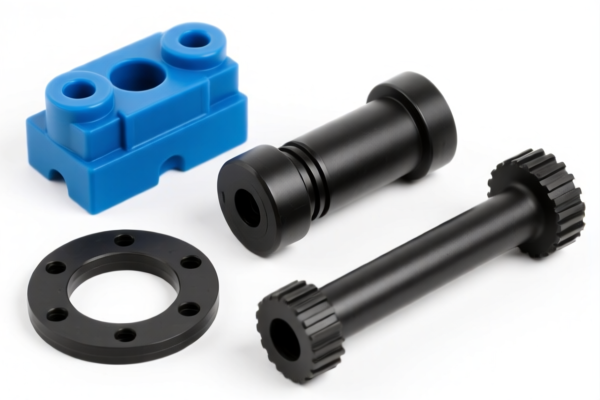
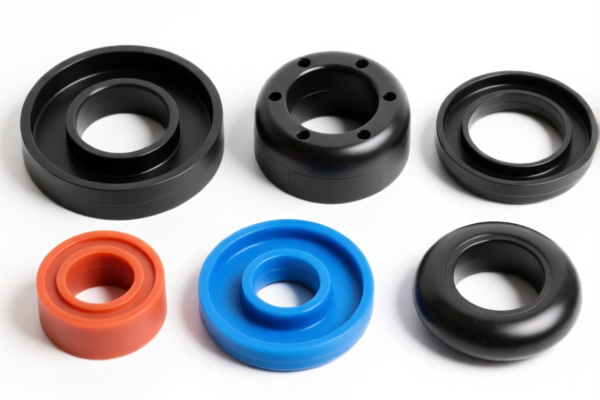
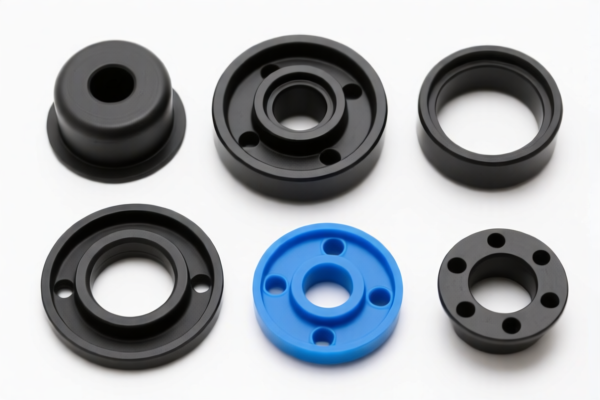
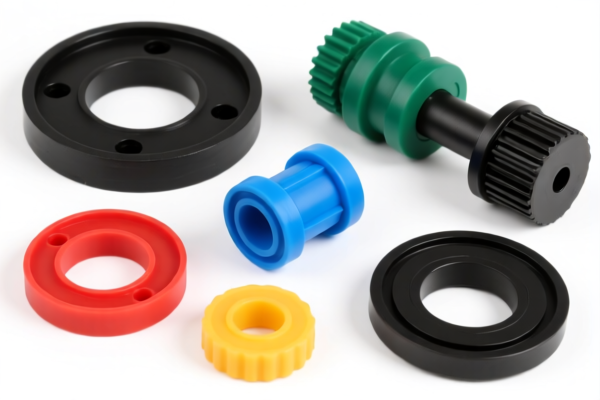
AI Analysis
🚗 Vehicle Parts & Accessories: The Ultimate HS Code Classification & Tariff Guide (2026)
🌐 HS Code Reference & Clearance Guide | Latest 2026 Tariff Analysis | Strategic Customs Strategy
📌 I. Product Definition & Classification: Do You Really Understand "Vehicle Parts"?
"Vehicle Parts" is a broad and complex category in international trade. It encompasses everything from decorative toy components to critical safety mechanisms for motorcycles and other motor vehicles. In customs classification, the intended use, material composition, and integration level are the deciding factors.
In the United States market (the focus of this analysis), vehicle parts are heavily scrutinized due to Section 301 tariffs and Section 122 tariffs (often referred to as the "122 Clause"). Misclassification can lead to massive duty hikes or customs seizures.
⚠️ Key Distinction Point:
- Toys (e.g., child’s tricycle parts): Generally lower duties, but strictly regulated by age and function.
- Motorcycle Parts: High scrutiny. Must be distinguished between "general accessories" (saddles, wheels) and "catch-all" categories.
- Specific vs. Generic: Specific parts (like saddles) have defined codes; generic/unspecified parts fall into "catch-all" baskets with higher duties.
📦 II. HS Code Classification Details (2026 Latest Tariff Authority Comparison)
| HS Code | Product Description | Application Scenario | Duty Complexity |
|---|---|---|---|
| 9503.00.00.90 | Toy Parts: Accessories for tricycles, scooters, pedal cars, etc. | Children's ride-on toys, plastic/metal toy components | ✅ Low Base (0%) |
| 8714.10.00.10 | Motorcycle Parts: Saddles and Seats | Genuine leather seats, padded motorcycle seats | ✅ Medium Base (0%) |
| 8714.10.00.20 | Motorcycle Parts: Wheels & Rims | Alloy wheels, steel rims, tires (if not sold separately) | ✅ Medium Base (0%) |
| 8512.90.60.00 | Motorcycle/Motor Vehicle Parts: Other parts, not specified elsewhere | Electrical lights, sound equipment, generic electronic components | ✅ High Base (0%) |
| 8512.90.90.00 | Motorcycle Parts: Parts for bicycles or motor vehicles | Generic mechanical parts, frames, brackets not in other specific categories | ✅ High Base (2.5%) |
🔍 Critical Note:
- Toys (9503) are treated differently from Motor Vehicle Parts (Chapter 87/85). A "toy car" part is not a "motor vehicle part."
- Motorcycle Parts are split between 8714 (Chassis/Body/Seats/Wheels) and 8512 (Electrical Equipment).
- "Catch-all" categories (like 8512.90.90.00) often carry higher base duties if not explicitly covered by another subheading.
💰 III. 2026 Latest Tariff Rate Breakdown (Including Surtaxes & Policy Add-ons)
✅ Applicable Country: United States (US)
✅ Country of Origin: China (CN)
✅ Effective Date: Current rates apply as of 2026.
🎯 1. 9503.00.00.90 —— Toy Parts (Tricycles, Scooters, etc.)
| Item | Content |
|---|---|
| Base Tariff | 0.0% (ad valorem) |
| Section 301 Surtax | 0.0% (Not included in Section 301 List 4B for most toys) |
| Section 122 Tariff | +10.0% (Added by USTR under specific trade remedies) |
| Total Effective Rate | 10.0% |
| Calculation | CIF Value × 10% |
| De Minimis Eligibility | ✅ Yes (Under $800, may be eligible for Section 321 exemption, but verify current policy) |
| Legal Basis Path | HTSUS:9503.00.00.90 → USTR:Section 122 |
📌 Explanation:
- Toys generally enjoy 0% base duty.
- However, the Section 122 Tariff (10%) applies to specific Chinese imports under trade remedy actions.
- Total Cost: Only 10%, making this the most tax-efficient category for "vehicle-like" items if they qualify as toys.
🎯 2. 8512.90.90.00 —— Motorcycle Parts (General/Catch-all)
| Item | Content |
|---|---|
| Base Tariff | 2.5% |
| Section 301 Surtax | +25.0% (Standard Section 301 rate for Chapter 85/87 parts not excluded) |
| Section 122 Tariff | +10.0% |
| Total Effective Rate | 37.5% |
| Calculation | CIF Value × 37.5% |
| De Minimis Eligibility | ❌ No (High duty volume typically excludes de minimis) |
| Legal Basis Path | HTSUS:8512.90.90.00 → USITC:Footnote 9903.88.01 → IEEPA:9903.01.25 → USTR:Section 122 |
📌 Warning:
- This is a high-duty category.
- The 25% Section 301 surtax is significant.
- Total 37.5% makes this the most expensive option in the dataset.
- Only use this if the part cannot be classified under any more specific code (e.g., not a saddle, not a wheel, not an electrical device with specific function).
🎯 3. 8512.90.60.00 —— Motorcycle/Motor Vehicle Parts (Other Catch-all)
| Item | Content |
|---|---|
| Base Tariff | 0.0% |
| Section 301 Surtax | +25.0% |
| Section 122 Tariff | +10.0% |
| Total Effective Rate | 35.0% |
| Calculation | CIF Value × 35.0% |
| De Minimis Eligibility | ❌ No |
| Legal Basis Path | HTSUS:8512.90.60.00 → USITC:Footnote 9903.88.01 → IEEPA:9903.01.25 → USTR:Section 122 |
📌 Comparison:
- Slightly cheaper than8512.90.90.00due to 0% base duty.
- Still suffers from 35% total due to Section 301 + Section 122.
- Applies to parts that are "other" and don't fit specific electrical or mechanical descriptions.
🎯 4. 8714.10.00.20 —— Motorcycle Parts (Wheels/Rims)
| Item | Content |
|---|---|
| Base Tariff | 0.0% |
| Section 301 Surtax | +7.5% (Reduced Section 301 rate for specific auto parts) |
| Section 122 Tariff | +10.0% |
| Total Effective Rate | 17.5% |
| Calculation | CIF Value × 17.5% |
| De Minimis Eligibility | ❌ No |
| Legal Basis Path | HTSUS:8714.10.00.20 → USITC:Footnote 9903.88.01 → IEEPA:9903.01.24 (Partial Exclusion) → USTR:Section 122 |
📌 Advantage:
- Significantly lower than generic parts.
- The 7.5% Section 301 rate is a preferential rate for wheels/rims.
- Total 17.5% is highly competitive for motorcycle accessories.
🎯 5. 8714.10.00.10 —— Motorcycle Parts (Saddles/Seats)
| Item | Content |
|---|---|
| Base Tariff | 0.0% |
| Section 301 Surtax | +7.5% (Reduced Section 301 rate for specific auto parts) |
| Section 122 Tariff | +10.0% |
| Total Effective Rate | 17.5% |
| Calculation | CIF Value × 17.5% |
| De Minimis Eligibility | ❌ No |
| Legal Basis Path | HTSUS:8714.10.00.10 → USITC:Footnote 9903.88.01 → IEEPA:9903.01.24 (Partial Exclusion) → USTR:Section 122 |
📌 Advantage:
- Same 17.5% total rate as wheels.
- Saddles and seats are specifically identified, allowing for the reduced Section 301 rate.
- Best option for motorcycle accessories if they fall into these specific categories.
🛠️ IV. Clearance Operational Advice (Practical Pitfall Avoidance Guide)
✅ 1. Documentation Checklist (Mandatory)
| Document | Required | Explanation |
|---|---|---|
| ✅ Product Specifications | ✔️ | Detail material (leather, plastic, metal), weight, dimensions. |
| ✅ Product Photos | ✔️ | Clear images of the part, label, and intended use (e.g., mounted on a motorcycle). |
| ✅ Intended Use Statement | ✔️ | Crucial for distinguishing "Toy" vs. "Real Vehicle" parts. |
| ✅ Commercial Invoice | ✔️ | Must accurately describe the item (e.g., "Motorcycle Saddle" NOT "Vehicle Part"). |
| ✅ Packing List | ✔️ | Confirm no mixed shipments of toys and vehicle parts. |
| ✅ Certification | ✔️ | DOT, SAE, or CE certificates if applicable for vehicle safety. |
✅ 2. Classification Strategy (Key Mantras)
🔥 "Toy is Low, Specific is Medium, Generic is High!"
| Scenario | Correct HS Code | Risk Level |
|---|---|---|
| Child’s tricycle part | 9503.00.00.90 |
🟢 Low (10% Total) |
| Motorcycle Saddle | 8714.10.00.10 |
🟡 Medium (17.5% Total) |
| Motorcycle Wheel | 8714.10.00.20 |
🟡 Medium (17.5% Total) |
| Generic Electrical Part | 8512.90.60.00 |
🔴 High (35% Total) |
| Unspecified Generic Part | 8512.90.90.00 |
🔴 Highest (37.5% Total) |
⚠️ Critical Tip:
- Never classify a motorcycle part as a "Toy" unless it is explicitly designed for children under 14 and meets safety standards. Customs may reclassify and penalize.
- Avoid "Catch-all" Codes (8512.90.90.00) if a more specific code (like Saddle or Wheel) applies. The 7.5% Section 301 rate is a huge saving.
✅ 3. Special Cases & Handling
| Situation | Handling Advice |
|---|---|
| OEM Custom Seats | Provide design drawings and material specs (e.g., "Genuine Leather Motorcycle Seat"). |
| Multi-Purpose Parts | If a part can be used for both cars and bikes, declare based on primary intended use (e.g., "Motorcycle Parts"). |
| Kit Assemblies | If sold as a "Wheel + Tire" kit, declare under 8714.10.00.20 (Wheel). Do not split unless necessary. |
| Electric Vehicle Parts | If electrical, check 8512 codes. If mechanical, check 8714. |
🌍 V. Global Market Comparison (2026 Update)
| Market | Preferred HS Code | Total Duty (China Origin) | Key Certifications |
|---|---|---|---|
| 🇺🇸 USA | 8714.10.00.10 / 8714.10.00.20 |
17.5% | DOT, SAE |
| 🇺🇸 USA (Toy) | 9503.00.00.90 |
10.0% | ASTM F963, CPC |
| 🇨🇳 China | 8714.10.00.10 |
5-10% | CCC (if applicable) |
| 🇪🇺 EU | 8714.10.00.10 |
4.5% | E-Mark, CE |
| 🇦🇺 Australia | 8714.10.00.10 |
5% | SRSA |
📌 Conclusion:
- USA imposes Section 122 (10%) on almost all vehicle/toy parts from China.
- EU/China/Australia do not have Section 122 or similar heavy surtaxes, making them cheaper markets for vehicle parts.
- Toys are the most tax-efficient if they genuinely qualify.
📌 VI. Common Errors & Pitfalls (Blood & Tears Lessons)
❌ Error 1: Classifying a Motorcycle Saddle as 8512.90.90.00
👉 Consequence: Duty jumps from 17.5% to 37.5%. Overpaid 20%!
❌ Error 2: Calling a Real Vehicle Part a "Toy"
👉 Consequence: Customs audit, potential fraud charges, and seizure. Avoid at all costs.
❌ Error 3: Using "General Parts" for Wheels
👉 Consequence: Missed 7.5% Section 301 preference. Pay 35% instead of 17.5%.
❌ Error 4: Ignoring Section 122 Tariff
👉 Consequence: All products above include a 10% Section 122 tariff. Forgetting to budget for this leads to cash flow issues.
✅ Correct Approach:
"Motorcycle Saddle, Genuine Leather, Model XYZ, for Use on Motorcycles Only."
HS Code:8714.10.00.10
🎯 VII. Conclusion: Precision Classification Saves Money!
🎯 Remember the Mantra:
🔹 "Toys 10%, Saddles/Wheels 17.5%, Generic 35-37.5%!"
🔹 "Section 122 is 10% on ALL! Plan accordingly!"
📌 Pro Tip:
- If you are importing motorcycle accessories, always try to classify under 8714.10.00.10 (Seats) or 8714.10.00.20 (Wheels) to benefit from the reduced Section 301 rate.
- For toy vehicle parts, ensure they meet toy safety standards to qualify for
9503.00.00.90at 10%.
📣 Immediate Action:
📞 Consult a customs broker for HS Code Pre-ruling if uncertain.
🚀 Accurate classification = Lower Costs + Smoother Clearance.
✨ Professional Clearance Starts with Precise Classification!
💼 Every Percent Saved is Profit Gained!
Customer Reviews
About HS Code Classification
The Harmonized System (HS) is an internationally standardized nomenclature developed by the World Customs Organization (WCO) to classify traded products. Over 200 countries use the HS system as the basis for customs tariffs, trade statistics, and import/export regulations.
Each HS code follows a hierarchical structure:
- Chapter (2 digits) — Broad category of goods (e.g., Chapter 84: Machinery and Mechanical Appliances)
- Heading (4 digits) — More specific grouping within the chapter
- Subheading (6 digits) — Internationally standardized breakdown, used by all WCO member countries
- National subdivisions (8-10 digits) — Country-specific extensions for further classification, such as US HTSUS 10-digit codes
Correct HS code classification is essential for smooth customs clearance, accurate duty payment, and compliance with trade regulations. Misclassification can lead to customs delays, overpayment of duties, or penalties.
When importing from CN to US, the applicable tariff rates may include:
- Most-Favored-Nation (MFN) rate — The standard duty rate applied to WTO members
- General rate — Applied to countries without trade agreements
- Trade remedy duties — Additional tariffs such as Section 301 (anti-dumping), Section 232 (national security), or countervailing duties
The information provided on this page is for reference purposes only. For official classification, please consult with your local customs authority or a licensed customs broker.