车钥匙
CN → US| HS Code | Tariff Rate | Origin | Destination | Doc |
|---|---|---|---|---|
| 8301200060 | 40.7% | CN | US | Official Doc |
| 8512909000 | 37.5% | CN | US | Official Doc |
| 8543709860 | 37.6% | CN | US | Official Doc |
Product Images
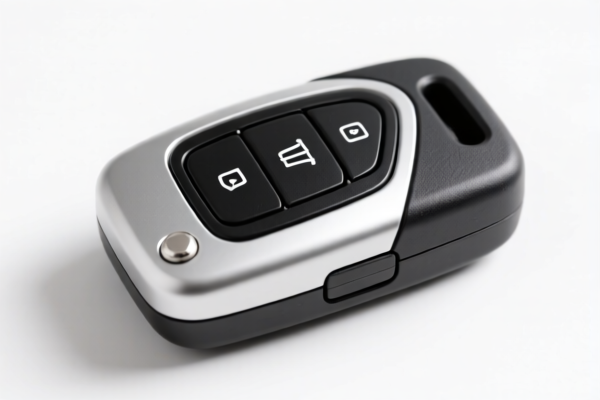
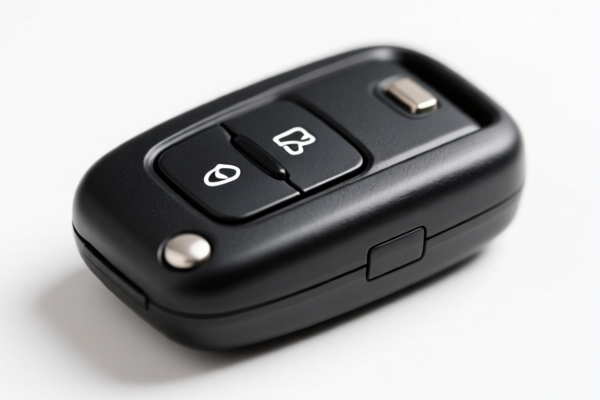
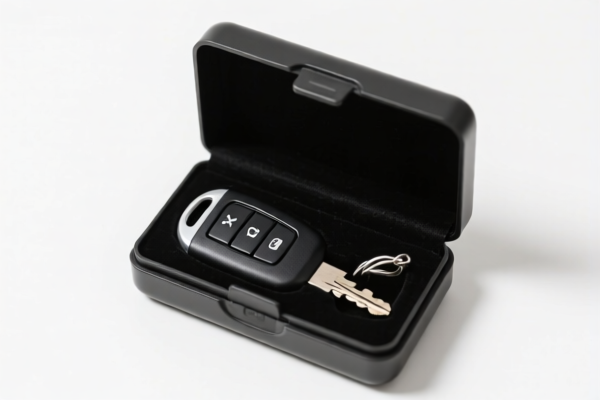
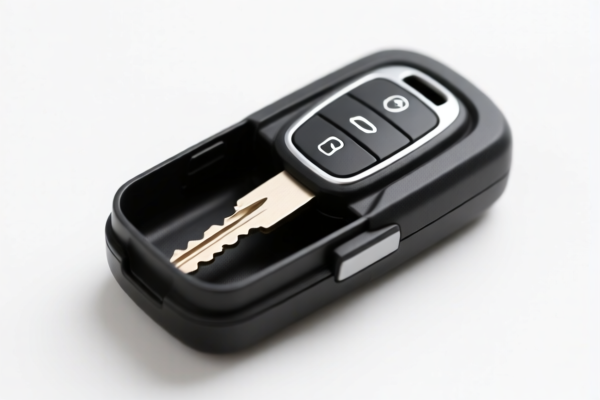
AI Analysis
🔑 Car Keys (Automotive Key Fobs / Lock Components)
🌐 HS Code Reference & Customs Clearance Guide | 2026 Latest Tariff Analysis | Professional Clearance Strategy
📌 I. Product Definition & Classification: What Exactly Is a "Car Key"?
Car keys are critical components for vehicle security and operation. In international trade, their classification depends heavily on whether they are viewed primarily as security locking mechanisms or as electronic signal/control devices. There is no single "correct" code without analyzing the specific technical structure and function of the key.
1. Mechanical/Security Focus:
If the key is primarily a physical locking device (e.g., a metal key, a standard mechanical lock set, or a key head designed to engage a cylinder), it falls under Chapter 83 (Base Metal Locks).
2. Electronic/Signal Focus:
If the key is an electronic fob that transmits signals to unlock doors, start engines, or control alarms, it falls under Chapter 85 (Electrical Machinery & Equipment).
⚠️ Key Distinction:
- If the item is a physical lock part (metal/plastic key for a cylinder) → 8301.20.00.60
- If the item is an electronic transmitter/fob (radio frequency, battery-powered) → 8512.90.90.00
- If the item is a complex standalone electronic device with unique functions beyond standard signaling → 8543.70.98.60
📦 II. HS Code Classification Details (2026 Latest Tariff Authority Comparison)
| HS Code | Product Description | Applicable Scenario | Key Feature |
|---|---|---|---|
8301.20.00.60 |
Car Keys (Other Locks) | Mechanical keys, traditional key heads, lock components for automotive doors/ignition. | Physical locking mechanism; part of "Other" automotive locks. |
8512.90.90.00 |
Parts of Signaling/Control Equipment | Electronic key fobs, remote controls, transponder keys that send signals to the vehicle. | Electrical signal/control function; part of vehicle signaling systems. |
8543.70.98.60 |
Other Machines & Apparatus | Complex electronic devices with independent functions that don't fit standard signaling or lock categories. | Standalone electronic/mechanical device; general "catch-all" for unique electronics. |
🔍 Key Insight:
- 8301.20.00.60 is the safest bet for mechanical keys or keys primarily functioning as a lock component.
- 8512.90.90.00 is appropriate for electronic fobs that act as parts of vehicle signaling systems (e.g., keyless entry remotes).
- 8543.70.98.60 is a potential fallback for highly specialized electronic keys that do not fit neatly into standard signaling or lock categories but have independent electronic functions.
💰 III. 2026 Latest Tariff Rate Breakdown (Including Surcharges & Policy Add-ons)
✅ Applicable Country: United States (US)
✅ Country of Origin: China (CN)
✅ Effective Date: From November 10, 2025 (including subsequent imports)
🎯 1. 8301.20.00.60 —— Car Keys (Other Locks)
| Item | Content |
|---|---|
| Base Tariff | 5.7% |
| Section 301 Surcharge | +25.0% |
| Section 122 Tariff | +10.0% |
| Total Rate | 40.7% |
| Tax Calculation | CIF Value × 40.7% |
| De Minimis Exemption | ❌ Not Applicable (High tariff rate exceeds de minimis thresholds for duty-free entry) |
| Legal Basis Path | Section 301: 25% + Section 122: 10% + Base: 5.7% |
📌 Explanation:
- Base 5.7%: Standard Most Favored Nation (MFN) rate for base metal locks.
- 25% Surcharge: Imposed under Section 301 of the Trade Act of 1974, targeting Chinese goods.
- 10% Surcharge: Under Section 122 of the Trade Act of 1962, additional tariffs applied to certain Chinese products.
- Total 40.7%: This is a very high combined tariff rate. Importers must account for this in pricing and supply chain decisions.
🎯 2. 8512.90.90.00 —— Parts of Signaling/Control Equipment (Electronic Keys)
| Item | Content |
|---|---|
| Base Tariff | 2.5% |
| Section 301 Surcharge | +25.0% |
| Section 122 Tariff | +10.0% |
| Total Rate | 37.5% |
| Tax Calculation | CIF Value × 37.5% |
| De Minimis Exemption | ❌ Not Applicable |
| Legal Basis Path | Section 301: 25% + Section 122: 10% + Base: 2.5% |
📌 Explanation:
- Base 2.5%: Standard MFN rate for parts of electrical signaling equipment.
- 25% Surcharge: Section 301 tariff applies to Chinese-made electrical parts.
- 10% Surcharge: Section 122 tariff applies to Chinese electrical goods.
- Total 37.5%: Slightly lower than the mechanical lock classification, but still significant. This code is appropriate for key fobs that are considered parts of the vehicle's signaling system.
🎯 3. 8543.70.98.60 —— Other Machines & Apparatus (Independent Electronic Devices)
| Item | Content |
|---|---|
| Base Tariff | 2.6% |
| Section 301 Surcharge | +25.0% |
| Section 122 Tariff | +10.0% |
| Total Rate | 37.6% |
| Tax Calculation | CIF Value × 37.6% |
| De Minimis Exemption | ❌ Not Applicable |
| Legal Basis Path | Section 301: 25% + Section 122: 10% + Base: 2.6% |
📌 Explanation:
- Base 2.6%: Standard MFN rate for other electrical machines and apparatus.
- 25% Surcharge: Section 301 tariff applies.
- 10% Surcharge: Section 122 tariff applies.
- Total 37.6%: This rate is nearly identical to8512.90.90.00. It is used when the key is seen as a standalone electronic device with independent function, not just a part of a signaling system.
🛠️ IV. Customs Clearance Practical Advice (Real-World Pitfall Avoidance Guide)
✅ 1. Documentation Checklist (Essential Items)
| Document | Required | Description |
|---|---|---|
| ✅ Product Specification Sheet | ✔️ | Must clearly state: Is it mechanical or electronic? Does it have a battery? Does it transmit signals? |
| ✅ Technical Diagram/Structure Chart | ✔️ | Show internal components. If it has a circuit board and antenna, it’s electronic (Ch 85). If it’s just a metal key, it’s mechanical (Ch 83). |
| ✅ Product Photos (Including Label) | ✔️ | Clear view of any labels, logos, or markings indicating "RFID," "Transponder," or "Key Fob." |
| ✅ Commercial Invoice | ✔️ | Description must be precise: "Mechanical Car Key" vs. "Electronic Car Key Fob." |
| ✅ Packing List | ✔️ | Detail contents to avoid confusion between parts and accessories. |
| ✅ Certificate of Origin (CO) | ✔️ | If not from China, may qualify for lower tariffs. |
✅ 2. Declaration Tips (Key Mnemonics)
🔥 “Mechanical = Lock, Electronic = Signal, Be Precise to Save Cash!”
| Scenario | Correct Declaration | Incorrect Practice |
|---|---|---|
| Traditional Metal Key | 8301.20.00.60 (Other Locks) |
Misdeclare as "Electronic Fob" → 37.5% (if wrong) or audit risk |
| Electronic Key Fob (Remote) | 8512.90.90.00 (Signaling Parts) |
Misdeclare as "Lock" → 40.7% (higher cost) |
| Complex Electronic Key Device | 8543.70.98.60 (Other Machines) |
Misdeclare as "Lock" → 40.7% (higher cost) |
| Key + Fob Hybrid | 8512.90.90.00 or 8543.70.98.60 |
Do not split if sold as one unit |
✅ 3. Special Case Handling
| Situation | Handling Advice |
|---|---|
| OEM Custom Keys | Provide original design drawings and client orders to prove specific function. |
| Keyless Entry System Parts | Clearly declare as "Parts of Signaling Equipment" (8512.90.90.00). |
| Simple Mechanical Keys | Use 8301.20.00.60. Ensure no electronic components are present. |
| High-Tech Smart Keys | Consider 8543.70.98.60 if it has unique independent functions beyond standard signaling. |
🌍 V. Global Market Clearance Comparison (2026 Latest)
| Country/Region | Recommended HS Code | Tariff Rate | Certification Requirements | Notes |
|---|---|---|---|---|
| 🇺🇸 USA | 8301.20.00.60 or 8512.90.90.00 |
37.5% - 40.7% | FCC (if electronic) | High tariffs due to Section 301 & 122 |
| 🇨🇳 China | 8301.20.00.60 or 8512.90.90.00 |
Low (MFN) | CCC (if electronic) | No surcharges for domestic trade |
| 🇪🇺 EU | 8301.20.00.60 or 8512.90.90.00 |
0% - 2.5% | CE, RoHS | No surcharges |
| 🇦🇺 Australia | 8301.20.00.60 or 8512.90.90.00 |
5% | RCM | No surcharges |
| 🇯🇵 Japan | 8301.20.00.60 or 8512.90.90.00 |
0% - 2.5% | PSE (if electronic) | No surcharges |
📌 Conclusion:
- The USA imposes significant additional tariffs (37.5%-40.7%) on car keys from China.
- Mechanical keys (8301.20.00.60) have a slightly higher base rate (5.7%) but the same surcharges, leading to a 40.7% total.
- Electronic keys (8512.90.90.00) have a lower base rate (2.5%), leading to a 37.5% total.
- Other markets (EU, Japan, Australia, China) do not impose these surcharges, making them more competitive.
📌 VI. Common Mistakes & Pitfall Avoidance Guide (Lessons Learned)
❌ Mistake 1: Declaring an electronic key fob as a mechanical lock.
👉 Consequence: Higher tariff (40.7% vs 37.5%) and potential compliance issues if FCC certification is missing.
❌ Mistake 2: Declaring a mechanical key as electronic signaling equipment.
👉 Consequence: Unjustified higher cost and potential audit for misclassification.
❌ Mistake 3: Ignoring FCC Certification for electronic keys.
👉 Consequence: Goods held at customs, delayed clearance, or returned.
✅ Correct Practice:
“Electronic Car Key Fob, Model XYZ, 433MHz, FCC Certified, for Vehicle Security System”
🎯 VII. Conclusion: Precise Classification Saves Money!
🎯 Remember the Mnemonic:
🔹 “Mechanical = Lock (40.7%), Electronic = Signal (37.5%), High Tariffs in USA!”
🔹 “HS Code Determines Cost, Precision Saves Thousands!”
📌 Tips:
- If your car keys are manufactured in Vietnam, Mexico, or Thailand, you may apply for IEEPA Exemptions or other preferential tariffs.
- It is highly recommended to apply for an Advance Ruling from US Customs and Border Protection (CBP) to confirm the correct HS Code and avoid surprise duties.
📣 Immediate Action:
📞 Contact a Professional Customs Broker + Provide Product Specs + Apply for HS Code Advance Ruling
🚀 Ensure Your Car Keys Clear Customs Smoothly, Avoid High Duties, and Maximize Profits!
✨ Professional Clearance Starts with Accurate Classification!
💼 Every Cent of Cost Deserves to Be Precisely Calculated!
Customer Reviews
About HS Code Classification
The Harmonized System (HS) is an internationally standardized nomenclature developed by the World Customs Organization (WCO) to classify traded products. Over 200 countries use the HS system as the basis for customs tariffs, trade statistics, and import/export regulations.
Each HS code follows a hierarchical structure:
- Chapter (2 digits) — Broad category of goods (e.g., Chapter 84: Machinery and Mechanical Appliances)
- Heading (4 digits) — More specific grouping within the chapter
- Subheading (6 digits) — Internationally standardized breakdown, used by all WCO member countries
- National subdivisions (8-10 digits) — Country-specific extensions for further classification, such as US HTSUS 10-digit codes
Correct HS code classification is essential for smooth customs clearance, accurate duty payment, and compliance with trade regulations. Misclassification can lead to customs delays, overpayment of duties, or penalties.
When importing from CN to US, the applicable tariff rates may include:
- Most-Favored-Nation (MFN) rate — The standard duty rate applied to WTO members
- General rate — Applied to countries without trade agreements
- Trade remedy duties — Additional tariffs such as Section 301 (anti-dumping), Section 232 (national security), or countervailing duties
The information provided on this page is for reference purposes only. For official classification, please consult with your local customs authority or a licensed customs broker.