轮椅和代步车袋
CN → USProduct Images


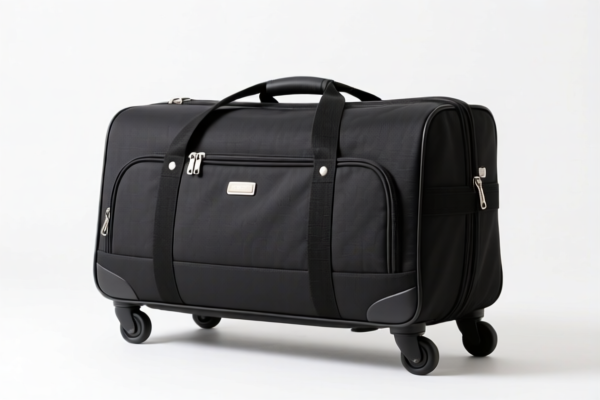
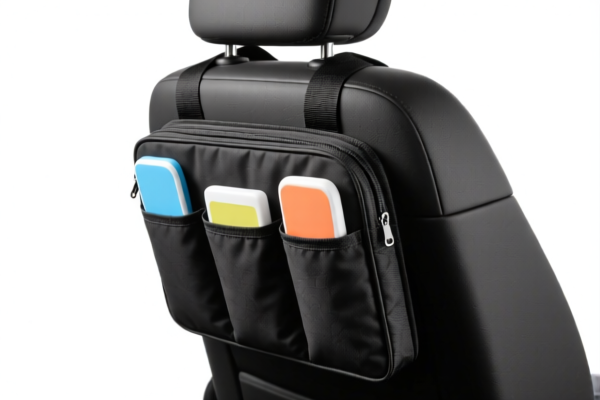
AI Analysis
🛠️ Wheelchair and Mobility Scooter Bags (Portable Storage & Transport Accessories)
🌐 HS Code Reference & Customs Clearance Guide | 2026 Latest Tariff Breakdown | Pro-Level Import Strategy
📌 One, Product Definition & Classification: What Exactly Are These Bags?
Wheelchair and mobility scooter bags are portable storage and transport accessories designed to securely carry essential items—such as personal belongings, medical supplies, or spare batteries—for users of wheelchairs and mobility scooters. These bags are typically:
- Attached to the frame (e.g., rear seat bag, front basket cover, or side-mount pouch)
- Removable and washable, often made from water-resistant fabric
- Designed for durability, stability, and ease of access during transit
⚠️ Key Distinction:
- If the bag is intended solely for carrying items and not part of the mobility device itself, it falls under textile or luggage categories
- If the bag is integrated into the device’s design (e.g., a built-in storage compartment), it may be considered part of the main product (HS 8713.00 or 8714.00)
📦 Two, HS Code Classification Details (2026 Official Tariff Matrix)
| HS Code | Product Description | Applicable Use Case | Is It a Separate Component? |
|---|---|---|---|
4202.92.90.00 |
Travel bags, handbags, and similar containers, made of textile materials, for use with wheelchairs or mobility scooters | External storage bags, side-mount, rear seat, or front basket bags | ✅ Yes – standalone accessory |
4202.92.90.00 |
Other travel bags, not specified elsewhere, with textile outer surface | Waterproof, padded, or zippered bags for medical/essential items | ✅ Yes – non-integrated |
8713.00.00.00 |
Parts and accessories for wheelchairs (excluding seats, wheels, or frames) | Only if integrated into the wheelchair structure (e.g., built-in tray or compartment) | ❌ No – considered part of the main device |
8714.00.00.00 |
Parts and accessories for mobility scooters (excluding frames, motors, or batteries) | Same as above – only if structurally attached | ❌ No – not a separate item |
9405.40.00.00 |
Furniture accessories, including storage units for chairs or seating systems | Rarely applicable – only if used as permanent furniture-like attachment | ⚠️ Limited use |
🔍 Critical Insight:
- Only standalone, removable bags should be declared under4202.92.90.00
- Built-in or permanently attached storage must be classified with the main device (wheelchair/scooter)
- Do NOT declare a removable bag as part of the wheelchair/scooter unless it’s sold as a bundled unit with a fixed attachment
💰 Three, 2026 Latest Tariff & Duty Breakdown (Including附加 Taxes & Policy Rules)
✅ Applicable Country: United States (US)
✅ Origin Country: China (CN)
✅ Effective Date: November 10, 2025 (including future imports)
🎯 1. 4202.92.90.00 — Textile Travel Bags for Wheelchairs & Mobility Scooters
| Item | Details |
|---|---|
| Base Tariff Rate | 0% (ad valorem) |
| USITC Section 301 Additional Duty | +25% (from USITC Footnote 9903.88.01) |
| IEEPA Emergency Economic Powers Act Duty | +10% (applies to goods from China/HK, effective Nov 10, 2025) |
| Total Effective Duty | 35% |
| Duty Calculation | CIF Value × 35% |
| De Minimis Threshold | ❌ Not eligible (denied under 9903.88.01) |
| Legal Pathway | IEEPA:9901.25 → IEEPA:9903.01.24 → USITC:4202.92.90.00 → FOOTNOTE:9903.88.01 |
📌 Explanation:
- Although the base tariff is 0%, China-origin textile bags are subject to both Section 301 and IEEPA duties due to ongoing trade restrictions
- Total 35% is applied regardless of value, making this a high-cost category
- Even small, lightweight bags (e.g., 1kg) are taxed at full rate — no relief
🛠️ Four, Customs Clearance Best Practices (Real-World Pro Tips)
✅ 1. Required Documentation Checklist (Must-Have)
| Document | Required? | Notes |
|---|---|---|
| ✅ Product Specification Sheet | ✔️ | Include material (e.g., polyester, nylon), dimensions, weight, waterproof rating |
| ✅ Product Photos (with model number) | ✔️ | Show attachment method (clips, straps, zippered closure) |
| ✅ Commercial Invoice | ✔️ | Clearly state: “Removable Textile Bag for Wheelchair, Model XYZ” |
| ✅ Certificate of Origin (CO) | ✔️ | If from Vietnam, Mexico, or Thailand, may qualify for IEEPA exemption |
| ✅ Packing List | ✔️ | Indicate whether bag is sold separately or bundled |
| ✅ Test Reports (if applicable) | ✔️ | UL, RoHS, or flammability test (for safety compliance) |
✅ 2.申报技巧(Key Rules to Remember)
🔥 “Removable ≠ Separate, Built-in ≠ Part of Device – Know the Difference!”
| Scenario | Correct HS Code | Wrong Approach |
|---|---|---|
| Bag sold with wheelchair as a kit | 8713.00.00.00 (as part of the device) |
Declare as 4202.92.90.00 → overpay duty |
| Bag sold separately, removable | 4202.92.90.00 |
Declare as 8713.00.00.00 → misclassification |
| Bag fixed to frame with screws | 8713.00.00.00 |
Declare as 4202.92.90.00 → risk of penalty |
| Bag with zippered closure, straps, and clips | 4202.92.90.00 |
Label as “accessory” or “bag” only |
✅ 3. Special Cases & Handling Tips
| Situation | Recommended Action |
|---|---|
| OEM/White-label bags | Provide design drawings + customer order to prove standalone nature |
| Bags with built-in battery pouch | Still classify under 4202.92.90.00 — not a battery container |
| Bags used in medical facilities | No special exemption — still subject to 35% duty |
| Bags for military or government use | Can apply for government use exemption (requires official letter) |
| Bags with RFID or tracking features | Still fall under 4202.92.90.00 — no special code |
🌍 Five, Global Market Customs Comparison (2026 Update)
| Country/Region | Recommended HS Code | Duty Rate | Certification Required | Notes |
|---|---|---|---|---|
| 🇺🇸 United States | 4202.92.90.00 |
35% (China-origin) | FCC, RoHS, flammability | IEEPA + USITC apply |
| 🇨🇳 China | 4202.92.90.00 |
5% | CCC, RoHS | No additional duties |
| 🇪🇺 European Union | 4202.92.90.00 |
0% (if CE compliant) | CE, REACH | No extra tariffs |
| 🇦🇺 Australia | 4202.92.90.00 |
5% | RCM | No additional duties |
| 🇯🇵 Japan | 4202.92.90.00 |
0% | PSE | No extra charges |
📌 Takeaway:
- The U.S. is the only market imposing 35% duty on these bags from China
- Vietnam, Mexico, Thailand, and Malaysia are exempt from IEEPA — consider sourcing from these countries to avoid 35% tax
📌 Six, Common Mistakes & Risk Warnings (Learn from Others’ Errors)
❌ Mistake 1: Declaring a removable bag as part of the wheelchair
👉 Result: Overpaid duty, audit risk, potential refund claims
❌ Mistake 2: Using generic name like “bag for wheelchair” without specifying removable, textile, non-integrated
👉 Result: Customs may assume it’s part of the device → misclassification
❌ Mistake 3: Not providing photos showing attachment method
👉 Result: Delayed release, request for additional info, or refusal
❌ Mistake 4: Selling bags as part of a bundle but declaring them separately
👉 Result: Violation of “bundled goods” rules → penalties
✅ Best Practice:
Use clear product titles:
“Removable Textile Storage Bag for Wheelchair, 12L Capacity, Water-Resistant, with Adjustable Straps, Model ABC, CE & RoHS Certified”
🎯 Seven, Conclusion: Precision in Classification = Profit Protection!
🎯 Remember the Mantra:
🔹 “Removable? → Use 4202.92.90.00. Built-in? → Include in 8713.00.00.
🔹 “Don’t split the kit. Don’t merge the accessory. Know the line.”
📌 Pro Tip:
If your bags are originating from Vietnam, Mexico, or Thailand, you can apply for IEEPA exemption — reducing duty from 35% to 0%
✅ Recommended: Apply for Advance Ruling (Pre-Review) before shipment to avoid surprises
📣 Act Now!
📞 Contact a certified customs broker + provide product images + request HS Code pre-determination
🚀 Ship smarter, pay less, avoid penalties — your business deserves precision!
✨ Smart Importing Starts with Smart Classification!
💼 Every dollar saved begins with the right HS Code.
Customer Reviews
About HS Code Classification
The Harmonized System (HS) is an internationally standardized nomenclature developed by the World Customs Organization (WCO) to classify traded products. Over 200 countries use the HS system as the basis for customs tariffs, trade statistics, and import/export regulations.
Each HS code follows a hierarchical structure:
- Chapter (2 digits) — Broad category of goods (e.g., Chapter 84: Machinery and Mechanical Appliances)
- Heading (4 digits) — More specific grouping within the chapter
- Subheading (6 digits) — Internationally standardized breakdown, used by all WCO member countries
- National subdivisions (8-10 digits) — Country-specific extensions for further classification, such as US HTSUS 10-digit codes
Correct HS code classification is essential for smooth customs clearance, accurate duty payment, and compliance with trade regulations. Misclassification can lead to customs delays, overpayment of duties, or penalties.
When importing from CN to US, the applicable tariff rates may include:
- Most-Favored-Nation (MFN) rate — The standard duty rate applied to WTO members
- General rate — Applied to countries without trade agreements
- Trade remedy duties — Additional tariffs such as Section 301 (anti-dumping), Section 232 (national security), or countervailing duties
The information provided on this page is for reference purposes only. For official classification, please consult with your local customs authority or a licensed customs broker.