轮胎补丁
CN → US| HS Code | Tariff Rate | Origin | Destination | Doc |
|---|---|---|---|---|
| 3926909989 | 22.8% | CN | US | Official Doc |
| 3926904590 | 13.5% | CN | US | Official Doc |
| 4016996050 | 37.5% | CN | US | Official Doc |
| 4016996010 | 37.5% | CN | US | Official Doc |
| 4012124035 | 39.0% | CN | US | Official Doc |
Product Images
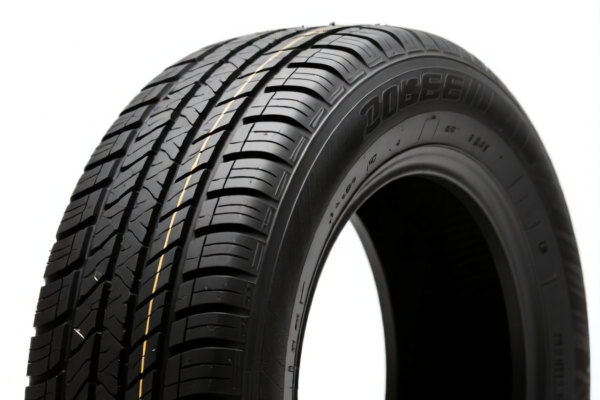
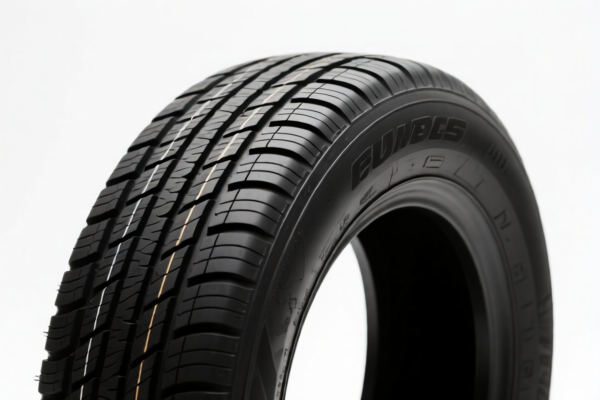
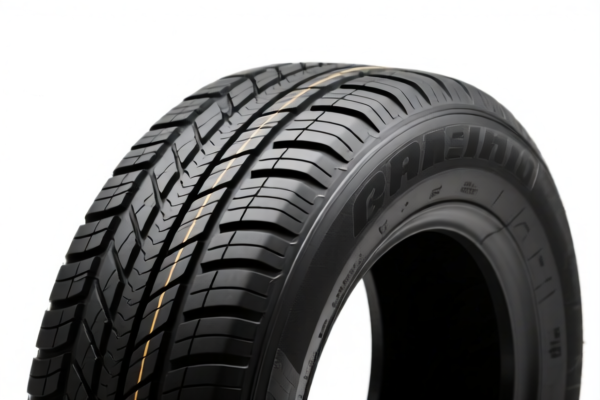
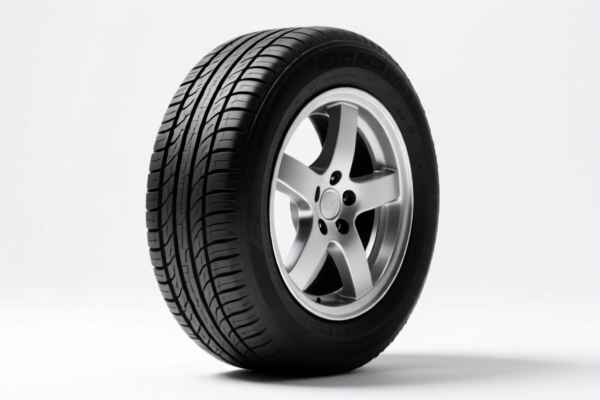
AI Analysis
🛞 Tire Patches & Repair Kits
🌐 HS Code Reference & Clearance Guide | 2026 Latest Tariff Analysis | Professional Customs Strategy
📌 I. Product Definition & Classification: Do You Really Understand "Tire Patches"?
Tire patches, in the context of international trade and customs classification, typically refer to rubber articles used for repairing pneumatic tires. They are distinct from general mechanical parts or hard rubber products. The key to correct classification lies in identifying the material (vulcanized rubber vs. hard rubber) and the specific end-use (mechanical articles for vehicles vs. general rubber goods).
⚠️ Key Distinction:
- If the item is a vulcanized rubber patch (soft, flexible, non-hard rubber) used for repair, it falls under Chapter 40.
- If it is a mechanical article specifically designed as a component for motor vehicle repair (e.g., a specific metal-rubber composite plug used as a mechanical fixture), it might be classified differently, but pure rubber patches are usually 4016.
- Hard Rubber (Ebonite): Excluded from Chapter 40 heading 40.16.
📦 II. HS Code Classification Details (2026 Latest Tariff Authority Cross-Reference)
Based on the provided data, the most relevant HS Codes for Tire Patches (assuming they are made of vulcanized rubber, not hard rubber, and are not specifically classified as "mechanical articles" in a way that excludes them from general rubber articles) are as follows:
| HS Code | Product Description | Applicable Scenario | Material Type |
|---|---|---|---|
4016.99.60.50 |
Other articles of vulcanized rubber other than hard rubber: Other: Other: Other: Other: Other Other | General rubber patches, self-adhesive rubber patches, basic tire repair inserts | ✅ Vulcanized Rubber |
4016.99.60.10 |
Other articles of vulcanized rubber other than hard rubber: Other: Other: Other: Other: Other Mechanical articles for motor vehicles | Critical: If the patch is considered a "Mechanical article" specifically for vehicle repair (e.g., a complex multi-layer plug with metal core), it may fall here. | ✅ Vulcanized Rubber |
🔍 Important Note:
- Why not3926.90.45.90or3926.90.99.89?
These HS Codes refer to Plastics (Headings 3901-3914). Tire patches are almost exclusively made of Rubber (Chapter 40). Unless the "patch" is made entirely of plastic (which is rare for pneumatic tire repair due to elasticity requirements), these codes are incorrect.
- Why4016.99.60.10vs4016.99.60.50?
-4016.99.60.10is for "Mechanical articles for motor vehicles". If the tire patch is a specialized mechanical repair component (like a rubber-metal plug used in professional tire service), it may qualify here.
-4016.99.60.50is for "Other" vulcanized rubber articles. This is the "catch-all" for general rubber patches that are not specifically defined as mechanical articles.
- Recommendation: For simple adhesive rubber patches,4016.99.60.50is safer. For complex repair plugs used in heavy machinery, consult customs on4016.99.60.10.
💰 III. 2026 Latest Tariff Rate Details (Including Additional Taxes)
✅ Applicable Country: United States (US)
✅ Country of Origin: China (CN)
✅ Effective Time: 2025–2026 (Current Enforcement)
🎯 1. 4016.99.60.50 —— General Vulcanized Rubber Articles (Tire Patches)
| Item | Content |
|---|---|
| Base Tariff | 2.5% (ad valorem) |
| Additional Tariff (Section 301) | +25.0% |
| Total Tariff | 27.5% |
| Tax Calculation | CIF Value × 27.5% |
| De Minimis Exemption | ❌ Not Eligible (High tariff articles usually excluded from $800 de minimis) |
| Legal Basis Path | USITC:4016.99.60.50 → Section 301: Footnote 9903.88.01 |
📌 Explanation:
- Rubber articles (Chapter 40) are subject to the 25% Section 301 additional tariff for Chinese-origin goods.
- The 2.5% base tariff is the standard MFN rate.
- Total Cost: 27.5% is a significant burden. For a $10,000 shipment, tax is $2,750.
🎯 2. 4016.99.60.10 —— Mechanical Articles for Motor Vehicles (Specialized Tire Repair Parts)
| Item | Content |
|---|---|
| Base Tariff | 0.0% (ad valorem) |
| Additional Tariff (Section 301) | 0.0% |
| Total Tariff | 0.0% |
| Tax Calculation | CIF Value × 0.0% |
| De Minimis Exemption | ✅ Potentially Eligible (If de minimis policy applies to 0% articles) |
| Legal Basis Path | USITC:4016.99.60.10 |
📌 Crucial Insight:
- If your tire patch is classified as a "Mechanical article for motor vehicles", the tariff is 0%.
- This is a massive difference (27.5% vs 0%).
- However, the classification must be defensible. The article must be primarily a "mechanical article" rather than a simple "rubber good."
- Risk: If customs disagrees and reclassifies to4016.99.60.50, you face 27.5% retroactive tax + penalties.
🛠️ IV. Customs Clearance Practical Advice (Real-World Pitfall Avoidance)
✅ 1. Document Checklist (Essential for Smooth Clearance)
| Document | Required | Purpose |
|---|---|---|
| ✅ Product Specification Sheet | ✔️ | Detail material composition (e.g., "90% Vulcanized Rubber, 10% Adhesive") |
| ✅ Technical Diagrams | ✔️ | Show if the patch has mechanical components (e.g., metal inserts, complex layers) |
| ✅ Product Photos | ✔️ | Clear images of the patch, labeling, and packaging |
| ✅ Commercial Invoice | ✔️ | Accurately describe as "Rubber Tire Patch" or "Mechanical Tire Repair Component" |
| ✅ Certificate of Origin | ✔️ | To confirm Chinese origin (triggers 301 tariffs) |
✅ 2. Declaration Strategy (Key Mnemonic)
🔥 "Material First, Use Second, Code Precise, Tax Minimized!"
| Scenario | Recommended HS Code | Why? |
|---|---|---|
| Simple Adhesive Rubber Patch | 4016.99.60.50 |
Clearly a rubber article, not a mechanical device. |
| Complex Rubber-Metal Plug | 4016.99.60.10 |
Argue as "Mechanical article" due to metal core/complex function. |
| Plastic Tire Patch (Rare) | 3926.90.45.90 or 3926.90.99.89 |
Only if made of plastic (check material safety data sheet). |
✅ 3. Special Cases Handling
| Case | Advice |
|---|---|
| OEM Patches for Tire Brands | Provide brand authorization + specs to prove they are genuine repair parts. |
| Mixed Shipments (Rubber + Plastic) | Do not mix. Declare rubber patches under 4016 and plastic seals under 3926 separately. Mixing causes delays. |
| Small Samples (De Minimis) | If value < $800, and code is 4016.99.60.10 (0% tax), it may enter duty-free. If 4016.99.60.50 (27.5%), it may still be taxed or rejected depending on CBP discretion. |
🌍 V. Global Market Comparison (2026 Latest)
| Country/Region | Recommended HS Code | Tariff (China Origin) | Certification | Note |
|---|---|---|---|---|
| 🇺🇸 USA | 4016.99.60.50 |
27.5% | None | High tariff due to 301 |
| 🇨🇳 China | 4016.99.60.50 |
20% | None | Import duty only |
| 🇪🇺 EU | 4016.90.00 |
0–6.5% | CE (if applicable) | Lower tariffs |
| 🇦🇺 Australia | 4016.93.00 |
5% | RCM | Moderate tariff |
| 🇯🇵 Japan | 4016.93.00 |
3.2% | PSE | Low tariff |
📌 Conclusion:
- USA is the most expensive market for rubber tire patches due to the 25% Section 301 tariff.
- Consider supply chain diversification (e.g., sourcing from Vietnam or Thailand) to avoid 301 tariffs if shipping to the US.
📌 VI. Common Errors & Pitfalls (Lessons Learned)
❌ Error 1: Classifying rubber patches as "Plastic Seals" (3926.90.45.90)
👉 Consequence: If customs inspects and finds rubber, they will reclassify to 4016.99.60.50 (27.5%) + penalty.
Tax Diff: 28.5% vs 27.5% (similar, but misdeclaration leads to fines).
❌ Error 2: Assuming all tire patches are "Mechanical Articles" (4016.99.60.10)
👉 Consequence: If the patch is just a rubber disk with adhesive, customs will reject the 0% rate and apply 27.5%.
Risk: High audit risk.
❌ Error 3: Ignoring "Hard Rubber" Exclusion
👉 Consequence: If the patch is made of ebonite (hard rubber), it is not covered under 4016. It may fall under 40.17 or 40.16 exclusion.
Solution: Verify material is vulcanized rubber, not hard rubber.
✅ Correct Practice:
"Vulcanized Rubber Tire Patch, Self-Adhesive, for Pneumatic Tires, Model TP-100"
🎯 VII. Conclusion: Precision in Classification Saves Money
🎯 Remember the Mnemonic:
🔹 "Rubber Patches: 27.5% or 0%?"
🔹 "Simple Rubber = 27.5% (4016.99.60.50)"
🔹 "Complex Mechanical = 0% (4016.99.60.10) – But Prove It!"
🔹 "Plastic Patches = 28.5% (3926.90.45.90) – Rare!"
📌 Pro Tip:
- For simple rubber patches, budget for 27.5% tariff.
- For complex repair plugs, consider applying for an Advance Ruling to confirm if they qualify as "Mechanical Articles" (0% tax).
- Avoid misclassifying as plastic (
3926) unless the material is truly plastic, as this is a common audit target.
📣 Action Item:
📞 Contact a licensed customs broker to review your product’s technical specs before shipping.
🚀 Get an Advance Ruling if you believe your product qualifies as a "Mechanical Article" to save 27.5%.
✨ Professional Customs Clearance Starts with Accurate Classification!
💼 Your Profit Margin Depends on the HS Code!
Customer Reviews
About HS Code Classification
The Harmonized System (HS) is an internationally standardized nomenclature developed by the World Customs Organization (WCO) to classify traded products. Over 200 countries use the HS system as the basis for customs tariffs, trade statistics, and import/export regulations.
Each HS code follows a hierarchical structure:
- Chapter (2 digits) — Broad category of goods (e.g., Chapter 84: Machinery and Mechanical Appliances)
- Heading (4 digits) — More specific grouping within the chapter
- Subheading (6 digits) — Internationally standardized breakdown, used by all WCO member countries
- National subdivisions (8-10 digits) — Country-specific extensions for further classification, such as US HTSUS 10-digit codes
Correct HS code classification is essential for smooth customs clearance, accurate duty payment, and compliance with trade regulations. Misclassification can lead to customs delays, overpayment of duties, or penalties.
When importing from CN to US, the applicable tariff rates may include:
- Most-Favored-Nation (MFN) rate — The standard duty rate applied to WTO members
- General rate — Applied to countries without trade agreements
- Trade remedy duties — Additional tariffs such as Section 301 (anti-dumping), Section 232 (national security), or countervailing duties
The information provided on this page is for reference purposes only. For official classification, please consult with your local customs authority or a licensed customs broker.