轻便休闲编织手提包
CN → US| HS Code | Tariff Rate | Origin | Destination | Doc |
|---|---|---|---|---|
| 4602112100 | 41.2% | CN | US | Official Doc |
| 4602192920 | 40.3% | CN | US | Official Doc |
| 4202224020 | 42.4% | CN | US | Official Doc |
| 4202228980 | 52.6% | CN | US | Official Doc |
Product Images
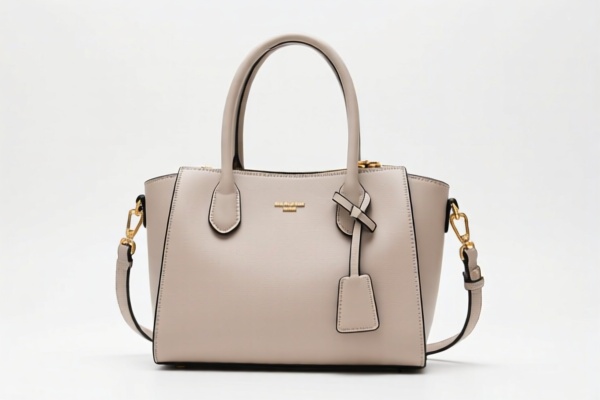
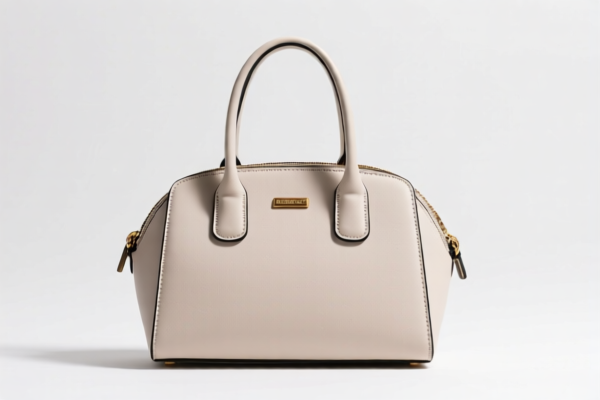
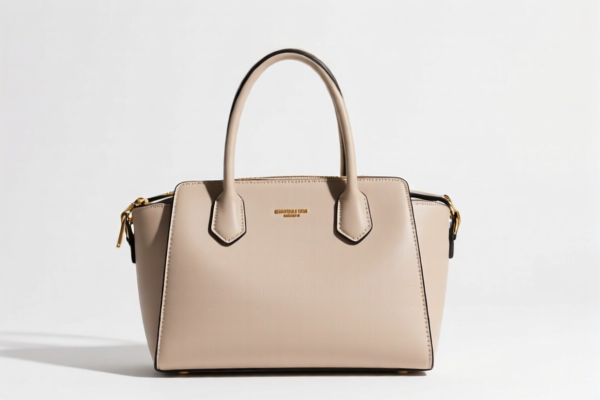
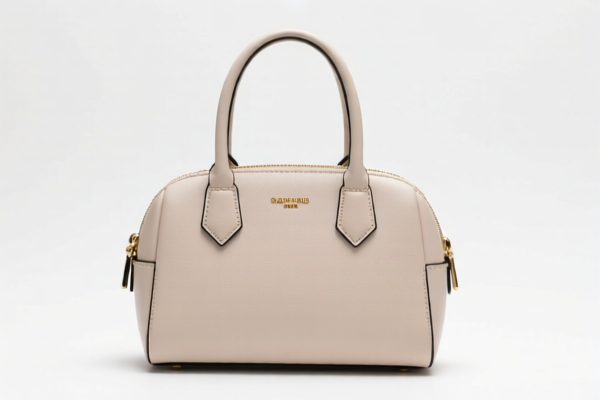
AI Analysis
👜 Light & Casual Woven Handbags (Woven Shopping/Tote Bags)
🌐 HS Code Reference & Customs Clearance Guide | 2026 Latest Tariff Analysis | Professional Strategy for Textile & Basketry Goods
📌 I. Product Definition & Classification: Do You Really Understand "Woven Bags"?
Light and casual woven handbags are popular everyday accessories, typically made from natural plant fibers (bamboo, rattan, straw) or processed textile materials. In international trade, they are strictly divided based on material composition and structural integrity.
Plant-Based Basketry (Chapter 46): Made from natural materials like bamboo, rattan, wicker, or straw, often rigid or semi-rigid.
Textile/Other Materials (Chapter 42): Made from woven textiles, synthetic fibers, or other non-plant materials, typically softer or flexible.
⚠️ Key Distinction Point:
- If the bag is made primarily of bamboo, rattan, or similar plant materials → Classified under Chapter 46
- If the bag is made of textiles, synthetic fibers, or other materials → Classified under Chapter 42
📦 II. HS Code Classification Details (2026 Latest Tariff Authority Comparison)
| HS Code | Product Description | Applicable Scenario | Material Type |
|---|---|---|---|
4602.11.21.00 |
Handbags woven from bamboo, rattan, or similar plant materials | Bamboo/Rattan Totes, Natural Fiber Casual Bags | ✅ Plant-based (Bamboo/Rattan) |
4602.19.29.20 |
Other woven handbags from plant materials | Straw, Grass, or Other Plant Fibers | ✅ Plant-based (Other) |
4202.22.40.20 |
Handbags made of woven materials (textile-based) | Woven Synthetic/Textile Bags | ✅ Textile/Woven |
4202.22.89.80 |
Handbags of other textile materials | Non-woven, mixed fabric, or special textile materials | ✅ Other Textiles |
🔍 Key Reminder:
- Chapter 46 applies to traditional basketry items made from natural plants.
- Chapter 42 applies to textile-based bags, even if they mimic a "woven" look.
- Misclassification can lead to significant duty differences (up to 12% variance in total tax rates).
💰 III. 2026 Latest Tariff Rate Details (Including Surcharges & Policy Add-ons)
✅ Applicable Country: United States (US)
✅ Origin: China (CN)
✅ Effective Date: From November 10, 2025 (including subsequent imports)
🎯 1. 4602.11.21.00 —— Handbags Woven from Bamboo/Rattan (Plant-Based)
| Item | Content |
|---|---|
| Base Tariff | 6.2% (ad valorem) |
| Section 301 Surcharge | +25.0% (USITC Footnote 9903.88.01) |
| Section 122 Tariff | +10.0% (Specific to certain Chinese goods) |
| Total Tax Rate | 41.2% |
| Tax Calculation | CIF Value × 41.2% |
| De Minimis Eligibility | ❌ Not Eligible (deny_de_minimis) |
| Legal Basis Path | USITC:4602.11.21.00 → FOOTNOTE:301.88.01 → Section 122 |
📌 Explanation:
- "Base Tariff 6.2%" is the standard MFN rate for bamboo/rattan basketry;
- "Section 301 Surcharge 25%" is imposed under the US Trade Act Section 301 on Chinese goods;
- "Section 122 Tariff 10%" is an additional levy on specific categories;
- Total 41.2% is a high duty rate, requiring advance cost estimation.
🎯 2. 4602.19.29.20 —— Other Woven Plant Material Handbags
| Item | Content |
|---|---|
| Base Tariff | 5.3% (ad valorem) |
| Section 301 Surcharge | +25.0% |
| Section 122 Tariff | +10.0% |
| Total Tax Rate | 40.3% |
| Tax Calculation | CIF Value × 40.3% |
| De Minimis Eligibility | ❌ Not Eligible |
| Legal Basis Path | USITC:4602.19.29.20 → FOOTNOTE:301.88.01 → Section 122 |
📌 Note:
- Slightly lower base rate than bamboo/rattan, but still subject to heavy surcharges;
- Applies to straw, grass, or other plant fibers not classified as bamboo/rattan.
🎯 3. 4202.22.40.20 —— Handbags Made of Woven Materials (Textile)
| Item | Content |
|---|---|
| Base Tariff | 7.4% (ad valorem) |
| Section 301 Surcharge | +25.0% |
| Section 122 Tariff | +10.0% |
| Total Tax Rate | 42.4% |
| Tax Calculation | CIF Value × 42.4% |
| De Minimis Eligibility | ❌ Not Eligible |
| Legal Basis Path | USITC:4202.22.40.20 → FOOTNOTE:301.88.01 → Section 122 |
📌 Note:
- This code applies to bags made from woven textiles (e.g., canvas, synthetic woven fabric);
- Even if it looks "woven," if the material is textile-based, it falls under Chapter 42, not Chapter 46.
🎯 4. 4202.22.89.80 —— Handbags of Other Textile Materials
| Item | Content |
|---|---|
| Base Tariff | 17.6% (ad valorem) |
| Section 301 Surcharge | +25.0% |
| Section 122 Tariff | +10.0% |
| Total Tax Rate | 52.6% |
| Tax Calculation | CIF Value × 52.6% |
| De Minimis Eligibility | ❌ Not Eligible |
| Legal Basis Path | USITC:4202.22.89.80 → FOOTNOTE:301.88.01 → Section 122 |
📌 Warning:
- This is the highest duty rate among the four codes;
- Applies to non-standard textile materials (e.g., felt, non-wovens, mixed fabrics);
- Avoid this classification unless absolutely necessary due to high cost impact.
🛠️ IV. Customs Clearance Practical Advice (实战避坑指南)
✅ 1. Documentation Checklist (No Exceptions)
| Document | Required | Notes |
|---|---|---|
| ✅ Product Specification Sheet | ✔️ | Must specify material (bamboo, straw, textile), dimensions, weight |
| ✅ Material Composition Statement | ✔️ | Critical for distinguishing Chapter 46 vs. Chapter 42 |
| ✅ Product Photos (Clear Label) | ✔️ | Show bag structure, lining, handles, and material texture |
| ✅ Commercial Invoice | ✔️ | Clearly state "Woven Handbag" and material type |
| ✅ Packing List | ✔️ | Detail quantity, packaging method |
| ✅ Certificate of Origin (CO) | ✔️ | If non-China origin, may qualify for preferential rates |
✅ 2. Declaration Tips (Key Mantra)
🔥 "Material First, Structure Second, Name Precise, Duty Lowered!"
| Scenario | Correct Declaration | Wrong Approach |
|---|---|---|
| Bamboo/Rattan Bag | 4602.11.21.00 |
Misdeclare as textile → 42.4% or 52.6% |
| Straw/Grass Bag | 4602.19.29.20 |
Misdeclare as bamboo → Incorrect base rate |
| Woven Textile Bag | 4202.22.40.20 |
Misdeclare as plant material → Risk of penalty |
| Non-Woven/Mixed Bag | 4202.22.89.80 |
Misdeclare as woven → Higher duty |
✅ 3. Special Cases Handling
| Scenario | Recommendation |
|---|---|
| OEM Custom Bags | Provide design drawings and material samples to prove classification |
| Bag with Lining/Interfacing | If lining is textile, still classify based on outer material |
| Mixed Material Bags | If >50% plant material → Chapter 46; Otherwise → Chapter 42 |
| Sample Imports | Even samples are subject to full duties; no de minimis exemption |
🌍 V. Global Market Comparison (2026 Latest)
| Country/Region | Recommended HS Code | Tariff | Certification | Notes |
|---|---|---|---|---|
| 🇺🇸 USA | 4602.11.21.00 or 4202.22.40.20 |
40.3%-52.6% | None specific | High duties due to Section 301 & 122 |
| 🇨🇳 China | 4602.11.21.00 or 4202.22.40.20 |
5%-10% | None | No surcharges |
| 🇪🇺 EU | 4602.11.21.00 or 4202.22.40.20 |
0%-4% | CE (if applicable) | No surcharges |
| 🇬🇧 UK | 4602.11.21.00 or 4202.22.40.20 |
0%-4% | None | Post-Brexit rules apply |
| 🇦🇺 Australia | 4602.11.21.00 or 4202.22.40.20 |
5% | None | No surcharges |
📌 Conclusion:
- USA is the only major market with significant surcharges (Section 301 & 122);
- China-origin bags face high costs in the US, making supply chain diversification advisable.
📌 VI. Common Mistakes & Pitfalls (Blood & Tears Lessons)
❌ Mistake 1: Declaring a textile bag as bamboo/rattan
👉 Consequence: Underpayment of tax → Back taxes + penalties!
❌ Mistake 2: Declaring a bamboo bag as textile
👉 Consequence: Overpayment of tax → Lost profit margin!
❌ Mistake 3: Ignoring material composition in documentation
👉 Consequence: Customs inspection → Delay or seizure!
❌ Mistake 4: Assuming de minimis applies to small shipments
👉 Consequence: No exemption for these HS codes → Full duty applies!
✅ Correct Approach:
“Bamboo Woven Handbag, Natural Finish, Handles, No Lining, Model XYZ, Material: Bamboo”
🎯 VII. Conclusion: Professional Declaration, Save Time & Money!
🎯 Remember the Mantra:
🔹 "Plant Material = Chapter 46, Textile = Chapter 42"
🔹 "Section 301 & 122 Add 35%, Check Your Code Twice!"
📌 Pro Tip:
If your bags are originally from Vietnam, Thailand, or Indonesia, you may apply for IEEPA Exemption or FTZ Benefits, reducing duty to 0%-5%.
Recommend Advance Ruling for new product lines to avoid clearance risks.
📣 Immediate Action:
📞 Contact Professional Customs Broker + Provide Material Samples + Apply for HS Code Advance Ruling
🚀 Ensure your woven bags pass customs smoothly, maximize profits, and expand globally!
✨ Professional Clearance Starts with Precise Classification!
💼 Every Penny of Cost is Worth Calculating!
Customer Reviews
About HS Code Classification
The Harmonized System (HS) is an internationally standardized nomenclature developed by the World Customs Organization (WCO) to classify traded products. Over 200 countries use the HS system as the basis for customs tariffs, trade statistics, and import/export regulations.
Each HS code follows a hierarchical structure:
- Chapter (2 digits) — Broad category of goods (e.g., Chapter 84: Machinery and Mechanical Appliances)
- Heading (4 digits) — More specific grouping within the chapter
- Subheading (6 digits) — Internationally standardized breakdown, used by all WCO member countries
- National subdivisions (8-10 digits) — Country-specific extensions for further classification, such as US HTSUS 10-digit codes
Correct HS code classification is essential for smooth customs clearance, accurate duty payment, and compliance with trade regulations. Misclassification can lead to customs delays, overpayment of duties, or penalties.
When importing from CN to US, the applicable tariff rates may include:
- Most-Favored-Nation (MFN) rate — The standard duty rate applied to WTO members
- General rate — Applied to countries without trade agreements
- Trade remedy duties — Additional tariffs such as Section 301 (anti-dumping), Section 232 (national security), or countervailing duties
The information provided on this page is for reference purposes only. For official classification, please consult with your local customs authority or a licensed customs broker.