辅助带
CN → US| HS Code | Tariff Rate | Origin | Destination | Doc |
|---|---|---|---|---|
| 5609003000 | 39.5% | CN | US | Official Doc |
| 9021100090 | 10.0% | CN | US | Official Doc |
| 3926905500 | 40.1% | CN | US | Official Doc |
| 5609001000 | 37.9% | CN | US | Official Doc |
| 3926905900 | 37.4% | CN | US | Official Doc |
Product Images
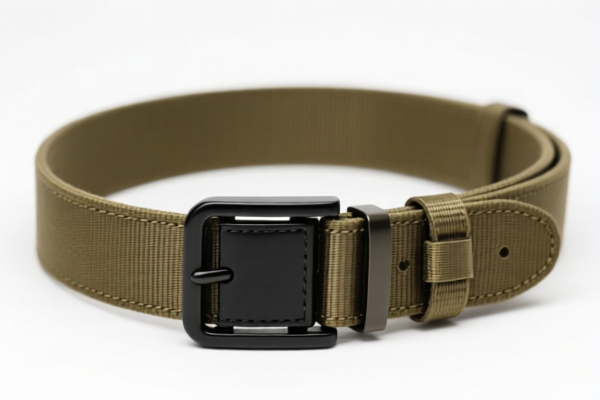
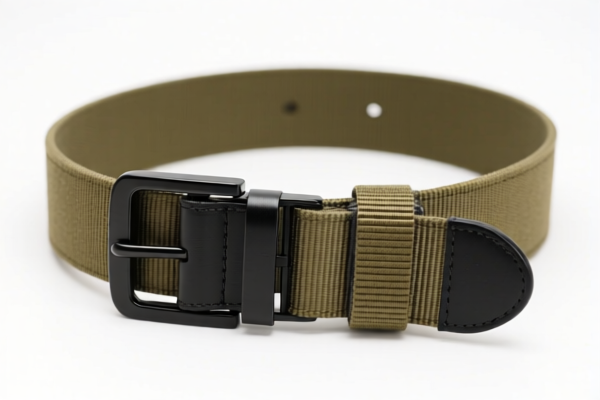
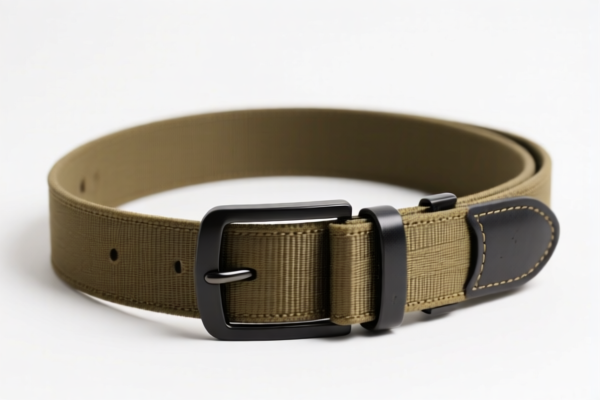
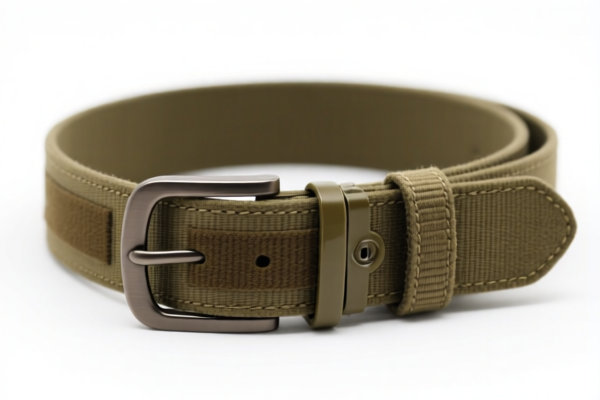
AI Analysis
🩺 Auxiliary Belt (Assistive Straps / Orthopedic Supports)
🌐 HS Code Reference & Customs Clearance Guide | 2026 Latest Tariff Analysis | Professional Clearance Strategy
📌 I. Product Definition & Classification: Do You Really Understand "Auxiliary Belts"?
In international trade, "Auxiliary Belts" (often referred to as medical supports, orthopedic braces, or assistive straps) are versatile goods. Their classification depends heavily on material composition, functional use, and structural form. They can range from simple textile straps to complex mechanical components or medical accessories.
⚠️ Key Distinction Points:
- If used for medical/surgical support (e.g., fracture aids, limb support) → Tends toward Chapter 90 (Medical Instruments).
- If used as textile articles (general use, non-medical specific) → Tends toward Chapter 56 (Textile Articles).
- If used for mechanical transmission (V-belts, drive belts) → Tends toward Chapter 39 (Plastics/Rubber Articles).
📦 II. HS Code Classification Details (2026 Latest Tariff Authority Match)
Based on the provided data, here are the 5 most likely HS Code classifications for "Auxiliary Belts" with their corresponding tariff breakdowns:
| HS Code | Classification Logic & Summary | Total Tax Rate | Tax Detail Breakdown (China Origin → USA) |
|---|---|---|---|
| 9021.10.00.90 | Medical Accessory: Classified as an accessory to surgical/orthopedic appliances (fracture aids). Fits the definition of "articles and accessories for orthopedic appliances." | 10.0% | Base: 0.0% Addl (Sec 301): 0.0% 122 Clause: 10.0% |
| 3926.90.59.00 | Plastic/Textile Drive Belt: Belongs to transmission belts/pulleys, categorized under plastic products containing textile fibers. Logical match for functional drive components. | 37.4% | Base: 2.4% Addl (Sec 301): 25.0% 122 Clause: 10.0% |
| 5609.00.10.00 | Textile Rope/Strap: Shape is rope or strap-like. Based on cotton/textile classification where no material conflict exists. | 37.9% | Base: 2.9% Addl (Sec 301): 25.0% 122 Clause: 10.0% |
| 5609.00.30.00 | General Textile Article: As a strap-like item, it falls under the residual category for man-made fiber products if not specifically classified elsewhere. | 39.5% | Base: 4.5% Addl (Sec 301): 25.0% 122 Clause: 10.0% |
| 3926.90.55.00 | Mechanical Transmission Part: Functionally similar to mechanical V-belts containing textile fibers. Logical classification for industrial transmission parts. | 40.1% | Base: 5.1% Addl (Sec 301): 25.0% 122 Clause: 10.0% |
🔍 Critical Observation:
-9021.10.00.90offers the lowest total tax burden (10.0%) if the product can be proven as a medical/orthopedic accessory.
-3926and5609codes incur high tariffs (37.4% – 40.1%) due to the combination of Base Duties + 25% Section 301 Additional Duties + 10% Section 122 Duties.
💰 III. 2026 Latest Tariff Rate Breakdown (Detailed Explanation)
✅ Applicable Country: United States (US)
✅ Origin: China (CN)
✅ Effective Time: Post-November 2025 (Including subsequent imports)
🎯 1. 9021.10.00.90 – Orthopedic/Surgical Accessories (Lowest Tax)
| Item | Content |
|---|---|
| Base Duty | 0.0% (ad valorem) |
| USITC Addl Duty (Sec 301) | 0.0% (Note: Certain medical devices may be exempt or lower rated under specific lists) |
| 122 Clause Duty | +10.0% (Specific provision for this subheading) |
| Total Rate | 10.0% |
| Calculation | CIF Value × 10% |
| De Minimis Exemption | ❌ No (Section 321 threshold does not apply to these goods in this context) |
| Legal Path | HTSUS:9021.10.00 → 122 Clause: Specific |
📌 Explanation:
- This is the most favorable classification if the "Auxiliary Belt" is intended for medical support (e.g., knee braces, back supports, fracture stabilization).
- The 0% Base and 0% Sec 301 make it significantly cheaper than textile or plastic equivalents.
- Key Requirement: Must prove medical/orthopedic function. General fashion or sports straps may be rejected for this code.
🎯 2. 3926.90.59.00 & 3926.90.55.00 – Plastic/Textile Transmission Belts (High Tax)
| Item | Content |
|---|---|
| Base Duty | 2.4% – 5.1% |
| USITC Addl Duty (Sec 301) | +25.0% |
| 122 Clause Duty | +10.0% |
| Total Rate | 37.4% – 40.1% |
| Calculation | CIF Value × (Total Rate) |
| De Minimis Exemption | ❌ No |
📌 Explanation:
- If the auxiliary belt is classified as a mechanical part (e.g., driving a machine, industrial transmission), it falls under Chapter 39.
- The 25% Sec 301 tariff is the major cost driver.
- Risk: Misclassifying a medical strap as a "mechanical belt" can lead to audits if usage doesn't match the description.
🎯 3. 5609.00.10.00 & 5609.00.30.00 – Textile Articles (High Tax)
| Item | Content |
|---|---|
| Base Duty | 2.9% – 4.5% |
| USITC Addl Duty (Sec 301) | +25.0% |
| 122 Clause Duty | +10.0% |
| Total Rate | 37.9% – 39.5% |
| Calculation | CIF Value × (Total Rate) |
| De Minimis Exemption | ❌ No |
📌 Explanation:
- If the belt is made of textiles (cotton, polyester, etc.) and not for medical use, it falls under Chapter 56.
- Similar to Chapter 39, the 25% Sec 301 applies heavily.
- Note: "Rope and cable" classifications often attract high tariffs due to trade tensions.
🛠️ IV. Customs Clearance Practical Advice (Avoid Pitfalls)
✅ 1. Preparation Checklist (Mandatory Documents)
| Document | Required | Notes |
|---|---|---|
| ✅ Product Specification Sheet | ✔️ | Detail material (cotton, plastic, elastic), dimensions, and elasticity. |
| ✅ Intended Use Declaration | ✔️ | Critical: State clearly if it is for Medical/Orthopedic use or Industrial/General use. |
| ✅ Photos (Packaged & Unpackaged) | ✔️ | Show labels, usage examples (if medical, show brace imagery). |
| ✅ Commercial Invoice | ✔️ | Accurate description: e.g., "Orthopedic Knee Support Strap" vs. "Industrial Drive Belt." |
| ✅ Material Composition Certificate | ✔️ | Confirm % of textile vs. plastic to support HS Code selection. |
| ✅ CE/FDA Clearance (If Medical) | ✔️ | If claiming 9021, provide FDA 510(k) or CE Mark for medical devices. |
✅ 2. Declaration Strategy (Key Mnemonics)
🔥 "Medical First, Check Function; If Not Medical, Pay More!"
| Scenario | Recommended HS Code | Risk of Misclassification |
|---|---|---|
| Medical Support (e.g., back brace, knee sleeve) | 9021.10.00.90 | Low Tax (10%). Must provide medical proof. |
| Sports/General Fitness Strap | Likely 5609 or 6217 | High Tax (~39%). Cannot claim medical status. |
| Industrial/Mechanical Belt | 3926.90.55/59 | High Tax (~38-40%). Must show industrial application. |
| Fashion Accessory | Likely 6217 or 6116 | Check specific chapter for apparel. May have different tariffs. |
📌 Pro Tip:
- If the product is a medical device, emphasize "Orthopedic Appliance Accessory" in the description.
- Avoid vague terms like "Auxiliary Belt" alone. Use "Orthopedic Support Belt" or "Medical Compression Strap" if applicable.
✅ 3. Special Cases & Exemptions
| Case | Handling Suggestion |
|---|---|
| Mixed Material (e.g., Elastic + Plastic) | If medical function dominates, argue for 9021. If structural dominance is plastic, consider 3926. |
| OEM Custom Belts | Provide end-user medical device manufacturer’s documentation to support 9021 classification. |
| Sample/Prototype | Clearly mark as "Sample - Not for Resale" but still subject to full duties unless de minimis applies (check current threshold). |
| Origin Non-China | If manufactured in Vietnam/Malaysia, Section 301 (25%) may not apply. Verify Country of Origin rules strictly. |
🌍 V. Global Market Comparison (2026 Latest)
| Country/Region | Recommended HS Code | Est. Duty (China Origin) | Notes |
|---|---|---|---|
| 🇺🇸 USA | 9021.10.00.90 | 10.0% | Best option if medical. 39-40% if textile/plastic. |
| 🇨🇳 China | 9021.10.00.90 | ~6-9% (Import Duty) | Check latest Chinese tariff schedule. |
| 🇪🇺 EU | 9021.10.00 | 0-4.5% | No major anti-dumping on medical braces. |
| 🇬🇧 UK | 9021.10.00 | 0-4.5% | Post-Brexit tariffs align closely with EU. |
| 🇦🇺 Australia | 9021.10.00 | 0-5% | FTA may offer 0% for eligible goods. |
📌 Conclusion:
- The USA is the most tax-sensitive market for this product due to Section 301 (25%) and Section 122 (10%) levies on non-medical items.
- Medical classification (9021) is the key to cost saving, reducing total tax from ~40% to 10%.
📌 VI. Common Errors & Pitfalls (Blood & Tears Lessons)
❌ Error 1: Claiming Medical status for a Fashion/Compliance Belt
👉 Result: Customs audit → Seizure → Back taxes + Penalties.
👉 Fix: Only claim 9021 if it is an FDA-regulated orthopedic device.
❌ Error 2: Misclassifying as "Rope" (5607) when it is a "Strap" (5609)
👉 Result: Incorrect duty rate → Underpayment → Customs demand for difference.
❌ Error 3: Ignoring Section 122
👉 Result: All three high-tax codes (3926, 5609) include 10% Sec 122. Ensure your tariff calculator includes this.
❌ Error 4: Using Generic Name "Auxiliary Belt"
👉 Result: Customs officer may classify conservatively as Textile (5609) → 39.5% Tax.
👉 Fix: Use precise description: "Orthopedic Fracture Support Strap, Elastic, Cotton-Poly Blend."
✅ Correct Approach:
"Medical Orthopedic Support Belt, for Knee Joint Stabilization, Elastic Material, FDA Listed, Model: XYZ"
🎯 VII. Conclusion: Professional Classification Saves Money!
🎯 Remember the Mnemonic:
🔹 "Medical = 10% (9021); Textile/Plastic = ~40% (5609/3926); Don't Risk It!"
🔹 "If it supports the bone, claim the medical code. If it drives a machine, expect high tariffs."
📌 Pro Tip:
- If your auxiliary belts are not medical, consider origin shifting (e.g., production in Vietnam) to avoid Section 301.
- For medical devices, apply for Advance Ruling from US Customs (CBP) to lock in the 9021.10.00.90 classification and 10% tax rate.
📣 Immediate Action:
📞 Consult a licensed customs broker.
📄 Submit Product Details + Intended Use Statement for pre-classification.
🚀 Clearance Accuracy = Profit Protection.
✨ Professional Clearance Starts with Accurate Classification!
💼 Every percentage point counts in global trade!
Customer Reviews
About HS Code Classification
The Harmonized System (HS) is an internationally standardized nomenclature developed by the World Customs Organization (WCO) to classify traded products. Over 200 countries use the HS system as the basis for customs tariffs, trade statistics, and import/export regulations.
Each HS code follows a hierarchical structure:
- Chapter (2 digits) — Broad category of goods (e.g., Chapter 84: Machinery and Mechanical Appliances)
- Heading (4 digits) — More specific grouping within the chapter
- Subheading (6 digits) — Internationally standardized breakdown, used by all WCO member countries
- National subdivisions (8-10 digits) — Country-specific extensions for further classification, such as US HTSUS 10-digit codes
Correct HS code classification is essential for smooth customs clearance, accurate duty payment, and compliance with trade regulations. Misclassification can lead to customs delays, overpayment of duties, or penalties.
When importing from CN to US, the applicable tariff rates may include:
- Most-Favored-Nation (MFN) rate — The standard duty rate applied to WTO members
- General rate — Applied to countries without trade agreements
- Trade remedy duties — Additional tariffs such as Section 301 (anti-dumping), Section 232 (national security), or countervailing duties
The information provided on this page is for reference purposes only. For official classification, please consult with your local customs authority or a licensed customs broker.