进口仪器
CN → US| HS Code | Tariff Rate | Origin | Destination | Doc |
|---|---|---|---|---|
| 9031808085 | 10.0% | CN | US | Official Doc |
| 9018908000 | 10.0% | CN | US | Official Doc |
| 9027894560 | 35.0% | CN | US | Official Doc |
| 9027894530 | 35.0% | CN | US | Official Doc |
| 9031499000 | 35.0% | CN | US | Official Doc |
Product Images

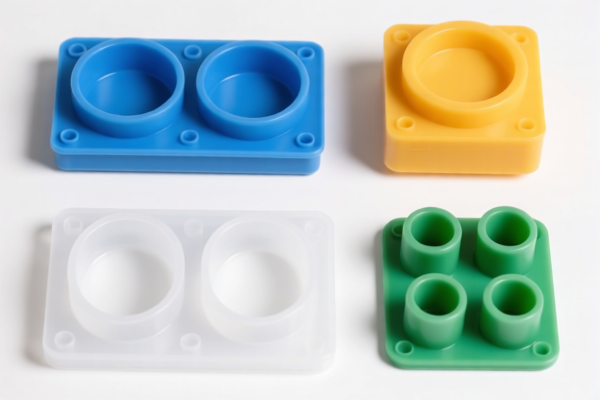
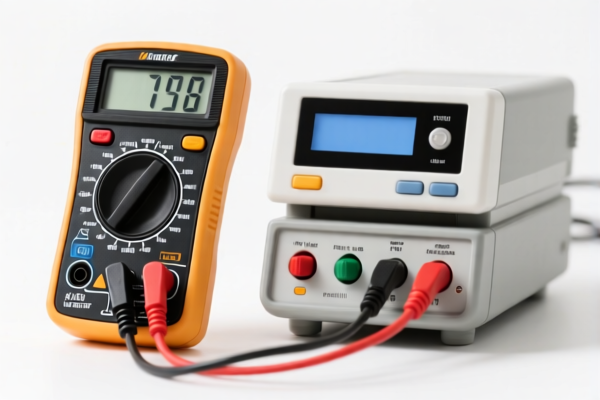
AI Analysis
🧪 Imported Instruments – HS Code & Tariff Guide 2026 | Expert Customs Clearance Strategy
🌐 HS Code Reference & Customs Clearance Handbook | 2026 Updated Tariff Rules | Pro-Level Import Planning
📌 1. Product Definition & Classification: What Exactly Is an "Imported Instrument"?
In international trade, "instruments" refer to precision devices used for measurement, inspection, medical procedures, scientific analysis, or industrial control. These are not general-purpose tools but highly specialized equipment.
⚠️ Key Distinction: - Medical/Scientific Instruments: Used in healthcare, labs, or R&D → HS Code 9018, 9027, 9031 - General Tools: Screwdrivers, wrenches, etc. → Not covered here - Optical Devices: Cameras, lenses → Separate classification - Electronic Components: Chips, boards → Not instruments
🔍 Core Principle:
If it measures, tests, analyzes, diagnoses, or monitors – it’s an instrument.
If it’s used for diagnosis, surgery, or lab testing → must be classified under medical or analytical instrument codes.
📦 2. HS Code Classification Breakdown (2026 Official Tariff List)
| HS Code | Product Description | Tax Rate | Key Use Case | Must Have? |
|---|---|---|---|---|
9031.80.80.85 |
Other measuring or checking instruments (n.e.s.) – general catch-all | 10.0% | Generic test devices, non-specific lab tools, quality control gauges | ✅ Yes – for unclassified instruments |
9018.90.80.00 |
Instruments for medical, surgical, dental, or veterinary use | 10.0% | Diagnostic machines, patient monitors, surgical tools, lab analyzers | ✅ Yes – if used in healthcare |
9027.89.45.60 |
Instruments for physical or chemical analysis | 35.0% | Spectrometers, chromatographs, pH meters, titration systems | ✅ Yes – analytical lab gear |
9027.89.45.30 |
Parts or accessories for analytical instruments | 35.0% | Sensor probes, sample holders, calibration kits | ✅ Yes – if part of a system |
9031.49.90.00 |
Other optical instruments (n.e.s.) | 35.0% | Microscopes, interferometers, laser alignment tools | ✅ Yes – non-classified optical devices |
📌 Critical Insight:
- Parts (e.g., sensor, probe, calibration unit) are taxed the same as the main instrument if they are functionally inseparable. - "n.e.s." (not elsewhere specified) codes are last-resort classifications – use only when no better fit exists.
💰 3. 2026 Tariff Breakdown: Full Tax Clause Explanation (US Focus)
✅ Applicable Country: United States (US)
✅ Origin: China (CN)
✅ Effective Date: November 10, 2025 (including future imports)
🎯 1. 9031.80.80.85 – Other Measuring/Checking Instruments (n.e.s.)
| Item | Detail |
|---|---|
| Base Tariff | 0% (ad valorem) |
| Additional Duty (USITC) | 0% |
| Section 122 Clause Duty | +10% (from IEEPA: 9903.01.24) |
| Total Tax | 10.0% |
| Tax Calculation | CIF Value × 10% |
| De Minimis Exemption | ❌ Not eligible (deny_de_minimis) |
| Legal Basis Path | IEEPA:9903.01.24 → 9031.80.80.85 |
📌 Explanation:
- This code is a catch-all for instruments not covered by more specific HS codes. - Only applies when no other category fits. - 10% is purely from Section 122 (IEEPA) – no USITC (301) tariff. - No additional 25% – only 10% total.
🎯 2. 9018.90.80.00 – Instruments for Medical/Surgical/Dental/Veterinary Use
| Item | Detail |
|---|---|
| Base Tariff | 0% |
| Additional Duty (USITC) | 0% |
| Section 122 Clause Duty | +10% (IEEPA: 9903.01.24) |
| Total Tax | 10.0% |
| Tax Calculation | CIF × 10% |
| De Minimis Exemption | ❌ Not eligible |
| Legal Basis Path | IEEPA:9903.01.24 → 9018.90.80.00 |
📌 Explanation:
- Applies to diagnostic tools, patient monitors, surgical devices, lab analyzers. - No USITC 25% – only 10% from IEEPA. - Even if used in hospitals or clinics, the tax is only 10%. - Must prove medical use in documentation.
🎯 3. 9027.89.45.60 – Instruments for Physical or Chemical Analysis
| Item | Detail |
|---|---|
| Base Tariff | 0% |
| Additional Duty (USITC) | +25% (from USITC: 9903.88.01) |
| Section 122 Clause Duty | +10% (IEEPA: 9903.01.24) |
| Total Tax | 35.0% |
| Tax Calculation | CIF × 35% |
| De Minimis Exemption | ❌ Not eligible |
| Legal Basis Path | IEEPA:9903.01.24 → USITC:9903.88.01 → 9027.89.45.60 |
📌 Explanation:
- 25% USITC (301) tariff applies due to China origin and high-tech nature. - 10% IEEPA (Section 122) – for national security concerns. - Total: 35% – extremely high. - Applies to spectrometers, chromatographs, mass analyzers, lab reactors, etc.
🎯 4. 9027.89.45.30 – Parts/Accessories for Analytical Instruments
| Item | Detail |
|---|---|
| Base Tariff | 0% |
| Additional Duty (USITC) | +25% |
| Section 122 Clause Duty | +10% |
| Total Tax | 35.0% |
| Tax Calculation | CIF × 35% |
| De Minimis Exemption | ❌ Not eligible |
| Legal Basis Path | IEEPA:9903.01.24 → USITC:9903.88.01 → 9027.89.45.30 |
📌 Explanation:
- Same as main instrument – parts are taxed at 35% if they are essential to the function. - No exception for "small parts" or "spare parts". - Even calibration kits, probes, sample chambers → 35%. - Must be declared as part of the system.
🎯 5. 9031.49.90.00 – Other Optical Instruments (n.e.s.)
| Item | Detail |
|---|---|
| Base Tariff | 0% |
| Additional Duty (USITC) | +25% |
| Section 122 Clause Duty | +10% |
| Total Tax | 35.0% |
| Tax Calculation | CIF × 35% |
| De Minimis Exemption | ❌ Not eligible |
| Legal Basis Path | IEEPA:9903.01.24 → USITC:9903.88.01 → 9031.49.90.00 |
📌 Explanation:
- Applies to microscopes, interferometers, laser alignment tools, optical sensors. - Even if not analytical, if optical and precision-based, it falls here. - 35% tax – same as analytical instruments. - "n.e.s." means last resort – use only when no better fit.
🛠️ 4. Customs Clearance Best Practices (Real-World Tips)
✅ 1. Required Documents (Must-Have Checklist)
| Document | Required? | Why It Matters |
|---|---|---|
| ✅ Product Specification Sheet | ✔️ | Shows function, use case, technical specs |
| ✅ Technical Manual / Schematic | ✔️ | Proves instrument type (e.g., analytical vs. general) |
| ✅ Product Photos (with labels) | ✔️ | For visual verification by customs |
| ✅ Test Reports (FCC, CE, RoHS, ISO) | ✔️ | Proves safety & compliance |
| ✅ Commercial Invoice | ✔️ | Must clearly state "Medical Instrument", "Analytical Device", etc. |
| ✅ Certificate of Origin (CO) | ✔️ | If from Vietnam, Mexico, Thailand → may qualify for IEEPA exemption |
| ✅ Packing List | ✔️ | Shows full set, including parts & accessories |
✅ 2.申报技巧 (Declaration Tips) – The Golden Rules
🔥 "Function First, Name Second, Tax Last!"
| Scenario | Correct HS Code | Wrong Practice |
|---|---|---|
| Medical monitor used in hospital | 9018.90.80.00 |
9031.80.80.85 → higher tax |
| Spectrometer for lab analysis | 9027.89.45.60 |
9031.49.90.00 → 35% vs 35% (same) |
| Microscope with laser alignment | 9031.49.90.00 |
9031.80.80.85 → wrong |
| Calibration probe for spectrometer | 9027.89.45.30 |
9018.90.80.00 → wrong |
| Generic test gauge | 9031.80.80.85 |
9027.89.45.60 → wrong |
✅ Pro Tip:
Always start with function, not name.
A “laser tool” is not a “laser pointer” – it’s an optical instrument.
✅ 3. Special Cases & How to Handle Them
| Situation | Recommended Action |
|---|---|
| OEM Instrument | Provide customer contract + design specs → avoid “non-standard” label |
| Used/Refurbished Instrument | Declare as “second-hand” → may qualify for lower tariff (check USCB rules) |
| Instrument for R&D (not commercial) | Apply for non-commercial use exemption – requires documentation |
| Instrument for Military/Special Projects | Apply for special import license – can reduce or waive tax |
| Parts from Non-China Origin | Use CO from Vietnam/Mexico → may avoid 25% USITC |
🌍 5. Global Market Comparison (2026)
| Country | Recommended HS Code | Tariff | Certification | Notes |
|---|---|---|---|---|
| 🇺🇸 USA | 9018.90.80.00, 9027.89.45.60 |
10%–35% | FDA, FCC, CE | High tax for China-origin |
| 🇨🇳 China | 9018.90.80.00, 9027.89.45.60 |
5% | CCC, CE | No extra tariffs |
| 🇪🇺 EU | 9018.90.80.00, 9027.89.45.60 |
0% (if CE) | CE, RoHS | No IEEPA/301 |
| 🇦🇺 Australia | 9018.90.80.00 |
5% | RCM | No extra tax |
| 🇯🇵 Japan | 9018.90.80.00 |
0% | PSE | No extra tax |
📌 Takeaway:
- USA is the only market with 25% + 10% combo. - China-origin instruments face 35% in US. - Vietnam/Mexico origin can avoid 25% USITC → only 10%.
📌 6. Common Mistakes & How to Avoid Them
❌ Mistake 1: Using 9031.80.80.85 for a spectrometer
👉 Result: 10% instead of 35% → underpaid tax → penalty + audit
❌ Mistake 2: Declaring a calibration probe as 9018.90.80.00
👉 Result: Wrong code → 35% tax → overpaid → refund denied
❌ Mistake 3: Not providing technical manual
👉 Result: Customs can’t verify function → delay or rejection
❌ Mistake 4: Using “test device” as name, but it’s a spectrometer
👉 Result: Misclassification → correct HS Code not applied
✅ Correct Way to Declare:
“High-Performance Liquid Chromatograph (HPLC), Model XYZ, for Chemical Analysis, with Integrated Detector, Calibration Kit, and Software, FCC & CE Certified”
🎯 7. Final Verdict: Get It Right the First Time
🎯 Remember the Golden Rule:
🔹 “Function Defines Code, Code Defines Tax, Tax Defines Profit!”
🔹 “One wrong HS Code = 25% extra cost!”
📌 Pro Tip:
If your instrument is originating from Vietnam, Mexico, Thailand, or Malaysia, apply for IEEPA exemption – you may pay only 10%, not 35%.
📞 Action Step:
Contact a licensed customs broker + submit product photos + specs → request HS Code Pre-Ruling.
📣 Don’t Risk It!
🚀 Get your instrument classified correctly before shipment.
💼 Save thousands in taxes. Avoid penalties. Ensure smooth clearance.
✨ Professional Importing Starts with Precision Classification!
💼 Your profit margin depends on your HS Code choice.
Customer Reviews
About HS Code Classification
The Harmonized System (HS) is an internationally standardized nomenclature developed by the World Customs Organization (WCO) to classify traded products. Over 200 countries use the HS system as the basis for customs tariffs, trade statistics, and import/export regulations.
Each HS code follows a hierarchical structure:
- Chapter (2 digits) — Broad category of goods (e.g., Chapter 84: Machinery and Mechanical Appliances)
- Heading (4 digits) — More specific grouping within the chapter
- Subheading (6 digits) — Internationally standardized breakdown, used by all WCO member countries
- National subdivisions (8-10 digits) — Country-specific extensions for further classification, such as US HTSUS 10-digit codes
Correct HS code classification is essential for smooth customs clearance, accurate duty payment, and compliance with trade regulations. Misclassification can lead to customs delays, overpayment of duties, or penalties.
When importing from CN to US, the applicable tariff rates may include:
- Most-Favored-Nation (MFN) rate — The standard duty rate applied to WTO members
- General rate — Applied to countries without trade agreements
- Trade remedy duties — Additional tariffs such as Section 301 (anti-dumping), Section 232 (national security), or countervailing duties
The information provided on this page is for reference purposes only. For official classification, please consult with your local customs authority or a licensed customs broker.