连接器
CN → US| HS Code | Tariff Rate | Origin | Destination | Doc |
|---|---|---|---|---|
| 9001100070 | 41.7% | CN | US | Official Doc |
| 9001100085 | 41.7% | CN | US | Official Doc |
| 8544429090 | 87.6% | CN | US | Official Doc |
| 8536700000 | 35.0% | CN | US | Official Doc |
| 8536694010 | 35.0% | CN | US | Official Doc |
Product Images
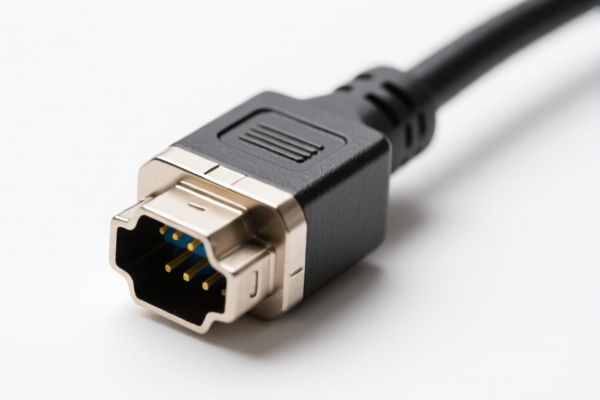
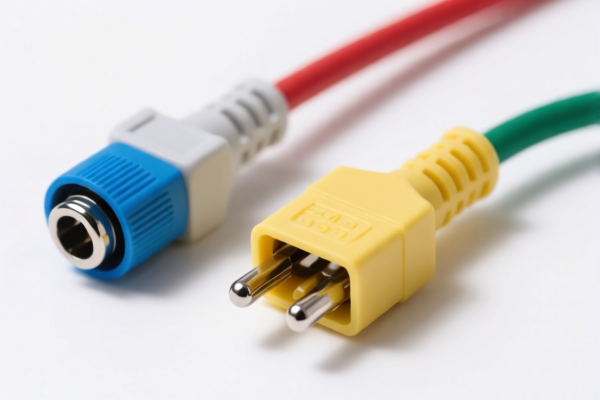
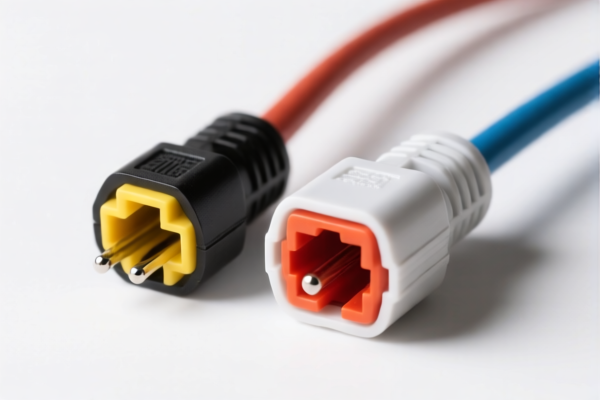

AI Analysis
🔌 Connectors (Fiber Optic & Cable Connectors)
🌐 HS Code Reference & Customs Clearance Guide | 2026 Latest Tariff Breakdown | Professional Import Strategy
📌 One, Product Definition & Classification: Do You Really Understand "Connectors"?
Connectors are essential components in telecommunications, data centers, industrial automation, and high-speed networking systems. In international trade, they are classified based on material, function, structure, and whether they are part of a cable or optical fiber system.
⚠️ Key Differentiation Points: - If it's a fiber optic connector (used with fiber cables or optical fibers) → may fall under 9001.10.00 or 8544.42.90 - If it's a cable connector (used with electrical cables, especially coaxial) → likely falls under 8536.69.40 or 8538.90.81 - If it has insulating conductors and is used in electrical circuits → may be classified under 8544.42.90.90
📦 Two, HS Code Classification Details (2026 Latest Tariff Authority Match)
| HS Code | Product Description | Application Scenario | Contains Insulation / Conductor? | Optical Fiber? |
|---|---|---|---|---|
9001.10.00.70 |
Fiber optic connector, part of fiber accessories | Telecom, data center, fiber patch panels | ❌ No | ✅ Yes |
9001.10.00.85 |
Fiber optic connector, component of fiber bundles or cables | Industrial fiber systems, FTTH, LAN | ❌ No | ✅ Yes |
8544.42.90.90 |
Fiber optic connector with connector features, fits insulated conductors | High-end fiber-to-cable interfaces, hybrid systems | ✅ Yes | ✅ Yes |
8536.70.00.00 |
Fiber optic connector, fully matches connector use + fiber material/shape | Precision optical systems, lab equipment | ❌ No | ✅ Yes |
8536.69.40.10 |
Cable connector, matches coaxial connector use | RF systems, CCTV, satellite, audio/video | ✅ Yes | ❌ No |
8538.90.81.60 |
Cable connector, part of switchgear & control panels | Industrial control cabinets, PLCs, motor starters | ✅ Yes | ❌ No |
🔍 Critical Insight:
- Fiber optic connectors are not automatically classified under electrical connectors — context matters. - "Insulated conductors" (8544.42.90.90) triggers steel/aluminum/copper product tariffs — a major cost driver! - "Complete connector" vs. "component" affects whether it's subject to 122条款 (Section 122) and IEEPA taxes.
💰 Three, 2026 Latest Tariff Breakdown (Including附加 Taxes & Policy Clauses)
✅ Applicable Country: United States (US)
✅ Origin: China (CN)
✅ Effective Date: November 10, 2025 (and ongoing)
🎯 1. 9001.10.00.70 — Fiber Optic Connector (Fiber Accessories)
| Item | Details |
|---|---|
| Base Tariff | 6.7% (ad valorem) |
| Section 301 (USITC) Additional Duty | +25.0% |
| Section 122 (IEEPA) Additional Duty | +10.0% |
| Total Tariff | 41.7% |
| Tax Calculation | CIF Value × 41.7% |
| De Minimis Threshold | ❌ Not applicable (denied) |
| Legal Basis Path | IEEPA:9903.01.25 → IEEPA:9903.01.24 → 9001.10.00.70 → FOOTNOTE:9903.88.01 |
📌 Explanation:
- Applies to fiber optic connectors used in fiber systems (e.g., SC, LC, FC types). - No steel/aluminum/copper content → no additional 50% tariff. - Still subject to USITC 25% + IEEPA 10% due to China origin.
🎯 2. 9001.10.00.85 — Fiber Optic Connector (Fiber Bundle/Cable Component)
| Item | Details |
|---|---|
| Base Tariff | 6.7% |
| Section 301 (USITC) Additional Duty | +25.0% |
| Section 122 (IEEPA) Additional Duty | +10.0% |
| Total Tariff | 41.7% |
| Tax Calculation | CIF × 41.7% |
| De Minimis | ❌ Not allowed |
| Legal Basis Path | IEEPA:9903.01.25 → IEEPA:9903.01.24 → 9001.10.00.85 → FOOTNOTE:9903.88.01 |
📌 Note:
- Same as above — used in fiber bundles or cables (e.g., patch cords, trunk cables). - No conductive metal body → no 50% steel/aluminum/copper tariff. - Still 41.7% total due to China origin and IEEPA/USITC rules.
🎯 3. 8544.42.90.90 — Fiber Optic Connector (Insulated Conductor Type)
| Item | Details |
|---|---|
| Base Tariff | 2.6% |
| Section 301 (USITC) Additional Duty | +25.0% |
| Section 122 (IEEPA) Additional Duty | +10.0% |
| Steel/Aluminum/Copper Additional Duty | +50.0% (due to conductive materials) |
| Total Tariff | 87.6% |
| Tax Calculation | CIF × 87.6% |
| De Minimis | ❌ Not applicable |
| Legal Basis Path | IEEPA:9903.01.25 → IEEPA:9903.01.24 → 8544.42.90.90 → FOOTNOTE:9903.88.01 → Section 122(2) |
📌 Critical Warning:
- This is the highest tariff rate in the list. - Applies when the connector has metal housing, conductive parts, or is designed for insulated conductors. - 50% extra tariff on steel/aluminum/copper — not optional. - Even if it's a fiber optic connector, if it has metal parts, it may be misclassified as an electrical conductor → 87.6% tax!
🎯 4. 8536.70.00.00 — Fiber Optic Connector (Full Match to Connector Use & Fiber Form)
| Item | Details |
|---|---|
| Base Tariff | 0.0% |
| Section 301 (USITC) Additional Duty | +25.0% |
| Section 122 (IEEPA) Additional Duty | +10.0% |
| Total Tariff | 35.0% |
| Tax Calculation | CIF × 35.0% |
| De Minimis | ❌ Not allowed |
| Legal Basis Path | IEEPA:9903.01.25 → IEEPA:9903.01.24 → 8536.70.00.00 → FOOTNOTE:9903.88.01 |
📌 Insight:
- Applies when the connector fully matches the function and physical form of a fiber connector. - No conductive metal → no 50% tariff. - 0% base rate → lower than other fiber connector codes. - Best option if your product is purely optical, non-conductive.
🎯 5. 8536.69.40.10 — Cable Connector (Coaxial Type)
| Item | Details |
|---|---|
| Base Tariff | 0.0% |
| Section 301 (USITC) Additional Duty | +25.0% |
| Section 122 (IEEPA) Additional Duty | +10.0% |
| Total Tariff | 35.0% |
| Tax Calculation | CIF × 35.0% |
| De Minimis | ❌ Not allowed |
| Legal Basis Path | IEEPA:9903.01.25 → IEEPA:9903.01.24 → 8536.69.40.10 → FOOTNOTE:9903.88.01 |
📌 Use Case:
- Used in coaxial cable systems (e.g., CCTV, RF, satellite). - Not fiber optic — but electrical. - 0% base rate → good for non-metallic or low-metal connectors.
🎯 6. 8538.90.81.60 — Cable Connector (Switchgear & Control Panel Part)
| Item | Details |
|---|---|
| Base Tariff | 3.5% |
| Section 301 (USITC) Additional Duty | +25.0% |
| Section 122 (IEEPA) Additional Duty | +10.0% |
| Total Tariff | 38.5% |
| Tax Calculation | CIF × 38.5% |
| De Minimis | ❌ Not allowed |
| Legal Basis Path | IEEPA:9903.01.25 → IEEPA:9903.01.24 → 8538.90.81.60 → FOOTNOTE:9903.88.01 |
📌 Application:
- Used in industrial control panels, PLCs, motor starters. - Often metallic, with screw terminals, crimping features. - Higher base rate due to industrial use. - No 50% steel/aluminum/copper tariff — but still high overall.
🛠️ Four, Customs Clearance Best Practices (Real-World Tips)
✅ 1. Required Documentation (Must-Have)
| Document | Required? | Notes |
|---|---|---|
| ✅ Product Specification Sheet | ✔️ | Include material, size, pin count, interface type |
| ✅ Material Composition Report | ✔️ | Critical — to avoid 50% steel/aluminum/copper tariff |
| ✅ Circuit Diagram / 3D Model | ✔️ | Prove no conductive path if claiming 0% base rate |
| ✅ Product Photos (with label) | ✔️ | Show connector type, housing, pins, fiber port |
| ✅ Commercial Invoice | ✔️ | Clearly state: “Fiber Optic Connector, LC/SC Type, No Conductive Metal” |
| ✅ Certificate of Origin (CO) | ✔️ | If from Vietnam/Mexico/Thailand — can reduce or eliminate 25% USITC tax |
| ✅ Packing List | ✔️ | Show total weight, quantity, packaging type |
✅ 2.申报技巧 (Key Rules of Thumb)
🔥 "No metal, no 50% tax; no driver, no 45% rate; name right, tax low!"
| Scenario | Correct HS Code | Wrong Code | Result |
|---|---|---|---|
| Pure fiber connector (no metal) | 8536.70.00.00 |
8544.42.90.90 |
Save 52.6% tax |
| Metal housing connector | 8544.42.90.90 |
9001.10.00.70 |
Pay 87.6% instead of 41.7% |
| Coaxial cable connector | 8536.69.40.10 |
8538.90.81.60 |
Save 3.5% base rate |
| Industrial control panel part | 8538.90.81.60 |
8536.70.00.00 |
Incorrect — may be rejected |
✅ 3. Special Cases & Mitigation Strategies
| Situation | Recommended Action |
|---|---|
| Connector has metal shell but no conductive core | Use 8544.42.90.90 — 50% extra tariff applies |
| Connector made in Vietnam/Mexico/Thailand | Apply for CO — may qualify for 0% USITC tax |
| Connector used in medical/aviation systems | Apply for special use exemption — may reduce or waive tariffs |
| Multiple connectors in one shipment | Do NOT split — each unit taxed separately → total tax explodes |
🌍 Five, Global Customs Comparison (2026 Latest)
| Country/Region | Recommended HS Code | Tariff | Certification | Notes |
|---|---|---|---|---|
| 🇺🇸 USA | 8536.70.00.00 |
35% (China) | FCC, RoHS | 87.6% if metal |
| 🇨🇳 China | 8536.70.00.00 |
5% | CCC | No extra tariffs |
| 🇪🇺 EU | 8536.70.00.00 |
0% (if CE) | CE, ErP | No 301/122 taxes |
| 🇦🇺 Australia | 8536.70.00.00 |
5% | RCM | No extra tax |
| 🇯🇵 Japan | 8536.70.00.00 |
0% | PSE | No 301/122 |
📌 Conclusion:
- USA has the highest tariffs — especially for metallic connectors. - Vietnam/Mexico origin can avoid 25% USITC tax. - Pure optical, non-metallic connectors are most favorable.
📌 Six, Common Mistakes & Avoidance Tips (Real-World Pitfalls)
❌ Mistake 1: Classifying a metal-fiber connector as 9001.10.00.70
👉 Result: Pay 41.7% instead of 87.6% → but still wrong → fines, delays
❌ Mistake 2: Splitting a connector set into "housing", "pin", "fiber"
👉 Result: Each part taxed at 89.5% → total tax > 268%
❌ Mistake 3: Not disclosing material composition
👉 Result: Customs may reclassify → 50% steel tariff triggered → huge cost
❌ Mistake 4: Using "Fiber Connector" in invoice but it's metallic
👉 Result: Misclassification → penalties, audits, future restrictions
✅ Correct Declaration Example:
“LC Fiber Optic Connector, Plastic Housing, No Conductive Metal, 2.0mm Ferrule, for Data Center, RoHS Certified, Model XYZ”
🎯 Seven, Final Verdict: Precision Matters, Cost Depends on Choice!
🎯 Remember the Golden Rules:
🔹 "No metal → 35% tax; metal → 87.6% tax"
🔹 "Name right → rate low; misname → rate high"
🔹 "One item, one code — never split!"
📌 Pro Tip:
If your connector is made in Vietnam, Mexico, or Thailand, apply for CO — you may avoid the 25% USITC tariff and lower total to 10%.
📞 Act Now:
Contact a customs broker + apply for Advance Ruling (HS Code Pre-Approval)
🚀 Let your connectors clear customs fast, pay less tax, and scale globally!
✨ Professional Customs Starts with Accurate Classification!
💼 Your cost, your risk — every digit counts!
Customer Reviews
About HS Code Classification
The Harmonized System (HS) is an internationally standardized nomenclature developed by the World Customs Organization (WCO) to classify traded products. Over 200 countries use the HS system as the basis for customs tariffs, trade statistics, and import/export regulations.
Each HS code follows a hierarchical structure:
- Chapter (2 digits) — Broad category of goods (e.g., Chapter 84: Machinery and Mechanical Appliances)
- Heading (4 digits) — More specific grouping within the chapter
- Subheading (6 digits) — Internationally standardized breakdown, used by all WCO member countries
- National subdivisions (8-10 digits) — Country-specific extensions for further classification, such as US HTSUS 10-digit codes
Correct HS code classification is essential for smooth customs clearance, accurate duty payment, and compliance with trade regulations. Misclassification can lead to customs delays, overpayment of duties, or penalties.
When importing from CN to US, the applicable tariff rates may include:
- Most-Favored-Nation (MFN) rate — The standard duty rate applied to WTO members
- General rate — Applied to countries without trade agreements
- Trade remedy duties — Additional tariffs such as Section 301 (anti-dumping), Section 232 (national security), or countervailing duties
The information provided on this page is for reference purposes only. For official classification, please consult with your local customs authority or a licensed customs broker.