通用动物马鞍具和挽具
CN → US| HS Code | Tariff Rate | Origin | Destination | Doc |
|---|---|---|---|---|
| 4015900050 | 39.0% | CN | US | Official Doc |
| 4015900010 | 39.0% | CN | US | Official Doc |
| 4201006000 | 12.8% | CN | US | Official Doc |
| 4201003000 | 37.4% | CN | US | Official Doc |
Product Images
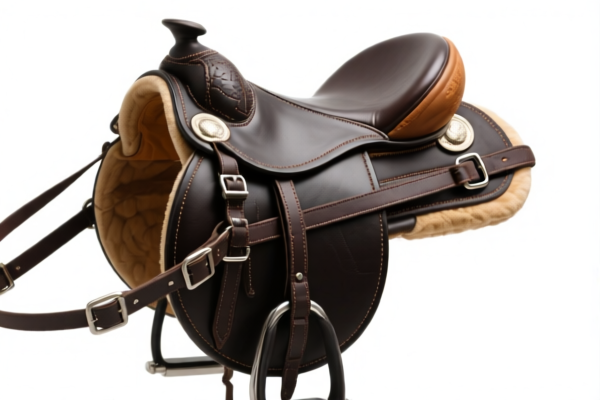
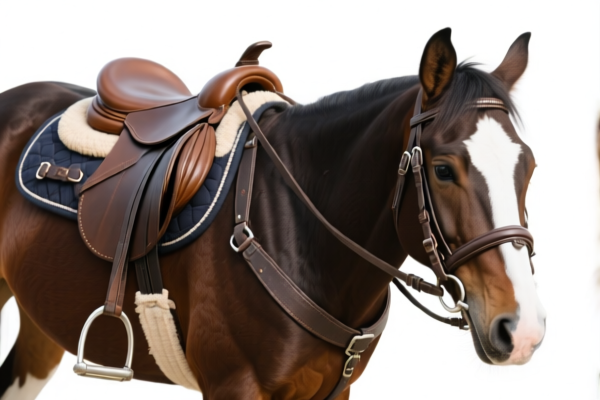
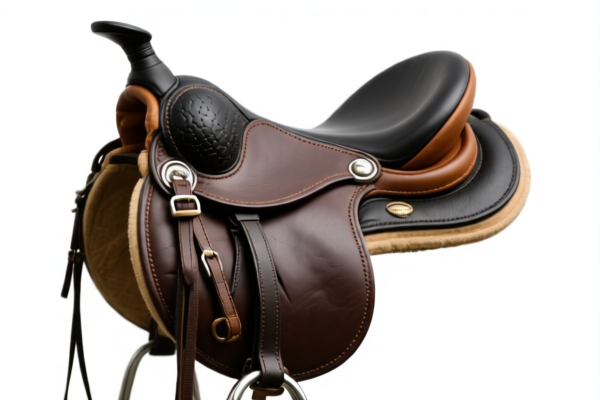
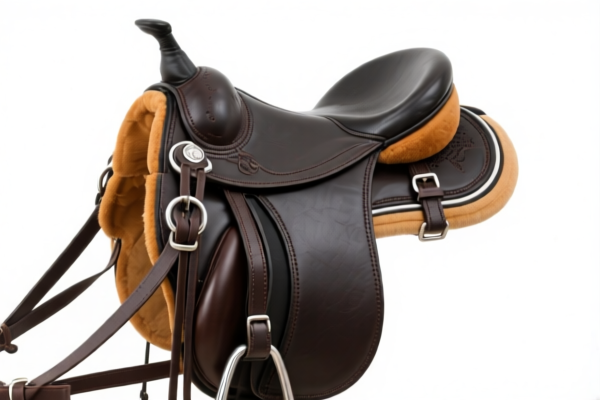
AI Analysis
🐎 Universal Animal Saddlery and Tack (Generic Animal Saddles & Harnesses)
🌐 HS Code Reference & Customs Clearance Guide | 2026 Latest Tariff Analysis | Professional Tier-1 Clearance Strategy 📌 I. Product Definition & Classification: Do You Really Understand "Animal Tack"?
"Universal Animal Saddlery and Harnesses" refer to equipment used for riding, driving, or working animals (primarily horses, but also cattle, mules, or llamas). In international trade, precise classification hinges on material composition and specific functional definition.
Leather Tack: Saddles, bridles, halters, and driving harnesses made primarily of leather. Synthetic/Textile Tack: Saddles or harnesses made primarily of plastic sheeting, textiles, or other materials not classified as leather.
⚠️ Critical Distinction Point: - If the item is leather-based or considered an accessory to leather tack → It falls under Chapter 42 (Articles of Leather). - If the item is a textile/rubber accessory (e.g., saddle pads, specific rubber straps) not constituting the main article → It may fall under Chapter 40 (Rubber) or Chapter 63 (Other Made-up Articles). - The specific subheading depends on whether it is "Animal Saddle Equipment" (Ch 42) or a "Part/Accessory" of clothing/tack (Ch 40/63).
📦 II. HS Code Classification Details (2026 Latest Tariff Authority Comparison)
Based on the provided data, there are two main classification paths: Chapter 42 (Leather/Animal Tack) and Chapter 40 (Rubber/Clothing Accessories).
| HS Code | Product Description | Applicability | Key Classification Logic |
|---|---|---|---|
4201.00.30.00 |
Articles of leather or composition leather for saddlery or harnessy Animal Saddle Equipment and Harnesses | Horse saddles, bridles, halters, driving harnesses made of leather or similar materials. | Direct Match: The name "Saddlery and Harnesses" matches "Animal Saddle Equipment and Harnesses" in function. |
4201.00.60.00 |
Other articles of leather or composition leather for saddlery or harnessy | Other leather tack not specifically listed under .30, or broader category of leather tack accessories. | Core Coverage: Purpose is fully consistent with this category's core scope. |
4015.90.00.50 |
Other articles of vulcanized rubber (excluding hard rubber) | Textile/Rubber accessories to saddlery/harnesses (e.g., rubber stirrup covers, specific rubber parts considered "accessories"). | Catch-All Logic: Classified as "Other" apparel/accessories, acting as a fallback for non-leather/primary article components. |
🔍 Key Reminder: - Primary Article (Saddle/Harness): Usually falls under 4201.00 if it is the main functional item. Between
.30and.60,.30is often cited for direct "Animal Saddle Equipment," while.60covers the broader "Core Scope" of leather tack. - Accessories/Parts: If the item is a minor component (like a rubber strap or pad) rather than the saddle itself, it may be classified under 4015.90.00.50 as an accessory, following "catch-all" logic. - Material Matters: Ensure the primary material is declared correctly. Leather → Ch 42. Rubber/Vulcanized → Ch 40.
💰 III. 2026 Latest Tariff Rate Breakdown (Including Additional Taxes & Policy Surcharges)
✅ Applicable Country: United States (US) ✅ Origin: China (CN) ✅ Effective Date: 2025/2026 (Current Enforcement)
🎯 1. 4201.00.30.00 —— Animal Saddle Equipment and Harnesses (Leather/Composition Leather)
| Item | Content |
|---|---|
| Base Duty Rate | 2.4% (Ad Valorem) |
| Section 301 Additional Duty | +25% (From USITC Footnote 9903.88.01 / Trade Act 301) |
| Section 122 Tariff | +10% (Specific surcharge on certain goods, often associated with trade remediation or specific policy lists) |
| Total Duty Rate | 37.4% |
| Tax Calculation | CIF Value × 37.4% |
| De Minimis Exemption | ❌ Not Applicable (Deny de minimis) |
| Legal Basis Path | USITC:4201.00.30.00 → Section 301: 25% → Section 122: 10% |
📌 Explanation: - Base 2.4%: Standard MFN (Most Favored Nation) duty for saddlery/harnesses. - Section 301 (25%): Standard tariff imposed on Chinese goods under Trade Act Section 301. - Section 122 (10%): Additional tariff layer applicable to this specific HS code in the provided dataset. - Total 37.4%: A significant cost factor. Must be factored into landed cost calculations.
🎯 2. 4201.00.60.00 —— Other Articles of Leather for Saddlery or Harnesses
| Item | Content |
|---|---|
| Base Duty Rate | 2.8% (Ad Valorem) |
| Section 301 Additional Duty | +25% (From USITC Footnote 9903.88.01 / Trade Act 301) |
| Section 122 Tariff | +10% (Specific surcharge) |
| Total Duty Rate | 37.8% |
| Tax Calculation | CIF Value × 37.8% |
| De Minimis Exemption | ❌ Not Applicable (Deny de minimis) |
| Legal Basis Path | USITC:4201.00.60.00 → Section 301: 25% → Section 122: 10% |
📌 Note: - Slightly Higher Base: The base duty (2.8%) is marginally higher than
.30(2.4%), resulting in a total of 37.8%. - Purpose Consistency: This code is used when the specific "Animal Saddle Equipment" description of.30is deemed less precise, but the "Core Scope" of leather tack is fully met. - Same Surcharge Structure: Identical 25% (Sec 301) + 10% (Sec 122) structure.
🎯 3. 4015.90.00.50 —— Other Articles of Vulcanized Rubber (Saddlery Accessories)
| Item | Content |
|---|---|
| Base Duty Rate | 4.0% (Ad Valorem) |
| Section 301 Additional Duty | +25% (From USITC Footnote 9903.88.01 / Trade Act 301) |
| Section 122 Tariff | +10% (Specific surcharge) |
| Total Duty Rate | 39.0% |
| Tax Calculation | CIF Value × 39.0% |
| De Minimis Exemption | ❌ Not Applicable (Deny de minimis) |
| Legal Basis Path | USITC:4015.90.00.50 → Section 301: 25% → Section 122: 10% |
📌 Explanation: - Highest Base Duty: 4.0% is the highest base duty among the three. - Fallback Classification: Used for accessories or parts (e.g., rubber stirrups, non-leather straps) that are integral to the saddle but not the saddle itself. - "Catch-All" Logic: Classified as "Other" apparel/accessories. If your product is a minor rubber component, use this. If it's the main saddle, use Ch 42. - Total 39.0%: The highest total rate. Avoid if the primary article is leather-based.
🛠️ IV. Customs Clearance Operational Advice (Practical Pitfall Avoidance Guide)
✅ 1. Preparation Checklist (Mandatory)
| Document | Required | Description |
|---|---|---|
| ✅ Product Specification Sheet | ✔️ | Material composition (Leather % vs. Rubber %), dimensions, weight, intended animal type. |
| ✅ Photos (Clear & Detailed) | ✔️ | Show the entire product, stitching, buckles, and any labels. Close-ups of material texture. |
| ✅ Commercial Invoice | ✔️ | Clearly state "Saddles and Harnesses for Animals" and specify material (e.g., "Genuine Leather Horse Saddle"). |
| ✅ Packing List | ✔️ | Itemized list. Do not mix rubber accessories with leather saddles in a way that obscures classification. |
| ✅ Material Declaration | ✔️ | Explicitly declare if items are 100% leather, synthetic, or rubber. Misdeclaration leads to penalties. |
| ✅ Function Statement | ✔️ | Confirm if the item is the primary saddle/harness or an accessory (e.g., pad, strap). |
✅ 2. Declaration Tips (Key Mnemonics)
🔥 “Main Article Ch42, Accessory Ch40, Material Defines the Code!”
| Scenario | Correct Declaration | Incorrect Practice |
|---|---|---|
| Primary Horse Saddle (Leather) | 4201.00.30.00 or 4201.00.60.00 |
Misreporting as "Rubber Goods" → 39.0% vs 37.4% (Minor diff, but wrong) |
| Rubber Stirrup Cover/Strap | 4015.90.00.50 |
Misreporting as "Saddle" → Potential audit risk if value is high |
| Mixed Package (Saddle + Pad) | Declare Saddle as primary, Pad as accessory | Splitting into two unrelated HS codes unnecessarily |
| Synthetic Leather Saddle | 4201.00.30.00 (if classified as composition leather) |
Misreporting as "Textile" → Wrong Chapter (Ch 63) |
✅ 3. Special Circumstances Handling
| Scenario | Handling Advice |
|---|---|
| OEM Custom Saddles | Provide design specs. Ensure material matches the declared HS code. |
| Hybrid Material (Leather + Rubber) | Determine the essential character. If leather provides essential character → Ch 42. If rubber provides essential character (e.g., all-rubber harness) → Ch 40. |
| Accessories Sold Separately | If sold separately (e.g., rubber bits), use 4015.90.00.50. |
| Used Goods | Generally treated same as new, but ensure condition doesn’t change classification. |
🌍 V. Global Market Clearance Comparison (2026 Latest)
| Country/Region | Recommended HS Code | Duty Rate (China Origin) | Certification/Notes |
|---|---|---|---|
| 🇺🇸 USA | 4201.00.30.00 / 60.00 |
37.4% / 37.8% | Sec 301 (25%) + Sec 122 (10%) apply. |
| 🇺🇸 USA (Rubber Accessory) | 4015.90.00.50 |
39.0% | Sec 301 + Sec 122 apply. |
| 🇨🇳 China (Export) | 4201.00.30.00 |
0% (Export Duty) | Check for export restrictions on animal products. |
| 🇪🇺 EU | 4201.00.30.00 |
~3.7% | No additional punitive tariffs. CE not required for animal gear. |
| 🇨🇦 Canada | 4201.00.30.00 |
0% (CUSMA if eligible) | Check CUSMA eligibility for preferential duty. |
📌 Conclusion: - USA is the most expensive market for saddlery due to Section 301 and Section 122 tariffs. - Ch 42 (Leather Tack) is generally more cost-effective than Ch 40 (Rubber Accessories) due to lower base duties, despite similar surcharges. - Ensure Material Declaration is accurate to avoid misclassification penalties.
📌 VI. Common Mistakes & Pitfall Guide (Lessons Learned)
❌ Mistake 1: Classifying a Leather Saddle as 4015.90.00.50 (Rubber).
👉 Consequence: While rate is similar (39.0% vs 37.4%), it creates a logical discrepancy during audit. Customs may suspect undeclared leather content or misdeclaration.
❌ Mistake 2: Ignoring Section 122 (10%). 👉 Consequence: Underpayment of duties. 37.4% is not just 25% + 2.4%. The 10% is a separate, mandatory surcharge in the provided data.
❌ Mistake 3: Treating Accessories as the Primary Article.
👉 Consequence: If a saddle comes with rubber straps, the saddle should dictate the primary HS code (4201.00). Splitting them incorrectly can trigger complex valuation rules.
✅ Correct Approach:
“Genuine Leather Horse Saddle, Size 16”, Model XYZ, Made in China, Subject to Section 301 and 122 Tariffs.”
🎯 VII. Conclusion: Professional Declaration, Cost Control, Compliance!
🎯 Key Takeaways:
🔹 “Leather = Ch 42 (37.4-37.8%), Rubber Accessory = Ch 40 (39.0%)” 🔹 “Total Duty = Base + 25% (Sec 301) + 10% (Sec 122)” 🔹 “Accuracy in Material Declaration is Critical to Avoid Audits!”
📌 Tips:
- If your product is not from China, Sec 301 and Sec 122 may not apply, significantly reducing costs.
- Consider Advance Rulings from US Customs (CBP) if the material composition is complex (e.g., hybrid leather/rubber).
- Documentation: Keep material test reports handy to prove leather vs. synthetic composition.
📣 Immediate Action:
📞 Verify Material Composition → Select Correct HS Code → Calculate 37.4-39.0% Landed Cost → Clear Customs Smoothly!
✨ Professional Clearance Starts with Precise Classification! 💼 Your Every Dollar of Duty is Worth Calculating Accurately!
Customer Reviews
About HS Code Classification
The Harmonized System (HS) is an internationally standardized nomenclature developed by the World Customs Organization (WCO) to classify traded products. Over 200 countries use the HS system as the basis for customs tariffs, trade statistics, and import/export regulations.
Each HS code follows a hierarchical structure:
- Chapter (2 digits) — Broad category of goods (e.g., Chapter 84: Machinery and Mechanical Appliances)
- Heading (4 digits) — More specific grouping within the chapter
- Subheading (6 digits) — Internationally standardized breakdown, used by all WCO member countries
- National subdivisions (8-10 digits) — Country-specific extensions for further classification, such as US HTSUS 10-digit codes
Correct HS code classification is essential for smooth customs clearance, accurate duty payment, and compliance with trade regulations. Misclassification can lead to customs delays, overpayment of duties, or penalties.
When importing from CN to US, the applicable tariff rates may include:
- Most-Favored-Nation (MFN) rate — The standard duty rate applied to WTO members
- General rate — Applied to countries without trade agreements
- Trade remedy duties — Additional tariffs such as Section 301 (anti-dumping), Section 232 (national security), or countervailing duties
The information provided on this page is for reference purposes only. For official classification, please consult with your local customs authority or a licensed customs broker.