酶联免疫吸附试剂卡
CN → US| HS Code | Tariff Rate | Origin | Destination | Doc |
|---|---|---|---|---|
| 3822190080 | 10.0% | CN | US | Official Doc |
| 3822190030 | 10.0% | CN | US | Official Doc |
| 3002130090 | 10.0% | CN | US | Official Doc |
| 9027504015 | 35.0% | CN | US | Official Doc |
Product Images
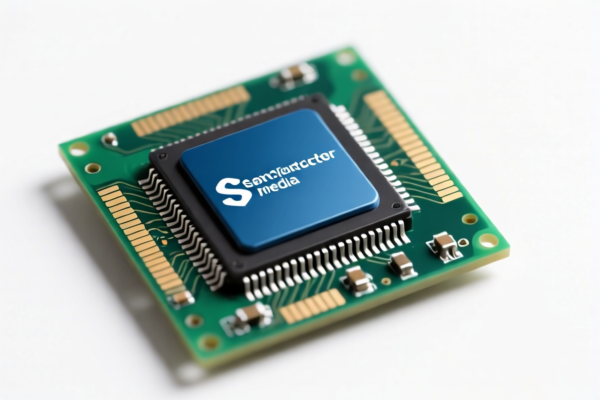
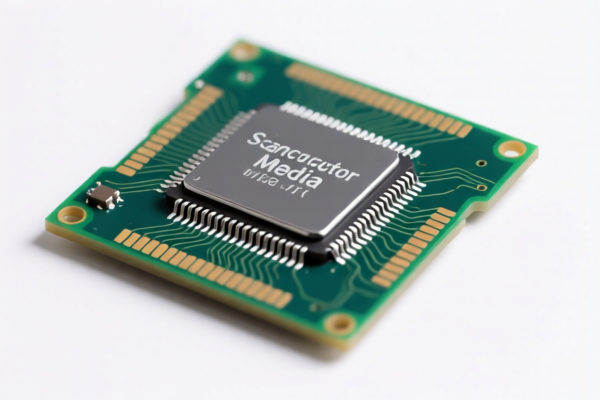
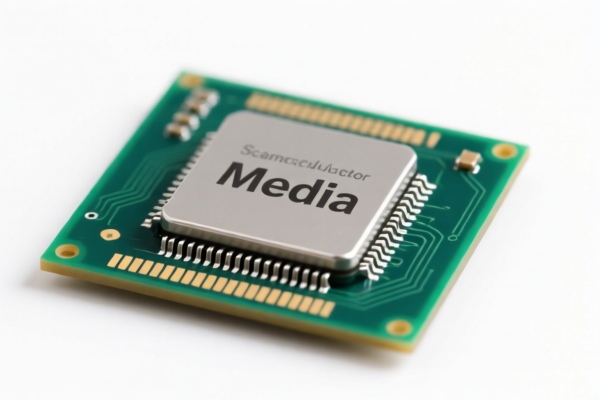

AI Analysis
🧪 Enzyme-Linked Immunosorbent Assay (ELISA) Test Cards
🌐 HS Code Reference & Customs Clearance Guide | 2026 Latest Tariff Breakdown | Professional Import Strategy
📌 One, Product Definition & Classification: Do You Really Understand ELISA Test Cards?
ELISA test cards are diagnostic reagents used in clinical laboratories, research institutions, and medical testing centers to detect specific antigens, antibodies, or biomarkers through immunochemical reactions. They are critical tools in infectious disease screening (e.g., HIV, Hepatitis B/C), autoimmune disorders, cancer biomarkers, and fertility testing.
⚠️ Key Distinction:
- If the product contains antigen or antiserum as a core component → Must be classified under anti-antigen/antibody category
- If it’s purely a chemical or biological reagent without immunological components → Falls under "other" diagnostic reagent category
📦 Two, HS Code Classification Details (2026 Latest Tariff Authority Match)
| HS Code | Product Description | Use Case | Contains Antigen/Antiserum? |
|---|---|---|---|
3822.19.00.80 |
Diagnostic reagents, chemical/biological nature, not antigen or antiserum — classified as "other" | General lab use, non-specific detection kits | ❌ No |
3822.19.00.30 |
Diagnostic or laboratory reagents, specifically designed for antigen or antiserum detection | HIV, Lyme disease, pregnancy tests, infectious disease screening | ✅ Yes |
3002.13.00.90 |
Immunological products, core component falls under immunology | Vaccines, immune response assays, serological testing | ✅ Yes |
9027.50.40.15 |
Biochemical analyzers or devices for immunoassay or chemical analysis, integrated with detection systems | Automated ELISA readers, lab instruments with built-in analysis | ✅ Yes (as part of device) |
🔍 Critical Insight:
- ELISA test cards themselves (strip-based or microplate formats) are reagents, not instruments → typically fall under 3822.19.00 or 3002.13.00
- If the card is used in a machine (e.g., a reader with software), and the entire system is sold together → may qualify for 9027.50.40.15
💰 Three, 2026 Latest Tariff Rate Breakdown (Including附加 Taxes & Policy Triggers)
✅ Applicable Country: United States (US)
✅ Origin: China (CN)
✅ Effective Date: November 10, 2025 (inclusive of subsequent imports)
🎯 1. 3822.19.00.80 — Diagnostic Reagents (Non-Antigen/Antiserum Type)
| Item | Detail |
|---|---|
| Base Duty | 0% (ad valorem) |
| USITC Additional Duty | +0% (no 301 tariff applied) |
| IEEPA Additional Duty | +10% (under International Emergency Economic Powers Act) |
| Total Tax Rate | 10.0% |
| Tax Calculation | CIF Value × 10% |
| De Minimis Threshold | ✅ Yes (1% de minimis applies) |
| Legal Basis Path | IEEPA:9903.01.25 → IEEPA:9903.01.24 → 3822.19.00.80 |
📌 Explanation:
- This code applies when the reagent is not based on antigen/antiserum, e.g., enzyme-labeled conjugates without immunological specificity. - Although no USITC 301 tariff applies, IEEPA 10% still applies due to China origin. - De minimis (1%) allows small shipments (<$800) to enter duty-free.
🎯 2. 3822.19.00.30 — Diagnostic Reagents with Antigen/Antiserum
| Item | Detail |
|---|---|
| Base Duty | 0% |
| USITC Additional Duty | +0% (no 301 tariff) |
| IEEPA Additional Duty | +10% |
| Total Tax Rate | 10.0% |
| Tax Calculation | CIF × 10% |
| De Minimis Threshold | ✅ Yes (1%) |
| Legal Basis Path | IEEPA:9903.01.25 → IEEPA:9903.01.24 → 3822.19.00.30 |
📌 Explanation:
- Applies to antigen/antiserum-based ELISA kits, such as: - Anti-HIV IgG/IgM kits
- Anti-HBsAg (Hepatitis B) detection
- Pregnancy test strips (hCG detection)
- Despite containing biological components, no 301 tariff applies because it's not a "product of China" under Section 301 — but IEEPA 10% still applies.
🎯 3. 3002.13.00.90 — Other Immunological Products
| Item | Detail |
|---|---|
| Base Duty | 0% |
| USITC Additional Duty | +0% |
| IEEPA Additional Duty | +10% |
| Total Tax Rate | 10.0% |
| Tax Calculation | CIF × 10% |
| De Minimis Threshold | ✅ Yes |
| Legal Basis Path | IEEPA:9903.01.25 → IEEPA:9903.01.24 → 3002.13.00.90 |
📌 Explanation:
- Applies when the primary function is immunological, even if not explicitly labeled as "antigen". - Common in immunoassay kits where the biological activity is central (e.g., cytokine detection, autoantibody screening). - No 301 tariff, but IEEPA 10% applies due to China origin.
🎯 4. 9027.50.40.15 — Biochemical Analyzers / Immunoassay Devices
| Item | Detail |
|---|---|
| Base Duty | 0% |
| USITC Additional Duty | +25% (under Section 301, China-specific) |
| IEEPA Additional Duty | +10% |
| Total Tax Rate | 35.0% |
| Tax Calculation | CIF × 35% |
| De Minimis Threshold | ❌ No (denied de minimis) |
| Legal Basis Path | IEEPA:9903.01.25 → IEEPA:9903.01.24 → USITC:9027.50.40.15 → FOOTNOTE:9903.88.01 |
📌 Explanation:
- Applies only if the ELISA test card is sold as part of a complete automated analyzer system (e.g., ELISA reader with software, data output, calibration). - Even if the card itself is low-value, the entire system is taxed at 35%. - No de minimis — even a $100 shipment may face full 35% tax. - This is the highest tariff rate in this list — must avoid if possible.
🛠️ Four, Customs Clearance Best Practices (Pro Tips to Avoid Penalties)
✅ 1. Required Documentation (Must-Have Checklist)
| Document | Required? | Notes |
|---|---|---|
| ✅ Product Specification Sheet | ✔️ | Include antigen/antiserum type, detection method, sensitivity, shelf life |
| ✅ Certificate of Analysis (CoA) | ✔️ | Proves composition and performance |
| ✅ Certificate of Origin (CO) | ✔️ | Required for tariff eligibility |
| ✅ FDA 510(k) or CE Mark (if applicable) | ✔️ | Medical device status affects classification |
| ✅ Commercial Invoice | ✔️ | Must clearly state “ELISA Test Card” and HS Code |
| ✅ Packing List | ✔️ | Show packaging format (microplate, strip, cassette) |
| ✅ Labeling & Packaging Photos | ✔️ | Show barcode, model, expiration date |
✅ 2.申报技巧(Key Rules of Thumb)
🔥 “Don’t bundle if you can separate — avoid 35%!”
| Scenario | Correct HS Code | Wrong Practice |
|---|---|---|
| ELISA test card (no machine) | 3822.19.00.30 or 3002.13.00.90 |
Misclassified as 9027.50.40.15 → 35% tax |
| Test card + reader (sold together) | Declare as separate items | Bundled → 35% on entire set |
| Test card only (microplate/strip) | 3822.19.00.30 |
Misreported as “chemical” → 10% but wrong |
| Kit with buffer, wash solution, stop solution | 3822.19.00.30 |
Treated as “reagent” — correct |
| Automated ELISA reader with software | 9027.50.40.15 |
Must be declared as instrument |
✅ 3. Special Case Handling
| Situation | Recommended Action |
|---|---|
| OEM/White-label ELISA kits | Provide client PO + labeling proof — avoid "non-standard" classification |
| Test cards for research use only | Declare as “Research Use Only (RUO)” — may qualify for lower scrutiny |
| Used in clinical diagnostics | Must include FDA/CE documentation — risk of rejection if missing |
| Shipped in bulk (e.g., 1000 kits) | Use de minimis only if < $800 per shipment — otherwise pay 10% |
| Test cards sold with calibration standards | Still classify as reagents — do not bundle with instrument |
🌍 Five, Global Customs Comparison (2026 Latest)
| Country/Region | Recommended HS Code | Duty Rate | Certification Required | Notes |
|---|---|---|---|---|
| 🇺🇸 USA | 3822.19.00.30 / 3002.13.00.90 |
10% (China) | FDA 510(k), CE | 35% if bundled with reader |
| 🇨🇳 China | 3822.19.00.30 |
0% (if domestic) | NMPA | No additional tariffs |
| 🇪🇺 EU | 3822.19.00.30 |
0% (if CE compliant) | CE, ISO 13485 | No IEEPA/301 |
| 🇦🇺 Australia | 3822.19.00.30 |
0% | TGA | No extra duties |
| 🇯🇵 Japan | 3822.19.00.30 |
0% | PMDA | No附加税 |
📌 Conclusion:
- The U.S. is the only market imposing IEEPA 10% on ELISA reagents from China. - Bundling with instruments is a major risk — 35% tariff is extremely high. - China-origin products face no 301 tariff on reagents — only IEEPA 10%.
📌 Six, Common Mistakes & Risk Warnings (Real-World Pitfalls)
❌ Mistake 1: Selling ELISA test cards with an automated reader as a single unit
👉 Result: Taxed at 35% → huge cost overrun!
❌ Mistake 2: Misclassifying antigen-based kits as "chemical reagents"
👉 Result: Incorrect HS Code → customs delay, penalty, or seizure
❌ Mistake 3: Not providing CoA or FDA documentation
👉 Result: Refusal of entry — especially in U.S. and EU
❌ Mistake 4: Using generic names like “test strip” or “diagnostic kit”
👉 Result: Customs can’t verify if it contains antigen → reclassification risk
✅ Correct Labeling Example:
"ELISA Test Card for Human Anti-HIV-1 IgG Antibody Detection, 96-well Microplate Format, Contains Antigen-Coated Wells, CE Marked, NMPA Registered, 100 Tests/Kit"
🎯 Seven, Final Verdict: Precision in Classification = Profit Protection!
🎯 Remember the Golden Rule:
🔹 "If it’s a reagent, keep it separate. If it’s a machine, declare it as such. Never mix them!"
🔹 "10% is manageable. 35% is catastrophic."
📌 Pro Tip:
If your ELISA cards are produced in Vietnam, India, or Mexico, you may avoid IEEPA 10% and qualify for 0% duty under trade agreements.
✅ Apply for Advance Ruling (Pre-Clearance) — get official HS Code confirmation before shipping.
📣 Take Action Now:
📞 Contact a licensed U.S. Customs Broker + Submit product photos + Request HS Code Pre-Review
🚀 Ensure your ELISA test cards clear customs fast, pay less tax, and scale globally!
✨ Smart Importing Starts with Accurate Classification!
💼 Your R&D investment deserves a smooth, low-cost, high-compliance journey to market.
Customer Reviews
About HS Code Classification
The Harmonized System (HS) is an internationally standardized nomenclature developed by the World Customs Organization (WCO) to classify traded products. Over 200 countries use the HS system as the basis for customs tariffs, trade statistics, and import/export regulations.
Each HS code follows a hierarchical structure:
- Chapter (2 digits) — Broad category of goods (e.g., Chapter 84: Machinery and Mechanical Appliances)
- Heading (4 digits) — More specific grouping within the chapter
- Subheading (6 digits) — Internationally standardized breakdown, used by all WCO member countries
- National subdivisions (8-10 digits) — Country-specific extensions for further classification, such as US HTSUS 10-digit codes
Correct HS code classification is essential for smooth customs clearance, accurate duty payment, and compliance with trade regulations. Misclassification can lead to customs delays, overpayment of duties, or penalties.
When importing from CN to US, the applicable tariff rates may include:
- Most-Favored-Nation (MFN) rate — The standard duty rate applied to WTO members
- General rate — Applied to countries without trade agreements
- Trade remedy duties — Additional tariffs such as Section 301 (anti-dumping), Section 232 (national security), or countervailing duties
The information provided on this page is for reference purposes only. For official classification, please consult with your local customs authority or a licensed customs broker.