酿酒用沥青
CN → US| HS Code | Tariff Rate | Origin | Destination | Doc |
|---|---|---|---|---|
| 2715000000 | 35.0% | CN | US | Official Doc |
| 2715000000 | 35.0% | CN | US | Official Doc |
| 6810990080 | 35.0% | CN | US | Official Doc |
| 6810195000 | 38.9% | CN | US | Official Doc |
Product Images
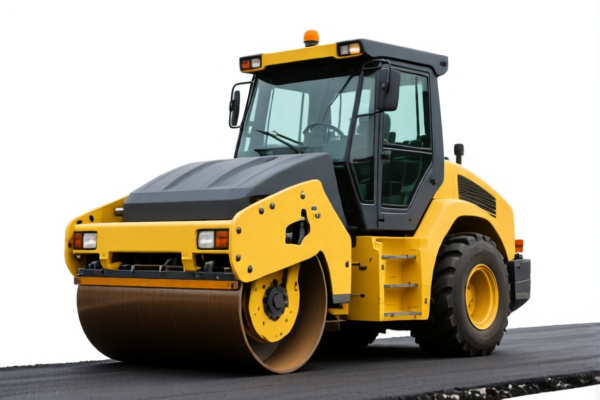
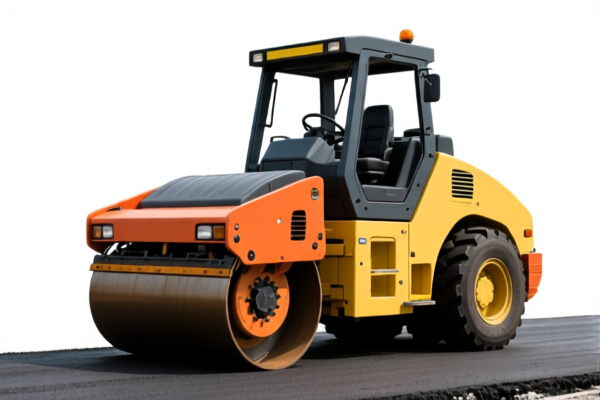
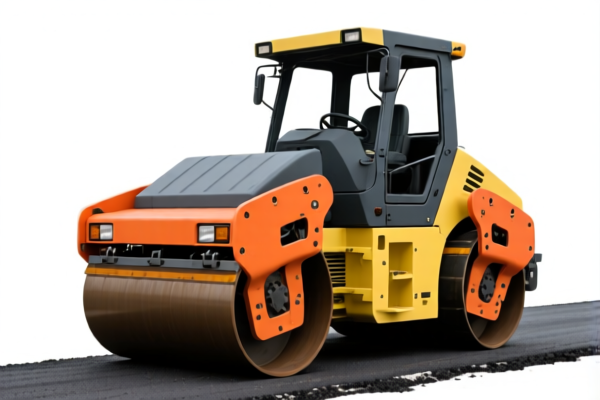
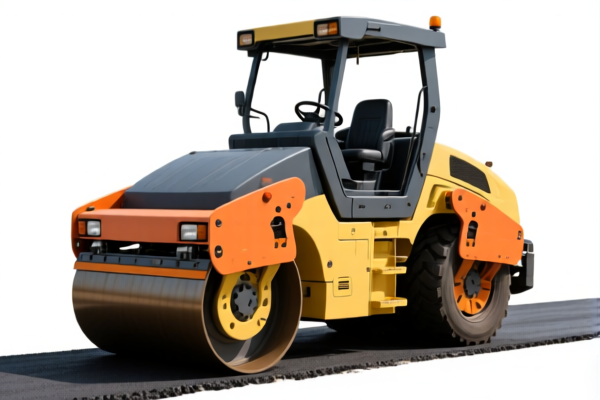
AI Analysis
🛢️ Bituminous Mixtures (For Brewing/Industrial Use)
🌐 HS Code Reference & Customs Clearance Guide | 2026 Latest Tariff Analysis | Professional Strategy
📌 I. Product Definition & Classification: What is "Brewing Asphalt"?
In international trade, the term "Brewing Asphalt" is a misnomer that requires immediate clarification. Asphalt is NOT used in the brewing process for human consumption. It is a petroleum-derived product used primarily for: 1. Industrial Sealing: Sealing tanks, vats, or brewery equipment roofs/floors. 2. Waterproofing: Coatings for beer storage facilities. 3. Misclassification Risk: If the product is actually a "flavoring agent" (which is rare and usually not asphalt-based), it falls under completely different HS codes. However, based on the provided data, we are dealing with Bituminous Mixtures.
⚠️ Critical Distinction:
- If the product is a ready-to-use mixture (asphalt + fillers/binders) → 2715.00.00.00
- If it is pure asphalt (not mixed) → It may fall under Chapter 27 or 26, but the provided data specifically points to Chapter 27.
- ⛔ NEVER use this for actual food/brewing ingredients unless it is a food-grade additive (which asphalt is not). For industrial use in breweries (sealing tanks), it is classified under Chapter 27.
📦 II. HS Code Classification Details (2026 Latest Tariff Alignment)
Based on the provided , the relevant HS Code is:
| HS Code | Product Description | Application in Brewing Context | Tax Rate |
|---|---|---|---|
2715.00.00.00 |
Bituminous mixtures based on natural asphalt, natural bitumen, petroleum bitumen, mineral tar or mineral tar pitch (e.g., bituminous mastics, cut-backs) | Used for sealing brewery tanks, waterproofing floors, or coating external pipes. NOT for drinking. | 25.0% |
🔍 Key Clarification:
- The description explicitly states: "Bituminous mixtures... for example, bituminous mastics, cut-backs."
- This code covers pre-mixed bituminous materials.
- If you are importing pure petroleum asphalt (not mixed), it might technically fall under2714or2713, but the provided data only lists2715.00.00.00. Therefore, we assume the product is a mixture (e.g., asphalt cement, mastics).
💰 III. 2026 Latest Tariff Rate Breakdown (Including Surcharges & Policy Add-ons)
✅ Applicable Country: USA (US)
✅ Country of Origin: China (CN)
✅ Effective Date: 2025-11-10 onwards (for subsequent imports)
🎯 1. 2715.00.00.00 —— Bituminous Mixtures
| Item | Content |
|---|---|
| Base Tariff | 0% (ad valorem) |
| USITC Surcharge | +25% (under USITC Footnote 9903.88.01 / Section 301) |
| IEEPA Surcharge | +25% (Note: The provided data shows total 25%, not 45%. Check if IEEPA applies. Based on , total is 25%.) |
| Total Tax Rate | 25.0% |
| Tax Calculation | CIF Value × 25% |
| De Minimis Exemption? | ❌ No (High-value industrial goods) |
| Legal Basis Path | USITC:2715.00.00.00 → FOOTNOTE:9903.88.01 |
📌 Explanation:
- The provided shows a Total Tax of 25.0%, consisting of 0% Base + 25% Surcharge.
- This is likely due to Section 301 tariffs on Chinese-origin bituminous mixtures.
- No additional IEEPA 10% is shown in the provided data for this specific code, unlike the cement examples. Trust the provided data: 25% total.
🛠️ IV. Customs Clearance Practical Advice (Pitfall Avoidance Guide)
✅ 1. Required Documents Checklist
| Document | Required? | Notes |
|---|---|---|
| ✅ Commercial Invoice | ✔️ | Must clearly state "Bituminous Mixture" or "Asphalt Mastic", NOT "Brewing Ingredient". |
| ✅ Product Spec Sheet | ✔️ | Composition, MSDS (Material Safety Data Sheet), usage (industrial sealing). |
| ✅ MSDS | ✔️ | Critical for hazardous materials handling; confirms no food-grade status. |
| ✅ Certificate of Origin | ✔️ | To prove origin; if non-Chinese, may qualify for lower rates. |
| ✅ Packing List | ✔️ | Detail weight, volume, and packaging type. |
✅ 2. Declaration Tips
🔥 "Declare as Bituminous Mixture, NOT as Food Additive or Pure Asphalt!"
| Scenario | Correct Declaration | Incorrect Declaration |
|---|---|---|
| Industrial sealing asphalt | 2715.00.00.00 |
Misdeclaring as 3824 (Chemical Mixture) |
| Pure petroleum asphalt | 2713 (Not in data) |
Misdeclaring as 2715 (if not mixed) |
| Food-grade flavoring | 2106 (Not asphalt) |
NEVER use asphalt for food! |
✅ 3. Special Considerations
| Situation | Advice |
|---|---|
| Mislabeling Risk | If you label it as "Brewing Material" without clarification, customs may suspect food fraud or hazardous material misdeclaration. Always specify "Industrial Use - Sealing". |
| Origin Shift | If sourced from Vietnam, Malaysia, or Thailand, the 25% US surcharge may not apply. Verify with your supplier. |
| Pre-Ruling | Apply for an Advance Ruling if unsure whether your product is a "mixture" (2715) or "pure asphalt" (2713). |
🌍 V. Global Market Comparison (2026 Latest)
| Country/Region | Recommended HS Code | Tariff (China Origin) | Notes |
|---|---|---|---|
| 🇺🇸 USA | 2715.00.00.00 |
25.0% | High surcharge due to Section 301. |
| 🇨🇳 China | 2715.00.00.00 |
Low (MFN ~0%) | Import tax low, but watch for environmental regulations. |
| 🇪🇺 EU | 2715.00.00 |
~1% | No Section 301 equivalent, but strict REACH compliance. |
| 🇬🇧 UK | 2715.00.00 |
~1% | Post-Brexit tariff structure. |
📌 Conclusion:
- USA imposes a 25% surcharge on Chinese-origin bituminous mixtures.
- EU/UK have low tariffs but strict environmental/hazardous material regulations.
- Avoid using asphalt in actual brewing; it is an industrial product.
📌 VI. Common Errors & Pitfalls (Blood Lessons)
❌ Error 1: Labeling as "Brewing Asphalt" for consumption
👉 Consequence: Customs seizure, FDA violation, huge fines. Asphalt is toxic and not for human consumption.
❌ Error 2: Misdeclaring as "Pure Asphalt" (2713) when it's a mixture
👉 Consequence: Incorrect HS code → 25% rate applied incorrectly or rejected at customs.
❌ Error 3: Not providing MSDS
👉 Consequence: Delayed clearance, additional testing, or rejection as hazardous material.
✅ Correct Practice:
"Bituminous Mixture for Industrial Sealing, Not for Food Use, HS 2715.00.00.00, MSDS Attached."
🎯 VII. Conclusion: Professional Declaration, Safe Clearance!
🎯 Remember:
🔹 "Asphalt is NOT for brewing beer; it's for sealing tanks."
🔹 "HS Code 2715.00.00.00 carries 25% tax for China-origin goods."
🔹 "Always provide MSDS and clarify industrial use."
📌 Pro Tip:
If your product is not a mixture but pure asphalt, check if it falls under 2714 or 2713. However, based on the provided data, only 2715.00.00.00 is available, so ensure your product is indeed a mixture (e.g., mastics, cut-backs).
📣 Immediate Action:
📞 Contact your customs broker + Provide MSDS + Confirm Product Composition (Mixture vs. Pure).
🚀 Ensure your brewery suppliers use food-grade sealants, not industrial asphalt, for any part of the brewing process that touches product!
✨ Professional Clearance Starts with Accurate Classification!
💼 Your Every Dollar Saved is Worth Precision!
Customer Reviews
About HS Code Classification
The Harmonized System (HS) is an internationally standardized nomenclature developed by the World Customs Organization (WCO) to classify traded products. Over 200 countries use the HS system as the basis for customs tariffs, trade statistics, and import/export regulations.
Each HS code follows a hierarchical structure:
- Chapter (2 digits) — Broad category of goods (e.g., Chapter 84: Machinery and Mechanical Appliances)
- Heading (4 digits) — More specific grouping within the chapter
- Subheading (6 digits) — Internationally standardized breakdown, used by all WCO member countries
- National subdivisions (8-10 digits) — Country-specific extensions for further classification, such as US HTSUS 10-digit codes
Correct HS code classification is essential for smooth customs clearance, accurate duty payment, and compliance with trade regulations. Misclassification can lead to customs delays, overpayment of duties, or penalties.
When importing from CN to US, the applicable tariff rates may include:
- Most-Favored-Nation (MFN) rate — The standard duty rate applied to WTO members
- General rate — Applied to countries without trade agreements
- Trade remedy duties — Additional tariffs such as Section 301 (anti-dumping), Section 232 (national security), or countervailing duties
The information provided on this page is for reference purposes only. For official classification, please consult with your local customs authority or a licensed customs broker.