醋酸纤维光学薄膜
CN → US| HS Code | Tariff Rate | Origin | Destination | Doc |
|---|---|---|---|---|
| 3912110000 | 40.6% | CN | US | Official Doc |
| 3912120000 | 40.6% | CN | US | Official Doc |
| 3920730000 | 37.9% | CN | US | Official Doc |
| 3920791000 | 41.2% | CN | US | Official Doc |
| 3921140000 | 41.5% | CN | US | Official Doc |
Product Images
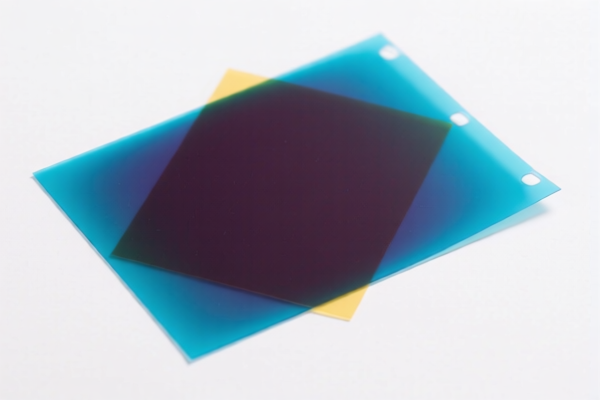

AI Analysis
🔬📄 Cellulose Acetate Optical Film: The Ultimate HS Code & Tax Breakdown (2026 Edition)
🌐 Global HS Code Reference & Customs Clearance Guide | 2026 Tariff Analysis | Professional Strategy
📌 I. Product Definition: What is "Cellulose Acetate Optical Film"?
Cellulose Acetate Optical Film is a high-performance polymer material derived from cellulose. It is renowned for its exceptional clarity, optical stability, and resistance to yellowing.
In international trade, this product is often misclassified due to variations in form (sheet vs. roll), thickness, and intended application.
Key Forms Identified in Trade: * Primary Form Semi-finished: Sheets/films not yet processed into specific optical components (e.g., lens filters, polarizers). * Standard Forms: General-purpose cellulose derivatives in sheets or rolls. * Thin Films: Ultra-thin films (<0.076mm) used in precision optics or packaging. * Regenerated Cellulose: Films made from regenerated fibers.
⚠️ Critical Distinction:
- If the film is a "Primary Form Semi-finished" or general sheet → It falls under 3912 or 3920.
- If it is a "Thin Film" specifically designed for optical use but not yet a finished lens → It may fall under 3921.
- Misclassification Risk: Classifying a finished optical component (like a polarized lens) as a raw film can lead to severe penalties.
📦 II. HS Code Classification Details (2026 Tariff Authority)
Based strictly on the provided data for "Cellulose Acetate Film" variants:
| HS Code | Product Description | Applicable Scenario | Key Feature |
|---|---|---|---|
3912.11.00.00 |
Cellulose Acetate Films (Primary Form Semi-finished) | Raw sheets, unfinished optical substrates, semi-processed rolls. | Primary Form (Semi-finished) |
3912.12.00.00 |
Cellulose Acetate Films (Cellulose Derivatives) | General standard forms, common cellulose derivative sheets. | Common Form of Cellulose Derivatives |
3920.73.00.00 |
Cellulose Acetate Films (Sheets, Plates, Foils) | Industrial sheets, plates, general-purpose foils. | Sheet/Plate/Foil category |
3920.79.10.00 |
Cellulose Acetate Films (Thickness ≤ 0.076mm) | Ultra-thin films, bands, and sheets under 0.076mm. | Ultra-Thin (<0.076mm) |
3921.14.00.00 |
Cellulose Acetate Films (Regenerated Cellulose) | Films specifically made from regenerated cellulose fibers. | Regenerated Material |
🔍 Critical Note:
-3912Series: Specifically targets "Cellulose Acetates" in their primary chemical form.
-3920Series: Targets "Other plates, sheets, film, foil and strip" of plastics (including cellulose acetate).
-3921Series: Specifically targets "Regenerated cellulosic fibers".
- Thickness Matters: If your film is ≤ 0.076mm, it must be classified under3920.79.10.00, not the general3920.73.
💰 III. 2026 Tariff Rate Deep Dive (US Import)
✅ Applicable Country: United States (US)
✅ Origin: China (CN)
✅ Effective Date: Current 2026 Trade Regulations (Section 301 + 122 Tariffs)
🎯 1. 3912.11.00.00 & 3912.12.00.00 (Primary & Common Forms)
| Item | Content |
|---|---|
| Base Tariff | 5.6% |
| Section 301 Additional Tariff | +25.0% (Section 301 List) |
| Section 122 Tariff | +10.0% (Retaliatory/Section 122) |
| Total Tariff Rate | 40.6% |
| Tax Calculation | CIF Value × 40.6% |
| De Minimis Exemption | ❌ NO (High tariff item) |
| Legal Path | HTSUS:3912.11.00.00 → USITC:301 → Section122 |
📌 Explanation:
- Base (5.6%): Standard Most-Favored-Nation (MFN) rate.
- 301 Add-on (25%): US "Section 301" tariffs imposed on Chinese goods for trade disputes.
- Section 122 (10%): Additional tariff applied to specific Chinese industrial materials.
- Total: 40.6% is a massive barrier. Do not underestimate this cost.
🎯 2. 3920.73.00.00 (Sheets, Plates, Foils)
| Item | Content |
|---|---|
| Base Tariff | 2.9% |
| Section 301 Additional Tariff | +25.0% |
| Section 122 Tariff | +10.0% |
| Total Tariff Rate | 37.9% |
| Tax Calculation | CIF Value × 37.9% |
| De Minimis Exemption | ❌ NO |
📌 Explanation:
- Slightly lower base rate (2.9%) compared to 3912 series, but Section 301 (25%) and Section 122 (10%) remain constant.
- Total: 37.9%. Still extremely high.
🎯 3. 3920.79.10.00 (Ultra-Thin Film ≤ 0.076mm)
| Item | Content |
|---|---|
| Base Tariff | 6.2% |
| Section 301 Additional Tariff | +25.0% |
| Section 122 Tariff | +10.0% |
| Total Tariff Rate | 41.2% |
| Tax Calculation | CIF Value × 41.2% |
| De Minimis Exemption | ❌ NO |
📌 Explanation:
- The thinness of the film actually triggers a higher base rate (6.2%) in some categories.
- Total: 41.2%. This is the highest tariff in the list. Precision optics made from ultra-thin film will face the steepest taxes.
🎯 4. 3921.14.00.00 (Regenerated Cellulose)
| Item | Content |
|---|---|
| Base Tariff | 6.5% |
| Section 301 Additional Tariff | +25.0% |
| Section 122 Tariff | +10.0% |
| Total Tariff Rate | 41.5% |
| Tax Calculation | CIF Value × 41.5% |
| De Minimis Exemption | ❌ NO |
📌 Explanation:
- "Regenerated" cellulose is treated as a distinct plastic category.
- Total: 41.5%. This is the absolute maximum tariff among the provided options.
🛠️ IV. Customs Clearance Practical Advice (Survival Guide)
✅ 1. Essential Documentation Checklist (Do Not Skip)
| Document | Requirement | Why It Matters |
|---|---|---|
| Material Safety Data Sheet (MSDS) | ✅ Mandatory | Proves chemical composition (Cellulose Acetate vs. other plastics). |
| Certificate of Analysis (COA) | ✅ Mandatory | Confirms thickness, optical clarity, and "Regenerated" status. |
| Product Specifications | ✅ Mandatory | Must explicitly state: Thickness (mm), Width, Form (Sheet/Roll). |
| Application Letter | ✅ Mandatory | Explain if it's "Optical Film" for lenses or "Packaging Film". |
| Invoice & Packing List | ✅ Mandatory | Must match HS Code description exactly. |
✅ 2. Declaration Strategy (The "Golden Rules")
🔥 Rule #1: Thickness is King!
If your film is ≤ 0.076mm, you MUST use3920.79.10.00. Using a general code (3920.73) will result in a 40.6% vs 41.2% difference and potential Customs Seizure.🔥 Rule #2: "Regenerated" vs. "Synthetic"
If the material is Regenerated Cellulose, you cannot claim3912. You must use3921.14.00. Misdeclaring this leads to 41.5% vs 40.6% errors and fines.🔥 Rule #3: "Primary Form" vs. "Finished Product"
If the film is already a finished optical component (e.g., a polarizer lens), do NOT use these HS Codes. You likely need codes under Chapters 90 (Optical Instruments). Declaring a finished lens as raw film (3912) is Customs Fraud.
✅ 3. Special Handling for "Optical" Use
| Scenario | Recommendation |
|---|---|
| Pure Raw Film (Sheet/Roll) | Use 3912.11.00.00 or 3920.73.00.00. Prepare for 40.6% tax. |
| Ultra-Thin Optical Film | Use 3920.79.10.00. Prepare for 41.2% tax. |
| Regenerated Fiber Film | Use 3921.14.00.00. Prepare for 41.5% tax. |
| Finished Optical Lens | STOP! Do not use the above. Consult a customs broker for Chapter 90 (9001.xxxx). |
🌍 V. Global Market Comparison (2026 Context)
| Region | Recommended HS Code | Est. Tariff (China Origin) | Note |
|---|---|---|---|
| 🇺🇸 USA | 3912.11.00.00 / 3920.73.00.00 |
37.9% - 41.5% | High Section 301 + 122 taxes. No De Minimis. |
| 🇪🇺 EU | 3912.11.00 |
~3% - 5% | No Section 301/122. Much cheaper. |
| 🇨🇳 China | 3912.11.00 |
~5.6% | Low base rate. No 301/122. |
| 🇦🇺 Australia | 3912.11.00 |
~5% | No extra Section 301. |
📌 Conclusion:
The US market is the most expensive for Cellulose Acetate Optical Film due to the 301 (25%) and 122 (10%)叠加 (stacking) on top of the base rate.
Strategy: If possible, explore transshipment routes (e.g., via Vietnam or Mexico) to avoid Section 301/122, but be aware of Rules of Origin enforcement.
📌 VI. Common Pitfalls & Avoidance (Lesson Learned)
❌ Pitfall 1: Ignoring Thickness
👉 Error: Declaring 0.075mm film under 3920.73.00.00 (37.9%).
👉 Result: Customs reclassifies to 3920.79.10.00 (41.2%). You pay the difference + fine.
❌ Pitfall 2: Mislabeling "Regenerated"
👉 Error: Declaring regenerated cellulose film under 3912.11.00.00.
👉 Result: Customs flags it as "False Description". Delay + Potential Seizure.
❌ Pitfall 3: Treating "Optical" as "Raw"
👉 Error: Declaring a finished LCD polarizer as raw film (3912).
👉 Result: Customs Fraud. The product belongs in Chapter 90. Penalties can exceed 100% of value.
✅ Correct Approach:
"Cellulose Acetate Film, Regenerated, 0.070mm Thickness, 500mm Width, Roll, for Optical Lens Manufacturing"
HS Code:3920.79.10.00(If ≤0.076mm) or3921.14.00.00(If Regenerated).
🎯 VII. Final Strategy: How to Survive the 40%+ Tax?
- Verify Formulation: Confirm if it is truly "Cellulose Acetate" or a different polymer.
- Check Thickness: Measure precisely. If >0.076mm, you might qualify for a lower base rate.
- Consider Chapter 90: If the film is already an optical component (lens, filter, polarizer), do NOT use Chapter 39. Use Chapter 90 where tariffs might be lower (or different).
- Pre-Arrival Ruling: HIGHLY RECOMMENDED. Submit your specs to US Customs (CBP) for an Advance Ruling before shipping.
- Supply Chain Diversification: Consider sourcing from non-China origins if possible to avoid the 35% (25+10) surcharge.
📌 Key Takeaway:
Cellulose Acetate Optical Film to the US is a "High Tax Zone" (37.9% - 41.5%).
Precision in HS Code selection (Thickness & Material Type) is the only way to minimize risk.
Do not guess! A 0.001mm difference or a wrong material description can cost you 40% of your product value.
✨ Expert Customs Clearance Starts with Precision!
💼 Calculate your true landed cost: CIF + 40.6% + Duty + Storage.
🚀 Get your pre-ruling today to avoid a $10,000 surprise!
Customer Reviews
About HS Code Classification
The Harmonized System (HS) is an internationally standardized nomenclature developed by the World Customs Organization (WCO) to classify traded products. Over 200 countries use the HS system as the basis for customs tariffs, trade statistics, and import/export regulations.
Each HS code follows a hierarchical structure:
- Chapter (2 digits) — Broad category of goods (e.g., Chapter 84: Machinery and Mechanical Appliances)
- Heading (4 digits) — More specific grouping within the chapter
- Subheading (6 digits) — Internationally standardized breakdown, used by all WCO member countries
- National subdivisions (8-10 digits) — Country-specific extensions for further classification, such as US HTSUS 10-digit codes
Correct HS code classification is essential for smooth customs clearance, accurate duty payment, and compliance with trade regulations. Misclassification can lead to customs delays, overpayment of duties, or penalties.
When importing from CN to US, the applicable tariff rates may include:
- Most-Favored-Nation (MFN) rate — The standard duty rate applied to WTO members
- General rate — Applied to countries without trade agreements
- Trade remedy duties — Additional tariffs such as Section 301 (anti-dumping), Section 232 (national security), or countervailing duties
The information provided on this page is for reference purposes only. For official classification, please consult with your local customs authority or a licensed customs broker.