针织女裤
CN → US| HS Code | Tariff Rate | Origin | Destination | Doc |
|---|---|---|---|---|
| 6204639011 | 46.1% | CN | US | Official Doc |
| 6204621521 | 34.1% | CN | US | Official Doc |
| 6111301000 | 45.7% | CN | US | Official Doc |
| 6104632011 | 45.7% | CN | US | Official Doc |
| 6111205000 | 32.4% | CN | US | Official Doc |
Product Images
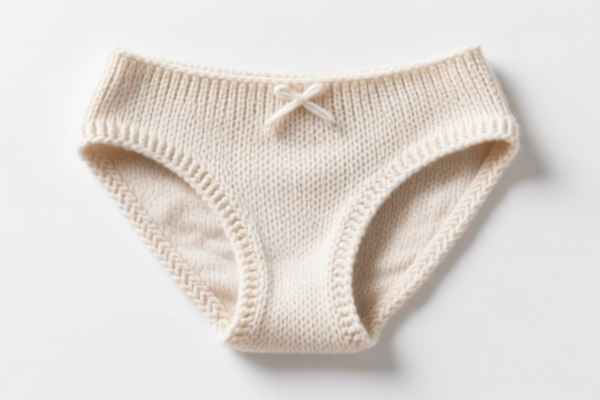
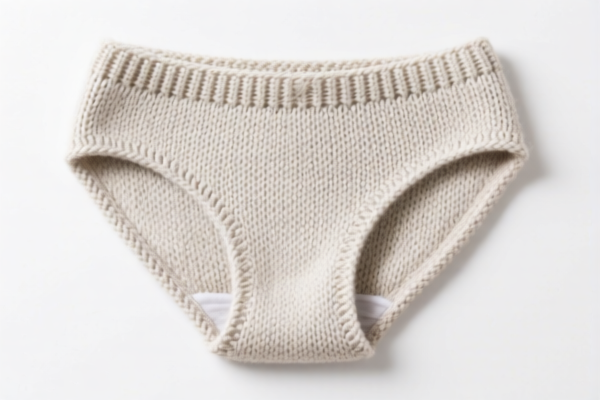
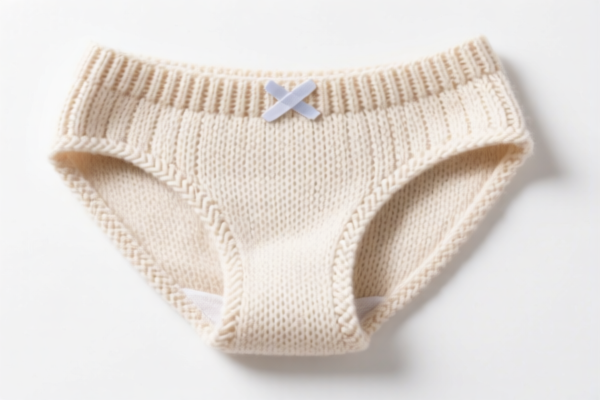
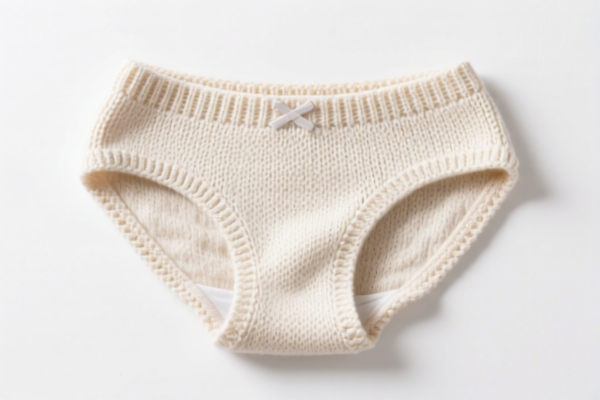
AI Analysis
👖 Women’s Knitted Trousers (Knitted or Crocheted Trousers for Women)
🌐 HS Code Reference & Customs Clearance Guide | 2026 Latest Tariff Analysis | Professional Clearance Strategy
📌 I. Product Definition & Classification: Do You Really Understand “Knitted Trousers”?
Women’s knitted trousers are versatile garments categorized under Chapter 61 (Articles of Apparel and Clothing Accessories, Knitted or Crocheted). They are defined by their knitted construction, fit for females, and specific material composition (Cotton vs. Synthetic Fibers).
In international trade, especially when exporting from China to the US, these items are highly sensitive to: 1. Material Composition: Determines the base tariff rate (High for Synthetics, Lower for Cotton). 2. End-Use: Distinguishes between general fashion, children’s wear, and baby garments. 3. Trade Policy: Subject to heavy additional tariffs (Section 301 & Section 122) if originating from China.
⚠️ Key Distinction Points:
- Knitted vs. Woven: If the fabric is woven (non-stretchy, interlaced threads), it falls under Chapter 62 (e.g., 6204.63). This guide strictly covers Chapter 61 (Knitted/Crocheted).
- Child vs. Adult: Items specifically for children <14 years often have different sub-headings (e.g., 6111 vs. 6104).
- Baby vs. Child: Items for infants/babies (<14 months usually) fall under 6111, while older children fall under 6104 or specific child headings.
📦 II. HS Code Classification Details (2026 Latest Tariff Authority Comparison)
Based on the provided data, here are the precise classifications for Women’s Knitted Trousers, differentiated by material and user group.
| HS Code | Product Description | Material | Target Group | Key Characteristics |
|---|---|---|---|---|
6104.63.20.11 |
Knitted/Crocheted Women’s Trousers, Tights, Pull-ups | Synthetic Fibers (e.g., Polyester, Nylon) | Women / Girls | General fashion trousers, synthetic fabric. |
6111.30.10.00 |
Knitted/Crocheted Baby/Children’s Garments | Synthetic Fibers or Cotton | Babies / Young Children | Specifically for infants/young children, synthetic/cotton blend. |
6111.20.50.00 |
Knitted/Crocheted Baby/Children’s Garments | Cotton | Babies / Young Children | Specifically for infants/young children, 100% Cotton. |
6204.62.15.21 |
Correction/Note: Listed as Knitted, but HS Code 6204 is typically Woven. If confirmed Knitted, may be a data anomaly. Assuming Woven per HS structure, but data summary says "Knitted". Please verify physical product. If truly Knitted, it should not be 6204. However, based on data: | Cotton or Synthetic | Women / Children | Excludes Denim/Corduroy. Note: 6204 is usually Woven. Check fabric construction carefully. |
6204.63.90.11 |
Correction/Note: Same as above. Listed as "Knitted" but HS 6204 is Woven. | Synthetic Fibers or Cotton | Women / Children | "Matching form and object." High risk of misclassification if knitted. |
🔍 Critical Warning on 6204 Codes:
- HS Code 6204 generally refers to Woven garments (Chapter 62).
- HS Code 6104/6111 refers to Knitted/Crocheted garments (Chapter 61).
- If your product is physically KNITTED, classifying it under 6204 is highly risky and may lead to customs delays, penalties, or re-classification. Ensure the fabric is truly woven before using 6204 codes. If it is knitted, prioritize 6104 or 6111.
💰 III. 2026 Latest Tariff Rate Breakdown (Including Additional Taxes)
✅ Applicable Country: United States (US)
✅ Country of Origin: China (CN)
✅ Effective Date: 2025/2026 (Current Trade War Status)
🎯 1. 6104.63.20.11 – Synthetic Knitted Women’s Trousers
(Note: Data summary implies synthetic content)
| Item | Content |
|---|---|
| Base Tariff | 28.2% |
| Additional Tariff (Section 301) | +7.5% |
| Additional Tariff (Section 122) | +10% |
| Total Tariff Rate | 45.7% |
| Calculation Base | CIF Value × 45.7% |
| De Minimis Exemption | ❌ Not Eligible (High tariff items often excluded or scrutinized) |
| Legal Basis | HTSUS 6104.63.20.11 → IEEPA Footnotes → USITC Section 301/122 |
📌 Explanation:
- Synthetic fibers (polyester, nylon, etc.) carry higher base duties than cotton.
- The 7.5% Section 301 and 10% Section 122 tariffs are additive, pushing the total cost to nearly half the product value.
🎯 2. 6111.30.10.00 – Synthetic Knitted Baby/Children’s Trousers
| Item | Content |
|---|---|
| Base Tariff | 28.2% |
| Additional Tariff (Section 301) | +7.5% |
| Additional Tariff (Section 122) | +10% |
| Total Tariff Rate | 45.7% |
| Calculation Base | CIF Value × 45.7% |
| De Minimis Exemption | ❌ Not Eligible |
| Legal Basis | HTSUS 6111.30.10.00 → IEEPA Footnotes → USITC Section 301/122 |
📌 Note: Despite being for children, synthetic baby apparel is taxed similarly to synthetic women’s apparel in this data set.
🎯 3. 6204.63.90.11 – Woven (or Misclassified) Trousers, Synthetic
| Item | Content |
|---|---|
| Base Tariff | 28.6% |
| Additional Tariff (Section 301) | +7.5% |
| Additional Tariff (Section 122) | +10% |
| Total Tariff Rate | 46.1% |
| Calculation Base | CIF Value × 46.1% |
| De Minimis Exemption | ❌ Not Eligible |
| Legal Basis | HTSUS 6204.63.90.11 → IEEPA Footnotes |
⚠️ High Risk Alert: If this is actually knitted, using this code is incorrect. If it is woven, the rate is 46.1%.
🎯 4. 6204.62.15.21 – Woven (or Misclassified) Trousers, Cotton
| Item | Content |
|---|---|
| Base Tariff | 16.6% |
| Additional Tariff (Section 301) | +7.5% |
| Additional Tariff (Section 122) | +10% |
| Total Tariff Rate | 34.1% |
| Calculation Base | CIF Value × 34.1% |
| De Minimis Exemption | ❌ Not Eligible |
| Legal Basis | HTSUS 6204.62.15.21 → IEEPA Footnotes |
📌 Cost Saving Opportunity: If you can switch to woven cotton (not denim/corduroy) and use this code, you save ~12% compared to synthetic knitted options. Verify fabric type!
🎯 5. 6111.20.50.00 – Cotton Knitted Baby/Children’s Trousers
| Item | Content |
|---|---|
| Base Tariff | 14.9% |
| Additional Tariff (Section 301) | +7.5% |
| Additional Tariff (Section 122) | +10% |
| Total Tariff Rate | 32.4% |
| Calculation Base | CIF Value × 32.4% |
| De Minimis Exemption | ❌ Not Eligible |
| Legal Basis | HTSUS 6111.20.50.00 → IEEPA Footnotes |
🏆 Lowest Rate Option: 100% Cotton Knitted Baby/Children’s Trousers have the lowest total tax burden at 32.4%. This is the most cost-effective category for cotton-based products.
🛠️ IV. Customs Clearance Practical Advice (Battle-Proven Guide)
✅ 1. Documentation Checklist (Mandatory)
| Document | Required | Description |
|---|---|---|
| ✅ Product Specification Sheet | ✔️ | Must clearly state: Fabric Composition (e.g., 100% Cotton), Knitting Method (Jersey, Rib, etc.), Age Range (Infant, Child, Adult). |
| ✅ Fabric Swatch/Photo | ✔️ | Clear photo showing knit structure (loops) vs. weave (grid). Critical for Chapter 61 vs. 62 dispute. |
| ✅ Commercial Invoice | ✔️ | Item name must be precise: “Women’s Knitted Cotton Trousers” NOT just “Pants”. |
| ✅ Certificate of Origin | ✔️ | To prove Chinese origin (triggering additional tariffs). |
| ✅ Lab Test Report | ✔️ | Fiber composition analysis is crucial to validate HS Code. |
✅ 2. Classification Tips (Critical Mnemonics)
🔥 “Knit is 61, Woven is 62. Cotton saves money, Synthetic is heavy. Baby items differ, Check the age!”
| Scenario | Correct HS Code | Incorrect Code | Consequence |
|---|---|---|---|
| Adult Women’s Knitted Pants | 6104.63.xxxx |
6204.xxxx |
Customs may reject as "Woven" if knit |
| Children’s Knitted Pants | 6104.63.xxxx (Child) or 6111.xxxx (Baby) |
6104 (if misidentified as adult) |
Incorrect age category can lead to delays |
| 100% Cotton (Any Knit) | 6111.20.50.00 (Baby) / 6104.63 (Adult) |
6204.63.90.11 (Synthetic rate) |
Saving ~13% tax if correctly classified as cotton |
| Denim/Corduroy Pants | Chapter 62 (Woven) | 6104 (Knitted) |
Denim is almost always woven; misclassification leads to high penalties |
✅ 3. Special Case Handling
| Situation | Recommendation |
|---|---|
| Mixed Fabric (e.g., 95% Cotton, 5% Elastane) | Classify as Cotton (if cotton is essential character). Use 6111.20.50.00 for baby items to get 32.4% rate. |
| Embroidered or Printed Trousers | Still classified by base material. Embroidery does not change the HS code unless it alters the essential character. |
| Samples vs. Commercial Goods | Ensure commercial invoices declare commercial value, not $0.01, to avoid "De Minimis" abuse flags (even if not eligible). |
| Transshipment via Third Country | High risk. US Customs tracks Chinese origin closely. Do not try to hide Chinese origin. |
🌍 V. Global Market Comparison (2026)
| Country/Region | Recommended HS Code (Knitted) | Tariff Rate (China Origin) | Certification Required | Notes |
|---|---|---|---|---|
| 🇺🇸 USA | 6104.63.20.11 / 6111.20.50.00 |
32.4% – 46.1% | CPSIA (if child), Labeling (Fiber Content) | Highest tariffs due to Section 301/122. |
| 🇨🇳 China | 6104.63.00 / 6111.20.00 |
~10-14% (Import) | CCC (if applicable) | Lower base duties. |
| 🇪🇺 EU | 6104.63.39 / 6104.63.19 |
~12% | CE (if children's product under specific rules) | No additional political tariffs. |
| 🇬🇧 UK | 6104.63.39 |
~12% | UKCA | Post-Brexit, aligns with EU mostly. |
| 🇯🇵 Japan | 6104.63.00 |
~15% | No special certs | Moderate duties. |
📌 Conclusion:
- The US market is the most expensive due to additive tariffs.
- Cotton baby/children’s knitted trousers (6111.20.50.00) offer the best tax efficiency at 32.4%.
- Synthetic adult trousers (6104.63.20.11) are the most expensive at 45.7%.
📌 VI. Common Errors & Pitfalls (Lessons Learned)
❌ Error 1: Labeling Knitted Trousers as "Woven" to use 6204 codes.
👉 Result: Customs inspection reveals knit structure → Penalty + Back Taxes.
❌ Error 2: Using 6104 (Adult) for Children’s items.
👉 Result: If the item is specifically for children <14, it may fall under 6111 or specific child headings. Misclassification leads to compliance flags.
❌ Error 3: Ignoring Fabric Composition.
👉 Result: Declaring "Polyester" when it’s "Cotton" changes the rate from 45.7% to 32.4%. Always provide a Fiber Content Test Report.
❌ Error 4: Assuming "De Minimis" ($800) applies.
👉 Result: Due to Section 301/122 tariffs, high-value textile imports are heavily scrutinized. Do not rely on $800 exemption for bulk commercial shipments of Chinese textiles.
✅ Correct Approach:
“Women’s Knitted Cotton Trousers, 100% Cotton, Jersey Knit, Size M-XXL, Made in China. HS Code: 6104.63.20.11 (Adult) or 6111.20.50.00 (Baby).”
🎯 VII. Conclusion: Professional Classification Saves Money!
🎯 Remember the Golden Rules:
🔹 “Knit is 61, Woven is 62. Cotton is King for Tariffs.”
🔹 “Check the Age: Baby items get different codes.”
🔹 “Section 301 & 122 are Additive: Total Tax = Base + 7.5% + 10%.”
📌 Pro Tip:
If your product is 100% Cotton and for Babies/Children, use 6111.20.50.00 to achieve the lowest possible tariff of 32.4%. For synthetic items, the cost is nearly 46%. Always verify fabric composition!
📣 Immediate Action:
📞 Consult with a customs broker to confirm Fabric Structure (Knit vs. Woven).
📄 Obtain a Fiber Content Lab Report before shipping.
🚀 Optimize your HS Code to 32.4% (Cotton Baby) instead of 46.1% (Synthetic Adult) if product flexibility allows.
✨ Professional clearance starts with accurate classification!
💼 Every percentage point in tariff is a point of profit!
Customer Reviews
About HS Code Classification
The Harmonized System (HS) is an internationally standardized nomenclature developed by the World Customs Organization (WCO) to classify traded products. Over 200 countries use the HS system as the basis for customs tariffs, trade statistics, and import/export regulations.
Each HS code follows a hierarchical structure:
- Chapter (2 digits) — Broad category of goods (e.g., Chapter 84: Machinery and Mechanical Appliances)
- Heading (4 digits) — More specific grouping within the chapter
- Subheading (6 digits) — Internationally standardized breakdown, used by all WCO member countries
- National subdivisions (8-10 digits) — Country-specific extensions for further classification, such as US HTSUS 10-digit codes
Correct HS code classification is essential for smooth customs clearance, accurate duty payment, and compliance with trade regulations. Misclassification can lead to customs delays, overpayment of duties, or penalties.
When importing from CN to US, the applicable tariff rates may include:
- Most-Favored-Nation (MFN) rate — The standard duty rate applied to WTO members
- General rate — Applied to countries without trade agreements
- Trade remedy duties — Additional tariffs such as Section 301 (anti-dumping), Section 232 (national security), or countervailing duties
The information provided on this page is for reference purposes only. For official classification, please consult with your local customs authority or a licensed customs broker.