钩针夹克和外套
CN → US| HS Code | Tariff Rate | Origin | Destination | Doc |
|---|---|---|---|---|
| 6102302010 | 45.7% | CN | US | Official Doc |
| 6117809570 | 32.1% | CN | US | Official Doc |
| 6117909055 | 32.1% | CN | US | Official Doc |
| 6114909070 | 15.6% | CN | US | Official Doc |
| 6102200010 | 25.9% | CN | US | Official Doc |
Product Images
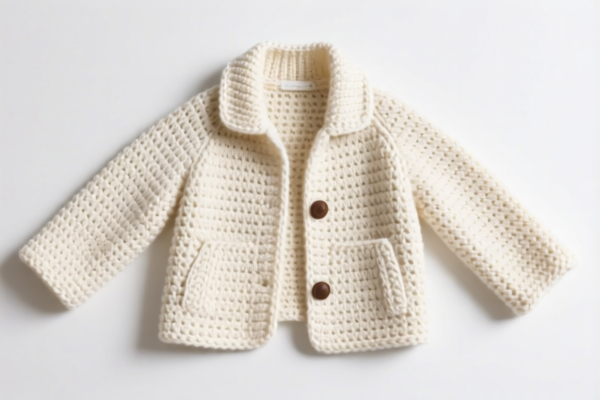
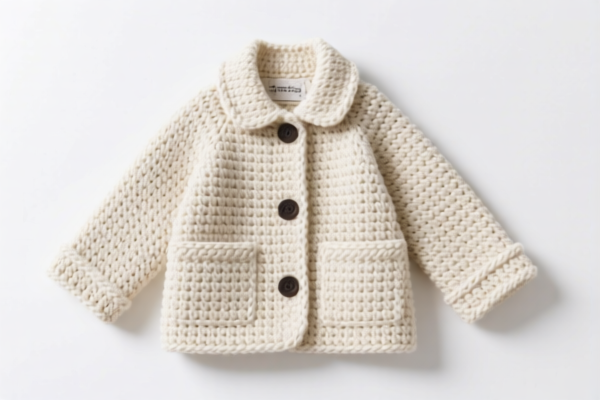
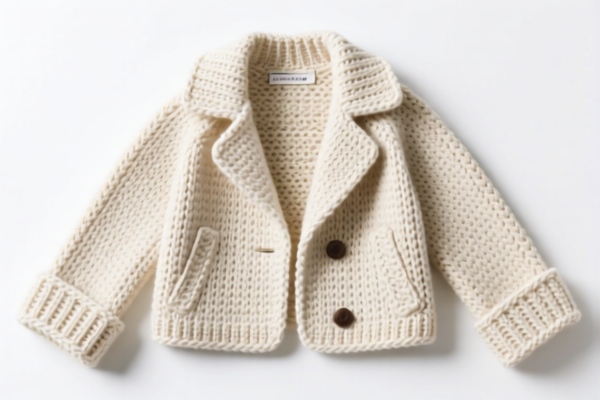
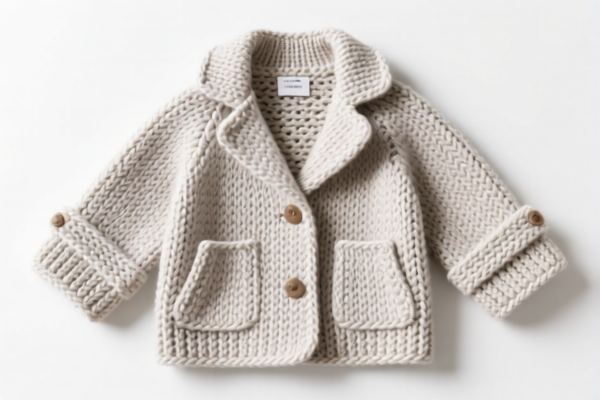
AI Analysis
🧶 Crochet Jackets & Coats (Knitted/Crocheted Outerwear)
🌐 HS Code Reference & Customs Clearance Guide | 2026 Latest Tariff Analysis | Professional Clearance Strategy
📌 I. Product Definition & Classification: Do You Really Know "Crochet Jackets"?
Crochet Jackets and Coats are woven fabric garments (specifically knitted or crocheted) characterized by an open, lace-like structure or solid textured patterns, created using a hook tool. In international trade, they are classified primarily under Chapter 61 (Articles of Apparel and Clothing Accessories, Knitted or Crocheted).
The classification hinges on two main factors: 1. Manufacturing Method: Knitted or Crocheted (Ch 61) vs. Woven (Ch 62). Note: The prompt specifies "Crochet," which falls under Ch 61. 2. Specific Form & Material: Is it a "Coat," "Jacket," "Accessory," or "Vest"? Is it Cotton, Synthetic, or Other?
⚠️ Key Distinction Points:
- Outerwear (Jackets/Coats): Designed to be worn over other garments, typically covering the torso. Must be classified under 6102 (Women’s/Men’s Outerwear) or 6114 (Other knitted/crocheted garments).
- Accessories: Items like loose collars, cuffs, or non-structural decorative pieces. Classified under 6117.
- Material Ambiguity: If the material is unknown, customs may default to "Other Textile Materials," often resulting in higher duty rates or stricter scrutiny.
📦 II. HS Code Classification Details (2026 Latest Tariff Authority)
Based on the provided data, here are the specific HS Codes relevant to Crochet Jackets, Coats, and related accessories.
| HS Code | Product Description | Application Scenario | Tax Rate (Total) |
|---|---|---|---|
6102.30.20.10 |
Crocheted Outerwear/Jacket Accessories: Matches crochet and jacket form; no material conflict. | Structured crochet jackets for outerwear use. | 45.7% |
6117.80.95.70 |
Knitted/Crocheted Clothing Accessories: For clothing accessories; material unspecified. | General accessories where material is not clearly defined as the primary component. | 32.1% |
6117.90.90.55 |
Crocheted Clothing Accessories: Specifically for coat/jacket accessories; fully consistent with code requirements. | Decorative or functional parts specifically designed for coats/jackets. | 32.1% |
6114.90.90.70 |
Crochet Windbreaker: Matches crochet/knitted form and jacket usage; inferred textile material. | Lighter weight crochet items classified as general "other knitted garments." | 15.6% |
6102.20.00.10 |
Crochet Windbreaker: Matches crochet/knitted form and jacket usage; inferred Cotton or cotton-blend. | Crochet jackets made of or containing cotton. | 25.9% |
🔍 Critical Note:
- 6102 codes generally carry higher duties (45.7% / 25.9%) due to "Section 301" and "Section 122" tariffs on specific outerwear categories from China.
- 6114 code offers a lower duty (15.6%) but requires strict proof that the item is not a "jacket" in the formal sense, or that it falls under "Other." Misclassification here is high-risk.
- 6117 codes (32.1%) apply to accessories, not full jackets. If you ship a full jacket under 6117, customs will reclassify and penalize.
💰 III. 2026 Latest Tariff Rate Details (Including Surcharges & Policy Add-ons)
✅ Applicable Country: United States (US)
✅ Origin: China (CN)
✅ Effective Time: 2025/2026 (Current enforcement period)
🎯 1. 6102.30.20.10 —— Crocheted Outerwear/Jacket (High Duty)
| Item | Content |
|---|---|
| Base Tariff | 28.2% (Ad Valorem) |
| Section 301 Surcharge | +7.5% (Targeting specific apparel categories) |
| Section 122 Surcharge | +10% (Emergency safeguard duties on certain textile/apparel imports) |
| Total Tariff | 45.7% |
| Calculation | CIF Value × 45.7% |
| De Minimis Exemption | ❌ No (Denied) |
| Legal Basis Path | HTSUS:6102.30.20.10 → USITC:Section301 → Customs Directive:122 |
📌 Explanation:
- This code represents a direct outerwear item.
- The 10% Section 122 tariff is a critical additional cost often overlooked, applicable to specific textile/apparel goods to protect domestic manufacturing.
- Total burden: 45.7% significantly impacts profit margins.
🎯 2. 6114.90.90.70 —— Crochet Windbreaker (Lower Duty Option)
| Item | Content |
|---|---|
| Base Tariff | 5.6% (Ad Valorem) |
| Section 301 Surcharge | 0.0% (Not applicable to this specific subheading) |
| Section 122 Surcharge | +10% |
| Total Tariff | 15.6% |
| Calculation | CIF Value × 15.6% |
| De Minimis Exemption | ❌ No |
| Legal Basis Path | HTSUS:6114.90.90.70 → Customs Directive:122 |
📌 Strategy:
- This code is significantly cheaper (15.6% vs 45.7%).
- Risk: Customs may reclassify this as a "Jacket" (6102) if the item is substantial. You must ensure the product is documented as a "Windbreaker" or "Light Outerwear" rather than a heavy "Coat/Jacket."
🎯 3. 6117.90.90.55 & 6117.80.95.70 —— Clothing Accessories
| Item | Content |
|---|---|
| Base Tariff | 14.6% |
| Section 301 Surcharge | +7.5% |
| Section 122 Surcharge | +10% |
| Total Tariff | 32.1% |
| Calculation | CIF Value × 32.1% |
| De Minimis Exemption | ❌ No |
| Legal Basis Path | HTSUS:6117.xxxx → USITC:Section301 → Customs Directive:122 |
📌 Strategy:
- Only use these codes for non-garment items (e.g., crochet collars, cuffs, trim).
- Do not misdeclare full jackets as "accessories" to save tax; this is a major compliance violation leading to seizures.
🛠️ IV. Customs Clearance Practical Advice (Combat Pitfall Guide)
✅ 1. Documentation Checklist (Non-negotiable)
| Document | Required? | Description |
|---|---|---|
| ✅ Product Spec Sheet | ✔️ | Detail construction: "100% Cotton Crochet," "Open Weave," "Windbreaker Style." |
| ✅ Technical Photos | ✔️ | Front, back, inside label, and close-up of the crochet stitch. Show it's a full garment. |
| ✅ Material Composition | ✔️ | Critical. If unknown, customs assumes worst-case scenario. Specify % of Cotton/Synthetic. |
| ✅ Commercial Invoice | ✔️ | Accurate description: "Women’s Crochet Windbreaker, Model XYZ." Avoid vague terms like "Clothing." |
| ✅ Labeling | ✔️ | Fiber content, country of origin, and care instructions must be permanently attached. |
✅ 2. Declaration Strategy (Key Mantra)
🔥 "Material Clear, Form Precise, Avoid 'Jacket' Trap, Choose 'Windbreaker' Wisely!"
| Scenario | Correct Declaration | Wrong Approach |
|---|---|---|
| Heavy Crochet Coat/Jacket | 6102.30.20.10 (45.7%) |
Declaring as "Accessory" → 6117 (32.1%) → Reclassified + Penalty |
| Light Crochet Windbreaker | 6114.90.90.70 (15.6%) |
Declaring as "Jacket" (6102) → 45.7% → Overpaying |
| Cotton Crochet Jacket | 6102.20.00.10 (25.9%) |
Generic "Knitted Garment" → Higher duty |
| Crochet Collar/Trim | 6117.90.90.55 (32.1%) |
Declaring as "Jacket" → 45.7% → Overpaying |
✅ 3. Special Handling for "Unspecified Material"
- If the material is not specified, customs may assign
6117.80.95.70(32.1%) or higher because they cannot verify if it qualifies for lower cotton/synthetic rates. - Action: Always declare the exact fiber composition (e.g., "100% Cotton" or "80% Polyester/20% Cotton").
🌍 V. Global Market Clearance Comparison (2026 Latest)
| Country/Region | Recommended HS Code | Tariff (China Origin) | Certification | Notes |
|---|---|---|---|---|
| 🇺🇸 USA | 6114.90.90.70 |
15.6% (or 45.7% for Jackets) | None specific | High scrutiny on Section 122 & 301 duties. |
| 🇪🇺 EU | 6114.90.xx | 12% (Standard) | None | Lower base duty, but VAT applies. |
| 🇨🇳 China | 6114.90.xx | 5-9% | None | Lower import duty for re-export hubs. |
| 🇨🇦 Canada | 6114.90.xx | 17.5% | None | CUSMA benefits may apply if manufactured in Canada/US. |
📌 Conclusion:
- The USA is the most expensive market for crochet outerwear due to the 10% Section 122 and 7.5% Section 301 surcharges.
- Strategy: If possible, structure the product as a "Light Windbreaker" (6114) rather than a "Jacket" (6102) to save 30%+ in duties, provided the item is structurally appropriate.
📌 VI. Common Mistakes & Pitfall Guide (Lessons Learned)
❌ Mistake 1: Declaring a full Jacket as an "Accessory" (6117)
👉 Consequence: Customs reclassifies to 6102, charges 45.7%, and issues a penalty.
❌ Mistake 2: Failing to specify Material Composition
👉 Consequence: Customs defaults to highest duty bracket or "Other," leading to 32.1% or higher unnecessarily.
❌ Mistake 3: Using "Knitted" and "Crocheted" interchangeably in description
👉 Consequence: While both are Ch 61, specific subheadings may differ. "Crochet" often requires specific proof of construction.
✅ Correct Approach:
"Women’s Crochet Windbreaker, 100% Cotton, Open Weave, Lightweight, Model ABC, No Hood"
Use6114.90.90.70for best rate if structurally justified.
🎯 VII. Conclusion: Professional Declaration, Cost Control!
🎯 Remember the Mantra:
🔹 "Jackets are 45%, Windbreakers 15% — Know the Difference!"
🔹 "Material is King — Declare it Clearly!"
🔹 "Accessories are 32% — Don't Hide Jackets as Accessories!"
📌 Pro Tip:
If your crochet jackets are originating from Vietnam, Mexico, or Turkey, you may qualify for IEEPA exemptions or FTAs (Free Trade Agreements), reducing the total tax to 0%~5%.
Recommend Applying for Advance Rulings (CBP Ruling) before shipping large volumes to the US.
📣 Immediate Action:
📞 Consult a licensed customs broker + Provide high-res product images + Apply for HS Code Pre-classification.
🚀 Let your Crochet Jackets clear customs smoothly, maximize profit, and expand globally!
✨ Professional Clearance Starts with Accurate Classification!
💼 Every Cent of Tax Saved is Pure Profit!
Customer Reviews
About HS Code Classification
The Harmonized System (HS) is an internationally standardized nomenclature developed by the World Customs Organization (WCO) to classify traded products. Over 200 countries use the HS system as the basis for customs tariffs, trade statistics, and import/export regulations.
Each HS code follows a hierarchical structure:
- Chapter (2 digits) — Broad category of goods (e.g., Chapter 84: Machinery and Mechanical Appliances)
- Heading (4 digits) — More specific grouping within the chapter
- Subheading (6 digits) — Internationally standardized breakdown, used by all WCO member countries
- National subdivisions (8-10 digits) — Country-specific extensions for further classification, such as US HTSUS 10-digit codes
Correct HS code classification is essential for smooth customs clearance, accurate duty payment, and compliance with trade regulations. Misclassification can lead to customs delays, overpayment of duties, or penalties.
When importing from CN to US, the applicable tariff rates may include:
- Most-Favored-Nation (MFN) rate — The standard duty rate applied to WTO members
- General rate — Applied to countries without trade agreements
- Trade remedy duties — Additional tariffs such as Section 301 (anti-dumping), Section 232 (national security), or countervailing duties
The information provided on this page is for reference purposes only. For official classification, please consult with your local customs authority or a licensed customs broker.