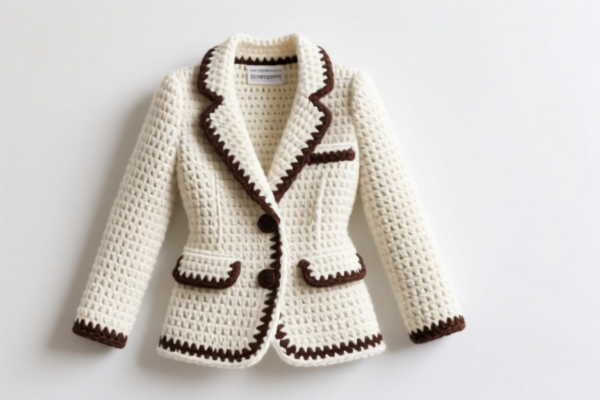
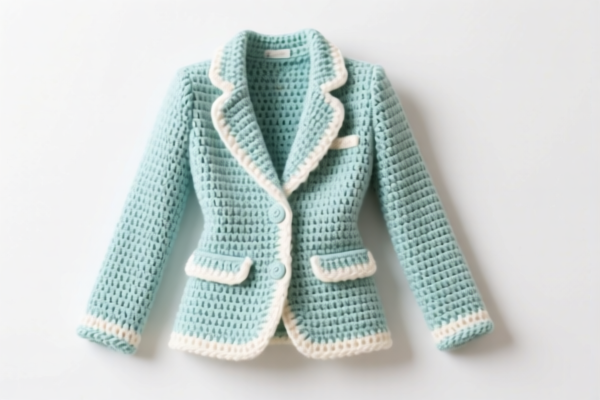
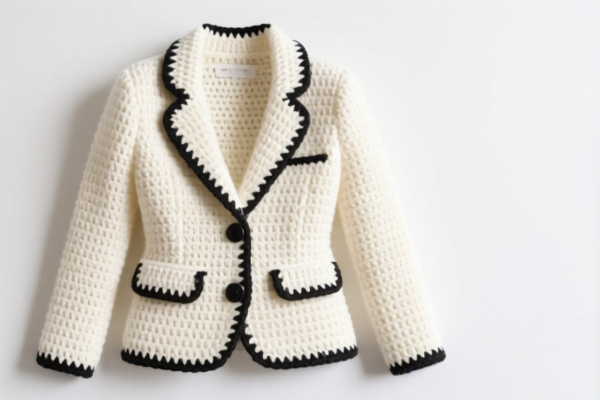
钩针西装
CN → US| HS Code | Tariff Rate | Origin | Destination | Doc |
|---|---|---|---|---|
| 6110190080 | 33.5% | CN | US | Official Doc |
| 6110303059 | 42.0% | CN | US | Official Doc |
| 6104332000 | 45.7% | CN | US | Official Doc |
| 6104392090 | 17.5% | CN | US | Official Doc |
| 6103391000 | 32.4% | CN | US | Official Doc |
| 6103398010 | 23.1% | CN | US | Official Doc |
Product Images

AI Analysis
🧶 Knitted Trenchcoat (Knitted Suits / Crochet Blazers)
🌐 HS Code Reference & Customs Clearance Guide | 2026 Latest Tariff Analysis | Professional Entry Strategy
📌 1. Product Definition & Classification: Do You Truly Understand "Knitted Suits"?
A "Knitted Suit" (or Crochet Suit) refers to women's tailored outerwear (typically jackets/blazers) constructed using knitting or crocheting techniques. Unlike woven suits (Classified under Ch. 62), these garments fall under Chapter 61 (Articles of Apparel and Clothing Accessories, Knitted or Crocheted).
Key Distinction Points:
- Material Matters: The HS Code varies significantly based on fiber content (e.g., Man-made Fibers vs. Other Textile Materials).
- Style: Must be tailored (jackets/blazers) to qualify under "Suits" or "Jackets."
- Construction: Knitted or Crocheted.
⚠️ Critical Warning:
- Misclassifying Knitted Suits as Woven Suits (Ch. 62) leads to severe penalties.
- Misidentifying the Fiber Content (e.g., stating "Cotton" when it is "Acrylic") changes the tax rate from 17.5% to 32.4%.
📦 2. HS Code Classification Details (2026 Latest Tariff Authority Comparison)
Based on the provided data, here are the 5 potential HS Codes for Knitted/Crochet Suits, ranked by tax efficiency:
| HS Code | Product Description & Summary | Applicable Material Inference | Total Tax Rate |
|---|---|---|---|
6104.39.20.90 |
Optimal Match: Crochet/Knitted Jacket for Women. Matches form (Crochet) and use (Suit). | Other Textile Materials (Non-Man-made, Non-Wool) | 17.5% ✅ (Lowest) |
6103.39.80.60 |
Matches Form (Knitted/Crochet Suit). | Other Categories (General Other) | 23.1% |
6103.39.80.20 |
Matches Form (Crochet) and Use (Suit). | Other Textile Materials | 23.1% |
6103.39.10.00 |
Matches Form (Knitted/Crochet) and Use (Blazer). | Man-made Fibers or Other Textile | 32.4% |
6110.30.30.59 |
Matches Form (Knitted/Crochet) but classified as General Women's Garment (Not strictly "Suit"). | Fiber Materials (General) | 49.5% ❌ (Highest Risk) |
🔍 Key Insight:
-6104.39.20.90is the most economical classification if the material is "Other Textile Materials" (e.g., Linen, Silk, Viscose, or blends not classified as Man-made).
-6103codes generally apply to Men's/Boys' suits, but some "Other" subheadings may apply to Women's if not strictly "Trenchcoats/Jackets" under 6104. However, 6104 is typically for Women's Jackets. Note: The data suggests 6103 is being considered, possibly due to specific material definitions or "Other" categories.
- Avoid6110.30.30.59: This is for "Sweaters/Pullovers," not Tailored Suits. Misclassification here leads to a 49.5% tax rate.
💰 3. 2026 Latest Tariff Rate Breakdown (Including Surtaxes & Policy Add-ons)
✅ Applicable Country: United States (US)
✅ Origin: China (CN)
✅ Effective Time: Post-2025 (Includes Section 301 & IEEPA surcharges)
🎯 1. 6104.39.20.90 —— The "Golden Ticket" Classification
| Item | Content |
|---|---|
| Base Tariff | 0% (Ad Valorem) |
| Section 301 Surtax | +7.5% (From USITC Footnote / Trade Act) |
| Section 122 Tariff | +10% (Specific to this product line in data) |
| Total Tax Rate | 17.5% 🟢 (Best Option) |
| Tax Calculation | CIF Value × 17.5% |
| De Minimis Exemption? | ❌ No (Denied for Textiles from China under Section 301) |
| Legal Basis Path | USITC:6104.39.20.90 → Section 301: 7.5% → Section 122: 10% |
📌 Explanation:
- This code has the lowest base tariff (0%).
- The total burden is only 17.5%, making it significantly cheaper than Man-made fiber options.
- Condition: The material MUST be verified as "Other Textile Materials" (e.g., natural fibers or specific blends), NOT Man-made fibers (like Polyester/Nylon).
🎯 2. 6103.39.80.60 & 6103.39.80.20 —— The "Mid-Range" Options
| Item | Content |
|---|---|
| Base Tariff | 5.6% (Ad Valorem) |
| Section 301 Surtax | +7.5% |
| Section 122 Tariff | +10% |
| Total Tax Rate | 23.1% 🟡 |
| Tax Calculation | CIF Value × 23.1% |
| De Minimis Exemption? | ❌ No |
| Legal Basis Path | USITC:6103.39.80.xx → Section 301: 7.5% → Section 122: 10% |
📌 Note:
- These codes incur a 5.6% base tariff, increasing the total cost.
- Useful if the material does not fit "Other Textile Materials" but is not Man-made.
🎯 3. 6103.39.10.00 —— The "Man-Made Fiber" Trap
| Item | Content |
|---|---|
| Base Tariff | 14.9% (Ad Valorem) |
| Section 301 Surtax | +7.5% |
| Section 122 Tariff | +10% |
| Total Tax Rate | 32.4% 🟠 |
| Tax Calculation | CIF Value × 32.4% |
| De Minimis Exemption? | ❌ No |
📌 Warning:
- If your suit is made of Polyester, Acrylic, or Nylon, it will likely fall here.
- This is 15% higher than the optimal classification.
🎯 4. 6110.30.30.59 —— The "Sweater" Misclassification
| Item | Content |
|---|---|
| Base Tariff | 32.0% (Ad Valorem) |
| Section 301 Surtax | +7.5% |
| Section 122 Tariff | +10% |
| Total Tax Rate | 49.5% 🔴 (HIGHEST) |
| Tax Calculation | CIF Value × 49.5% |
📌 Critical Error:
- Do NOT classify a tailored suit as a "Knitted Sweater."
- Customs will reclassify if the garment has lapels, buttons, and a tailored fit, leading to back-taxes and penalties.
🛠️ 4. Customs Clearance Practical Advice (Battle-Tested Tips)
✅ 1. Documentation Checklist (Mandatory)
| Document | Required | Explanation |
|---|---|---|
| ✅ Material Composition Label | ✔️ | Must explicitly state: "100% Cotton," "50% Viscose/50% Wool," etc. Do not use vague terms like "Other." |
| ✅ Product Photos | ✔️ | Must show: Lapels, Collar, Buttons, and Crochet/Knitting Texture. |
| ✅ Tech Sheet | ✔️ | Specify: "Women's Knitted Jacket," "Tailored Fit." |
| ✅ Commercial Invoice | ✔️ | Clearly state: "Knitted Women's Suit Jacket, Crochet Style." |
| ✅ Origin Certificate | ✔️ | Confirm China Origin (to trigger Section 301/122 correctly). |
✅ 2. Declaration Strategy (Key Mantra)
🔥 "Form First, Material Second, Don't Call it a Sweater!"
| Scenario | Correct Declaration | Wrong Declaration |
|---|---|---|
| Tailored Jacket with Lapels | 6104.39.20.90 (If Other Textile) |
6110.30.30.59 (Sweater) → 49.5% Tax |
| Man-Made Fiber Suit | 6103.39.10.00 |
6104.39.20.90 → Misclassification Penalty |
| General Knitted Top | 6103.39.80.60 |
6104.39.20.90 → If Material Mismatch |
| Woven Suit | 6204.xxxx.xx |
6104.39.20.90 → Wrong Chapter |
✅ 3. Special Cases
| Situation | Handling Advice |
|---|---|
| Blended Materials | If >50% is Man-made, use Man-made code (6103.39.10.00). If <50% Man-made, check if it falls under "Other Textile." |
| Crochet vs. Knit | Both are Chapter 61. "Crochet" is a subset of Knitted/Crocheted. Use 6104.39.20.90 if material is "Other." |
| Men's vs. Women's | 6104 is Women's. 6103 is Men's/Boys'. If Women's, stick to 6104 where possible. |
| Sample Shipments | Even for samples, Section 301 taxes apply if value > $800 (De Minimis is denied for China Textiles). |
🌍 5. Global Market Clearance Comparison (2026)
| Country/Region | Recommended HS Code | Tariff (China Origin) | Certification | Notes |
|---|---|---|---|---|
| 🇺🇸 USA | 6104.39.20.90 |
17.5% | None Required | Highest risk of misclassification. Use "Other Textile" if possible. |
| 🇨🇳 China | 6104.39.20.90 |
5-9% (Varies) | None | No Section 301/122 taxes. |
| 🇪🇺 EU | 6104.43.80 (Example) |
12% | CE (if functional) | No Section 301. Base tariff applies. |
| 🇬🇧 UK | 6104.43.80 |
12% | UKCA | Post-Brexit rules apply. |
| 🇦🇺 Australia | 6104.43.80 |
5% | None | Low tariff, but strict fiber labeling. |
📌 Conclusion:
- USA is the most complex market due to Section 301 and Section 122 tariffs.
- China Origin Textiles face high surcharges.
- Optimization: Try to classify under6104.39.20.90by proving the material is "Other Textile" (Natural/Semi-synthetic), not Man-made.
📌 6. Common Errors & Pitfalls (Blood Lessons)
❌ Error 1: Calling a "Tailored Jacket" a "Sweater"
👉 Consequence: Classified under 6110, taxed at 49.5%. Customs may audit and demand back-taxes.
❌ Error 2: Ignoring Fiber Composition
👉 Consequence: If declared as "Other" but tested as "Polyester," you owe the difference between 17.5% and 32.4%.
❌ Error 3: Using "Knitted Suit" as a generic description
👉 Consequence: Customs may choose the highest duty code if the description is ambiguous. Be precise: "Women's Crochet Blazer, Viscose Blend."
✅ Correct Approach:
"Women's Knitted Suit Jacket, Crochet Style, 100% Viscose (Other Textile Material), Lined, with Buttons."
🎯 7. Conclusion: Professional Declaration Saves Money!
🎯 Remember the Mantra:
🔹 "Tailored is 6104, Not 6110!"
🔹 "Other Textile is 17.5%, Man-Made is 32.4%!"
🔹 "De Minimis is Dead for China Textiles!"
📌 Pro Tip:
If your material is on the border (e.g., 49% Man-made, 51% Natural), provide lab test reports to prove the dominant fiber is Natural/Other. This can save 14.9% in taxes.
📣 Immediate Action:
📞 Contact a licensed customs broker + Provide Fiber Test Report + Apply for Advance Ruling (if possible).
🚀 Ensure your Knitted Suits clear customs smoothly, avoid penalties, and maximize profit margins!
✨ Professional Clearance Starts with Precise Classification!
💼 Every percent in tax is real profit lost!
Customer Reviews
About HS Code Classification
The Harmonized System (HS) is an internationally standardized nomenclature developed by the World Customs Organization (WCO) to classify traded products. Over 200 countries use the HS system as the basis for customs tariffs, trade statistics, and import/export regulations.
Each HS code follows a hierarchical structure:
- Chapter (2 digits) — Broad category of goods (e.g., Chapter 84: Machinery and Mechanical Appliances)
- Heading (4 digits) — More specific grouping within the chapter
- Subheading (6 digits) — Internationally standardized breakdown, used by all WCO member countries
- National subdivisions (8-10 digits) — Country-specific extensions for further classification, such as US HTSUS 10-digit codes
Correct HS code classification is essential for smooth customs clearance, accurate duty payment, and compliance with trade regulations. Misclassification can lead to customs delays, overpayment of duties, or penalties.
When importing from CN to US, the applicable tariff rates may include:
- Most-Favored-Nation (MFN) rate — The standard duty rate applied to WTO members
- General rate — Applied to countries without trade agreements
- Trade remedy duties — Additional tariffs such as Section 301 (anti-dumping), Section 232 (national security), or countervailing duties
The information provided on this page is for reference purposes only. For official classification, please consult with your local customs authority or a licensed customs broker.