钩针西装外套
CN → US| HS Code | Tariff Rate | Origin | Destination | Doc |
|---|---|---|---|---|
| 6103398010 | 23.1% | CN | US | Official Doc |
| 6103398030 | 23.1% | CN | US | Official Doc |
| 6104332000 | 45.7% | CN | US | Official Doc |
| 6103391000 | 32.4% | CN | US | Official Doc |
| 6110303059 | 42.0% | CN | US | Official Doc |
Product Images
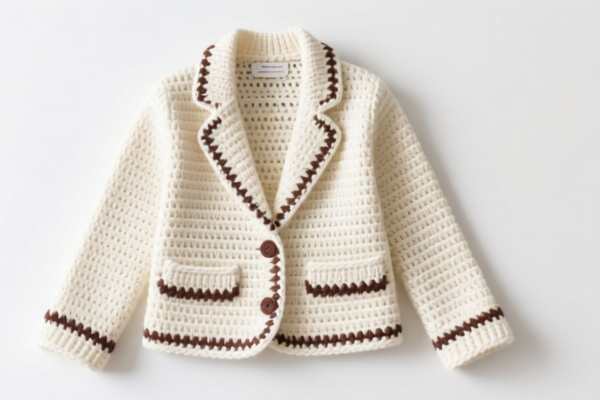
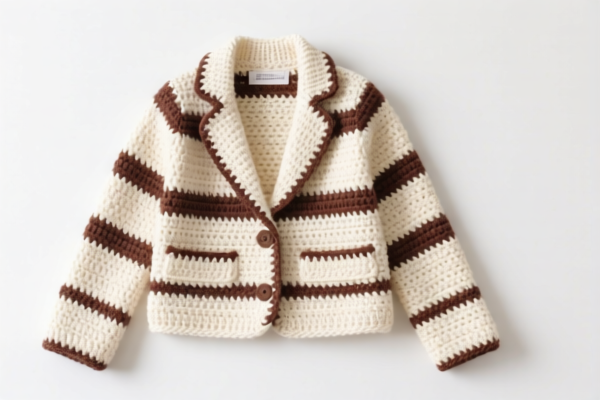
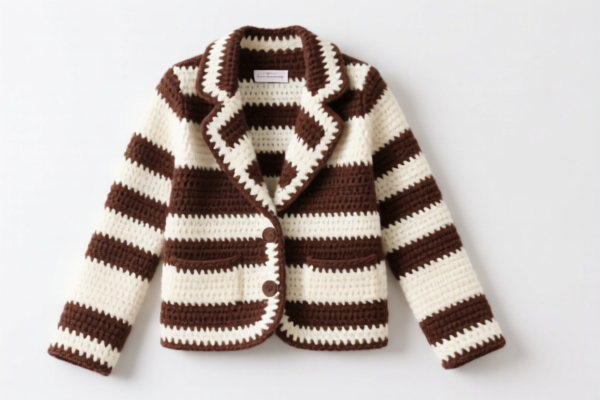

AI Analysis
🧶 Crochet Blazer (Knitted Suits & Jackets)
🌐 HS Code Reference & Customs Clearance Guide | 2024 Latest Tariff Analysis | Professional Entry Strategy
📌 1. Product Definition & Classification: What Exactly Is a "Crochet Blazer"?
In international trade, a "Crochet Blazer" (or Knitted Suit/Jacket) is defined by its manufacturing process and structural integrity. Unlike woven suits (Chapter 62), these are formed by looping yarns. The classification hinges on three critical factors: 1. Form: Knitted or Crocheted (Harumono/Knitting). 2. Usage: Specifically for Suits, Blazers, or Tuxedos. 3. Material Composition: Whether it is Artificial, Synthetic, or Other Textile Materials.
⚠️ Key Distinction Point:
- Knitted/Crocheted Structure: Must be confirmed as knitted (Chapter 61). If woven, it falls under Chapter 62 (e.g., 6203.33).
- Gender Specifics:
- Men’s/Boys’ Suits: Usually fall under 6103.
- Women’s/Girls’ Suits: Usually fall under 6104 or 6110 (if sweater-like).
- Material Ambiguity: The term "Other Textile Materials" (for 6103.39.80) often triggers different base duties compared to "Artificial Fibers" or "Synthetic Fibers."
📦 2. HS Code Classification Details (2024/2025 Tariff Schedule)
Based on the provided data, here are the four distinct classifications for "Crochet/Knitted Blazers/Suits" and their tax implications.
| HS Code | Product Description | Gender/Type | Material Inference | Total Tax Rate |
|---|---|---|---|---|
6103.39.80.10 |
Knitted/Crocheted Suits, Other Textile Materials | Men’s/Boys’ Suit | Other Textile Materials (Non-Standard) | 23.1% |
6103.39.80.30 |
Knitted/Crocheted Suits, Artificial Fibers | Men’s/Boys’ Suit | Artificial Fibers (e.g., Rayon, Viscose) | 23.1% |
6104.33.20.00 |
Knitted/Crocheted Women’s Suits, Synthetic/Mixed | Women’s Suit | Synthetic or Mixed Fibers (e.g., Polyester blend) | 45.7% |
6103.39.10.00 |
Knitted/Crocheted Suit Jackets, Artificial/Other | Men’s/Boys’ Jacket | Artificial or Other Materials | 32.4% |
6110.30.30.59 |
Knitted/Crocheted Women’s Garments, Fiber Class | Women’s Top/Blazer | Fiber Class (General Knitwear) | 49.5% |
🔍 Critical Observation:
- Men’s Suits (6103) generally attract lower base duties (5.6% - 14.9%) but still face significant Section 301/IEEPA surcharges.
- Women’s Suits (6104) and General Knitwear (6110) face much higher base duties (28.2% - 32.0%), leading to total tariffs exceeding 45%.
- Misclassification Risk: Classifying a women’s synthetic crochet blazer as6103(Men’s) to save tax is illegal and high-risk. Must match gender and specific suit construction.
💰 3. Detailed Tariff Breakdown (US Market - China Origin)
✅ Applicable Country: United States (US)
✅ Origin: China (CN)
✅ Policy Context: Includes Base Duty + Section 301 (7.5%) + Section 122 (10%) = Total Surcharge ~17.5% - 20.5% + Base Duty.
🎯 1. 6103.39.80.10 & 6103.39.80.30 — Men’s Knitted Suits (Other/Artificial)
| Item | Detail |
|---|---|
| Base Duty | 5.6% (Ad Valorem) |
| Section 301 Surcharge | +7.5% (List 3/4 Items) |
| Section 122 Surcharge | +10% (Specific Provision) |
| Total Tax Rate | 23.1% |
| Calculation | CIF Value × 23.1% |
| De Minimis Exemption | ❌ NOT APPLICABLE (deny_de_minimis). Section 301/122 taxes apply even to small parcels. |
| Legal Path | HTSUS:6103.39.80 → Section 301: 7.5% → Sec 122: 10% |
📌 Explanation:
- Even though the base duty is low (5.6%), the 23.1% total is significant for high-value suits.
- "Other Textile Materials" (10) and "Artificial Fibers" (30) are treated similarly in this specific tariff line regarding surcharges.
🎯 2. 6103.39.10.00 — Men’s Knitted Suit Jackets
| Item | Detail |
|---|---|
| Base Duty | 14.9% (Ad Valorem) |
| Section 301 Surcharge | +7.5% |
| Section 122 Surcharge | +10% |
| Total Tax Rate | 32.4% |
| Calculation | CIF Value × 32.4% |
| De Minimis Exemption | ❌ NOT APPLICABLE |
| Legal Path | HTSUS:6103.39.10 → Section 301: 7.5% → Sec 122: 10% |
📌 Explanation:
- This code often applies to "Jackets" that may not be full suits or have different construction details.
- The higher base duty (14.9%) makes this code more expensive than the general "Suit" codes above, resulting in a 32.4% total.
🎯 3. 6104.33.20.00 — Women’s Synthetic/Mixed Knitted Suits
| Item | Detail |
|---|---|
| Base Duty | 28.2% (Ad Valorem) |
| Section 301 Surcharge | +7.5% |
| Section 122 Surcharge | +10% |
| Total Tax Rate | 45.7% |
| Calculation | CIF Value × 45.7% |
| De Minimis Exemption | ❌ NOT APPLICABLE |
| Legal Path | HTSUS:6104.33.20 → Section 301: 7.5% → Sec 122: 10% |
📌 Explanation:
- High Base Duty: Women’s suits made of Synthetic fibers face a high base duty (28.2%).
- Total Cost: The 45.7% rate is nearly half the value of the goods. This is a major cost driver for women’s fashion imports from China.
🎯 4. 6110.30.30.59 — Women’s Knitted Garments (General Fiber)
| Item | Detail |
|---|---|
| Base Duty | 32.0% (Ad Valorem) |
| Section 301 Surcharge | +7.5% |
| Section 122 Surcharge | +10% |
| Total Tax Rate | 49.5% |
| Calculation | CIF Value × 49.5% |
| De Minimis Exemption | ❌ NOT APPLICABLE |
| Legal Path | HTSUS:6110.30.30 → Section 301: 7.5% → Sec 122: 10% |
📌 Explanation:
- Highest Tax Bracket: If the item is classified as a general "Knitted Garment" (Sweater-style) rather than a structured "Suit," it falls under 6110.
- Risk: Many "blazer-style" crochet tops may be misclassified here. If it has lapels, buttons, and structure, it should arguably be a Suit (6104). However, if the customs broker classifies it as a "Sweater," the tax is 49.5%.
- Note: While 49.5% is the highest listed tax, the base duty is 32%. This category is for Fiber Class general wear.
🛠️ 4. Customs Clearance Practical Advice (Avoiding Pitfalls)
✅ 1. Essential Documentation Checklist
| Document | Required? | Why It Matters |
|---|---|---|
| ✅ Product Photos | ✔️ | Must clearly show knitted/crochet texture (vs. woven). Must show lapels/structure (for Suit classification) vs. simple neckline (for Sweater classification). |
| ✅ Composition Statement | ✔️ | Exact % of Artificial (Rayon/Nylon) vs. Synthetic (Polyester) vs. Other. Critical for distinguishing 6103.39.80.30 vs 6103.39.80.10. |
| ✅ Construction Diagram | ✔️ | Proves it is Knitted/Crocheted (Chapter 61). If woven, it must be re-classified to Chapter 62 (different taxes). |
| ✅ Commercial Invoice | ✔️ | Must specify "Knitted Suit" or "Crochet Blazer". Vague terms like "Clothing" lead to audits. |
| ✅ Origin Certificate | ✔️ | Confirm China Origin. If made in Vietnam/Mexico, Section 301/122 surcharges may be waived, reducing total tax to Base Duty Only. |
✅ 2. Classification Strategy & Tips
🔥 "Structure Defines Suit, Material Defines Rate, Origin Saves Cost!"
| Scenario | Recommended HS Code | Tax Rate | Strategy |
|---|---|---|---|
| Men’s Crochet Blazer (Artificial) | 6103.39.80.30 |
23.1% | Best for Men’s suits. Low base duty. |
| Men’s Crochet Blazer (Other Material) | 6103.39.80.10 |
23.1% | If material is non-standard (e.g., wool blend not specified as artificial/synthetic). |
| Men’s Crochet Jacket (Not Full Suit) | 6103.39.10.00 |
32.4% | Higher tax. Avoid if possible; ensure it qualifies as a "Suit" component. |
| Women’s Synthetic Crochet Blazer | 6104.33.20.00 |
45.7% | High tax. Ensure material is correctly identified as Synthetic. |
| Women’s Knitted Top (Sweater Style) | 6110.30.30.59 |
49.5% | Avoid if it has suit structure. If it’s just a knit top, this is correct but expensive. |
✅ 3. Special Handling for "Crochet" Items
| Issue | Advice |
|---|---|
| Texture Verification | Customs officers may confuse Crochet with Woven. Provide close-up macro photos of the looped yarn structure. |
| Gender Misclassification | Do not label a Women’s Blazer as Men’s (6103) to get 23.1% tax. Penalties are severe. Use 6104 (45.7%) or 6110 (49.5%) honestly. |
| Material Ambiguity | "Other Textile Materials" (6103.39.80.10) is a catch-all. If the material is Rayon, use 6103.39.80.30 (Artificial). Mislabeling Rayon as "Other" can trigger audits. |
| Origin Diversification | Consider sourcing from Vietnam or Turkey to avoid the 17.5%+ surcharges. Even if base duties are similar, removing Section 301/122 can save 10-15%. |
🌍 5. Global Market Comparison (2024/2025)
| Market | Typical HS Code (Men’s Knit Suit) | Base Duty | China Surcharge | Total Effective Tax |
|---|---|---|---|---|
| 🇺🇸 USA | 6103.39.80.30 |
5.6% | +17.5% (301+122) | 23.1% |
| 🇪🇺 EU | 6103.39.39 |
12% | 0% (No Section 301) | 12% |
| 🇨🇳 China | 6103.39.39 |
9% | 0% | 9% |
| 🇬🇧 UK | 6103.39.39 |
12% | 0% | 12% |
📌 Conclusion:
- USA is the most expensive market for Chinese-made knit suits due to Section 301 and Section 122.
- Women’s Suits are taxed even higher in the US (45.7%-49.5%).
- Recommendation: For US imports, duty drawback programs or free trade agreements (if applicable) are critical. Consider third-party manufacturing in non-China countries to bypass surcharges.
📌 6. Common Errors & Pitfalls (Lessons Learned)
❌ Error 1: Classifying a Woven Blazer as Knitted (6103)
👉 Consequence: Incorrect Chapter. Woven suits go to Chapter 62 (6203). Penalties for wrong classification.
❌ Error 2: Calling a Women’s Suit a "Sweater" (6110) to avoid 6104
👉 Consequence: If it has lapels/structure, it’s a Suit. Misclassification leads to back taxes + interest.
❌ Error 3: Ignoring Section 122
👉 Consequence: Many brokers forget the 10% Section 122 surcharge. Total tax becomes 23.1% not 13.1%. Budget for 23.1%+.
❌ Error 4: Vague Material Description
👉 Consequence: "Other Textile Materials" (6103.39.80.10) is risky. If it’s actually Polyester (Synthetic), it should be 6104.33.20.00 (Women’s) or similar, with higher base duty. Be precise.
✅ Correct Declaration Example:
"Men's Knitted Blazer, Crochet Texture, 100% Artificial Fiber (Rayon), Lined, for Business Use, HS 6103.39.80.30"
🎯 7. Conclusion: Precision in Textile Classification
🎯 Key Takeaways:
🔹 Men’s Knit Suits (
6103): Lower base duty (5.6%), Total Tax 23.1%.
🔹 Women’s Knit Suits (6104): High base duty (28.2%), Total Tax 45.7%.
🔹 General Knitwear (6110): Highest base duty (32.0%), Total Tax 49.5%.
🔹 China Origin: Add 17.5% (7.5% Sec 301 + 10% Sec 122) to ALL rates.
🔹 No De Minimis: Small packages do NOT escape these taxes.
📌 Pro Tip:
If your volume is high, pre-classify with CBP using Binding Rulings. Consider supply chain shifts to avoid the 17.5% surcharge. For women’s crochet blazers, ensure the structure justifies 6104 (Suit) over 6110 (Sweater) to avoid over-taxation, but never under-tax by mislabeling.
📣 Immediate Action:
📞 Consult a Customs Broker to verify the Knitted vs. Woven structure and Material Composition.
🚀 Optimize Supply Chain: If possible, source from non-China origins to save 17.5%.
✨ Professional Clearance, Starting with Accurate HS Codes!
💼 Every Percent Matters in Textile Trade!
Customer Reviews
About HS Code Classification
The Harmonized System (HS) is an internationally standardized nomenclature developed by the World Customs Organization (WCO) to classify traded products. Over 200 countries use the HS system as the basis for customs tariffs, trade statistics, and import/export regulations.
Each HS code follows a hierarchical structure:
- Chapter (2 digits) — Broad category of goods (e.g., Chapter 84: Machinery and Mechanical Appliances)
- Heading (4 digits) — More specific grouping within the chapter
- Subheading (6 digits) — Internationally standardized breakdown, used by all WCO member countries
- National subdivisions (8-10 digits) — Country-specific extensions for further classification, such as US HTSUS 10-digit codes
Correct HS code classification is essential for smooth customs clearance, accurate duty payment, and compliance with trade regulations. Misclassification can lead to customs delays, overpayment of duties, or penalties.
When importing from CN to US, the applicable tariff rates may include:
- Most-Favored-Nation (MFN) rate — The standard duty rate applied to WTO members
- General rate — Applied to countries without trade agreements
- Trade remedy duties — Additional tariffs such as Section 301 (anti-dumping), Section 232 (national security), or countervailing duties
The information provided on this page is for reference purposes only. For official classification, please consult with your local customs authority or a licensed customs broker.