键盘护腕
CN → US| HS Code | Tariff Rate | Origin | Destination | Doc |
|---|---|---|---|---|
| 6217109550 | 32.1% | CN | US | Official Doc |
| 9021908100 | 10.0% | CN | US | Official Doc |
| 6217108500 | 24.6% | CN | US | Official Doc |
Product Images
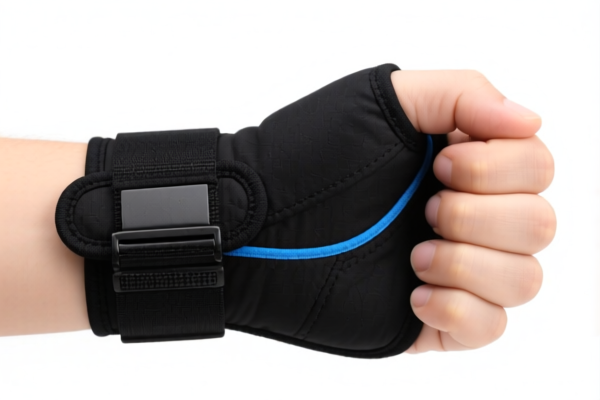
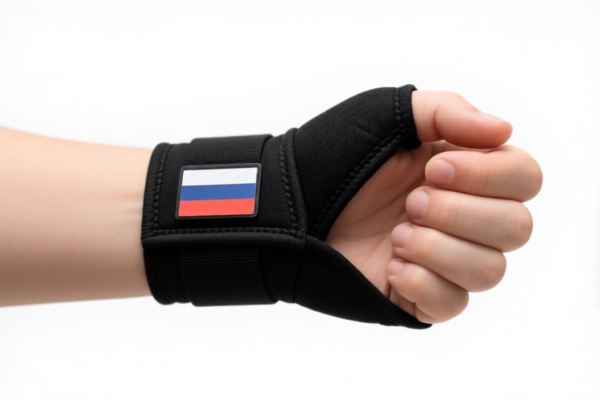
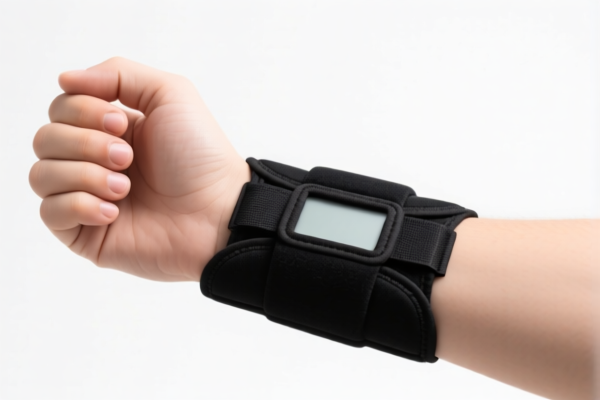
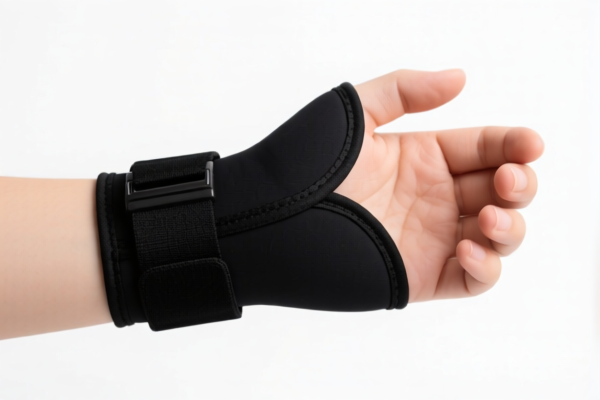
AI Analysis
🖱️ Keyboard Wrist Rests (Mouse & Keyboard Wrist Pads)
🌐 HS Code Reference & Customs Clearance Guide | 2026 Latest Tariff Analysis | Professional Strategy
📌 Part 1: Product Definition & Classification: Do You Really Understand "Wrist Rests"?
A Keyboard Wrist Rest is an ergonomic accessory designed to support the wrists while typing or using a mouse. In international trade, its classification depends heavily on its functional nature and material composition. It generally falls into two conflicting categories:
- Apparel Accessories (Headwear/Wristbands category): If viewed as a textile item for wearing or general support (similar to sweatbands).
- Orthopedic Appliances: If viewed as a medical or auxiliary support device for joint stabilization.
⚠️ Key Distinction Point:
- If it is primarily a textile/elastic fabric pad used for comfort/decoration during computer use → It may be classified under Chapter 62 (Articles of Apparel).
- If it is specifically designed as a medical orthopedic device for joint support → It may be classified under Chapter 90 (Medical/Orthopedic Appliances).
- Note: The specific HS Codes provided in the data suggest three potential classifications based on subtle functional interpretations.
📦 Part 2: HS Code Classification Details (2026 Latest Tariff Authority Comparison)
| HS Code | Product Description | Application Scenario | Functional Interpretation |
|---|---|---|---|
6217.10.95.50 |
Other made-up clothing accessories, not knit or crochet | Wristbands for sports, general fashion, or decorative wrist pads | ✅ Apparel Accessory (Textile/Elastic material, finished product) |
9021.90.81.00 |
Parts and accessories for orthopedic appliances | Medical wrist supports, ergonomic aids for joint stabilization | ✅ Orthopedic Device (Auxiliary support/fixed joint function) |
6217.10.85.00 |
Other made-up clothing accessories (e.g., headbands, hair bands) | Wristbands similar in form to hair bands, decorative or functional fashion items | ✅ Fashion/Functional Accessory (Similar to headbands/hair accessories) |
🔍 Key Reminder:
- If the product is marketed as a "sports wristband" or "fashion accessory" → It likely falls under 6217.10.xxxxxx.
- If the product is marketed as a "medical wrist support" or "ergonomic orthopedic aid" → It likely falls under 9021.90.81.00.
- Critical Note: The classification significantly impacts the total tax rate, ranging from 10.0% to 32.1%.
💰 Part 3: 2026 Latest Tariff Rate Detailed Explanation (Including Surtaxes & Policy Add-ons)
✅ Applicable Country: United States (US)
✅ Origin: China (CN)
✅ Effective Time: From November 10, 2025 onwards (for subsequent imports)
🎯 1. 6217.10.95.50 —— Other Made-up Clothing Accessories (High Tax Bracket)
| Item | Content |
|---|---|
| Product Summary | Wristbands classified as clothing accessories, finished products, mostly textile or elastic materials. |
| Base Tariff | 14.6% |
| Surtax (Section 301) | 7.5% |
| Section 122 Tariff | 10.0% |
| Total Tariff | 32.1% |
| Tax Calculation | CIF Value × 32.1% |
| De Minimis Exemption | ❌ Not Eligible (Deny de minimis) |
| Legal Basis Path | Base: 14.6% → Surtax: 7.5% → 122 Clause: 10% |
📌 Explanation:
- This classification treats the wrist rest as a general textile accessory.
- The 32.1% rate is the highest among the options, making it costly for importers.
- Warning: Misclassifying a medical device as a textile accessory to avoid scrutiny may lead to penalties, but misclassifying a textile item as medical may delay clearance.
🎯 2. 9021.90.81.00 —— Parts and Accessories for Orthopedic Appliances (Lowest Tax Bracket)
| Item | Content |
|---|---|
| Product Summary | Orthopedic appliances for auxiliary support or fixing joints, material mostly textile or elastic. |
| Base Tariff | 0.0% |
| Surtax (Section 301) | 0.0% |
| Section 122 Tariff | 10.0% |
| Total Tariff | 10.0% |
| Tax Calculation | CIF Value × 10.0% |
| De Minimis Exemption | ❌ Not Eligible (Deny de minimis) |
| Legal Basis Path | Base: 0.0% → Surtax: 0.0% → 122 Clause: 10% |
📌 Critical Advantage:
- This is the most tax-efficient classification, with a total rate of only 10.0%.
- Eligibility Criteria: The product must be designed and marketed as an orthopedic appliance or joint support device. It cannot be a simple fashion wristband.
- Documentation: May require medical device registration or ergonomic certification to prove its "orthopedic" nature.
🎯 3. 6217.10.85.00 —— Other Made-up Clothing Accessories (Medium Tax Bracket)
| Item | Content |
|---|---|
| Product Summary | Wristbands as decorative or functional accessories, similar in form to headbands/hair bands, mostly textile or elastic. |
| Base Tariff | 14.6% |
| Surtax (Section 301) | 0.0% |
| Section 122 Tariff | 10.0% |
| Total Tariff | 24.6% |
| Tax Calculation | CIF Value × 24.6% |
| De Minimis Exemption | ❌ Not Eligible (Deny de minimis) |
| Legal Basis Path | Base: 14.6% → Surtax: 0.0% → 122 Clause: 10% |
📌 Explanation:
- This category is for fashion-oriented wristbands that resemble headbands or hair accessories.
- It avoids the 7.5% Section 301 surtax present in6217.10.95.50, resulting in a lower total rate (24.6%) compared to the highest bracket.
- Usage: Suitable for products marketed as decorative or general-purpose accessories rather than strict medical devices.
🛠️ Part 4: Customs Clearance Practical Advice (Real-World Pitfall Avoidance)
✅ 1. Required Documentation Checklist (Non-Negotiable)
| Document | Must Provide | Description |
|---|---|---|
| ✅ Product Spec Sheet | ✔️ | Material composition (e.g., polyester, foam, elastic), dimensions, weight. |
| ✅ Product Photos | ✔️ | Clear images showing usage, packaging, and any medical claims. |
| ✅ Commercial Invoice | ✔️ | Must accurately describe the product name and HS Code. |
| ✅ Origin Certificate | ✔️ | Proof of origin (China). |
| ✅ Packing List | ✔️ | Detailed contents of the shipment. |
| ✅ Orthopedic Certificate (if claiming 9021.90.81.00) | ⚠️ Highly Recommended | Documentation proving the product is designed for joint support/orthopedic use. Without this, customs may reclassify to textile codes. |
| ✅ Ergonomic Certification (Optional) | ⚠️ Recommended | Support for ergonomic claims, helping justify the medical/orthopedic classification. |
✅ 2. Declaration Strategy (Key Mnemonic)
🔥 “Medical Justification, Lower Tax; Textile Description, Higher Cost!”
| Scenario | Correct Declaration Approach | Wrong Approach |
|---|---|---|
| Product is a simple foam pad for typing | 6217.10.85.00 (24.6%) or 6217.10.95.50 (32.1%) |
Misdeclare as medical device → Risk of penalty. |
| Product is a structured brace for wrist stability | 9021.90.81.00 (10.0%) |
Misdeclare as textile → Overpay 20%+ in taxes. |
| Product is a fashion wristband | 6217.10.85.00 (24.6%) |
Misdeclare as medical → Risk of penalty. |
| Product is a sports sweatband | 6217.10.95.50 (32.1%) |
N/A |
📌 Key Tip:
- If your product is primarily for comfort during computer use, but lacks specific orthopedic/medical claims, it is safer to classify under 6217 (Textile Accessories).
- However, if you can provide strong evidence (e.g., ergonomic design for carpal tunnel prevention, medical-grade materials), you can argue for 9021.90.81.00 to save 14.6%-22.1% in taxes.
✅ 3. Special Case Handling
| Situation | Handling Advice |
|---|---|
| OEM Custom Wrist Rests | Provide customer orders and design drawings. If marketed as "ergonomic aid," emphasize orthopedic features. |
| Mixed Shipments (Textiles + Accessories) | Ensure proper separation. Do not mix medical devices with fashion accessories in the same line item without clear distinction. |
| Claims of "Medical Device" | Be prepared for potential scrutiny. Provide clinical or ergonomic studies if available. |
| Section 122 Tariff Application | Note that all three codes are subject to a 10% Section 122 tariff. This is a fixed cost regardless of classification. |
🌍 Part 5: Global Market Clearance Comparison (2026 Latest)
| Country/Region | Recommended HS Code | Tariff (China Origin) | Certification Requirements | Remarks |
|---|---|---|---|---|
| 🇺🇸 USA | 9021.90.81.00 (if orthopedic) |
10.0% (Total) | Orthopedic/Medical Claim Support | Lowest rate if classified correctly. |
| 🇺🇸 USA | 6217.10.85.00 (if textile) |
24.6% (Total) | Standard Textile Declaration | Medium rate, lower than apparel. |
| 🇺🇸 USA | 6217.10.95.50 (if textile) |
32.1% (Total) | Standard Textile Declaration | Highest rate, avoid if possible. |
| 🇪🇺 EU | Varies by material | Typically 0-4% | CE (if medical), REACH (textiles) | No Section 122 tariff. |
| 🇨🇳 China | Varies | 5-10% | None specific | Lower overall tax burden. |
📌 Conclusion:
- USA is the most complex market due to Section 122 and Section 301 tariffs.
- Classification is critical: Saving 10-22% in tariffs by correctly identifying the product as an orthopedic appliance vs. a textile accessory.
- China-origin products face significant additional tariffs in the US, so accurate classification is essential for cost control.
📌 Part 6: Common Errors & Pitfall Avoidance (Lessons Learned)
❌ Mistake 1: Declaring a fashion wristband as a medical device (9021.90.81.00)
👉 Consequence: Customs may reject the declaration, impose penalties, and reclassify to a higher tax rate.
❌ Mistake 2: Declaring an orthopedic brace as a general textile accessory (6217.10.95.50)
👉 Consequence: Overpaying 22.1% in taxes (32.1% vs 10.0%).
❌ Mistake 3: Ignoring Section 122 Tariff
👉 Consequence: Underestimating costs. All three codes are subject to 10% Section 122 tariff, so it’s a fixed cost to consider.
❌ Mistake 4: Using vague product names like "Wrist Pad" without specifying function
👉 Consequence: Customs may choose the highest applicable duty rate or delay clearance for further inspection.
✅ Correct Approach:
“Orthopedic Wrist Support Brace, Elastic Material, Designed for Joint Stabilization, Model XYZ”
vs.
“Textile Wristband, Fashion Accessory, Polyester Material, Model ABC”
🎯 Part 7: Conclusion: Professional Declaration Saves Money!
🎯 Remember the Mnemonic:
🔹 “Medical Claims, Lower Tax; Textile Facts, Higher Cost!”
🔹 “HS Code Determines Life, 22% Difference, Declare Right, Save Big!”
📌 Pro Tip:
- If your product has ergonomic features (e.g., memory foam, anatomical shape), emphasize orthopedic benefits in your marketing and documentation.
- Apply for an Advance Ruling if unsure. This can provide certainty and prevent disputes at customs.
📣 Immediate Action:
📞 Contact a professional customs broker + Provide product details + Consider HS Code Advance Ruling
🚀 Ensure your keyboard wrist rests clear customs smoothly, efficiently, and cost-effectively!
✨ Professional Clearance Starts with Accurate Classification!
💼 Every Dollar of Cost Deserves Precise Calculation!
Customer Reviews
About HS Code Classification
The Harmonized System (HS) is an internationally standardized nomenclature developed by the World Customs Organization (WCO) to classify traded products. Over 200 countries use the HS system as the basis for customs tariffs, trade statistics, and import/export regulations.
Each HS code follows a hierarchical structure:
- Chapter (2 digits) — Broad category of goods (e.g., Chapter 84: Machinery and Mechanical Appliances)
- Heading (4 digits) — More specific grouping within the chapter
- Subheading (6 digits) — Internationally standardized breakdown, used by all WCO member countries
- National subdivisions (8-10 digits) — Country-specific extensions for further classification, such as US HTSUS 10-digit codes
Correct HS code classification is essential for smooth customs clearance, accurate duty payment, and compliance with trade regulations. Misclassification can lead to customs delays, overpayment of duties, or penalties.
When importing from CN to US, the applicable tariff rates may include:
- Most-Favored-Nation (MFN) rate — The standard duty rate applied to WTO members
- General rate — Applied to countries without trade agreements
- Trade remedy duties — Additional tariffs such as Section 301 (anti-dumping), Section 232 (national security), or countervailing duties
The information provided on this page is for reference purposes only. For official classification, please consult with your local customs authority or a licensed customs broker.