镂空麻织带
CN → US| HS Code | Tariff Rate | Origin | Destination | Doc |
|---|---|---|---|---|
| 5609004000 | 38.9% | CN | US | Official Doc |
| 5806322000 | 41.2% | CN | US | Official Doc |
| 3926905900 | 37.4% | CN | US | Official Doc |
| 5609003000 | 39.5% | CN | US | Official Doc |
| 5806393080 | 10.0% | CN | US | Official Doc |
Product Images

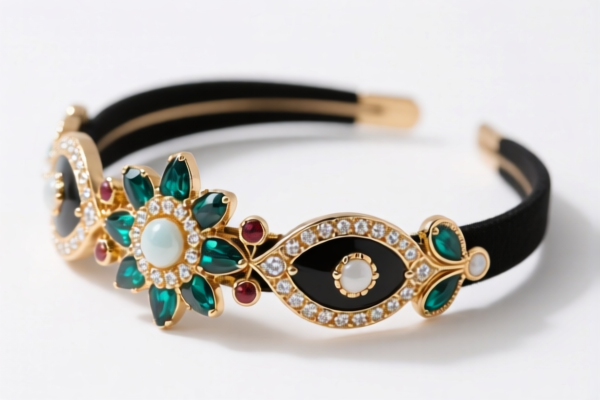
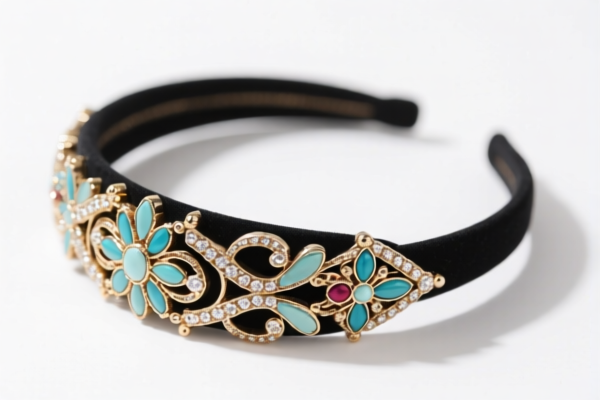
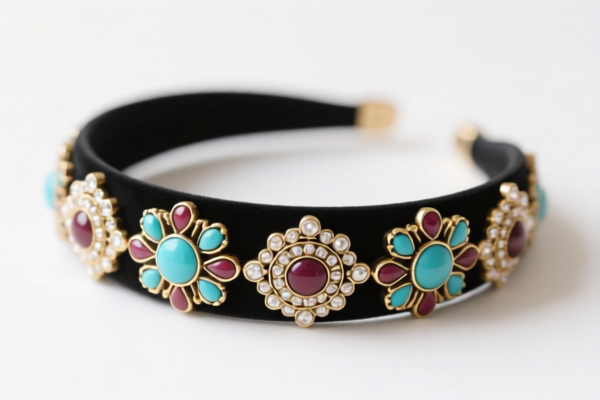
AI Analysis
🌿 Lace-Style Hemp-Like Weaving Tape (Hollow-Weave Textile Band)
🌐 HS Code Classification & Customs Clearance Guide | 2026 Latest Tariff Breakdown | Strategic Import Planning for High-Tax Goods
📌 One Product, Five Classifications: Why So Many HS Codes?
🔍 Key Insight:
The "Lace-Style Hemp-Like Weaving Tape" — a decorative, openwork textile band made from synthetic or man-made fibers — can be classified under five different HS Codes depending on its structure, material composition, and intended use.⚠️ Critical Warning:
Misclassification leads to overpayment, penalties, or seizure. Each HS code carries different tariff rates, especially under U.S. Section 301, Section 122, and IEEPA — the "3-Part Tax Bomb".
📦 Two Key Factors That Determine Your HS Code
| Factor | Impact on Classification |
|---|---|
| 1. Physical Structure | Is it a band (5609), narrow fabric (5806), or belt/chain (3926)? |
| 2. Material Composition | Is it natural fiber, man-made fiber, synthetic, or with textile content in plastic? |
✅ Pro Tip:
Always analyze both structure AND material.
A single product can fall into multiple categories — but only one is correct.
🧩 Five HS Code Classifications (2026 U.S. Tariff Authority)
| HS Code | Product Description | Material Type | Structural Type | Total Tax Rate |
|---|---|---|---|---|
5609.00.40.00 |
Textile Band / Strip, made of fibers/yarns, not woven into fabric | Fiber/Synthetic Yarn | Band/Strip | 38.9% |
5806.32.20.00 |
Narrow Fabric, made of man-made fibers, with openwork or lace-like pattern | Man-Made Fiber | Narrow Fabric (≤30cm) | 41.2% |
3926.90.59.00 |
Belt or Drive Belt, containing textile fiber, used in mechanical systems | Plastic + Textile Fiber | Belt/Transmission Belt | 37.4% |
5609.00.30.00 |
Textile Band, made of synthetic or man-made fibers, not woven | Synthetic/Fiber | Band/Strip | 39.5% |
5806.39.30.80 |
Narrow Fabric, non-silk, non-metalized, with no special finish | Non-silk, Non-metal | Narrow Fabric | 10.0% |
📌 Note:
-5806.39.30.80is the only low-tax option — but only if your product is not made of man-made fiber and not used as a belt. - The other four codes are high-tax due to Section 122 + Section 301 + IEEPA.
💰 2026 U.S. Tariff Breakdown: The 3-Part Tax Bomb Explained
✅ Applicable to: All imports from China (CN)
✅ Effective Date: November 10, 2025 (and ongoing)
✅ Legal Basis: Section 301 (USITC), Section 122 (IEEPA), IEEPA 9903.01.25
🎯 1. 5609.00.40.00 — Textile Band (Fiber/Yarn-Based)
| Tax Component | Rate | Legal Basis |
|---|---|---|
| Base Tariff | 3.9% | Standard U.S. Tariff |
| Section 301 (USITC) | +25.0% | From U.S. Trade Act 301 (China tariffs) |
| Section 122 (IEEPA) | +10.0% | From International Emergency Economic Powers Act |
| Total Tax | 38.9% | CIF × 38.9% |
📌 Why This Applies:
- The product is not a fabric, but a band made of textile yarns → falls under 5609. - Even if it looks like lace, if it's not a narrow fabric, it’s not 5806.
🎯 2. 5806.32.20.00 — Narrow Fabric (Man-Made Fiber, Lace-Like)
| Tax Component | Rate | Legal Basis |
|---|---|---|
| Base Tariff | 6.2% | Standard U.S. Tariff |
| Section 301 (USITC) | +25.0% | China-specific tariff |
| Section 122 (IEEPA) | +10.0% | Emergency economic powers |
| Total Tax | 41.2% | CIF × 41.2% |
📌 Why This Applies:
- The product is narrow (≤30cm) and lacy/structured → qualifies as narrow fabric. - Made of man-made fiber → triggers higher base rate (6.2%).⚠️ Red Flag:
If it’s not a fabric, but a band, do NOT use this code.
🎯 3. 3926.90.59.00 — Belt/Transmission Belt (With Textile Fiber)
| Tax Component | Rate | Legal Basis |
|---|---|---|
| Base Tariff | 2.4% | Standard U.S. Tariff |
| Section 301 (USITC) | +25.0% | China tariffs |
| Section 122 (IEEPA) | +10.0% | IEEPA emergency powers |
| Total Tax | 37.4% | CIF × 37.4% |
📌 Why This Applies:
- If the tape is used as a belt (e.g., in machinery, fashion belts, or industrial use), it may be classified as 3926.90.59.00. - Even if it’s decorative, if it’s meant to be worn or used as a belt, this code applies.🔥 Danger Zone:
- High risk of misclassification → audit trigger. - Must prove intended use to avoid higher taxes.
🎯 4. 5609.00.30.00 — Textile Band (Synthetic/Man-Made Fiber)
| Tax Component | Rate | Legal Basis |
|---|---|---|
| Base Tariff | 4.5% | Standard U.S. Tariff |
| Section 301 (USITC) | +25.0% | China tariffs |
| Section 122 (IEEPA) | +10.0% | IEEPA emergency powers |
| Total Tax | 39.5% | CIF × 39.5% |
📌 Why This Applies:
- Made of synthetic or man-made fibers → not natural → not 5609.00.40.00. - Still a band, so 5609.00.30.00 is correct.✅ Key Difference:
-5609.00.40.00= Fiber/yarn-based (e.g., cotton-like) -5609.00.30.00= Synthetic/fiber-based (e.g., polyester, nylon)
🎯 5. 5806.39.30.80 — Narrow Fabric (Low-Tax Option)
| Tax Component | Rate | Legal Basis |
|---|---|---|
| Base Tariff | 0.0% | Standard U.S. Tariff |
| Section 301 (USITC) | +0.0% | No additional tariff |
| Section 122 (IEEPA) | +10.0% | Only IEEPA applies |
| Total Tax | 10.0% | CIF × 10.0% |
📌 Why This Applies (Rare but Possible):
- Only if:
- It’s a narrow fabric (≤30cm)
- Made of non-silk, non-metalized material
- No special finish or treatment
- Not used as a belt or drive component✅ Best Case Scenario:
- Only 10% tax — 1/4 of the highest rate. - But: Must prove it’s not a band or belt.🔥 Critical Risk:
- If any part of the product is meant for mechanical use, it’s not eligible for this code.
🛠️ Customs Clearance Strategy: 5 Pro Tips to Avoid Disaster
✅ 1. Pre-申报准备清单(Must-Have Documents)
| Document | Required? | Why It Matters |
|---|---|---|
| ✅ Product Photos (Clear & Detailed) | ✔️ | Show structure, weave, thickness, and use |
| ✅ Material Certificate (e.g., Fiber Type) | ✔️ | Prove natural vs. man-made vs. synthetic |
| ✅ Technical Specification Sheet | ✔️ | Detail width, length, use case, construction |
| ✅ Commercial Invoice | ✔️ | Must match HS Code and describe use |
| ✅ Origin Certificate (CO) | ✔️ | If from Vietnam/Mexico, may avoid 301/122 |
| ✅ Third-Party Test Report (e.g., ASTM, ISO) | ✔️ | Prove intended use (e.g., not a belt) |
| ✅ Declaration of Use (Statement of Purpose) | ✔️ | Critical for 5806.39.30.80 |
✅ 2. 申报技巧:The 3-Step Rule
🔥 "Structure First, Material Second, Use Last"
| Step | Action | Example |
|---|---|---|
| 1️⃣ Determine Structure | Is it a band, narrow fabric, or belt? | If it’s woven in a band shape, use 5609 |
| 2️⃣ Check Material | Is it natural, man-made, or synthetic? | If nylon/polyester, use 5609.00.30.00 |
| 3️⃣ Confirm Intended Use | Is it for fashion, decoration, or machinery? | If not a belt, avoid 3926.90.59.00 |
📌 Golden Rule:
Do not assume — prove with documentation.
✅ 3. High-Risk Scenarios & How to Handle Them
| Scenario | Risk | Solution |
|---|---|---|
| Lace tape used in fashion belts | May be misclassified as 3926.90.59.00 → 37.4% tax | Prove decorative use only |
| Openwork design but not narrow fabric | May be misclassified as 5806.32.20.00 → 41.2% | Prove width >30cm or not a fabric |
| Synthetic fiber but used as band | May be misclassified as 5609.00.40.00 → 38.9% | Prove synthetic fiber → use 5609.00.30.00 |
| Claiming 5806.39.30.80 | Risk of audit & penalty | Provide proof of non-metalized, non-silk, no special finish |
🌍 Global Customs Comparison (2026)
| Country | Recommended HS Code | Tariff | Certification | Notes |
|---|---|---|---|---|
| 🇺🇸 USA | 5806.32.20.00 (max) |
41.2% | None (but document proof) | 3-Part Tax Bomb applies |
| 🇨🇳 China | 5609.00.30.00 |
5% | CCC | No 301/122 |
| 🇪🇺 EU | 5806.32.20.00 |
0% (if CE) | CE | No IEEPA |
| 🇦🇺 Australia | 5806.32.20.00 |
5% | RCM | No extra tariffs |
| 🇯🇵 Japan | 5806.32.20.00 |
0% | PSE | No extra tariffs |
📌 Conclusion:
- Only the U.S. applies the 3-part tax bomb. - China, EU, Australia, Japan have no additional tariffs on this product. - Consider shifting origin to Vietnam/Mexico to avoid 301/122.
🚨 Common Mistakes & Legal Pitfalls (Avoid These!)
❌ Mistake 1: Using 5806.39.30.80 without proof of non-metalized, non-silk, no special finish
👉 Result: Audit, penalty, 41.2% tax applied retroactively
❌ Mistake 2: Claiming it’s a band but using 3926.90.59.00
👉 Result: Wrong classification, higher tax, delayed clearance
❌ Mistake 3: Not providing material certificate
👉 Result: Customs may assume man-made fiber → 41.2% tax
❌ Mistake 4: Using "lace tape" as product name without technical description
👉 Result: Misclassification, no defense
✅ Correct申报 Phrase:
"Lace-Style Hemp-Like Weaving Tape, 2.5cm Wide, Made of 100% Polyester Yarn, Used for Decorative Apparel, Not for Mechanical Use, Non-Metalized, Non-Silk"
🎯 Final Verdict: How to Win the Tax War
✅ Best Strategy:
- Use5609.00.30.00if synthetic fiber, band-shaped, not a belt → 39.5% tax - Use5806.39.30.80only if you can prove it’s not a belt, not metalized, not silk → 10.0% tax - Avoid3926.90.59.00unless intended for mechanical use🔥 Pro Tip:
- Apply for Advance Ruling (Pre-Approval) from U.S. Customs. - Use a U.S.-based customs broker with experience in textile bands.
📌 Summary: Your Action Plan
- 📸 Take clear photos of the product (front, back, edge, use case)
- 📄 Get a material certificate (fiber type, composition)
- 📝 Write a clear product description (use the golden phrase)
- 📬 Apply for HS Code pre-ruling (if high value)
- 🚚 Ship from Vietnam/Mexico if possible → avoid 301/122
📣 Call to Action:
📞 Contact a U.S. customs broker TODAY
🚀 Get your HS Code pre-approved
💰 Save 30%+ in tariffs
✨ Remember:
🔹 "Structure > Material > Use"
🔹 "One wrong code = 41.2% tax"
🔹 "Proof beats assumption"
💼 Your product’s success starts with the right HS code.
🚀 Clear the border. Win the trade.
Customer Reviews
About HS Code Classification
The Harmonized System (HS) is an internationally standardized nomenclature developed by the World Customs Organization (WCO) to classify traded products. Over 200 countries use the HS system as the basis for customs tariffs, trade statistics, and import/export regulations.
Each HS code follows a hierarchical structure:
- Chapter (2 digits) — Broad category of goods (e.g., Chapter 84: Machinery and Mechanical Appliances)
- Heading (4 digits) — More specific grouping within the chapter
- Subheading (6 digits) — Internationally standardized breakdown, used by all WCO member countries
- National subdivisions (8-10 digits) — Country-specific extensions for further classification, such as US HTSUS 10-digit codes
Correct HS code classification is essential for smooth customs clearance, accurate duty payment, and compliance with trade regulations. Misclassification can lead to customs delays, overpayment of duties, or penalties.
When importing from CN to US, the applicable tariff rates may include:
- Most-Favored-Nation (MFN) rate — The standard duty rate applied to WTO members
- General rate — Applied to countries without trade agreements
- Trade remedy duties — Additional tariffs such as Section 301 (anti-dumping), Section 232 (national security), or countervailing duties
The information provided on this page is for reference purposes only. For official classification, please consult with your local customs authority or a licensed customs broker.