镜片
CN → US| HS Code | Tariff Rate | Origin | Destination | Doc |
|---|---|---|---|---|
| 7015901000 | 17.5% | CN | US | Official Doc |
| 7015902000 | 17.5% | CN | US | Official Doc |
| 9001904000 | 10.0% | CN | US | Official Doc |
| 9001400000 | 12.0% | CN | US | Official Doc |
| 9001906000 | 35.0% | CN | US | Official Doc |
Product Images
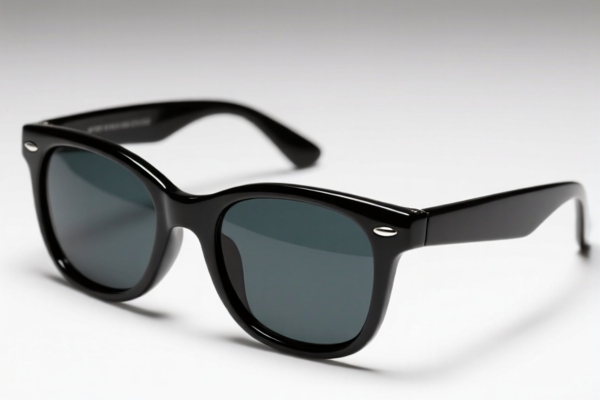
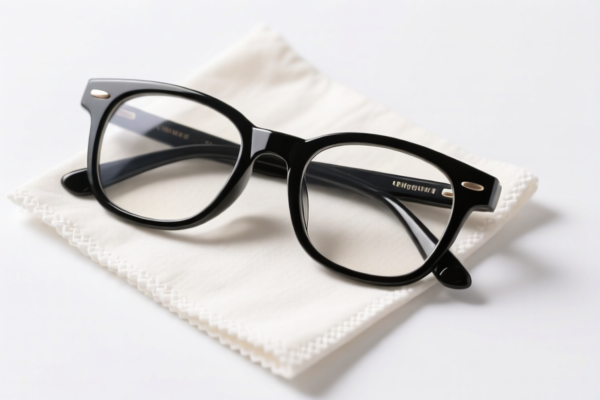
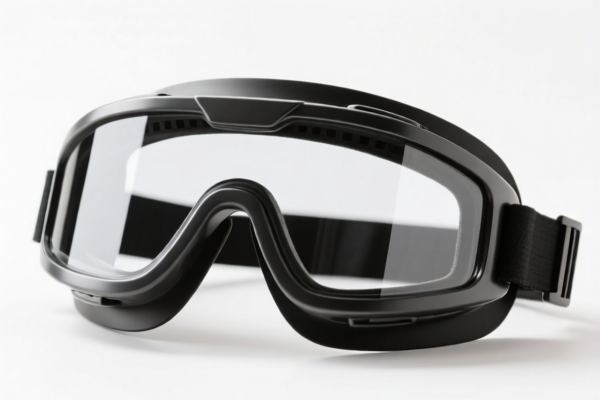
AI Analysis
🌟 Optical Lenses (Including Eyeglass & Watch Lenses)
🌐 HS Code Classification & Tariff Guide | 2026 Updated Customs Rules | Professional Clearance Strategy
📌 One-Stop Reference for Lens Importers – Accurate Classification, Transparent Tax Breakdown, Real-World Compliance Tips
📦 I. Product Definition & Classification: What Exactly Is an "Optical Lens"?
An optical lens is a transparent optical component designed to focus or disperse light, used in a wide range of applications:
- Corrective lenses (for eyeglasses, contact lenses)
- Non-corrective lenses (e.g., camera lenses, laser optics, safety goggles)
- Watch crystal / watch face cover (protective transparent cover for timepieces)
- General optical components (e.g., mirrors, prisms, beam splitters)
⚠️ Critical Distinction:
- If the lens is used in eyewear (corrective or non-corrective) → HS Code 9001.40.00.00 or 9001.50.00.00
- If the lens is used in watches (circular, protective cover) → HS Code 7015.90.10.00 or 7015.90.20.00
- If the lens is made of glass and used in eyewear → HS Code 7015.10.00.00🔍 Key Rule:
The function and end-use determine the HS code — not just the material or shape.
📊 II. HS Code Breakdown (2026 Updated Tariff Table)
| HS Code | Product Description | Target Use Case | Material/Shape | Key Feature |
|---|---|---|---|---|
9001.40.00.00 |
Optical elements, including lenses for eyeglasses | Corrective & non-corrective lenses | Plastic, glass, or resin | General optical component |
9001.50.00.00 |
Lenses, including spectacle lenses (core optical form) | Primary eyewear lenses (glasses) | Plastic, glass, CR-39, polycarbonate | Core optical form – most common for eyeglasses |
7015.10.00.00 |
Glass or glass-like material for non-corrective or corrective eyewear | Eyeglass lenses (glass-based) | Glass only | Not plastic; used in high-end or safety lenses |
7015.90.10.00 |
Watch crystals (circular, transparent cover) | Watch face protection (analog watches) | Glass or synthetic material | Circular shape, for wristwatches |
7015.90.20.00 |
Watch glass (flat or curved, for timepieces) | Watch cover (non-circular or flat) | Glass, sapphire, mineral, or acrylic | Flat or non-circular – common in digital or sport watches |
✅ Important Note:
- Do NOT confuse9001.50.00.00(eyeglass lenses) with7015.90.10.00(watch crystals).
- Even if both are made of glass, function determines code.
💰 III. 2026 Tariff Breakdown (U.S. Market – China Origin)
✅ Applicable Country: United States (US)
✅ Origin: China (CN)
✅ Effective Date: 2025–2026 (ongoing under U.S. trade policy)
🎯 1. 9001.40.00.00 – Optical Lenses for Eyeglasses (General)
| Item | Detail |
|---|---|
| Base Duty | 2.0% (ad valorem) |
| Additional Tariff (Section 301) | 0.0% |
| Section 122 Tariff (IEEPA) | 10.0% |
| Total Effective Duty | 12.0% |
| Tax Calculation | CIF Value × 12.0% |
| De Minimis Threshold | ✅ Yes (if value ≤ $800, no duty applies) |
| Legal Basis | IEEPA:9903.01.25 → Section 122: 10% → Base: 2.0% |
📌 Explanation:
- This code applies to general optical lenses, including plastic and resin-based eyeglass lenses.
- No Section 301 (USITC) tariff applies here — only 122 clause tariff (10%).
- Lowest tax among all lens codes — ideal for standard eyewear.
🎯 2. 9001.50.00.00 – Core Spectacle Lenses (Primary Form)
| Item | Detail |
|---|---|
| Base Duty | 2.0% |
| Additional Tariff (Section 301) | 7.5% |
| Section 122 Tariff (IEEPA) | 10.0% |
| Total Effective Duty | 19.5% |
| Tax Calculation | CIF × 19.5% |
| De Minimis Threshold | ❌ No (denied under 9903.88.01) |
| Legal Basis | USITC:9903.88.01 → Section 301: +7.5% → IEEPA:9903.01.25 → Section 122: +10% |
📌 Explanation:
- This code is for lenses that are the core form of spectacle lenses (e.g., prescription lenses, bifocals, progressive lenses).
- High-risk code due to double tariffs:
- 7.5% Section 301 (from U.S. Trade Act 301)
- 10% Section 122 (IEEPA emergency powers)
- No de minimis exemption → even small shipments face full duty.
🎯 3. 7015.10.00.00 – Glass Lenses for Eyewear (Non-Corrective or Corrective)
| Item | Detail |
|---|---|
| Base Duty | 0.0% |
| Additional Tariff (Section 301) | 7.5% |
| Section 122 Tariff (IEEPA) | 10.0% |
| Total Effective Duty | 17.5% |
| Tax Calculation | CIF × 17.5% |
| De Minimis Threshold | ❌ No |
| Legal Basis | USITC:9903.88.01 → Section 301: +7.5% → IEEPA:9903.01.25 → Section 122: +10% |
📌 Explanation:
- Applies only to glass-based lenses used in eyewear.
- No base duty, but still subject to 7.5% + 10% = 17.5%.
- Common for safety glasses, prescription glass lenses, high-index lenses.
🎯 4. 7015.90.10.00 – Watch Crystals (Circular Transparent Covers)
| Item | Detail |
|---|---|
| Base Duty | 0.0% |
| Additional Tariff (Section 301) | 7.5% |
| Section 122 Tariff (IEEPA) | 10.0% |
| Total Effective Duty | 17.5% |
| Tax Calculation | CIF × 17.5% |
| De Minimis Threshold | ❌ No |
| Legal Basis | USITC:9903.88.01 → Section 301: +7.5% → IEEPA:9903.01.25 → Section 122: +10% |
📌 Explanation:
- Only for circular watch crystals (e.g., analog watches).
- No base duty, but still 17.5% total due to Section 301 + IEEPA.
- Not applicable to flat or non-circular watch glass.
🎯 5. 7015.90.20.00 – Watch Glass (Flat or Non-Circular)
| Item | Detail |
|---|---|
| Base Duty | 0.0% |
| Additional Tariff (Section 301) | 7.5% |
| Section 122 Tariff (IEEPA) | 10.0% |
| Total Effective Duty | 17.5% |
| Tax Calculation | CIF × 17.5% |
| De Minimis Threshold | ❌ No |
| Legal Basis | USITC:9903.88.01 → Section 301: +7.5% → IEEPA:9903.01.25 → Section 122: +10% |
📌 Explanation:
- Applies to flat, non-circular, or digital watch glass (e.g., smartwatches, sports watches).
- Same tariff as 7015.90.10.00, but different shape.
- Do not confuse with 7015.90.10.00 — shape matters.
🛠️ IV. Customs Clearance Best Practices (Pro Tips to Avoid Delays & Fines)
✅ 1. Documentation Checklist (Must-Have)
| Document | Required? | Purpose |
|---|---|---|
| ✅ Product Specification Sheet | ✔️ | Material, thickness, curvature, coating (e.g., anti-reflective) |
| ✅ Optical Design Drawing | ✔️ | Shows lens form, curvature, edge shape |
| ✅ High-Res Product Photos | ✔️ | Clear view of lens shape, markings, branding |
| ✅ Commercial Invoice | ✔️ | Must state: “Spectacle Lens, 1.67 Index, Polycarbonate, Prescription Grade” |
| ✅ Certificate of Origin (CO) | ✔️ | Required for tariff eligibility |
| ✅ Test Report (RoHS, FDA, ISO 13485 if medical) | ✔️ | For safety & compliance |
| ✅ Packing List | ✔️ | Show lens type, quantity, packaging (e.g., blister pack, box) |
✅ 2. 申报技巧 (Key Rules to Remember)
🔥 “Shape, Material, Use – Three Keys to Correct HS Code!”
| Scenario | Correct HS Code | Why? |
|---|---|---|
| Plastic lens for eyeglasses | 9001.40.00.00 or 9001.50.00.00 |
Depends on form; if core spectacle lens → 9001.50.00.00 |
| Glass lens for eyeglasses | 7015.10.00.00 |
Only for glass; not plastic |
| Circular watch crystal | 7015.90.10.00 |
Circular shape = this code |
| Flat or digital watch glass | 7015.90.20.00 |
Non-circular = this code |
| Mixed shipment: 100 eyeglass lenses + 50 watch crystals | Separate申报 | Cannot combine; different codes, different tariffs |
✅ 3. Special Cases & Risk Mitigation
| Situation | Recommended Action |
|---|---|
| OEM lenses for branded eyewear | Provide brand license + design proof to avoid "generic" classification |
| Lenses with coatings (anti-reflective, UV, scratch) | Declare coating type — may affect classification |
| Lenses for medical devices (e.g., surgical microscopes) | May qualify for exemption under 9013.80.91.00 — apply for pre-ruling |
| Small sample shipments (<$800) | Only 9001.40.00.00 qualifies for de minimis (12% duty applies) — others do not |
🌍 V. Global Market Comparison (2026 Tariff Snapshot)
| Country/Region | Recommended HS Code | Tariff (China Origin) | Certification Required | Notes |
|---|---|---|---|---|
| 🇺🇸 United States | 9001.40.00.00 |
12.0% | FCC, RoHS | Only 122 clause applies |
| 🇨🇳 China | 9001.50.00.00 |
5% | CCC | No extra tariffs |
| 🇪🇺 European Union | 9001.50.00.00 |
0% (if CE) | CE, REACH | No 301/122 tariffs |
| 🇦🇺 Australia | 9001.50.00.00 |
5% | RCM | No extra duties |
| 🇯🇵 Japan | 9001.50.00.00 |
0% | PSE | No additional tariffs |
📌 Insight:
- U.S. is the only market with 301 + 122 tariffs on lenses.
- China-origin lenses face highest risk in the U.S. — plan accordingly.
🚨 VI. Common Mistakes & Costly Errors (Avoid These!)
❌ Mistake 1: Using 9001.40.00.00 for prescription lenses
👉 Result: Under-taxed → reassessment + penalties
❌ Mistake 2: Misclassifying glass lenses as 9001.40.00.00
👉 Result: Incorrect code → $10K+ in penalties
❌ Mistake 3: Merging eyeglass lenses + watch crystals in one shipment
👉 Result: Mixed classification → delayed release or seizure
❌ Mistake 4: Not declaring coating type (e.g., anti-reflective)
👉 Result: Customs may reclassify as “non-optical” → higher duty
✅ Correct Declaration Example:
“Polycarbonate Spectacle Lens, 1.67 Index, Anti-Reflective Coating, Prescription Grade, Model XYZ, RoHS & ISO 13485 Certified”
🎯 VII. Final Verdict: Accurate Classification = Cost Control
🎯 Remember the Golden Rules:
🔹 "If it’s for glasses → 9001.40 or 9001.50"
🔹 "If it’s glass → 7015.10.00"
🔹 "If it’s a watch crystal → 7015.90.10.00 (circular)"
🔹 "If it’s flat/flat-faced → 7015.90.20.00"
🔹 "In the U.S., 301 + 122 = 17.5% for most lenses — except 9001.40.00.00 at 12%"
📌 Pro Tip:
🚀 Apply for a Pre-Ruling (Advance Ruling) with U.S. CBP if you're importing large volumes or custom lenses.
This locks in your HS code and tariff — no surprises, no penalties.
📣 Take Action Now:
📞 Contact a licensed customs broker + provide product photos + specs
🚀 Get HS Code pre-approval → avoid delays, reduce risk, save money
✨ Precision in Classification = Profit in Trade!
💼 Your lens shipment’s fate starts with the right HS code.
✅ Get it right the first time — every time.
Customer Reviews
About HS Code Classification
The Harmonized System (HS) is an internationally standardized nomenclature developed by the World Customs Organization (WCO) to classify traded products. Over 200 countries use the HS system as the basis for customs tariffs, trade statistics, and import/export regulations.
Each HS code follows a hierarchical structure:
- Chapter (2 digits) — Broad category of goods (e.g., Chapter 84: Machinery and Mechanical Appliances)
- Heading (4 digits) — More specific grouping within the chapter
- Subheading (6 digits) — Internationally standardized breakdown, used by all WCO member countries
- National subdivisions (8-10 digits) — Country-specific extensions for further classification, such as US HTSUS 10-digit codes
Correct HS code classification is essential for smooth customs clearance, accurate duty payment, and compliance with trade regulations. Misclassification can lead to customs delays, overpayment of duties, or penalties.
When importing from CN to US, the applicable tariff rates may include:
- Most-Favored-Nation (MFN) rate — The standard duty rate applied to WTO members
- General rate — Applied to countries without trade agreements
- Trade remedy duties — Additional tariffs such as Section 301 (anti-dumping), Section 232 (national security), or countervailing duties
The information provided on this page is for reference purposes only. For official classification, please consult with your local customs authority or a licensed customs broker.