门顶
CN → US| HS Code | Tariff Rate | Origin | Destination | Doc |
|---|---|---|---|---|
| 4418218060 | 39.8% | CN | US | Official Doc |
| 3926305000 | 22.8% | CN | US | Official Doc |
| 4418298060 | 39.8% | CN | US | Official Doc |
| 3926902500 | 24.0% | CN | US | Official Doc |
Product Images
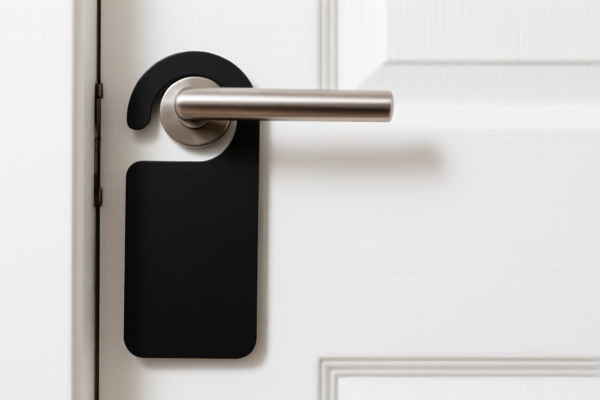
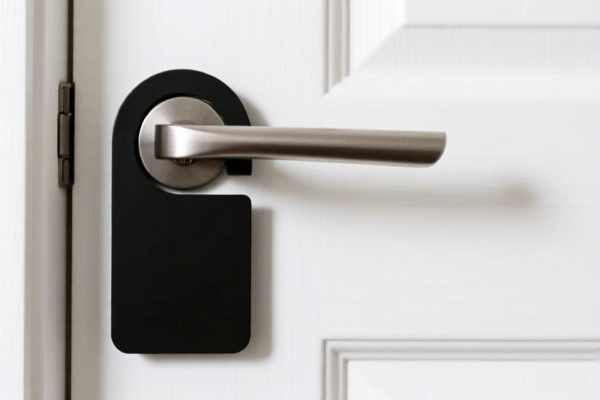
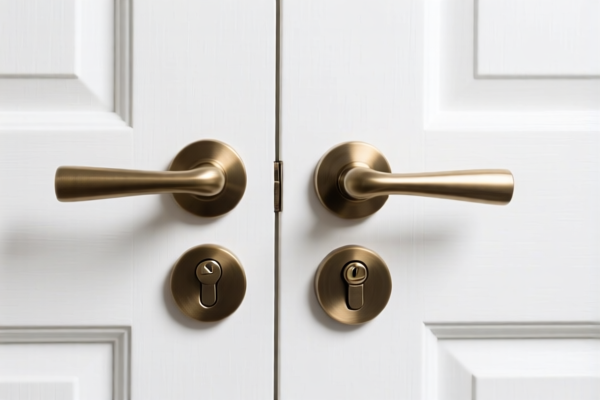

AI Analysis
Based on the provided data, the term "Door Top" (implied as a door header, threshold, or related wooden framing component) falls under specific HS Codes related to wooden construction items. Below is the detailed classification, tax breakdown, and clearance strategy in a Wiki-style format.
🚪 Door Top (Wooden Headers/Thresholds/ Frames)
🌐 HS Code Classification & Customs Clearance Guide | 2026 Tariff Deep Dive
📌 One: Product Definition & Classification Logic
"Door Top" in international trade typically refers to the horizontal structural components of a door assembly, including: * Door Headers (Lintels): The top frame part supporting the door. * Thresholds/Sills: The bottom piece (often grouped with door tops in classification logic). * Door Frames & Jambs: The surrounding structure.
Classification Logic: 1. Material: Must be Wood (specifically Tropical Wood or General Wood). 2. Function: Used for building construction (doors, frames, thresholds). 3. Exclusion: If the item contains significant non-wood components (e.g., heavy metal reinforcement or plastic mechanisms), it might shift to Chapter 39 (Plastics).
⚠️ Critical Distinction: * Solid Wood Door Components (Headers, Frames) → Chapter 44 (Wood & Articles of Wood). * Plastic Fixings/Connectors (Screws, brackets, plastic strips used to secure the door top) → Chapter 39 (Plastics).
📦 Two: HS Code Classification Details (2026 Tariff Authority)
Based on your input data, the "Door Top" and its related accessories fall into the following specific codes:
| HS Code | Product Description | Applicable Category | Tax Rate (Total) |
|---|---|---|---|
4418.21.80.60 |
Door Top/Frame for Tropical Wood Specifically for tropical wood doors, frames, and thresholds. |
Tropical Wood Doors/Thresholds ("Other") | 39.8% |
4418.29.80.60 |
Door Top/Frame for General Wood Wooden architectural carpentry not specified as tropical. |
Wooden Construction ("Other" Catch-all) | 39.8% |
3926.30.50.00 |
Plastic Connection/Fixing Parts Plastic connectors or fasteners used for the door top. |
Plastic "Other Connectors" | 22.8% |
3926.90.25.00 |
Other Plastic Parts Plastic components of other shapes for doors. |
Plastic "Other Articles" | 24.0% |
🔍 Deep Dive into Logic: *
4418.21.80.60: Identified as Tropical Wood. If your "Door Top" is made of Teak, Mahogany, or similar tropical species, this is the correct code. *4418.29.80.60: A catch-all (umbrella) category for wooden building carpentry that doesn't fit specific sub-classes. Fits standard pine/oak door tops. *3926.30.50.00&3926.90.25.00: If your "Door Top" assembly includes plastic strips, plastic connectors, or non-wood mounting hardware, these are taxed separately. Do not mix these values with the wood tax rate.
💰 Three: 2026 Tariff Breakdown & Policy Analysis
✅ Origin: China (CN)
✅ Destination: United States (US)
✅ Applicable Regime: Section 301 / "122 Clause" Tariffs
🎯 Scenario A: Wooden Door Tops (4418.21.80.60 & 4418.29.80.60)
Total Tax: 39.8%
| Tax Component | Rate | Legal Basis & Explanation |
|---|---|---|
| Base Duty | 4.8% | Standard MFN (Most Favored Nation) tariff for wood articles. |
| Section 301 (Add-on) | 25.0% | The "Prohibitive" Tax. This is the US Section 301 tariff on Chinese wood products (List 1/2/3/4A). |
| "122 Clause" Tax | 10.0% | Specific US Legislation. Likely refers to recent or specific administrative orders (e.g., Section 301 additions or specific antidumping/coupons). |
| Total Effective Rate | 39.8% | 4.8 + 25.0 + 10.0 |
📌 Expert Warning: * 39.8% is a very high barrier. You cannot use de minimis (small parcel) exemptions for commercial imports. * Material Proof is Key: You must prove the wood is not prohibited species if applicable, but the tax applies to the category regardless.
🎯 Scenario B: Plastic Components (3926.30.50.00 & 3926.90.25.00)
Total Tax: 22.8% - 24.0%
| Tax Component | Rate (Connectors) | Rate (Other Parts) | Legal Basis & Explanation |
|---|---|---|---|
| Base Duty | 5.3% | 6.5% | Standard duty for plastic articles. |
| Section 301 (Add-on) | 7.5% | 7.5% | Lower Section 301 rate applied to plastic consumer/industrial goods compared to wood. |
| "122 Clause" Tax | 10.0% | 10.0% | Same specific US legislation applies to plastics. |
| Total Effective Rate | 22.8% | 24.0% | Significantly lower than wood. |
🔍 Strategy Insight: * Separating Plastic parts from Wooden parts on the invoice can save money (22.8% vs 39.8%). * Do not lump plastic fixings into the wood HS code; customs will re-classify and penalize.
🛠️ Four: Customs Clearance Strategy (Practical Guide)
✅ 1. Documentation Requirements (Critical)
To clear these goods without detention, you must provide:
* Material Certificate: Explicitly stating the percentage of wood vs. plastic per unit.
* Example: "Door Top: 95% Tropical Wood, 5% Plastic Fasteners."
* HS Code Declaration: Must list BOTH 4418... (Wood) and 3926... (Plastic) if the shipment is mixed.
* Product Photos: Clear images showing the wood grain (to prove it's wood) and the plastic parts (to prove they are separate).
* Bill of Lading (B/L): Must match the commercial invoice value exactly.
✅ 2. Declaration Tactics (The "Split" Strategy)
🔥 Golden Rule: "Split the Material, Save the Tax!"
| Situation | Wrong Declaration | Right Declaration |
|---|---|---|
| Mixed Shipment | Declaring the whole "Door Top" as 4418.21.80.60 |
Split Invoice: 1. Wooden Frame: 4418.21.80.60 (39.8%)2. Plastic Connectors: 3926.30.50.00 (22.8%) |
| Tropical Wood | Declaring as generic "Wood" (4418.29) |
Declare as "Tropical Wood" (4418.21) |
| Threshold vs. Frame | Mixing threshold and door frame without distinction | Keep consistent; both are Chapter 44, but tax logic is similar. |
✅ 3. Risk Management
- Avoid "122 Clause" Surprises: The 10% "122 Clause" tax is specific. Ensure your HS code matches the exact description used in the 122 regulation.
- No De Minimis: Do not try to ship small quantities via "Section 321" (de minimis). Wooden door tops are commercial goods; they will be seized or taxed retroactively.
- Bonding: Ensure you have a US Customs Bond to handle the 39.8% tax liability.
🌍 Five: Global Market Comparison (2026)
| Region | HS Code | Base Tax | Section 301/Add-on | Total Est. Tax | Verdict |
|---|---|---|---|---|---|
| 🇺🇸 USA | 4418.21/29 |
4.8% | +25% + 10% | 39.8% | ⚠️ High Barrier |
| 🇪🇺 EU | 4418.21 |
0-2% | No 301 | ~2-5% | ✅ Favorable |
| 🇨🇦 Canada | 4418.21 |
0% | No 301 | 0% | ✅ Favorable |
| 🇦🇺 Australia | 4418.21 |
5% | No 301 | ~5-10% | ✅ Favorable |
📌 Conclusion: The US market is the most expensive for Chinese wooden door tops due to the aggressive 39.8% tariff. Action Item: If shipping to the US, consider sourcing plastic alternatives (for non-structural parts) to lower the average tax rate to ~23%, or explore third-country processing (e.g., assemble in Vietnam/Mexico) to bypass the "Made in China" label.
📌 Six: Common Pitfalls & Avoidance
❌ Pitfall 1: "One-size-fits-all" Declaring
Error: Declaring a door with plastic locks as pure wood (
4418...). Result: Customs penalizes for misclassification; you pay 39.8% on the plastic parts too. Fix: Split the line items.
❌ Pitfall 2: Missing the "122 Clause"
Error: Calculating only 4.8% + 25% = 29.8%. Result: Underpayment of 10% = Seizure or fine. Fix: Always add the specific "122 Clause" 10% for Chinese exports in this category.
❌ Pitfall 3: Misidentifying Wood Type
Error: Calling a tropical wood product "Generic Wood" (
4418.29). Result: While the tax rate is the same (39.8%), it may trigger Phytosanitary inspections (pest/disease checks) which cause delays. Fix: Be honest about "Tropical Wood" to avoid unnecessary inspection delays.
🎯 Seven: Final Verdict
"Door Top" (Wooden) in the US Market:
* HS Code: 4418.21.80.60 (Tropical) or 4418.29.80.60 (General).
* Tax: 39.8% (4.8% Base + 25% Section 301 + 10% 122 Clause).
* Strategy: Split plastic accessories (3926...) to reduce average tax to ~23%.
* Warning: This is a high-risk, high-cost entry. Professional Customs Brokerage is mandatory.
🚀 Pro Tip:
"Split the invoice, check the wood type, and never miss the 10% add-on!"
✨ Clearance Success = Precise HS Code + Accurate Material Declaration
💼 Don't let 39.8% eat your profit margin!
Customer Reviews
About HS Code Classification
The Harmonized System (HS) is an internationally standardized nomenclature developed by the World Customs Organization (WCO) to classify traded products. Over 200 countries use the HS system as the basis for customs tariffs, trade statistics, and import/export regulations.
Each HS code follows a hierarchical structure:
- Chapter (2 digits) — Broad category of goods (e.g., Chapter 84: Machinery and Mechanical Appliances)
- Heading (4 digits) — More specific grouping within the chapter
- Subheading (6 digits) — Internationally standardized breakdown, used by all WCO member countries
- National subdivisions (8-10 digits) — Country-specific extensions for further classification, such as US HTSUS 10-digit codes
Correct HS code classification is essential for smooth customs clearance, accurate duty payment, and compliance with trade regulations. Misclassification can lead to customs delays, overpayment of duties, or penalties.
When importing from CN to US, the applicable tariff rates may include:
- Most-Favored-Nation (MFN) rate — The standard duty rate applied to WTO members
- General rate — Applied to countries without trade agreements
- Trade remedy duties — Additional tariffs such as Section 301 (anti-dumping), Section 232 (national security), or countervailing duties
The information provided on this page is for reference purposes only. For official classification, please consult with your local customs authority or a licensed customs broker.