防水贴
CN → US| HS Code | Tariff Rate | Origin | Destination | Doc |
|---|---|---|---|---|
| 8308100000 | 0.0% | CN | US | Official Doc |
| 3926908500 | 24.0% | CN | US | Official Doc |
| 3926907000 | 22.8% | CN | US | Official Doc |
| 7319402050 | 72.0% | CN | US | Official Doc |
| 7319405050 | 67.5% | CN | US | Official Doc |
Product Images
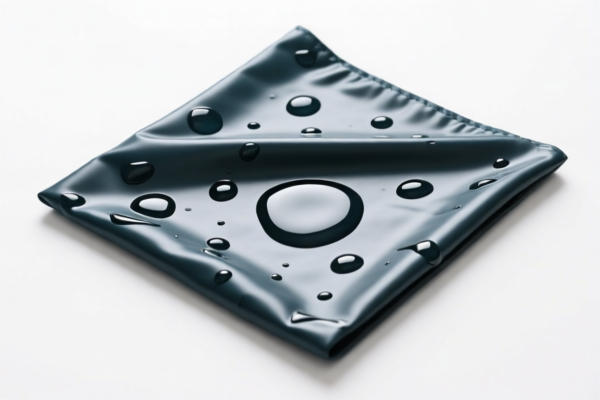

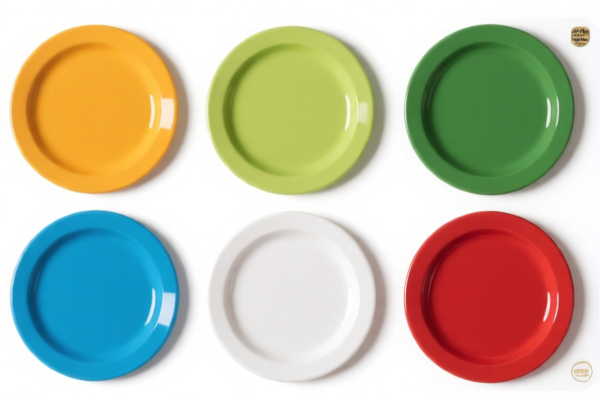
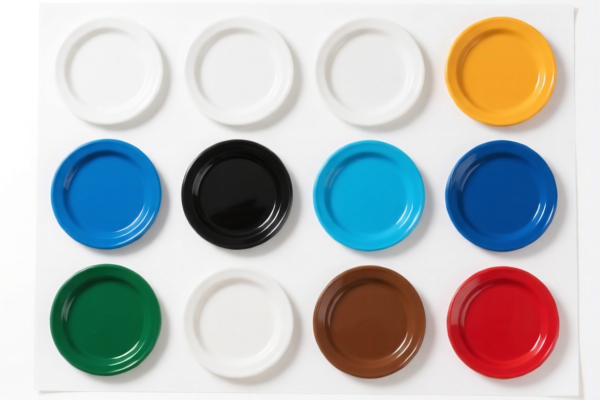
AI Analysis
💧 Waterproof Name Tags & Labels (防水姓名贴/标签)
🌐 HS Code Reference & Customs Clearance Guide | 2026 Latest Tariff Analysis | Professional Clearance Strategy
📌 1. Product Definition & Classification: What Exactly Are "Waterproof Name Tags"?
Waterproof name tags are self-adhesive labels used for identification in wet, outdoor, or industrial environments. They are typically made of plastic films (PET/PP/Vinyl) or synthetic materials, sometimes with paper-like textures but technically classified under plastics or paper products depending on the core material and manufacturing process.
In international trade, they are primarily categorized into two main groups based on material: 1. Plastic/Film-Based Self-Adhesive Sheets: Classified under Chapter 39 (Plastics and Articles Thereof). These are the most common "waterproof" tags. 2. Paper/Synthetic-Based Labels: Classified under Chapter 48 (Paper and Paperboard). These may be paper-based with waterproof coatings or synthetic paper materials. 3. Textile-Based Tapes: If the material is heavily coated textile (e.g., rubber-plastic coated fabric), it may fall under Chapter 56.
⚠️ Key Distinction:
- If the backing and face material are plastic films (even if printed like paper) → Chapter 39 (Higher Base Tariff).
- If the base is paper (even if coated for water resistance) or purely synthetic paper classified as paper products → Chapter 48 (Lower Base Tariff, often 0%).
- If it is a textile tape with plastic/rubber coating → Chapter 56 (Specific textile classification).
📦 2. HS Code Classification Details (2026 Latest Tariff Authority Comparison)
| HS Code | Product Description | Material Composition | Key Features |
|---|---|---|---|
3919.10.20.55 |
Self-adhesive plastic films/strip, waterproof name tags | Plastic/Film-based | Base: 5.8% Total: 40.8% |
4823.90.86.80 |
Other paper articles, waterproof name tags | Paper/Film-based (Paper core) | Base: 0.0% Total: 35.0% |
4823.90.86.20 |
Labels, waterproof name tags | Plastic/Synthetic (Label specific) | Base: 0.0% Total: 35.0% |
3919.90.50.60 |
Self-adhesive plastic flat shapes, waterproof name tags | Pure Plastic | Base: 5.8% Total: 40.8% |
5604.90.90.00 |
Waterproof tape, rubber/plastic coated textile | Textile + Coating | Base: 5.0% Total: 40.0% |
🔍 Critical Note:
- The biggest cost driver is the Base Tariff (5.8% vs. 0.0%).
- Chapter 39 items have a higher base rate, leading to a higher total tax burden.
- Chapter 48 items often have a 0% base rate, making them cheaper despite the same additional tariffs.
- Misclassification from3919to4823can save ~5.8% on the base duty, but requires strict proof of material composition.
💰 3. 2026 Latest Tariff Rate Details (Including Surtaxes & Policy Additions)
✅ Applicable Country: USA (US)
✅ Origin: China (CN)
✅ Effective Date: Post-2025 importations (current policy regime)
🎯 1. 3919.10.20.55 & 3919.90.50.60 — Plastic Self-Adhesive Name Tags
| Item | Content |
|---|---|
| Base Tariff | 5.8% (Ad Valorem) |
| Section 301 Surtax | +25.0% (USITC Footnote) |
| Section 122/IEEPA Surtax | +10.0% (Specific Chinese Product Surtax) |
| Total Tariff Rate | 40.8% |
| Tax Calculation | CIF Value × 40.8% |
| De Minimis Exemption | ❌ Not Eligible (High tax rate excludes low-value shipment exemptions) |
| Legal Basis Path | USITC:3919.10.20.55 → SECTION_301 → SECTION_122 |
📌 Explanation:
- The 5.8% base tariff is standard for self-adhesive plastic sheets.
- The 25% Section 301 tariff applies to almost all Chinese plastic goods.
- The 10% Surtax is a specific additional levy on certain Chinese imports.
- Total 40.8% is very high. Many importers try to shift classification to Chapter 48 to reduce the base to 0%.
🎯 2. 4823.90.86.80 & 4823.90.86.20 — Paper/Synthetic Labels
| Item | Content |
|---|---|
| Base Tariff | 0.0% |
| Section 301 Surtax | +25.0% |
| Section 122/IEEPA Surtax | +10.0% |
| Total Tariff Rate | 35.0% |
| Tax Calculation | CIF Value × 35.0% |
| De Minimis Exemption | ❌ Not Eligible (Subject to Surtaxes) |
| Legal Basis Path | USITC:4823.90.86.80 → SECTION_301 → SECTION_122 |
📌 Note:
- Even though it's "waterproof," if the core material is classified as paper or paper-based synthetic under HTSUS 4823, the base tariff drops to 0%.
- This saves 5.8% on the base duty compared to plastic classifications.
- Crucial: The product must genuinely be paper-based or meet the specific "label" definition under 4823. Pure plastic films cannot be declared here.
🎯 3. 5604.90.90.00 — Waterproof Tape (Textile-Based)
| Item | Content |
|---|---|
| Base Tariff | 5.0% |
| Section 301 Surtax | +25.0% |
| Section 122/IEEPA Surtax | +10.0% |
| Total Tariff Rate | 40.0% |
| Tax Calculation | CIF Value × 40.0% |
| De Minimis Exemption | ❌ Not Eligible |
| Legal Basis Path | USITC:5604.90.90.00 → SECTION_301 → SECTION_122 |
📌 Explanation:
- This code applies if the item is a textile tape (e.g., woven fabric) coated with rubber or plastic, often used for heavy-duty labeling or sealing.
- It is less common for standard "name tags" but may apply to specific industrial textile labels.
- Total rate is 40.0%, slightly lower than plastic films but higher than paper labels.
🛠️ 4. Customs Clearance Practical Advice (Avoiding Pitfalls)
✅ 1. Required Documentation Checklist (Mandatory)
| Document | Must Provide | Purpose |
|---|---|---|
| ✅ Product Specification Sheet | ✔️ | Must explicitly state material composition (e.g., "Face: PET Film, Adhesive: Acrylic, Backing: Silica" vs. "Face: Synthetic Paper"). |
| ✅ Material Sample/Photo | ✔️ | Close-up of texture, coating, and backing. |
| ✅ Certificate of Material Origin | ✔️ | Proves if the core is paper or plastic. |
| ✅ Commercial Invoice | ✔️ | Must match HS Code description exactly (e.g., "Self-Adhesive Plastic Label" vs. "Paper Label"). |
| ✅ Packing List | ✔️ | Clear weight and quantity details. |
| ✅ Test Report | ✔️ | Proof of "waterproof" nature if claimed for specific use (e.g., UV resistance, tear strength). |
✅ 2. Classification Strategy (Key Mnemonics)
🔥 "Plastic Base = 5.8% + 35% = 40.8% | Paper Base = 0% + 35% = 35%"
| Scenario | Correct HS Code | Reason |
|---|---|---|
| Pure Plastic/Vinyl/PET Tag | 3919.10.20.55 or 3919.90.50.60 |
Core material is plastic film. |
| Synthetic Paper/Paper Tag with Coating | 4823.90.86.80 or 4823.90.86.20 |
Core is paper or classified as paper article. |
| Textile Tape with Plastic Coating | 5604.90.90.00 |
Core is textile fabric. |
| Misclassification Risk | Avoid declaring Plastic as Paper | Customs may audit material composition; penalties apply. |
✅ 3. Special Considerations
| Situation | Handling Advice |
|---|---|
| OEM Custom Name Tags | Provide design files and material specs. Ensure "Name Tag" description aligns with HS definitions. |
| Mixed Shipments | Declare each HS Code separately. Do not mix plastic and paper tags in one line item. |
| Small Quantity/Low Value | No De Minimis Exemption. Even small packages are subject to 35-40.8% tax. |
| "Waterproof" Claim | Use technical terms (e.g., "Water-Resistant PET Film") rather than just "Waterproof" to avoid ambiguous classification. |
🌍 5. Global Market Comparison (2026 Latest)
| Country/Region | Recommended HS Code | Tariff (China Origin) | Certification | Notes |
|---|---|---|---|---|
| 🇺🇸 USA | 3919.10.20.55 / 4823.90.86.80 |
40.8% / 35.0% | None specific | High surtaxes apply. |
| 🇨🇳 China | 3919.10.20.55 / 4823.90.86.80 |
5.8% / 0.0% | None | No additional surtaxes. |
| 🇪🇺 EU | 3919.10.20 / 4823.90.86 |
~6.5% / ~5.0% | CE (if adhesive contains hazardous substances) | No Section 301 equivalent. |
| 🇬🇧 UK | 3919.10.20 / 4823.90.86 |
~6.5% / ~5.0% | None | Post-Brexit tariffs apply. |
📌 Conclusion:
- USA is the most expensive market due to Section 301 and Section 122 surtaxes.
- EU/UK have lower base tariffs and no equivalent surtaxes, making them more cost-effective for these goods.
- China has the lowest base tariffs, but domestic consumption doesn't incur import duties.
📌 6. Common Mistakes & Pitfalls (Lessons Learned)
❌ Mistake 1: Declaring Plastic Tags as Paper to Save 5.8%
👉 Consequence: Customs audit fails → Penalty + Back Taxes + Delays.
👉 Fix: Ensure material is genuinely paper-based or synthetic paper classified under 4823.
❌ Mistake 2: Ignoring Section 122 Surtax
👉 Consequence: Underpaying taxes by 10% → Seizure or Fine.
👉 Fix: Always include the 10% surtax in cost calculations for US imports.
❌ Mistake 3: Vague Description "Labels"
👉 Consequence: Customs assigns highest possible rate or delays for clarification.
👉 Fix: Use precise terms like "Self-Adhesive Plastic Film Labels" or "Paper Labels."
✅ Correct Approach:
"Self-Adhesive Plastic Labels, Waterproof, 2x3 inches, PET Material, Model XYZ"
OR
"Synthetic Paper Labels, Waterproof, 2x3 inches, Paper-Based, Model XYZ"
🎯 7. Conclusion: Precise Classification Saves Money!
🎯 Remember the Mnemonic:
🔹 "Plastic Base 5.8%, Paper Base 0% | Surtaxes 35% Total | Don't Misdeclare!"
🔹 "HS Code Defines Cost | 5.8% Difference is Real | Accuracy Saves Dollars!"
📌 Pro Tip:
If you have high-volume shipments, consider Advance Ruling (Ruling Letter) from US Customs (CBP) to confirm the correct HS Code (3919 vs. 4823) and avoid disputes.
Also, verify if your specific synthetic paper qualifies under 4823.90.86.80 for the 0% base rate — this is a common optimization strategy.
📣 Immediate Action:
📞 Contact a professional customs broker
📸 Provide material samples/photos
📝 Apply for HS Code Advance Ruling
🚀 Ensure smooth clearance and minimize tax burden!
✨ Professional Clearance Starts with Accurate Classification!
💼 Every percent counts in international trade!
Customer Reviews
About HS Code Classification
The Harmonized System (HS) is an internationally standardized nomenclature developed by the World Customs Organization (WCO) to classify traded products. Over 200 countries use the HS system as the basis for customs tariffs, trade statistics, and import/export regulations.
Each HS code follows a hierarchical structure:
- Chapter (2 digits) — Broad category of goods (e.g., Chapter 84: Machinery and Mechanical Appliances)
- Heading (4 digits) — More specific grouping within the chapter
- Subheading (6 digits) — Internationally standardized breakdown, used by all WCO member countries
- National subdivisions (8-10 digits) — Country-specific extensions for further classification, such as US HTSUS 10-digit codes
Correct HS code classification is essential for smooth customs clearance, accurate duty payment, and compliance with trade regulations. Misclassification can lead to customs delays, overpayment of duties, or penalties.
When importing from CN to US, the applicable tariff rates may include:
- Most-Favored-Nation (MFN) rate — The standard duty rate applied to WTO members
- General rate — Applied to countries without trade agreements
- Trade remedy duties — Additional tariffs such as Section 301 (anti-dumping), Section 232 (national security), or countervailing duties
The information provided on this page is for reference purposes only. For official classification, please consult with your local customs authority or a licensed customs broker.