防滑鞋套
CN → US| HS Code | Tariff Rate | Origin | Destination | Doc |
|---|---|---|---|---|
| 4016996050 | 37.5% | CN | US | Official Doc |
| 4016990500 | 20.9% | CN | US | Official Doc |
| 6406200000 | 20.2% | CN | US | Official Doc |
| 6406903030 | 15.3% | CN | US | Official Doc |
| 4015900050 | 39.0% | CN | US | Official Doc |
Product Images
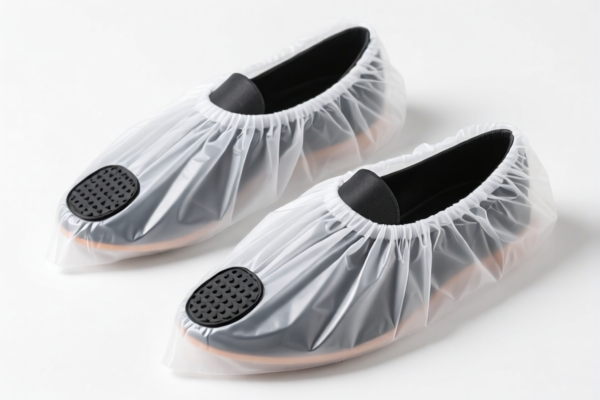
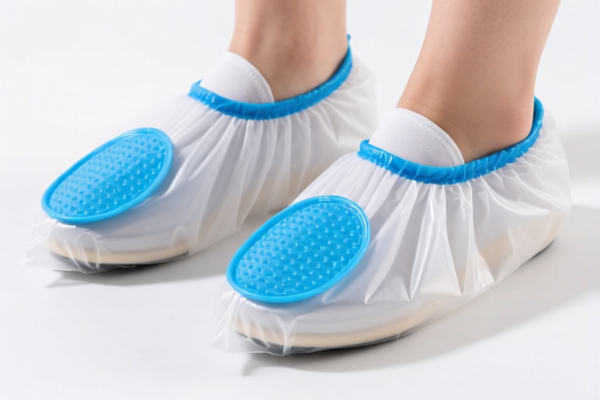
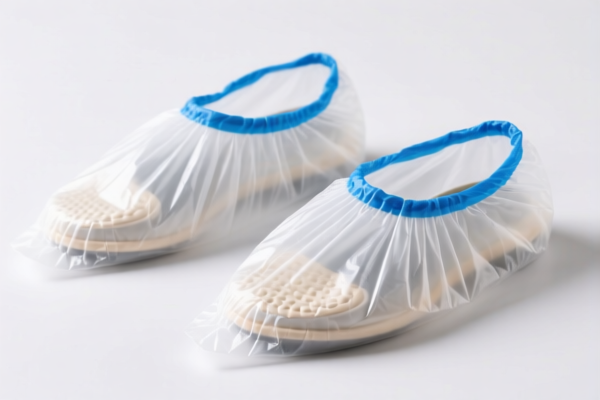
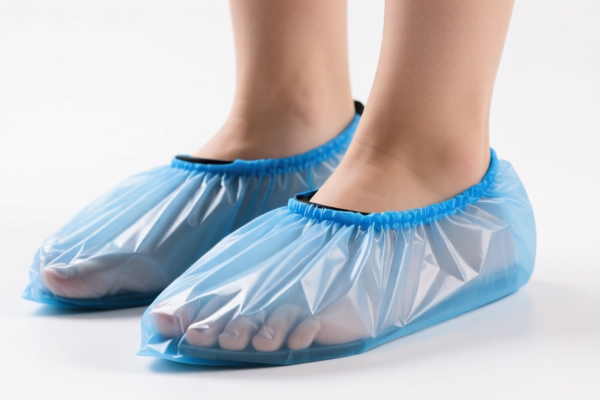
AI Analysis
👢 Anti-Acid/Anti-Alkali Shoe Covers (防滑鞋套 / 防酸碱鞋套)
🌐 HS Code Reference & Customs Clearance Guide | 2026 Latest Tariff Analysis | Professional Compliance Strategy
📌 I. Product Definition & Classification: Understanding "Anti-Acid Shoe Covers"
Anti-acid/Alkali Shoe Covers are protective garments designed to shield footwear from corrosive chemicals, oils, and hazardous liquids. In international trade, their classification depends heavily on their material composition, form factor, and specific function.
⚠️ Key Distinction:
- If made of vulcanized rubber and intended as a garment accessory →归类 to 4015.90.00.50
- If classified as a shoe sole part (even if used for traction) → Potential confusion with 6406.20.00.00 or 4016.99.60.50
- If made of plastic/rubber mix and considered a general shoe part → Potential classification under 6406.90.30.30
📦 II. HS Code Classification Details (2026 Latest Tariff Authority Comparison)
| HS Code | Product Description | Application Scenario | Tax Rate |
|---|---|---|---|
4015.90.00.50 |
Garments & Accessories of Vulcanized Rubber, specifically anti-acid/alkali shoe covers | Chemical plant workers, labs, cleaning crews | 39.0% |
6406.20.00.00 |
Parts of Footwear: Outer soles (typically rubber/plastic) | Shoe manufacturing suppliers, sole replacement parts | 20.2% |
4016.99.60.50 |
Other Vulcanized Rubber Articles: Anti-slip soles (interpreted as制品/finished goods) | General anti-slip rubber products, not specifically "garments" | 37.5% |
6406.90.30.30 |
Parts of Footwear: Other shoe parts (rubber/plastic soles) | General shoe components, rubber or plastic bottom match | 15.3% |
4016.99.05.00 |
Other Vulcanized Rubber Articles: Accessories or household items | General rubber accessories, home use, or generic anti-slip parts | 20.9% |
🔍 Critical Reminder:
- Primary Classification: For anti-acid/alkali shoe covers, the most accurate classification is4015.90.00.50because they are explicitly "garment accessories" made of vulcanized rubber for protective purposes.
- Misclassification Risk: If declared merely as "anti-slip soles" (防滑鞋底), customs may shift classification to6406.20.00.00or4016.99.60.50, leading to different tax liabilities and potential audits.
- Material Matters: If the product is not vulcanized rubber but rather thermoplastic rubber (TPR) or PVC, it may fall under6406.90.30.30(15.3%) or4016.99.05.00(20.9%), but this requires strict material verification.
💰 III. 2026 Latest Tariff Rate Breakdown (Including Surcharges & Policy Additions)
✅ Applicable Country: United States (US)
✅ Origin: China (CN)
✅ Effective Date: November 10, 2025 (and subsequent imports)
🎯 1. 4015.90.00.50 —— Anti-Acid/Anti-Alkali Shoe Covers (Vulcanized Rubber Garments/Accessories)
| Item | Details |
|---|---|
| Base Tariff | 4.0% (Ad Valorem) |
| Section 301 Surtax | +25.0% (From USITC Footnote 9903.88.01) |
| Section 122 Tariff | +10.0% (Specific to certain rubber products from China) |
| Total Effective Rate | 39.0% |
| Tax Calculation | CIF Value × 39.0% |
| De Minimis Eligibility | ❌ No (deny_de_minimis) |
| Legal Basis Path | USITC:4015.90.00.50 → FOOTNOTE:9903.88.01 → Section 122: 10% |
📌 Explanation:
- The 25% Section 301 tariff is a standard surcharge on Chinese rubber goods;
- The 10% Section 122 tariff applies specifically to anti-corrosion/rubber protective gear;
- Total 39.0% is a high tariff, requiring careful cost forecasting.
🎯 2. 6406.20.00.00 —— Parts of Footwear: Outer Soles (Rubber/Plastic)
| Item | Details |
|---|---|
| Base Tariff | 2.7% |
| Section 301 Surtax | +7.5% |
| Section 122 Tariff | +10.0% |
| Total Effective Rate | 20.2% |
| Tax Calculation | CIF Value × 20.2% |
| De Minimis Eligibility | ❌ No |
| Legal Basis Path | USITC:6406.20.00.00 → Section 301: 7.5% → Section 122: 10% |
📌 Note:
- This classification is only applicable if the product is strictly a "sole part" and not a "garment accessory".
- Misclassifying shoe covers as "soles" to achieve a lower rate is a common audit trigger.
🎯 3. 4016.99.60.50 —— Other Vulcanized Rubber Articles (Anti-Slip Soles)
| Item | Details |
|---|---|
| Base Tariff | 2.5% |
| Section 301 Surtax | +25.0% |
| Section 122 Tariff | +10.0% |
| Total Effective Rate | 37.5% |
| Tax Calculation | CIF Value × 37.5% |
| De Minimis Eligibility | ❌ No |
| Legal Basis Path | USITC:4016.99.60.50 → FOOTNOTE:9903.88.01 → Section 122: 10% |
📌 Warning:
- If customs interprets "anti-slip soles" as rubber articles rather than shoe parts, this classification applies.
- Rate is 37.5%, only slightly lower than4015.90.00.50.
🎯 4. 6406.90.30.30 —— Parts of Footwear: Other (Rubber/Plastic Soles)
| Item | Details |
|---|---|
| Base Tariff | 5.3% |
| Section 301 Surtax | +0.0% |
| Section 122 Tariff | +10.0% |
| Total Effective Rate | 15.3% |
| Tax Calculation | CIF Value × 15.3% |
| De Minimis Eligibility | ❌ No |
| Legal Basis Path | USITC:6406.90.30.30 → Section 122: 10% |
📌 Advantage:
- This is the lowest tax rate (15.3%) among all options.
- However, it requires proving the product is a general shoe part (not a protective garment) and made of rubber/plastic.
- Risk: If deemed a "garment accessory", this classification will be rejected.
🎯 5. 4016.99.05.00 —— Other Vulcanized Rubber Articles (Accessories/Household)
| Item | Details |
|---|---|
| Base Tariff | 3.4% |
| Section 301 Surtax | +7.5% |
| Section 122 Tariff | +10.0% |
| Total Effective Rate | 20.9% |
| Tax Calculation | CIF Value × 20.9% |
| De Minimis Eligibility | ❌ No |
| Legal Basis Path | USITC:4016.99.05.00 → Section 301: 7.5% → Section 122: 10% |
📌 Use Case:
- Applicable for generic rubber accessories or household items.
- Suitable if the product is not strictly a "shoe cover" but a general anti-slip rubber piece.
🛠️ IV. Customs Clearance Practical Advice (Avoid Pitfalls)
✅ 1. Documentation Checklist (Mandatory)
| Document | Required | Notes |
|---|---|---|
| ✅ Product Specification Sheet | ✔️ | Must specify material (Vulcanized Rubber vs. Plastic), function (Anti-acid/Alkali), and form (Shoe Cover vs. Sole) |
| ✅ Product Photos | ✔️ | Clear images showing how it covers the shoe, not just a standalone sole |
| ✅ Material Certificate | ✔️ | Prove it is vulcanized rubber (for 4015/4016) or rubber/plastic (for 6406) |
| ✅ Commercial Invoice | ✔️ | Clearly state "Anti-Acid Shoe Covers" or "Protective Footwear Accessories" |
| ✅ Packing List | ✔️ | Specify quantity, weight, and packaging type |
| ✅ Third-Party Test Report | ✔️ | Chemical resistance test, durability test (if available) |
✅ 2. Declaration Strategy (Key Mantra)
🔥 "Garment Accessory, Not Sole! Rubber Type, Clearly Stated!"
| Scenario | Correct Declaration | Wrong Practice |
|---|---|---|
| Anti-Acid Shoe Covers | 4015.90.00.50 (Garment Accessory) |
Declare as "Sole" → 20.2% or 37.5% audit risk |
| Standalone Anti-Slip Sole | 6406.20.00.00 or 6406.90.30.30 |
Declare as "Shoe Cover" → Misclassification |
| Generic Rubber Anti-Slip Pad | 4016.99.05.00 |
Declare as "Garment" → 39.0% unnecessary high rate |
| Mixed Material (Rubber + Plastic) | Verify material % → 6406.90.30.30 or 4016.99.60.50 |
Assume one HS code → Delay |
✅ 3. Special Cases
| Case | Handling Advice |
|---|---|
| OEM Custom Shoe Covers | Provide client order + design sketch to prove "garment accessory" status |
| Shoe Covers with Plastic Inner Layer | Declare based on outer material (if rubber exterior, likely 4015 or 4016) |
| Bulk Import for Industrial Use | Emphasize "Chemical Protection" function to support 4015.90.00.50 |
| Small Sample Shipments | Still subject to tariffs; no de minimis exemption |
🌍 V. Global Market Comparison (2026 Latest)
| Country/Region | Recommended HS Code | Tariff | Certification | Notes |
|---|---|---|---|---|
| 🇺🇸 USA | 4015.90.00.50 |
39.0% | None specific | Highest tariff due to Section 301 + 122 |
| 🇨🇳 China | 4015.90.00.50 |
5.0% | None | Low tariff, easy clearance |
| 🇪🇺 EU | 4015.90.00.50 |
4.0% | CE (if PPE) | No Section 301 equivalent |
| 🇬🇧 UK | 4015.90.00.50 |
4.0% | UKCA | Post-Brexit rules apply |
| 🇯🇵 Japan | 4015.90.00.50 |
3.0% | PSE (if electrical) | Low tariff, high quality standards |
📌 Conclusion:
- USA imposes the highest tariffs (39.0%) on anti-acid shoe covers due to multiple surtaxes.
- EU/UK/Japan offer significantly lower rates (~3-4%), making them more cost-effective for export.
- China has minimal tariffs, facilitating domestic use or re-export.
📌 VI. Common Mistakes & Pitfalls (Lessons Learned)
❌ Mistake 1: Declaring "Shoe Covers" as "Shoe Soles" (6406.20.00.00) to save tax
👉 Consequence: Customs audit → Back taxes + fines. Rate difference: 39.0% vs 20.2%, but risk of penalty is high.
❌ Mistake 2: Ignoring Section 122 Tariff (10%)
👉 Consequence: Underpayment of 10% → Delayed clearance or demand for additional payment.
❌ Mistake 3: Not specifying material type (Vulcanized Rubber vs. Plastic)
👉 Consequence: Classification ambiguity → Customs may choose the highest applicable rate.
❌ Mistake 4: Using "Protective Gear" as generic description
👉 Consequence: Lack of specificity → Customs requires additional documentation → Clearance delay.
✅ Correct Approach:
"Anti-Acid Rubber Shoe Covers, Vulcanized Rubber, Garment Accessory, Model XYZ, Chemical Resistant"
🎯 VII. Conclusion: Precise Classification, Cost Control!
🎯 Remember the Mantra:
🔹 "Shoe Cover = Garment Accessory (4015.90.00.50)"
🔹 "Sole = Shoe Part (6406.xxxx.xxxx)"
🔹 "Tax Rate: 39% vs 15% – Choose Wisely!"
🔹 "Material Matters: Rubber vs Plastic Changes Everything!"
📌 Pro Tip:
If your product is primarily plastic or non-vulcanized, consider
6406.90.30.30(15.3%) for cost savings, but ensure material documentation supports this.
For anti-acid/alkali functions, stick to4015.90.00.50for compliance safety.
📣 Immediate Action:
📞 Contact professional customs broker + Provide product photos + Apply for HS Code Advance Ruling
🚀 Ensure smooth clearance, cost efficiency, and regulatory compliance for your Anti-Acid Shoe Covers!
✨ Professional Customs Clearance Starts with Accurate Classification!
💼 Every cent of cost is worth precise calculation!
Customer Reviews
About HS Code Classification
The Harmonized System (HS) is an internationally standardized nomenclature developed by the World Customs Organization (WCO) to classify traded products. Over 200 countries use the HS system as the basis for customs tariffs, trade statistics, and import/export regulations.
Each HS code follows a hierarchical structure:
- Chapter (2 digits) — Broad category of goods (e.g., Chapter 84: Machinery and Mechanical Appliances)
- Heading (4 digits) — More specific grouping within the chapter
- Subheading (6 digits) — Internationally standardized breakdown, used by all WCO member countries
- National subdivisions (8-10 digits) — Country-specific extensions for further classification, such as US HTSUS 10-digit codes
Correct HS code classification is essential for smooth customs clearance, accurate duty payment, and compliance with trade regulations. Misclassification can lead to customs delays, overpayment of duties, or penalties.
When importing from CN to US, the applicable tariff rates may include:
- Most-Favored-Nation (MFN) rate — The standard duty rate applied to WTO members
- General rate — Applied to countries without trade agreements
- Trade remedy duties — Additional tariffs such as Section 301 (anti-dumping), Section 232 (national security), or countervailing duties
The information provided on this page is for reference purposes only. For official classification, please consult with your local customs authority or a licensed customs broker.