防鼾声带
CN → US| HS Code | Tariff Rate | Origin | Destination | Doc |
|---|---|---|---|---|
| 4014905000 | 14.2% | CN | US | Official Doc |
| 4014901000 | 10.0% | CN | US | Official Doc |
| 9021908100 | 10.0% | CN | US | Official Doc |
| 9021390000 | 10.0% | CN | US | Official Doc |
| 3926909989 | 22.8% | CN | US | Official Doc |
Product Images
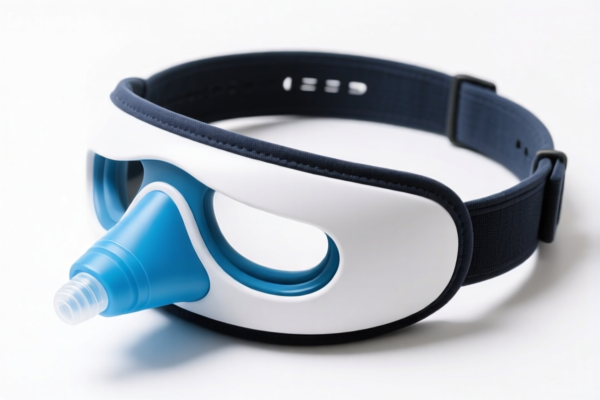

AI Analysis
🌙 Anti-Snore Devices (Anti-Snoring Straps & Masks)
🌐 HS Code Reference & Customs Clearance Guide | 2026 Latest Tariff Analysis | Professional Entry Strategy
📌 I. Product Definition & Classification: Do You Know What "Anti-Snore Strap" Really Is?
"Anti-Snore Strap" (防鼾声带) is a broad term covering various devices designed to prevent or reduce snoring. In international trade, these items are classified based on their material composition and primary function.
The market generally splits into two main categories:
-
Medical/Orthopedic Devices (Wearable devices correcting body defects or aiding posture):
- Examples: Nasal dilators, chin straps designed to keep the mouth closed, mandibular advancement devices (MADs).
- Classification Logic: Based on their function as "appliance for correcting defects" or "orthotic appliances."
-
Non-Medical Consumer Goods (Textile, Rubber, or Plastic accessories):
- Examples: Simple fabric straps, silicone masks, or generic plastic holders.
- Classification Logic: Based on their material (Sulfurized Rubber, Plastics, Textiles).
⚠️ Key Distinction Point:
- If the device is marketed as a medical instrument to correct a physical defect (snoring as a health issue) → It may fall under Chapter 90 (Medical Instruments).
- If the device is a general accessory made of rubber, plastic, or textile with no specific medical claim → It falls under Chapter 40 (Rubber) or Chapter 39 (Plastics).
📦 II. Detailed HS Code Classification (2026 Latest Tariff Data)
Based on the provided dataset, here are the specific HS Codes for "Anti-Snore Straps" depending on the product's specific material and intended use declaration:
| HS Code | Product Description | Material/Function Inference | Applicable Scenario |
|---|---|---|---|
| 4014.90.50.00 | Sulfurized Rubber Products for Hygiene/Medical | Inferred as Sulfurized Rubber. | Hygiene/Medical use, specifically for anti-snoring purposes (e.g., rubber nose clips or straps). |
| 4014.90.10.00 | Other Rubber/Resin Hygiene/Medical Goods | Inferred as Sulfurized Rubber or Elastic Materials. | Anti-snoring devices classified strictly as "hygiene/medical" rubber articles. |
| 9021.90.81.00 | Orthopedic Appliances / Body Defect Compensators | No material conflict; Functional focus. | Worn on the body to compensate for a defect (snoring correction) or assist breathing. |
| 9021.39.00.00 | Other Artificial Parts of the Body / Orthotic | Functional focus; "Other" subcategory. | 矫形/辅助类器械 (Orthotic/Auxiliary devices), specifically for artificial body cavity support. |
| 3926.90.99.89 | Other Plastics & Articles Thereof | Inferred as Plastic. | Anti-snoring tools made primarily of plastic (not classified as medical instruments). |
🔍 Critical Analysis:
- Medical Path (9021): If the product claims to "treat" or "correct" a medical condition (snoring), 9021.90.81.00 or 9021.39.00.00 are the strongest candidates. These often have lower base tariffs (0%) but face Section 232/122 clauses.
- Material Path (4014/3926): If the product is a generic accessory without medical claims, customs may default to material classification.
- Rubber (4014): Can be 0% base + 10% Section 122 = 10%.
- Plastic (3926): Can be 5.3% base + 7.5% Additional Tariffs + 10% Section 122 = 22.8%.
💰 III. 2026 Latest Tariff Rate Breakdown (China to US)
✅ Target Market: United States (US)
✅ Origin: China (CN)
✅ Effective Date: Based on 2026 tariff structures (including Section 122/232 clauses).
🎯 1. 4014.90.50.00 & 4014.90.10.00 — Rubber/Resin Anti-Snore Devices
| Item | Content |
|---|---|
| Base Tariff (MFN) | 0.0% - 4.2% (Depending on specific sub-classification) |
| Additional Tariff (Section 301/232) | 0.0% (For 4014.90.10) or 4.2% (For 4014.90.50) |
| Section 122 Tariff | +10% (Specific add-on for certain rubber/hygiene products) |
| Total Effective Rate | 10.0% (for .10.00) or 14.2% (for .50.00) |
| Calculation Basis | CIF Value × Total Rate |
| De Minimis Exemption | ❌ No (Typically denied for medical/rubber goods under strict trade barriers) |
| Legal Path | Base Tariff + Section 122 Clause 10% |
📌 Explanation:
- 0% Base Tariff applies to many rubber hygiene goods, making this a low-tax option.
- The 10% Section 122 tax is the primary cost driver here, added on top of the base rate.
- Strategy: If your product is rubber-based, aim for 4014.90.10.00 to achieve the lowest 10% total tax.
🎯 2. 9021.90.81.00 & 9021.39.00.00 — Medical/Orthopedic Devices
| Item | Content |
|---|---|
| Base Tariff (MFN) | 0.0% |
| Additional Tariff | 0.0% |
| Section 122 Tariff | +10% |
| Total Effective Rate | 10.0% |
| Calculation Basis | CIF Value × 10% |
| De Minimis Exemption | ❌ No |
| Legal Path | Base Tariff 0% + Section 122 Clause 10% |
📌 Explanation:
- Medical devices often enjoy 0% base tariffs.
- The 10% Section 122 is the only extra cost.
- Total Cost: 10%. This is highly competitive compared to plastic goods.
🎯 3. 3926.90.99.89 — Plastic Anti-Snore Devices
| Item | Content |
|---|---|
| Base Tariff (MFN) | 5.3% |
| Additional Tariff (Section 301) | +7.5% (Specific to certain plastic goods) |
| Section 122 Tariff | +10% |
| Total Effective Rate | 22.8% |
| Calculation Basis | CIF Value × 22.8% |
| De Minimis Exemption | ❌ No |
| Legal Path | Base Tariff 5.3% + Section 301 7.5% + Section 122 10% |
📌 Warning:
- Plastic goods suffer from Triple Taxation (Base + Section 301 + Section 122).
- 22.8% is more than double the tax of rubber or medical devices.
- Strategy: Avoid classifying plastic anti-snore devices under3926if possible. Claim medical function to switch to 9021.
🛠️ IV. Customs Clearance Practical Advice (Avoid Pitfalls)
✅ 1. Preparation Checklist (Must-Haves)
| Document | Required? | Purpose |
|---|---|---|
| Product Specification Sheet | ✅ | Must detail: Material (Rubber vs. Plastic vs. Medical Grade), Function (Anti-snore only vs. Medical treatment). |
| Material Certificate | ✅ | Proof of "Sulfurized Rubber" vs. "Generic Plastic" to justify 4014/9021 over 3926. |
| Intended Use Statement | ✅ | Crucial for claiming 9021 (Medical) vs. 4014/3926 (General). |
| Marketing Images | ✅ | Show the device being worn on the face/jaw. Does it look like a "medical device" or a "toy/accessory"? |
| Commercial Invoice | ✅ | Clearly state "Anti-Snoring Device" or "Orthopedic Appliance." |
| CE/FDA Certification (Optional) | ✅ | If claiming medical status (9021), FDA clearance (if applicable) strengthens the claim. |
✅ 2. Classification Strategy (The Golden Rule)
🔥 Rule: "Medical Claim = 10% Tax; Plastic = 22.8% Tax"
| Scenario | Recommended HS Code | Tax Rate | Action |
|---|---|---|---|
| Rubber Strap (Generic) | 4014.90.10.00 |
10.0% | Best for rubber accessories. |
| Plastic Device (No Medical Claim) | 3926.90.99.89 |
22.8% | Avoid if possible. High cost. |
| Plastic/Rubber Device (Medical Claim) | 9021.90.81.00 |
10.0% | Recommended. Change product description to "Orthopedic/Defect Correcting." |
| Mandibular Advancement (MAD) | 9021.39.00.00 |
10.0% | Use if it holds the jaw open. |
💡 Pro Tip:
- If your product is plastic, but you can prove it is designed to "correct a physical defect" (snoring), declare it under 9021. This saves 12.8% in taxes.
- Do NOT declare plastic medical devices under 3926 if 9021 is more accurate; customs may audit and penalize for misclassification.
✅ 3. Special Handling
| Situation | Handling Advice |
|---|---|
| Multi-material Device (Plastic + Rubber) | Declare based on the principal function (9021) or the principal material. If function is medical, 9021 is safer. |
| OEM/White Label | Ensure the brand name doesn't make it look like a "gadget" (3926) vs. a "device" (9021). |
| Sample vs. Commercial | Samples may be exempt, but commercial shipments face the full 10% or 22.8%. |
🌍 V. Market Comparison (US vs. Others)
| Market | Recommended HS Code | Effective Tax Rate | Key Requirement |
|---|---|---|---|
| 🇺🇸 USA | 9021.90.81.00 or 4014.90.10.00 |
10.0% | Medical function proof for 9021; Rubber proof for 4014. |
| 🇺🇸 USA (Plastic) | 3926.90.99.89 |
22.8% | Avoid unless necessary. |
| 🇪🇺 EU | 9021 or 4014 |
Low (0-5%) | CE Marking required. |
| 🇨🇳 China | 9021 or 4014 |
Low (5-10%) | Standard import duties. |
📌 Conclusion:
- The US market is the most sensitive. The 22.8% tax on plastic goods makes them uncompetitive.
- Focus on the "Medical" angle to land in the 10% tax bracket.
📌 VI. Common Mistakes & Solutions (Lessons Learned)
❌ Mistake 1: Declaring a plastic anti-snore strap as 3926.90.99.89 without medical justification.
👉 Result: Pay 22.8%.
✅ Fix: Re-classify as 9021.90.81.00 with a statement on "Defect Correction" to pay 10%.
❌ Mistake 2: Declaring a rubber strap as 4014.90.50.00 (Higher base tax).
👉 Result: Pay 14.2% instead of 10%.
✅ Fix: Verify if it fits 4014.90.10.00 (0% base) for better savings.
❌ Mistake 3: Mixing "General" and "Medical" claims in one shipment.
👉 Result: Customs detention, re-classification, delays.
✅ Fix: Keep marketing consistent. Use "Anti-Snore Device" or "Orthopedic Appliance."
🎯 VII. Conclusion: Smart Classification = Higher Profit
🎯 Remember the Golden Rule:
🔹 "Rubber/Medical = 10% (Safe)"
🔹 "Plastic/Non-Medical = 22.8% (Risky)"
🔹 "Claim Medical Function to Save 12.8%!"
📌 Action Plan:
1. Audit your product: Is it Rubber or Plastic? Does it claim medical benefits?
2. Select HS Code: Aim for 9021 or 4014.90.10.00.
3. Prepare Docs: Get material certs and a clear "Medical Use" statement.
4. Declare Correctly: Avoid the 22.8% plastic trap.
✨ Professional Customs Clearance Starts with the Right Code!
💼 Your margin depends on your HS Code accuracy.
Customer Reviews
About HS Code Classification
The Harmonized System (HS) is an internationally standardized nomenclature developed by the World Customs Organization (WCO) to classify traded products. Over 200 countries use the HS system as the basis for customs tariffs, trade statistics, and import/export regulations.
Each HS code follows a hierarchical structure:
- Chapter (2 digits) — Broad category of goods (e.g., Chapter 84: Machinery and Mechanical Appliances)
- Heading (4 digits) — More specific grouping within the chapter
- Subheading (6 digits) — Internationally standardized breakdown, used by all WCO member countries
- National subdivisions (8-10 digits) — Country-specific extensions for further classification, such as US HTSUS 10-digit codes
Correct HS code classification is essential for smooth customs clearance, accurate duty payment, and compliance with trade regulations. Misclassification can lead to customs delays, overpayment of duties, or penalties.
When importing from CN to US, the applicable tariff rates may include:
- Most-Favored-Nation (MFN) rate — The standard duty rate applied to WTO members
- General rate — Applied to countries without trade agreements
- Trade remedy duties — Additional tariffs such as Section 301 (anti-dumping), Section 232 (national security), or countervailing duties
The information provided on this page is for reference purposes only. For official classification, please consult with your local customs authority or a licensed customs broker.