零钱包
CN → US| HS Code | Tariff Rate | Origin | Destination | Doc |
|---|---|---|---|---|
| 4202321000 | 0.0% | CN | US | Official Doc |
| 4202329300 | 52.6% | CN | US | Official Doc |
| 4202321000 | 0.0% | CN | US | Official Doc |
| 4202329300 | 52.6% | CN | US | Official Doc |
| 4202321000 | 0.0% | CN | US | Official Doc |
Product Images
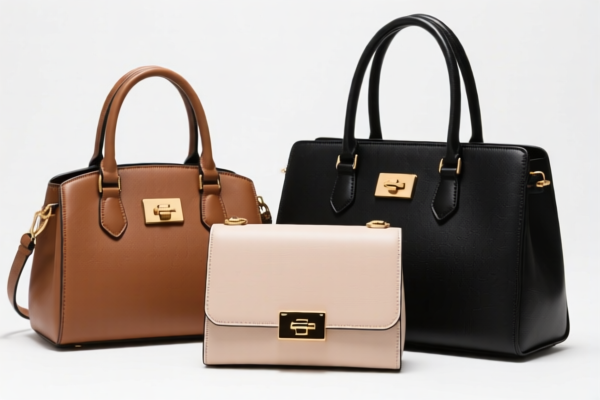



AI Analysis
👜 Men's Coin Pouches (Clutch Wallets)
🌐 HS Code Reference & Customs Clearance Guide | 2026 Latest Tariff Full Analysis | Professional-Level Clearance Strategy
📌 Part 1: Product Definition and Classification: Do You Really Understand "Coin Pouches"?
Men's coin pouches are small containers designed for carrying coins, cards, keys, or other small personal items. In international trade, classification depends primarily on the material and manufacturing structure:
Plastic/Synthetic Leather Pouches: Made from plastics, synthetic leather, or materials that behave like them (smooth, non-woven appearance). These often fall under heading 4202.32.10. Textile/Man-made Fiber Pouches: Made from woven fabrics, nylon, polyester, or other textile materials. These often fall under heading 4202.32.93.
⚠️ Key Distinction Point:
- If the material is plastic, synthetic leather, or similar non-textile materials (smooth, molded, or coated) → Classify under 4202.32.10.00.
- If the material is textile fabric (woven, knitted, nylon, polyester, etc.) → Classify under 4202.32.93.00.
📦 Part 2: HS Code Classification Details (2026 Latest Tariff Authoritative Comparison)
| HS Code | Product Description | Applicable Scenario | Material Type |
|---|---|---|---|
4202.32.10.00 |
Men's coin pouch, made of plastic or textile materials (specifically plastic/synthetic variants), for carrying small items | Plastic cases, synthetic leather clutches, smooth-surface containers | ✅ Plastic / Synthetic Leather |
4202.32.93.00 |
Men's coin pouch, made of textile materials or man-made fibers, shape conforms to portable item characteristics | Nylon pouches, woven fabric clutches, canvas wallets | ✅ Textile / Man-made Fiber |
🔍 Important Reminder:
- Material is the deciding factor. A "plastic-looking" wallet made of woven fabric is still textile; a "fabric-looking" bag made of PVC-coated mesh might be plastic.
- 4202.32.10.00 is typically for items where the outer surface is plastic or synthetic leather.
- 4202.32.93.00 is for items where the outer surface is textile fabric.
- Do not mix these up, as the tax implications differ significantly due to different base rates.
💰 Part 3: 2026 Latest Tariff Rate Details (Including Surtaxes and Policy Add-ons)
✅ Applicable Country: United States (US)
✅ Origin: China (CN)
✅ Effective Time: Ongoing (Current enforcement period)
🎯 1. 4202.32.10.00 —— Coin Pouches (Plastic/Synthetic Leather Material)
| Item | Content |
|---|---|
| Base Duty Rate | 12.1¢/kg + 4.6% (Ad Valorem + Specific Duty) |
| Section 301 Surcharge | +25.0% (Additional tariff on Chinese goods) |
| Section 122 Tariff | +10.0% (Targeted tariffs on certain goods) |
| Total Effective Rate | 12.1¢/kg + 35.0% (4.6% base + 25% + 10% surcharges) |
| Tax Calculation | (Weight × 12.1¢) + (CIF Value × 35.0%) |
| De Minimis Eligibility | ❌ No (subject to full duty assessment) |
| Legal Basis Path | HTSUS:4202.32.10.00 → Section 301: Footnote 9903.88.01 → Section 122: IEEPA Provisions |
📌 Explanation:
- The 12.1¢/kg is a specific duty based on weight, applied regardless of value.
- The 4.6% is the standard MFN (Most Favored Nation) ad valorem rate.
- The 25% and 10% are punitive surcharges applied to Chinese-origin goods.
- Combined Ad Valorem Rate: 4.6% + 25% + 10% = 35%.
- Total Cost Impact: You pay per kilogram plus 35% of the value. This is a high-cost classification.
🎯 2. 4202.32.93.00 —— Coin Pouches (Textile Material)
| Item | Content |
|---|---|
| Base Duty Rate | 17.6% (Ad Valorem) |
| Section 301 Surcharge | +25.0% (Additional tariff on Chinese goods) |
| Section 122 Tariff | +10.0% (Targeted tariffs on certain goods) |
| Total Effective Rate | 52.6% (17.6% base + 25% + 10% surcharges) |
| Tax Calculation | CIF Value × 52.6% |
| De Minimis Eligibility | ❌ No (subject to full duty assessment) |
| Legal Basis Path | HTSUS:4202.32.93.00 → Section 301: Footnote 9903.88.01 → Section 122: IEEPA Provisions |
📌 Note:
- This classification has a higher base rate (17.6% vs. 4.6%) but no specific weight-based duty.
- The total ad valorem rate is 52.6%, which is significantly higher than the plastic variant's 35% (value portion).
- Comparison: For high-value, low-weight items, the plastic version (4202.32.10.00) may be cheaper despite the weight fee. For low-value, high-weight items, the textile version might be comparable, but the 52.6% flat rate is generally punishing.
- Crucial: Misclassifying a textile pouch as plastic to get the 35% rate is customs fraud and will result in severe penalties.
🛠️ Part 4: Customs Clearance Practical Advice (Real-World Pitfall Avoidance Guide)
✅ 1. Required Documentation Checklist (None Can Be Skipped)
| Document | Must Provide | Explanation |
|---|---|---|
| ✅ Product Specification Sheet | ✔️ | Must clearly state outer material (e.g., "100% Nylon," "PVC Coated," "Synthetic Leather"). |
| ✅ Material Test Report | ✔️ | Third-party lab report confirming if the outer layer is textile or plastic. |
| ✅ Product Photos (Clear) | ✔️ | Show texture, weave (if textile), and any labels indicating material composition. |
| ✅ Commercial Invoice | ✔️ | Must list "Men's Coin Pouch" and specify material (e.g., "Nylon Coin Pouch" vs. "Plastic Wallet"). |
| ✅ Packing List | ✔️ | Include gross/net weight for the 12.1¢/kg calculation if classified as 4202.32.10.00. |
✅ 2. Declaration Techniques (Key Mnemonic)
🔥 "Material First, Weight Matters, Be Precise or Pay More!"
| Scenario | Correct Declaration | Wrong Approach |
|---|---|---|
| Outer is Nylon/Polyester | 4202.32.93.00 |
Claiming "Plastic" to avoid 52.6% → Customs Audit & Penalty |
| Outer is Synthetic Leather/PVC | 4202.32.10.00 |
Claiming "Textile" → May save duty but risks misclassification if not truly textile |
| Mixed Materials | Determine Primary Outer Surface | Vague description "Mixed material" → Delays & Re-classification |
📌 Critical Insight:
- For4202.32.10.00, ensure the outer surface is plastic/synthetic. If the lining is textile but the shell is plastic, it still goes to4202.32.10.00.
- For4202.32.93.00, if the outer surface is fabric, even if it has a plastic coating for waterproofing, it may still be considered textile depending on the coating's nature. Consult a customs broker for coated fabrics.
✅ 3. Special Case Handling
| Scenario | Handling Advice |
|---|---|
| High-End Luxury Pouches | Ensure brand name does not affect HS code. Material is key. |
| Eco-Friendly Materials | If made from recycled plastic, still 4202.32.10.00 unless classified as textile. |
| Sample Shipments | Even samples are subject to duty if value exceeds de minimis (which they often do for Chinese goods under current rules). |
| Kit Packages (Pouch + Keys + Cards) | Declare the principal item (the pouch). The accessories may be ignored or grouped if incidental. |
🌍 Part 5: Global Market Comparison (2026 Latest)
| Country/Region | Recommended HS Code | Tariff (China Origin) | Certification Required | Notes |
|---|---|---|---|---|
| 🇺🇸 USA | 4202.32.10.00 / 4202.32.93.00 |
35% (Plastic) / 52.6% (Textile) | None specific | High tariffs due to Section 301 & 122 |
| 🇪🇺 EU | 4202.32.10 / 4202.32.93 |
~2.7% - 6.5% | CE (if electronic components) | Lower base duties, no US-style surcharges |
| 🇨🇳 China | 4202.32.10 / 4202.32.93 |
0% - 5% | CCC (if applicable) | Duty-free import for many consumer goods |
| 🇬🇧 UK | 4202.32.10 / 4202.32.93 |
~12% - 18% | None | Post-Brexit tariffs similar to pre-Brexit EU |
📌 Conclusion:
- The US market is exceptionally expensive for Chinese-manufactured coin pouches due to the叠加 (stacked) tariffs.
- Textile pouches (4202.32.93.00) face the highest duty (52.6%).
- Plastic/Synthetic pouches (4202.32.10.00) are slightly more cost-effective (35% + weight fee) but still costly.
📌 Part 6: Common Mistakes & Pitfall Avoidance (Blood & Tears Lessons)
❌ Mistake 1: Classifying a Nylon Pouch as 4202.32.10.00 (Plastic) to save 17.6% base rate.
👉 Consequence: Customs audit, seizure, and fines. The 12.1¢/kg fee might save a few cents on low-weight items, but the risk is not worth it.
❌ Mistake 2: Ignoring the Section 122 Tariff.
👉 Consequence: Underpaying by 10%. The US CBP is actively enforcing this. Ensure your broker includes it.
❌ Mistake 3: Using vague terms like "Wallet" or "Clutch."
👉 Consequence: Customs may classify it under a different, potentially higher, or less accurate heading. Use "Coin Pouch" or "Small Leather Goods."
✅ Correct Declaration Example:
"Men's Nylon Coin Pouch, 100% Polyester Textile Outer, No Electronic Components, Model CP-100"
🎯 Part 7: Conclusion: Professional Declaration, Save Time and Money
🎯 Remember the Mnemonic:
🔹 "Plastic is 35% + Weight, Textile is 52.6% Flat. Don't Guess, Test the Material!"
🔹 "Section 301 and 122 are the Killer. Base Rate + Surcharges = Total Cost."
📌 Pro Tip:
If your coin pouches are sourced from Vietnam, Mexico, or Thailand, you may be eligible for lower or zero tariffs under USMCA or other FTAs, avoiding the 25%+10% surcharges.
Recommendation: Apply for a Binding Ruling from US Customs and Border Protection (CBP) if you are unsure about the material classification. This provides legal certainty and protects against future audits.
📣 Immediate Action:
📞 Contact a Licensed Customs Broker + Provide Material Specs + Verify Origin
🚀 Ensure Your Coin Pouches Clear Customs Smoothly, Maximize Profit Margins!
✨ Professional Customs Clearance Starts with Precise Classification!
💼 Every Percent of Duty Counts in Today's Market!
Customer Reviews
About HS Code Classification
The Harmonized System (HS) is an internationally standardized nomenclature developed by the World Customs Organization (WCO) to classify traded products. Over 200 countries use the HS system as the basis for customs tariffs, trade statistics, and import/export regulations.
Each HS code follows a hierarchical structure:
- Chapter (2 digits) — Broad category of goods (e.g., Chapter 84: Machinery and Mechanical Appliances)
- Heading (4 digits) — More specific grouping within the chapter
- Subheading (6 digits) — Internationally standardized breakdown, used by all WCO member countries
- National subdivisions (8-10 digits) — Country-specific extensions for further classification, such as US HTSUS 10-digit codes
Correct HS code classification is essential for smooth customs clearance, accurate duty payment, and compliance with trade regulations. Misclassification can lead to customs delays, overpayment of duties, or penalties.
When importing from CN to US, the applicable tariff rates may include:
- Most-Favored-Nation (MFN) rate — The standard duty rate applied to WTO members
- General rate — Applied to countries without trade agreements
- Trade remedy duties — Additional tariffs such as Section 301 (anti-dumping), Section 232 (national security), or countervailing duties
The information provided on this page is for reference purposes only. For official classification, please consult with your local customs authority or a licensed customs broker.